
- Collection type
- Object
- Description
- Broad, squat cylindrical wooden lip stud with crosshatched upper surface [RTS 12/5/2004].
- Long description
- Lip stud carved from a single piece of wood, and consisting of a flat upper surface, broad, squat cylindrical body with very slightly concave sides and a flat base. The top has been decorated with a crosshatched pattern made up of a series of incised lines; this covers the entire surface, which is currently a dark brown colour (Pantone 7533C). The centre of the underside is polished, perhaps through use, and is a darker reddish brown colour than the rest of the object. The stud is complete and intact, with some white surface discolouration on the upper surface, and some scratches on the underside. It has a length of 25.2 mm, is 24.5 mm wide, 17.5 mm high and has a weight of 5.7 grams [RTS 12/5/2004].
- Geographical reference
- Sobat River Upper Nile Jonglei
- Person
- Maker Unknown Maker
- Field collector John Petherick
- PRM source Augustus Henry Lane Fox Pitt Rivers founding collection
- Date / Period
- Date made: Before 1865?, uncertain
- Date collected
- 1853 - 1859 or 1861 - 1865
- Acquisition information
- Donated: 1884
- Materials and processes
- Material Wood Plant, Process Carved, Process Incised, Process Polished, Process Decorated
- Dimensions
- Length 25.2 mm, Width 24.5 mm, Height 17.5 mm, Weight 5.7 g
- Object numbers
- Accession number: 1884.84.93 PR Cat other PR nos: 3396
- Research and responses
Petherick appears to have encountered the 'Djibba' during his first trading expedition in 1853, when he travelled up the Sobat River, and they are probably located near the Sobat or its tributaries, in either the administrative districts of either Upper Nile or Jonglei, or across the border into modern Ethiopia (J. Petherick, 1861, Egypt, the Sudan and Central Africa, Map; note that the geographical coordinates given for this group in his 1860 article seem to be inaccurate). Ajibba is the Anuak name for this group, who are also known as the Murle or Beir [B.A. Lewis 1972, The Murle, 2; RTS 6/5/2004]. As Petherick established a trading camp amongst the Dinka in this region, subsequent contact with the 'Djibba' through his agents seems likely, and material could well have been collected after this date. His first collection was shipped back to England in 1859; he collected additional material between 1861 and 1865 [RTS 4/12/2003].
Logan mentions that Murle women wear 'half-moon shaped' wooden plugs in their lower lips; this may be a variant form (M.H. Logan 1918, "The Beirs", Sudan Notes and Records 1, 242). The cylindrical shape of this example is similar to Latuka lip plug 1934.8.79, although this example has a larger diameter. Its decoration is comparable to that of Bongo lip plugs, but slightly coarser in execution (compare with 1884.84.87) [RTS 7/5/2004].
Search terms: Ornament, Lip Ornament, Body Art Accessory
Further items to explore
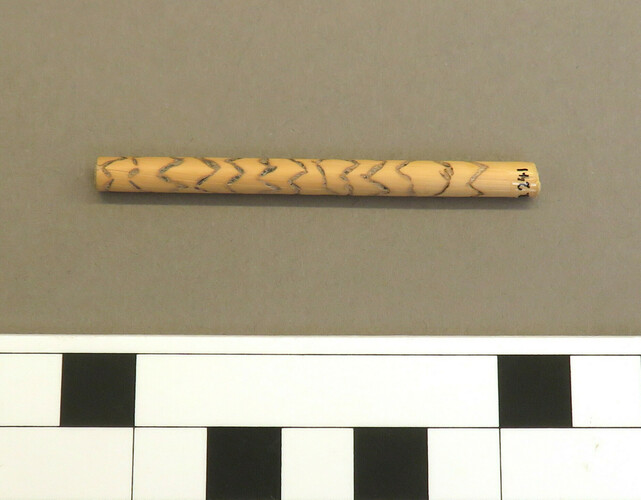 1923.88.241Lip ornament formed of cylindrical length of reed. There are thirteen irregularly zigzagging pyroengraved bands decorating the length of the ornament. [JMC 15/7/2019]1923.88.241
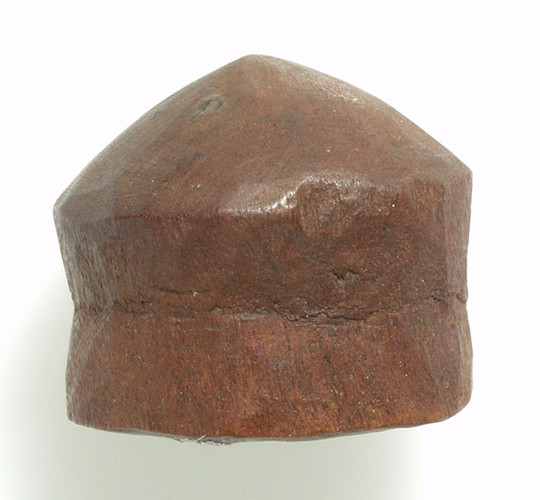 1884.84.92Undecorated cylindrical wooden lip stud with conical top and concave sides, worn by women in their lower lip [RTS 11/5/2004].1884.84.92
 1949.12.137.3Pottery lip stud. [El.B DDF Body Arts Project 2010/2011 11/10/2010]1949.12.137.3
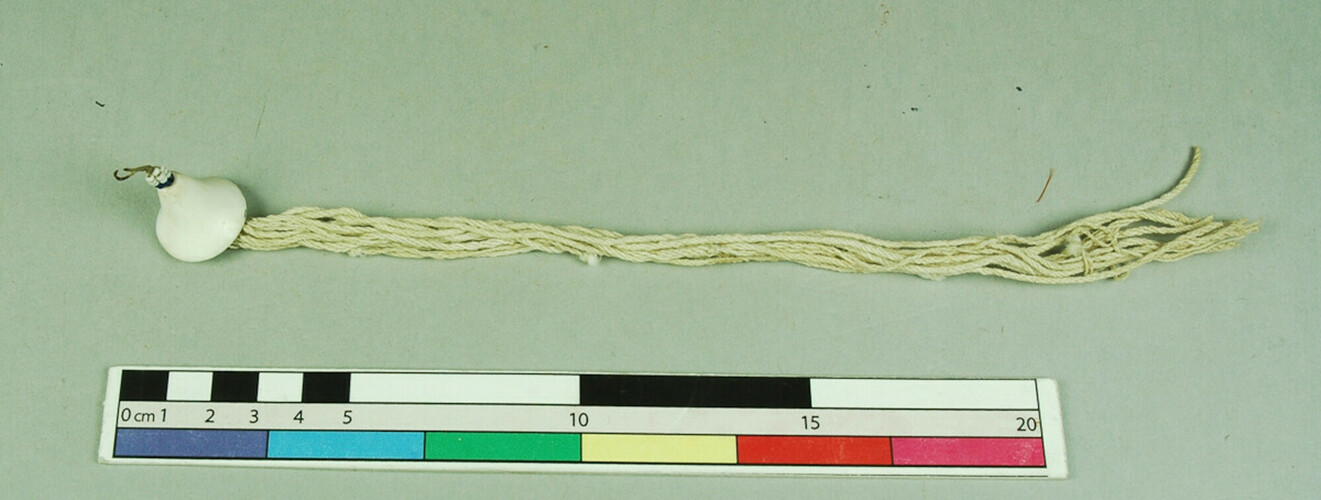 1895.11.19Lip ornament of a cone-shaped piece of shell, with short strings of beads and a long cotton tassel. [El.B DDF Body Arts Project 2010/2011 14/10/2010]1895.11.19
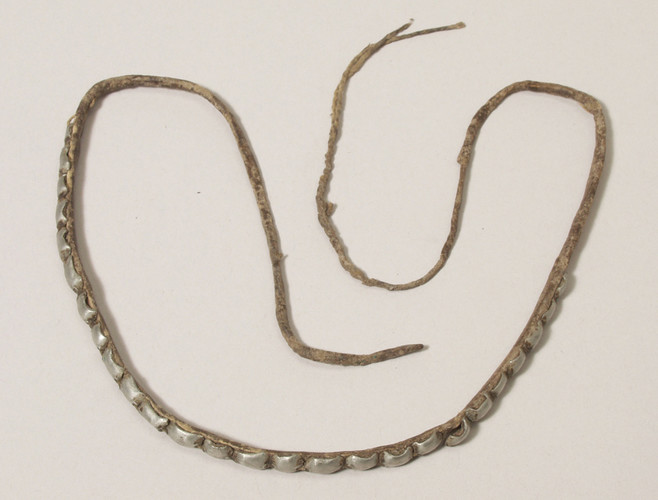 1903.16.120Necklet made from a narrow leather strip with aluminium or tin segments sewn onto one side [RTS 29/3/2004].1903.16.120
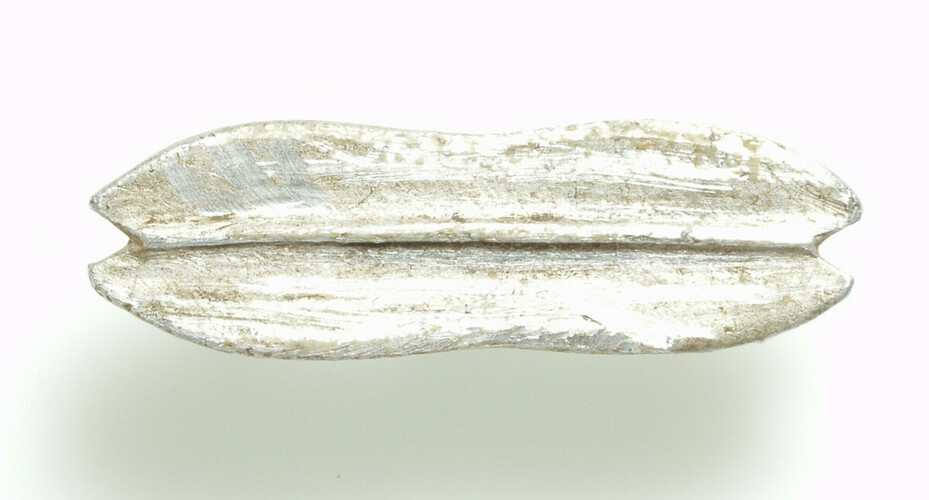 1979.20.158.1Aluminium or tin ear stud with three-pronged base, part of a pair [RTS 12/5/2004].1979.20.158.1
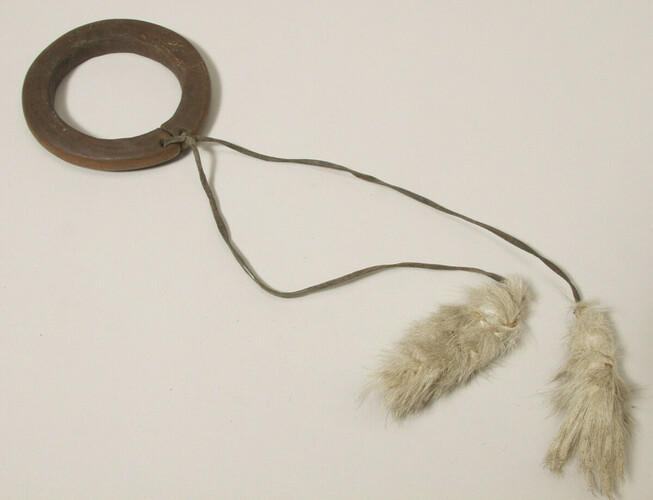 1979.20.205Penannular wooden arm ornament with 2 hide strips and animal hair tassels attached [RTS 7/4/2004].1979.20.205
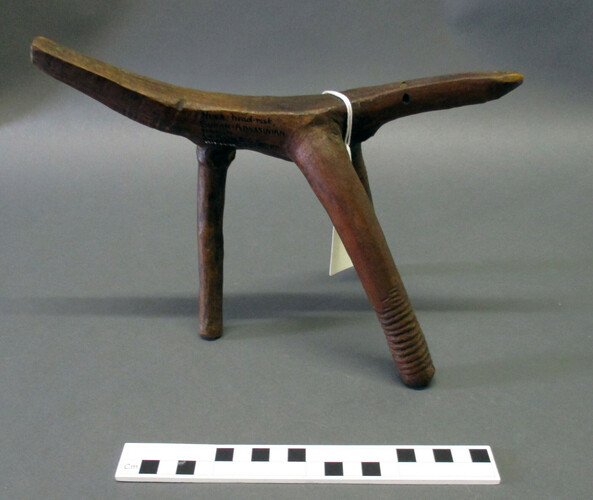 1917.25.39Zoomorphic headrest carved from a tree branch, with narrow, perforated seat and 3 angled and ribbed legs [RTS 3/6/2005].1917.25.39