
- Collection type
- Object
- Description
- Undecorated cylindrical wooden lip stud with conical top and concave sides, worn by women in their lower lip [RTS 11/5/2004].
- Long description
- Small lip stud carved from a single piece of wood, and consisting of a conical top with pointed apex, on a short cylindrical body with concave sides, defined by an incised line cut around the centre. The base is flat and slightly oval in plan view. The stud is nearly complete, with minor chipping on the edge of the underside; it is currently a dark reddish brown colour (Pantone 4625C). Tool marks are visible on the surfaces, and the upper and lower surfaces appear to have been polished. The object has a length of 16.5 mm, a width of 15.5 mm and a height of 14.9 mm; it weighs 2.3 grams [RTS 11/5/2004].
- Geographical reference
- Cultural groups
- Bongo
- Person
- Maker Unknown Maker
- Field collector John Petherick
- PRM source Augustus Henry Lane Fox Pitt Rivers founding collection
- Date / Period
- Date made: Possibly before 1858
- Date collected
- 1856 - 1858
- Acquisition information
- Donated: 1884
- Materials and processes
- Material Wood Plant, Process Carved, Process Polished
- Dimensions
- Length 16.5 mm, Width 15.5 mm, Height 14.9 mm, Weight 2.3 g
- Object numbers
- Accession number: 1884.84.92
- Research and responses
John Petherick led three separate trading expeditions that passed through Bongo territory between 1856 and 1858; this material was shipped back to England in 1859. See Petherick 1861, Egypt, The Sudan and Central Africa for more details.
Bongo lip ornaments are described by Petherick in his 1861 volume, Egypt, The Sudan and Central Africa, p. 401 ‘the women would be handsome were it not for a disfiguration of the under lip, in which circular pieces of wood are inserted, varying in size according to age from a sixpence to a florin'. See also G. Schweinfurth's description, In The Heart of Africa Volume I, 1873, pp 296-298. By the time that Evans-Pritchard encountered the Bongo, in the 1920's, the use of large pegs in the lower lips seemed to have gone out of fashion, although they were reportedly still used by the Löli Jurs and the Dogodjo tribe (E.E. Evans-Pritchard, 1929, "The Bongo", Sudan Notes and Records XII part I, p. 10.
This is very similar in form to 1884.84.87 (with decorated top), and 1884.88.88-91 (undecorated examples) [RTS 11/5/2004].
Search terms: Ornament, Lip Ornament, Body Art Accessory
Further items to explore
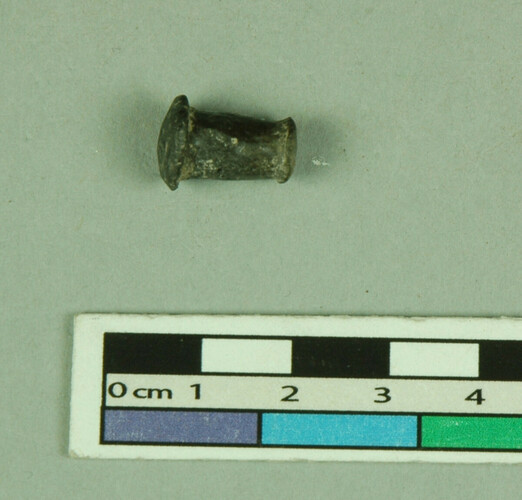 1949.12.15.2.6Black pottery lip stud from burial site. [ZM 02/04/2007]1949.12.15.2.6
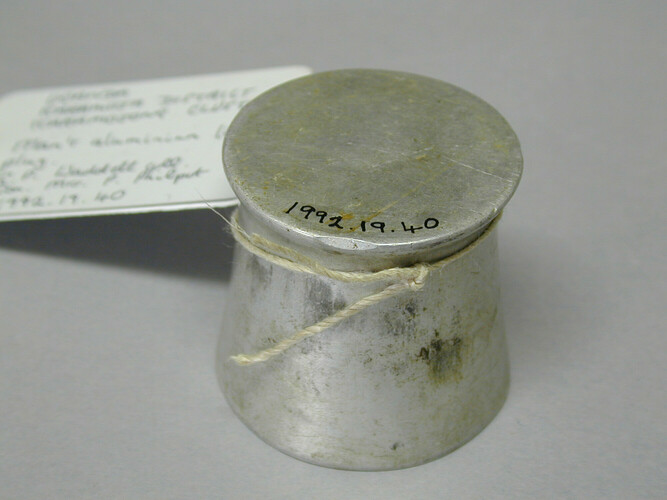 1992.19.40Lip plug: a cylinder of solid aluminium, flared at both ends; concave at the wider end.1992.19.40
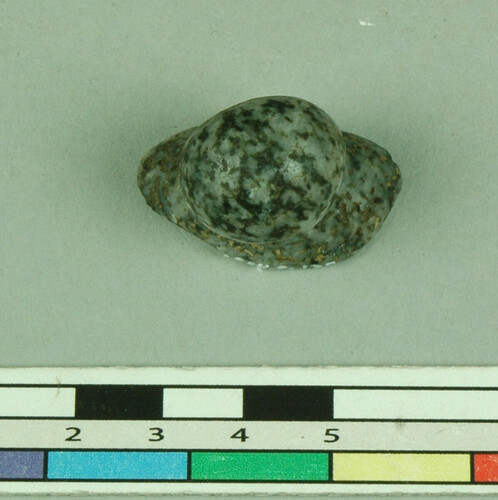 1954.9.138Stone labret. [JP 1/9/2001]1954.9.138
 1886.1.760.5Perforated stud of ivory. [El.B DDF Body Arts Project 2010/2011 06/10/2010]1886.1.760.5
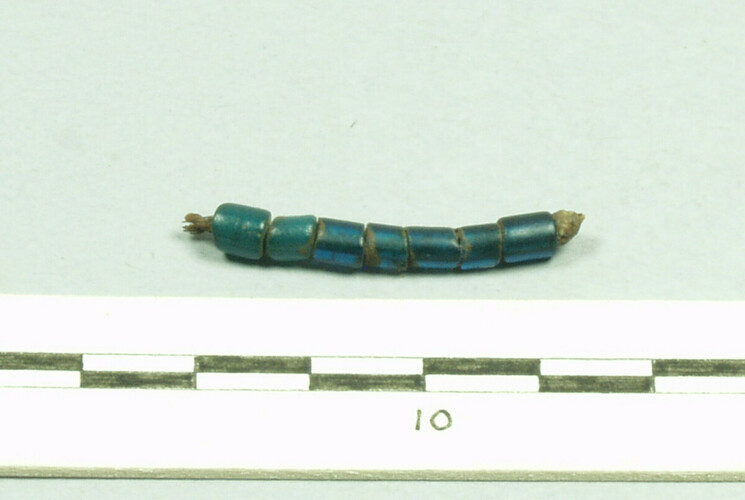 1946.8.101.7Short length of plant fibre cord strung with 7 glass beads [RTS 30/6/2004].1946.8.101.7
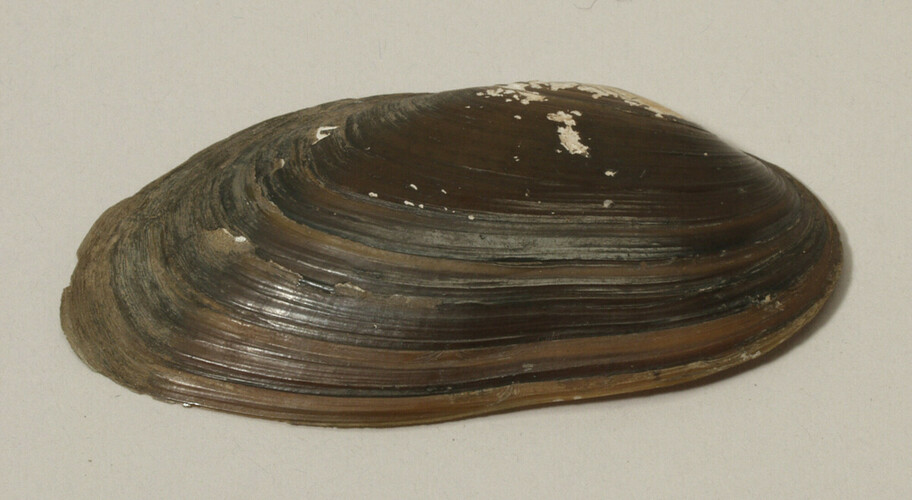 1979.20.57Small mussel shell, used as spoon or ladle [SM 14/05/2007]1979.20.57
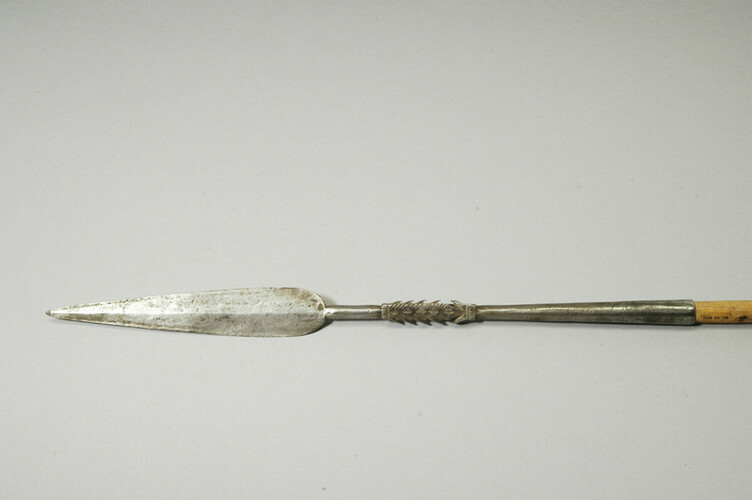 1979.20.108Spear with leaf-shaped blade, barbed and decorated shank and socketed base on a wooden shaft, made by Jur Luo and used by the Dinka [RTS 11/7/2005].1979.20.108
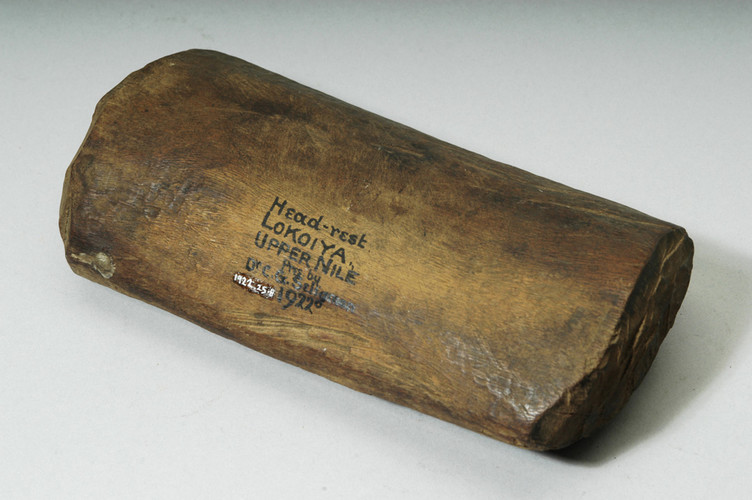 1922.25.8Rectangular headrest with convex upper face, carved from a single block of wood [RTS 27/5/2005].1922.25.8