
- Collection type
- Object
- Description
- Small mussel shell, used as spoon or ladle [SM 14/05/2007]
- Long description
- Spoon or small scoop made from one half of a bivalve shell (probably oyster or mussel), separated from its paired shell at the hinge but not obviously modified in any other way. The object is oval in plan view, with a convex underside that has a translucent caramel colour and more opaque dark brown coloured surface (Pantone 464C and 439C). This has flaked off around the apex, exposing the opaque white and opalescent pinkish colour of the underlying mother-of-pearl (Pantone 7415C). The surface is weathered along one side, with the remainder of the outer surface having a polished appearance, which may be naturally occurring. The interior hollow is concave, and made of the natural pinkish purple mother-of-pearl lining of the shell. The object is complete, apart from the surface damage mentioned above and some edge damage. It is 96.7 mm long, 48 mm wide and 11 mm high; the shell itself is around 1 mm thick near the edges, with a weight of 18.6 grams [RTS 28/6/2004].
- Geographical reference
- Northern Bahr el Ghazal Dhangrial
- Cultural groups
- Dinka Tuich
- Date / Period
- Date made: Before 1979
- Date collected
- 17 February 1979
- Acquisition information
- Purchased: 1979
- Materials and processes
- Material Mussel Shell, Material Mother of Pearl Shell
- Dimensions
- Length: max 96.7 mm, Width: max 48 mm, Height: max 11 mm, Thick: max 1 mm, Weight 18.6 g
- Object numbers
- Accession number: 1979.20.57 Other numbers: Langton Collection 123
- Research and responses
At the time this object was collected, the Bahr el Ghazal province was bordered by the Upper Nile Province to the east and Western Equatoria to the south; this area is now divided into the districts of Western Bahr el Ghazal, Northern Bahr el Ghazal, and parts of Warab and El Buheyrat. Dhangrial is located within Northern Bahr el Ghazal. For a map showing the distribution of Dinka Tuich groups, see J. Ryle, 1982, Warriors of the White Nile: The Dinka, p. 25.
This object is said to have been found in the river and used as a spoon; its local name is thial. This is probably the same term as Nebel's Tial, plural tiet, which he defines as a ‘smaller shell, spoon’ (Nebel 1979, Dinka-English Dictionary, p. 82).
For a slightly larger shell of the same type, used as a ladle, see 1979.20.58. The Anuak also utilise shells as spoons (see 1936.10.40-42, or variant form with serrated end, 1936.10.44-45). The Anuak shells are described as 'mussel shells' by Evans-Pritchard; they appear to be the same type as found here and that is probably the correct identification [RTS 20/08/2005].
Search terms: Food and Drink, Spoon, Food Accessory
Further items to explore
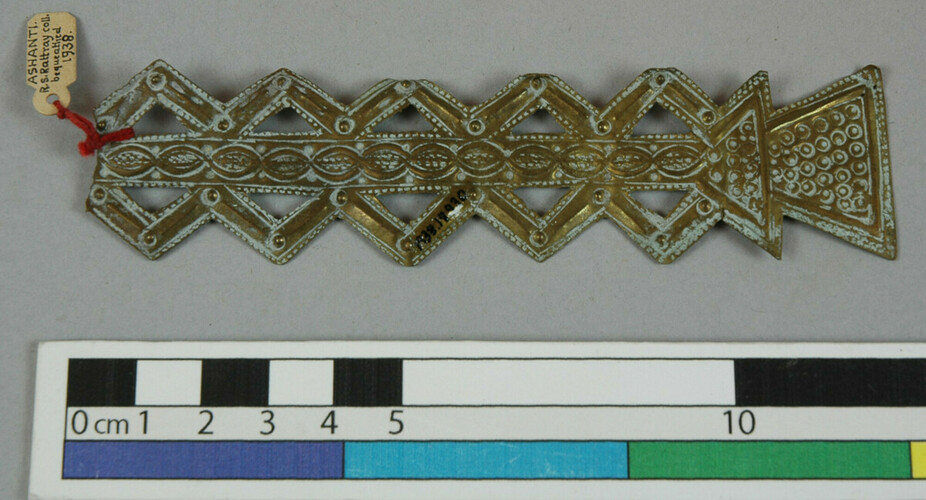 1938.18.930Copper alloy spoon for gold dust. The spoon is missing its scoop. The flat handle has repoussé and open work triangles. [MJD 18/04/2011]1938.18.930
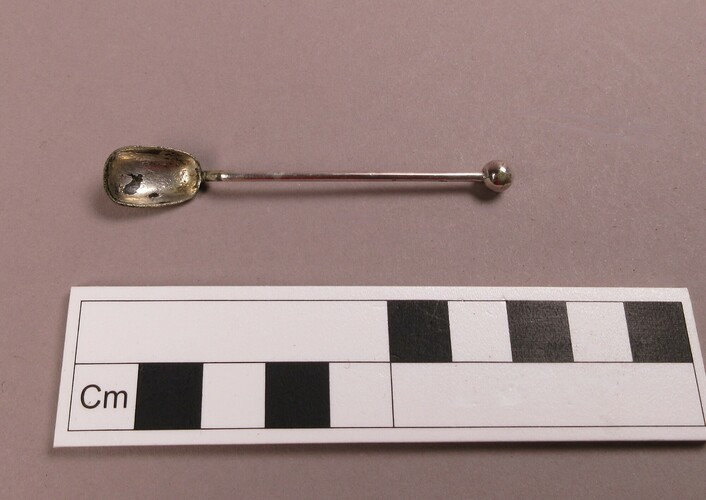 1992.6.96Small ?mustard spoon of silver metal, possibly silver plate. [SM (Verve) 28/01/2015]1992.6.96
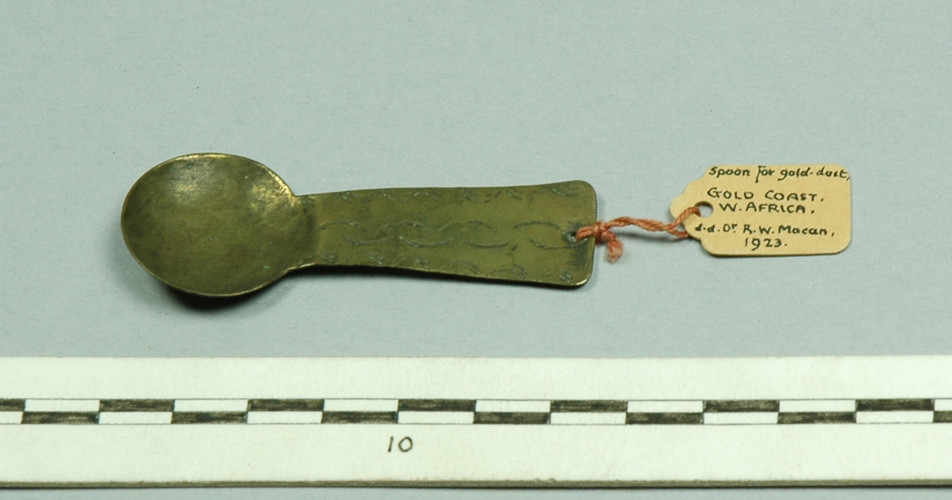 1923.55.30Small brass spoon with round bowl and broad handle, incised with curved lines. [El.B 'DCF 2004-2006 What's Upstairs?' 31/3/2006]1923.55.30
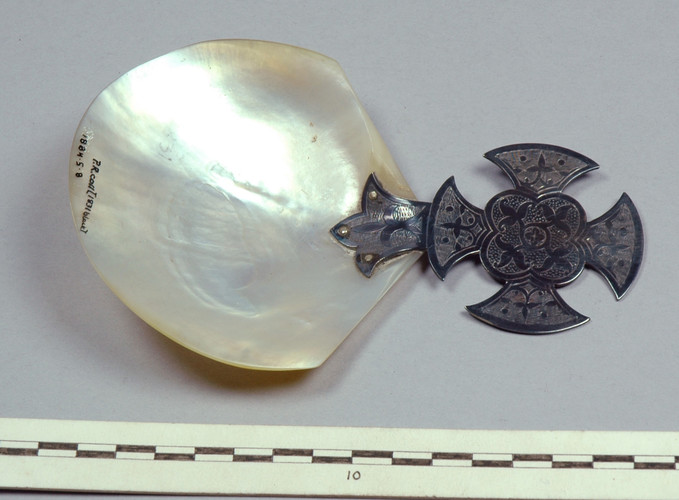 1884.5.8Spoon of mother of pearl with silver handle in maltese cross shape, incised with leaf patterns. [El.B 'DCF 2004-2006 What's Upstairs?' 7/3/2006]1884.5.8
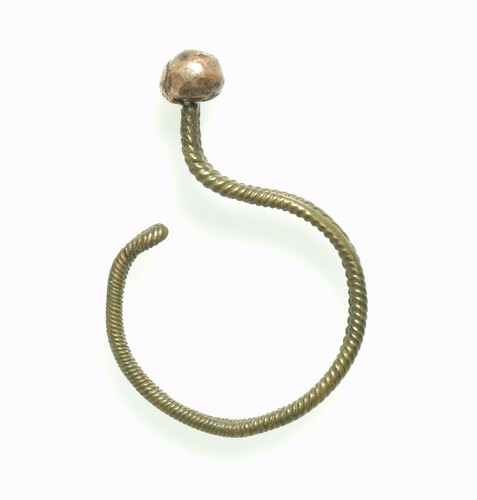 1979.20.159Brass wire hook, for wearing as a lip ring by men and women [RTS 12/5/2004].1979.20.159
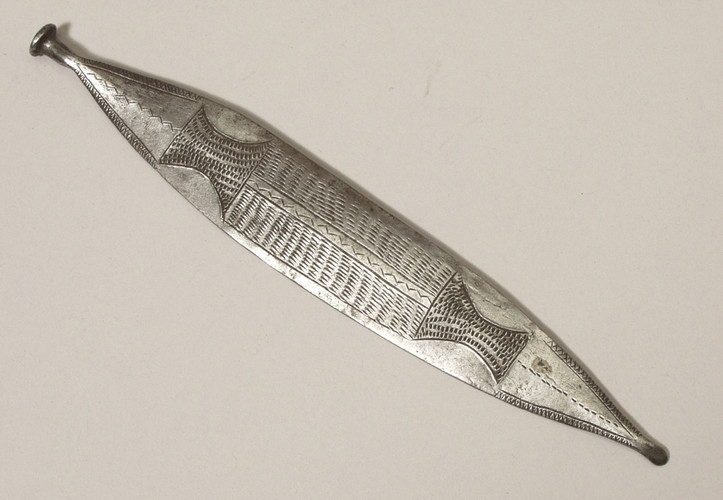 1884.63.28Lenticular iron knife with punched decoration on one surface, used by women [SM 15/06/2007]1884.63.28
 1936.10.27Harpoon gaff with detachable iron hooked head bound to a wooden stick with a plant fibre twisted retrieving line. [MJD 09/11/2009]1936.10.27
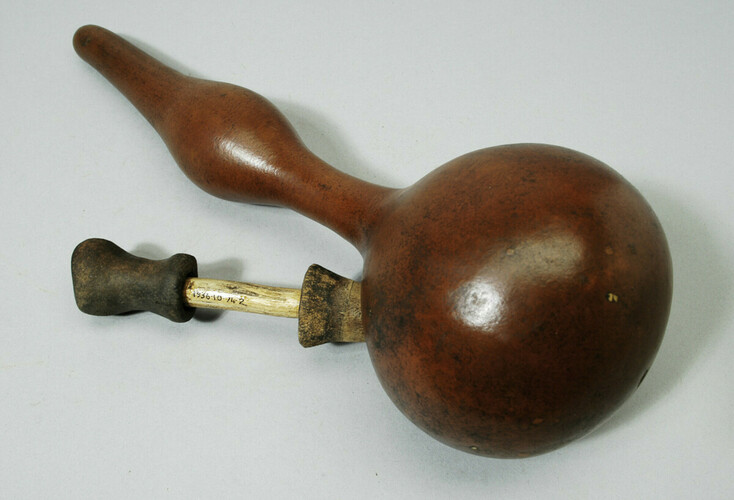 1936.10.74.1Tobacco pipe with gourd water-holder [.1] and pottery bowl on a hollow wooden stem [.2] [RTS 21/12/2004].1936.10.74.1