
- Collection type
- Object
- Description
- Pottery bowl from a tobacco pipe, fired a mottled buff colour, with incised decoration over part of the body [RTS 20/10/2004].
- Long description
- Pottery bowl from a tobacco pipe, hand made from a well levigated fabric with tiny mica inclusions, fired buff with some orange and gray mottling in patches across the surface (Pantone 4655C). This appears to have been made as two separately modelled sections, with the stem being inserted into the side of the bowl to join them together. It consists of a cylindrical stem with narrow flat topped rim, circular in section, linking into a bulbous bowl with swollen convex sided lower body and walls sloping up and in towards a broad flat collar rim with narrow flat top, somewhat irregular in thickness. Bowl and stem are joined at right angles to one another. There is a hemispherical foot with convex underside at the base of the pipe, in line with the stem. This has been decorated with 9 incised lines that run from the upper edge, which has been tooled to delineate it from the bowl, to the centre of the underside. The rim collar has been decorated with incised crosshatching, applied at an oblique angle, while below, the bowl body has a single incised line running around the circumference, with four crosshatched squares pendant from it. The underside of the bowl has a larger crosshatched rectangle running across its surface. The object is complete and intact, with vertical shaving marks running along the length of the stem. It has a weight of 233.4 grams, and is 170 mm long. The top of the stem has a diameter of 23 mm, while the opening measures 13 mm across; the bowl body has a width of 58.5 mm, while the rim is 30 mm and the mouth is 24 mm wide. The base knob measures 24.8 by 24.5 mm across, and the walls of the bowl are 3 mm thick [RTS 20/10/2004].
- Geographical reference
- Cultural groups
- Nuer
- Date / Period
- Date made: Before 1936
- Date collected
- October to November 1936
- Acquisition information
- Donated: 1937
- Materials and processes
- Material Pottery, Process Handbuilt, Process Fire-Hardened, Process Incised, Process Burnished, Process Decorated
- Dimensions
- Diameter 58.5 mm bowl body, Length 170 mm, Diameter 30 mm rim, Weight 233.4 g
- Object numbers
- Accession number: 1937.34.68
- Research and responses
This object was collected during Evans-Pritchard's last period of fieldwork amongst the Nuer (see E.E. Evans-Pritchard, 1940, The Nuer). Compare this with the image of a Nuer pipe, photo 1961.8.6.
A sketch of earlier styles of Nuer pipes is published in J. & K. Petherick, 1869, Travels in Central Africa and Explorations of the Western Nile Tributaries, Vol. I, p. 119. They described the pipe of a Nuer chief from the village of Aliab as follows: "He carried a pipe with a capacious bowl; the tube is hollowed, one and a half inches in diameter; it is crammed with thin fibres of bark, like coarse hemp, which, when thoroughly saturated with nicotine, is greedily chewed by the men and married women. As a mark of respect and friendship, the quid is passed from one to another…” (Petherick 1869, 420). Domville Fife also discusses the manufacture and use of Nuer pipes, as he observed it at the village of Hillet-el-Nuer in the 1920's: "The bowl is fashioned of clay and is fitted with a reed stem about 30 inches long, which has an immense mouthpiece made of calabash. Although tobacco is largely grown locally the smoking mixture of the Nuer is composed of the almost black leaves of the swamp variety of this plant, combined with a plentiful supply of charcoal and cow dung ... Both men and women smoke these curious pipes, and are frequently seen walking along supporting them with one hand while they do their work with the other" (C.W. Domville Fife, 1927, Savage Life in the Black Sudan, pp 161-162).
It seems to be quite common to find mica mixed in with Sudanese clays. Schweinfurth noted this was the case for Bongo pottery, which he suggested made their wares very brittle; he believed this mix to be naturally occurring and that the Bongo potters did not know how to remove it from their fabrics (G. Schweinfurth, 1873, In the Heart of Africa Volume I, p. 292).
Another Nuer pipe, 1931.66.21, shares this general form, with collar-edged rim and base knob, but is of a different coloured clay and more elaborately decorated. For very similar pipe bowls, see 1937.34.66-67, also from the Nuer [RTS 2/12/2004].
Search terms: Narcotic, Pottery, Pipe, Tobacco Accessory
Further items to explore
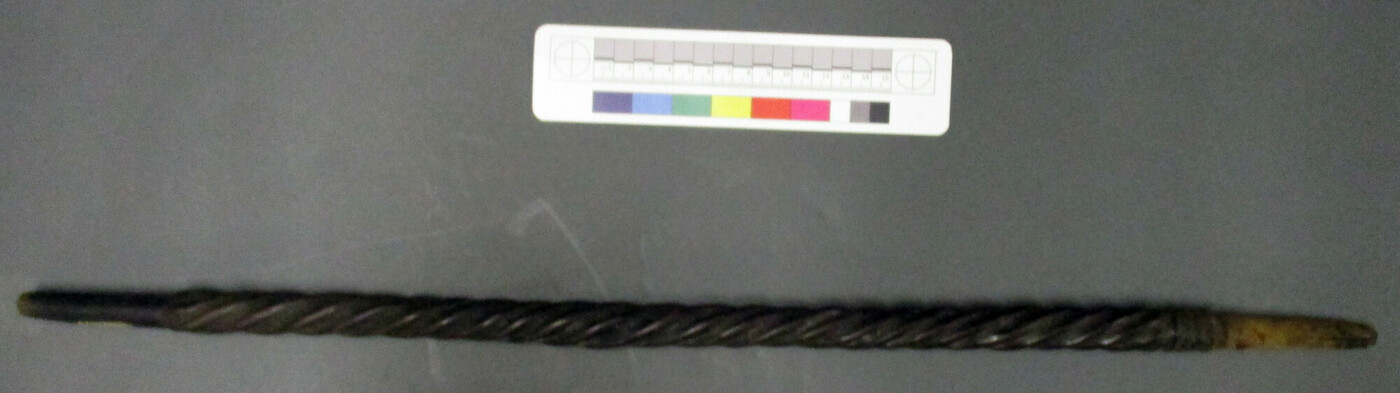 1942.13.136.2Carved wooden pipe stem, part of a pipe with black pottery pipe bowl 1942.13.136 .1. [CW [OPS Move] 21/10/2016]1942.13.136.2
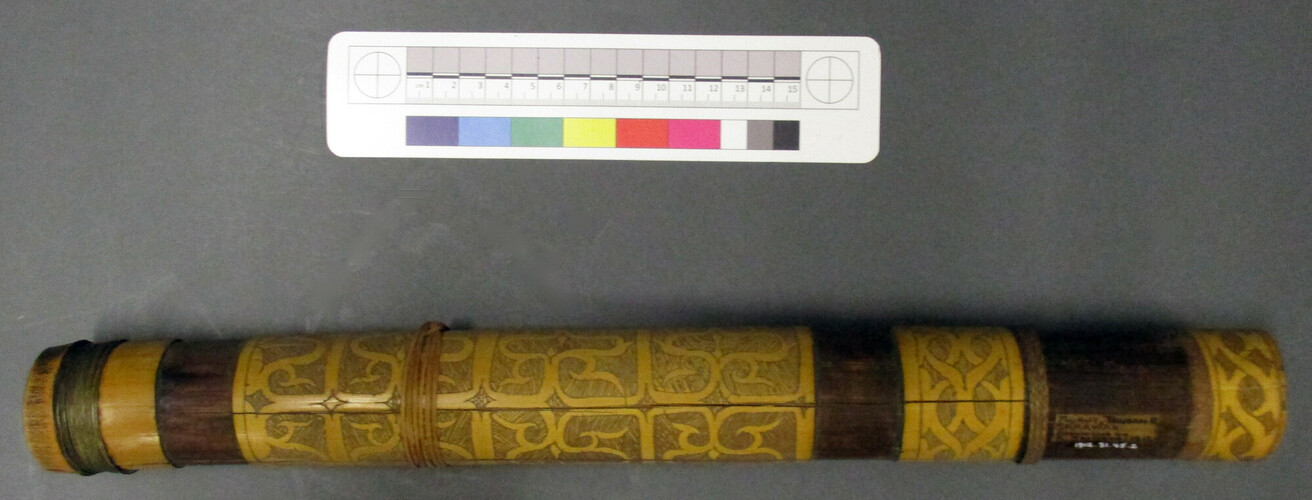 1912.31.45.2Cylindrical bamboo pipe stem, part of a pipe with carved wooden bowl. For the wooden pipe bowl see 1912.31.45 .1 [CW [OPS Move] 25/10/2016]1912.31.45.2
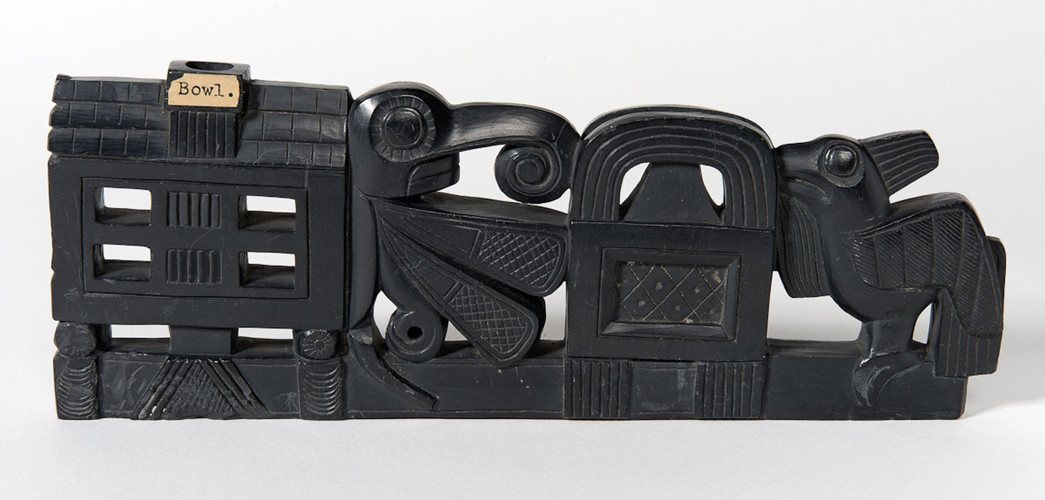 1884.101.94Argillite ship panel pipe with cabin, butterfly and rooster. [CAK 12/02/2010]1884.101.94
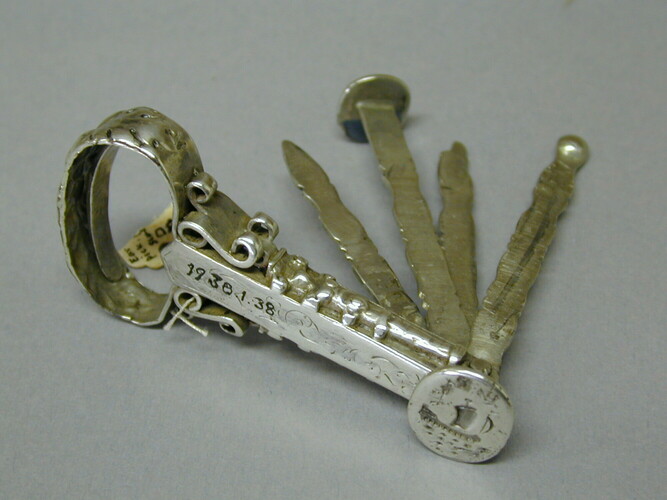 1938.1.38Combined ear scoop, tooth pick, pipe stopper and seal with a sailing boat on it. [JP 1/11/2001]1938.1.38
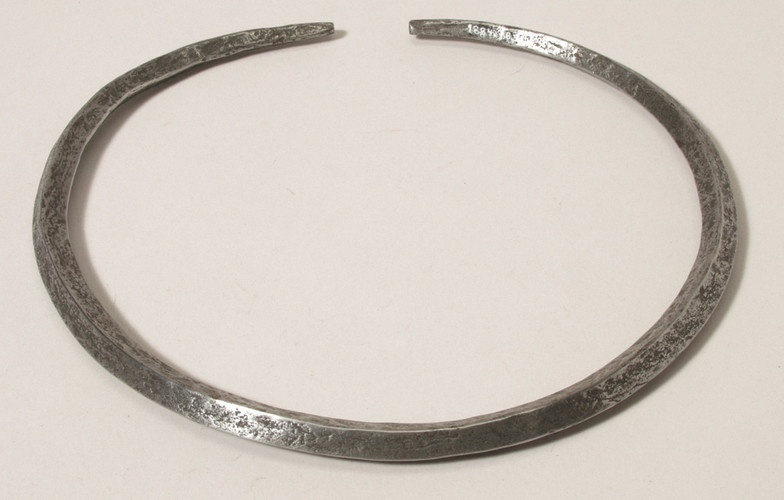 1884.78.31Heavy penannular iron torque with lozenge-shaped section and notched decoration [RTS 28/4/2004].1884.78.31
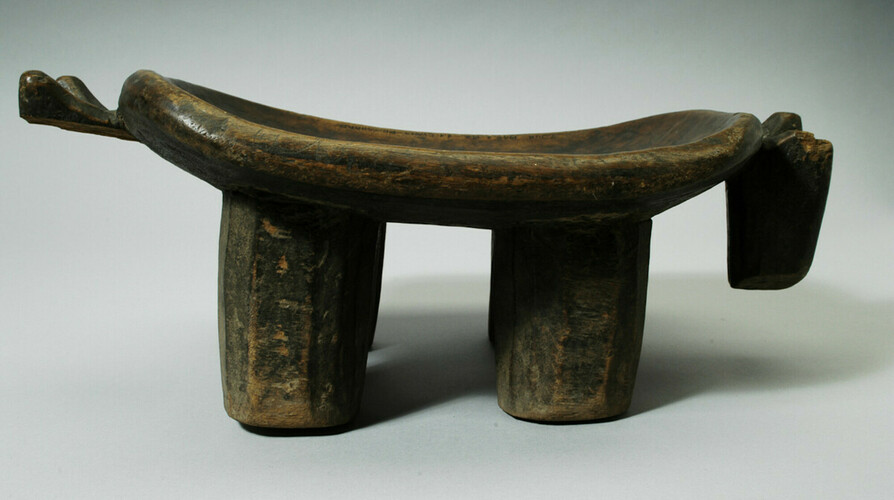 1948.2.142Sub-rectangular wooden platter with two stylised horned animal-head handles and four thick legs [RTS 13/4/2005].1948.2.142
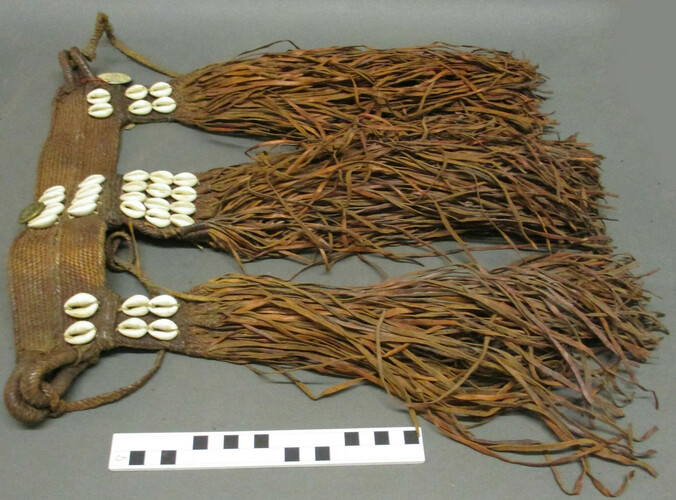 1954.5.170.1Leather trappings for head of bull, made of 3 sets of fringes on a band decorated with cowrie shells and a brass button. For the corresponding objects see [1954.5.170 .2 for woven strip with bells and 1954.5.170 .3 and .4 for the leather pieces with fringe.] [SB [OPS Move] 6/6/2017]1954.5.170.1
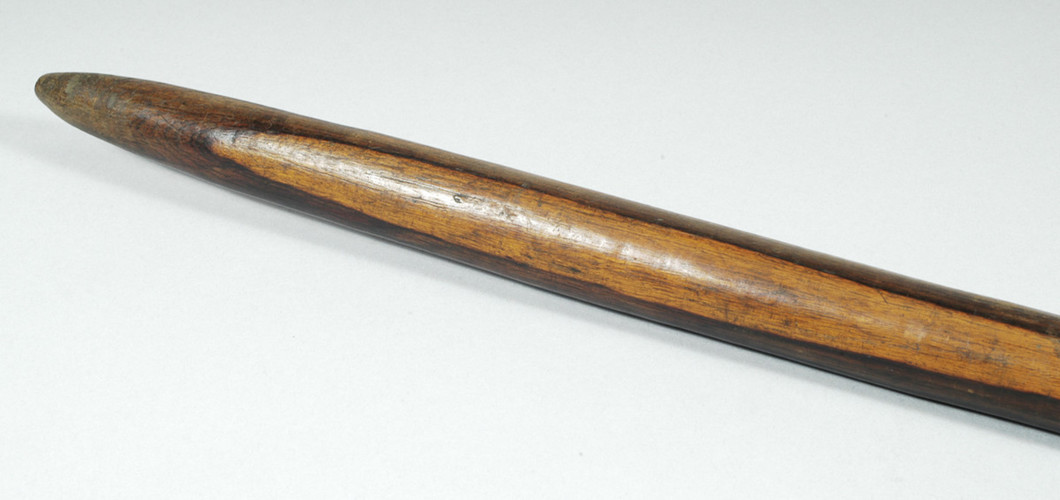 1903.16.118Narrow wooden throwing club with pointed head, grooved lower body and tapering flat butt [RTS 11/5/2005].1903.16.118