
- Collection type
- Object
- Description
- Headdress of coiled basketry covered with cocks' feathers. [LM 'DCF 2004-2006 What's Upstairs?' 6/12/2005]
- Geographical reference
- Cultural groups
- Lango
- Date / Period
- Date made: Before 1926
- Date collected
- By 1926
- Acquisition information
- Donated: 1926
- Materials and processes
- Material Plant Fibre, Material Bird Feather, Process Coiled, Process Basketry
- Dimensions
- Height: max 210 mm, Diameter: max 280 mm
- Object numbers
- Accession number: 1926.17.1
- Research and responses
Andrew Gosler and Juan Gonzalez, during a research visit, agreed that the feathers were likely cock's feathers. [ROH 07/03/2012]
Driberg discusses this type of headdress in his book on the Lango of Uganda, as a style which he believed had developed early in the nineteenth century: 'The hair of the head was allowed to grow long ... and into it were woven, aided by a plastering of clay and chalk, cock’s feathers built up into the appearance of a busby. This busby was called kono, and walo was the term used of dressing the hair in this fashion. This was more particularly, but not exclusively, a war head-dress...As hairdressing of this nature occupied several hours (and entailed a fee of one pot of beer and one chicken to the barber), the tok or the kono were not undone for months at a time... Subsequently it was found that the tok and the kono ... look almost as well even if detached from the head, and they were frequently removed by carefully shaving the hair close to the head, the hair thus forming a felt lining to the ... feather busby. The most modern development is a round wicker-worn tok ... into which the wearer's hair is worked so compactly and neatly as to form a closely woven felt cover ... This fashion of headgear does not date back for more than ten years' (J.H. Driberg, 1923, The Lango, p. 59 - 60). Note that Driberg only mentions the wickerwork frame in relation to the tok (a term used both for the crown of the head, and another style of hairdressing in which beads are threaded onto the hair). In his dictionary at the back of this volume, kono is defined as: 'Feathers of birds, feather busby'.
A type of headdress worn by the Acholi may also be related, in which a wickerwork frame that fits over the top of the head and supports a large mass of long, curving ostrich feathers (M. Trowell and K.P. Wachsmann, 1953, Tribal Crafts of Uganda, p. 195, 197, and pls 46H and 48B) [RTS 14/6/2004].
Search terms: Clothing Headgear, Ornament, Basketry, Headdress, Headgear, Head Ornament
Further items to explore
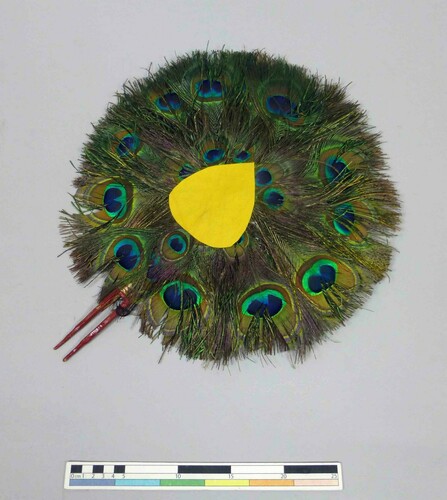 1996.3.1.4.1Peacock feather ornament [1996.3.1 .4 .1] with separate reinforced textile support [1996.3.1 .4 .2] to be attached to the very top of Black Hat Dancer's hat [1996.3.1 .1].[FB 02/12/2014]1996.3.1.4.1
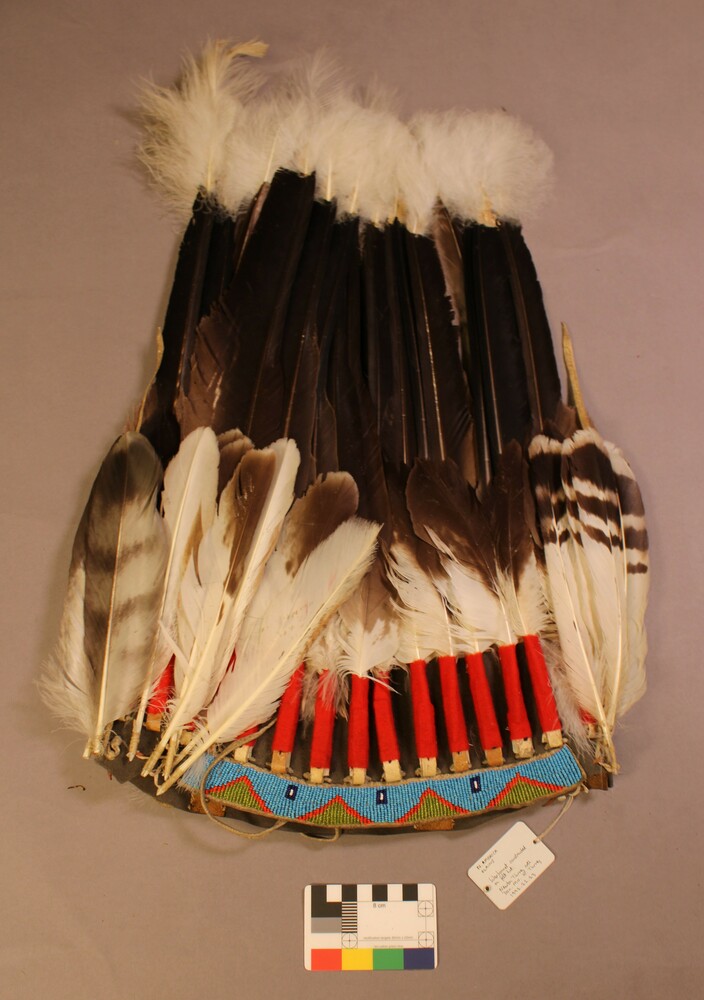 1992.22.23Warbonnet1992.22.23
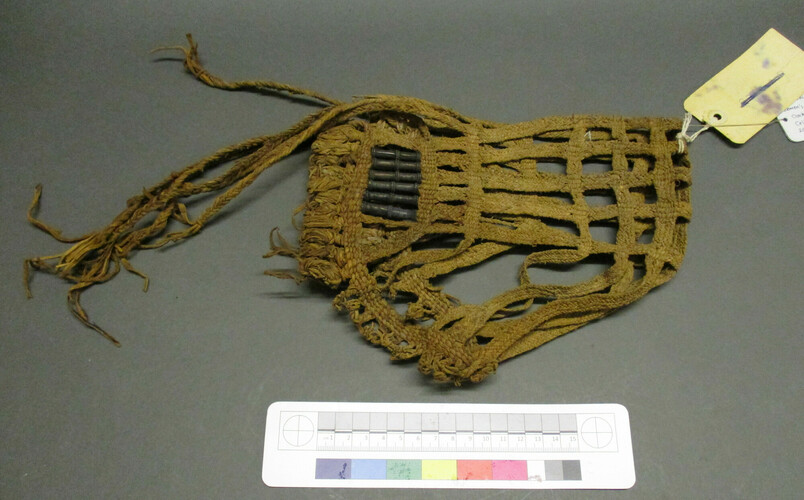 2003.11.37Woman's headdress made out of goat skin and silver coils. [RJ 14/3/2003]2003.11.37
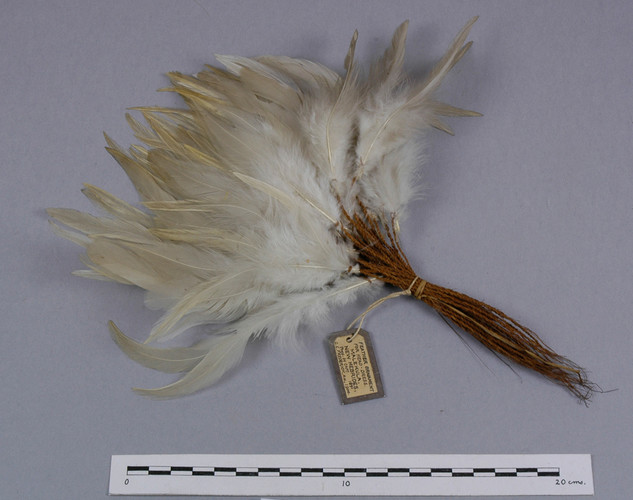 1900.49.13Head ornament of grey and white feathers tied to lengths of twisted plant fibre and bound into a bundle with a strip of ?dried grass [SM 10/06/2008]1900.49.13
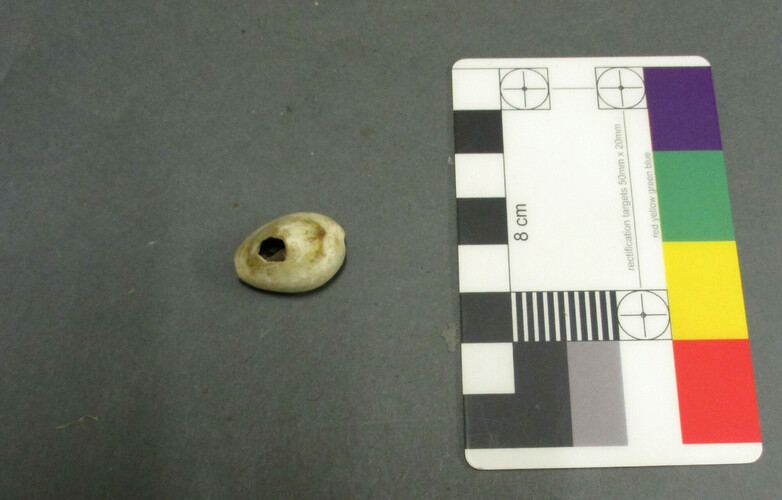 2017.121.18Cowrie shell. Part of a rainmakers outfit. [FB 1/6/2017]2017.121.18
 1932.24.3Length of hide strip, twisted so that the hair stands out forming a spiral fringe.1932.24.3
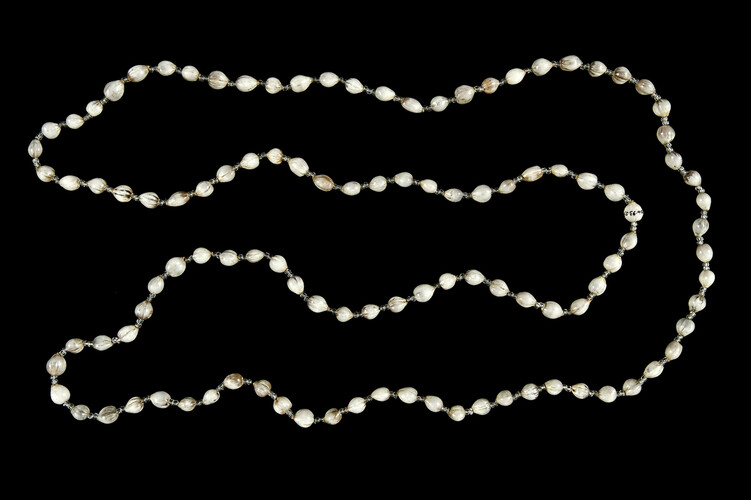 2006.93.27Neck ornament of plant seeds and clear glass seed beads, strung on ?fishing wire. Worn by young men during circumcision ceremonies. [MdeA 22/01/2008]2006.93.27
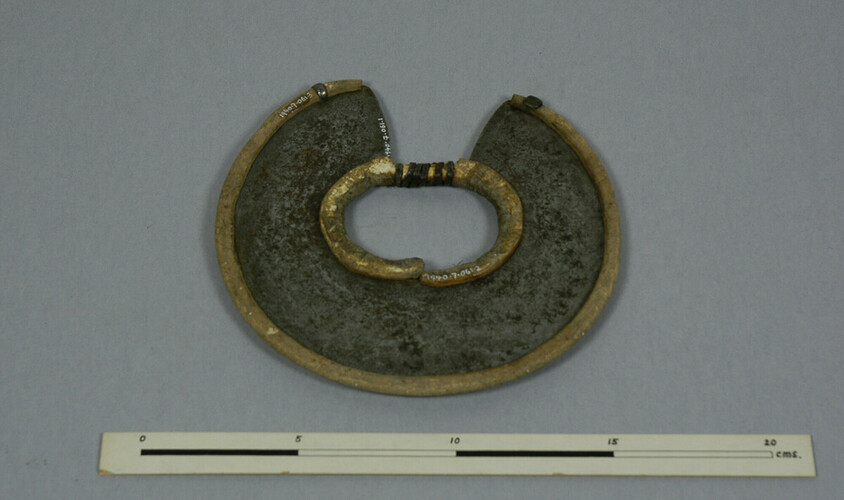 1940.7.061.1Circular iron wrist knife [.1] with hide inner sheath with iron binding [.2] and outer sheath with iron and brass clamps [.3] [RTS 1/3/2005].1940.7.061.1