
- Collection type
- Object
- Description
- Sword [.1] with straight single edged blade and wooden hilt, in a silver mounted, open wooden sheath [.2] [SM 19/11/2007]
- Long description
- Sword [.1] with straight single edged blade and wooden hilt, in a silver mounted, open wooden sheath [.2]. The hilt has a slight wooden guard and a grip that is bound with bands of silver wire. The sheath is made from a single piece of wood. It is slightly flared towards the tip, with two silver bands to hold the sword in place. These bands are decorated with three turquoise beads set into each. The tip is trimmed with a strip of copper alloy and has a panel of decorative scrolled design that resembles ?Cloisonné, but with no traces of enamel. This panel has four turquoise beads and one coral bead set into it. [SM 19/11/2007]
- Cultural groups
- Lepcha
- Date / Period
- Date made: Before 05/1929
- Date collected
- By May 1929
- Acquisition information
- Purchased: 31/05/1929
- Materials and processes
- Material Iron Metal, Material Wood Plant, Material Silver Metal, Material Metal Wire, Material Copper Alloy Metal, Material Turquoise Stone, Material Coral, Process Forged (Metal), Process Carved, Process Bound, Process Inlaid, Process Nailed, Process Cloisonné Enamelled
- Dimensions
- Width: max 53 mm, Width: max 45 mm, Length: max 545 mm, Length: max 500 mm
- Object numbers
- Accession number: 1929.84.1.1 Accession number: 1929.84.1.2
- Research and responses
The Lepcha (pop.50,000) are the indigenous people of Sikkim, broadly of Tibetan cultural origin. This is manifested in the substantially Tibetan form of this relatively unelaborated sword and scabbard. Warfare was generally uncommon among the Buddhist-Animist Lepcha, and generally practiced with bow and arrow. High quality Lepcha shortswords bear overlain decorative work in silver and brass, as well as cabochons of semi-precious stone – again, substantially Tibetan in form. More modest pieces exhibit simple brass bands holding the blade into the one-sided scabbard. Buddhist symbols can be found on swords from Nepal, Sikkim and West Bengal (Egerton, 1896: 100). Small lotus-flower rivets connote the individual’s potential to realise enlightenment and decrease karma, irrespective of the conditions of their birth – as the lotus produces a flower from waterlogged mud. Research Conducted for DCF Cutting Edge 2006/2007 [AM].
Further items to explore
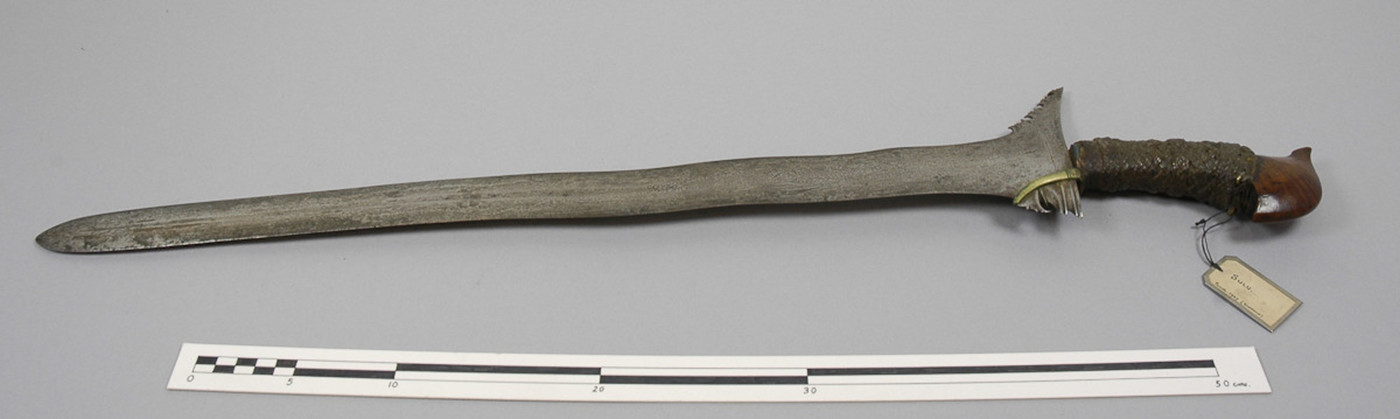 1907.72.45Sword or dagger with very slightly wavy blade with fretted projections at the hilt. The grip is wound with plaited string and seems to be varnished, the pommel is of wood and carved into a curved shape. [El.B 2/3/2007]1907.72.45
 1900.78.56.1Japanese sword [.1] with wooden sheath [.2] and hilt made and carved by an Ainu. [SM 02/04/2007]1900.78.56.1
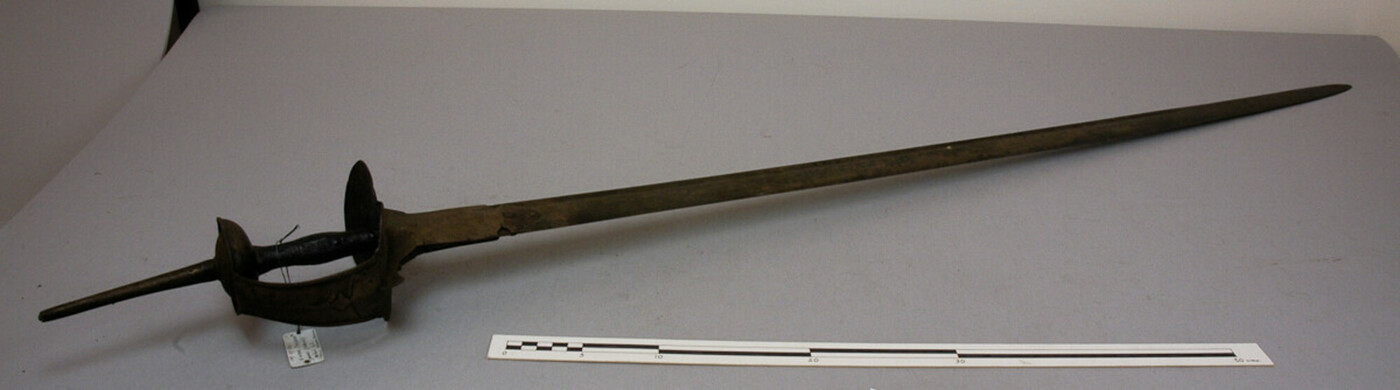 1969.29.36Sword with single edged, tapering blade and 'basket hilt' and projecting finial spike at the pommel. [SM 10/09/2007]1969.29.36
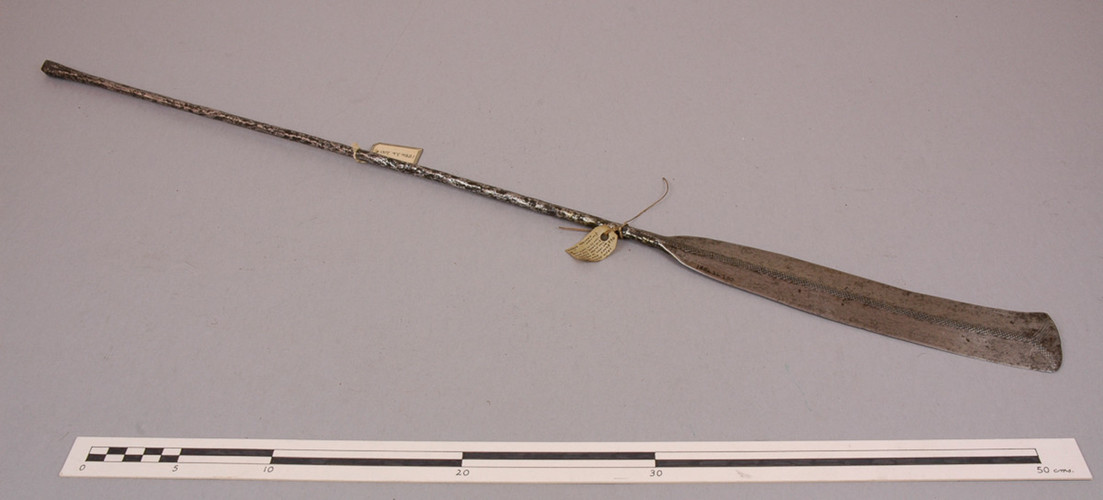 1884.24.200Iron glaive or long-handled sword, forged in one piece. Slightly curving blade with square end and cross-hatched decoration on both sides; slender rod handle. [LM 03/07/2007]1884.24.200