
- Collection type
- Object
- Description
- Bow harp with nine surviving strings and rectangular hide-covered resonator, with letters cut into surface.
- Long description
- Very large bow harp, consisting of a long curved neck carved from an orangey brown branch, stripped of its surface bark (Pantone 729C). This has a faceted head, and at its base slots into a hole cut halfway down the side of a wooden soundbox. The neck has been perforated with a row of 10 holes, bored rather than burnt through the wood. Shallow grooves have been cut around the back of the neck, behind all but the uppermost hole; it is not clear if this is a side-effect of the manufacturing process, a guide to marking out the holes, or to position the string, which would usually stretch across this area. The eighth hole from the top is missing its peg; the remainder have been fitted with solid tuning pegs carved from wood. One peg is carved from an orangey brown plywood, similar to that used for harp 1994.60.2 (Pantone 729C), the other are made from a more yellow coloured wood (Pantone 7508C). These are roughly paddle-shaped, with flat tops, narrow rectangular bodies then a cylindrical, peg-like base that fits through the tuning hole. Notches have been cut into either side of the upper body, providing recesses that have been used to position the ends of the string. The harp body has been carved from a piece of yellow wood (Pantone 7508C), and consists of a flat-topped rim, upright sides and a flat base. The body is almost rectangular in plan view, with one curving and one straight end. A piece of pale yellow animal hide (Pantone 7508C) with white hair on the surface has been stretched tightly over the mouth of this bowl and down over the sides, forming the sound table; a similar piece covers the base. Both pieces have been perforated around their edges, and stitched together using narrow hide strips that form a zigzag pattern around the sides of the soundbox with a horizontal line of binding around the circumference. Two large sound holes have been cut in opposite corners of the sound table, one circular, one almost triangular, with a row of 10 string holes running down the middle. Both ends of the string carrier are visible; this has been carved from a narrow piece of yellow bamboo or cane (Pantone 7508C), lentoid-shaped in section, with part of one node visible; this extends from beyond the front of the sound box, passing through a slot cut in the sound table, then runs beneath the line of string holes, where it is used to secure the strings, before emerging out through the hide via another slot at back. An inscription has been scratched into the sound table, on either side of the string holes, with two rows of letters that must be read in opposite directions. One side reads IWA[...]K - the second last letter has the top part visible, and may be a Y - its lower body has been removed by the cutting out of the sound hole. The other side possibly reads OKOY[...]I - the first letter could be a D, rather than an O, while the end of the Y and possibly part of the last letter has also been lost by the cutting out of the sound hole on this side. The strings have been made from lengths of a pale cream coloured twisted nylon (Pantone 7401C), and have been knotted around the waisted part of each tuning peg, then wound one or more times around the shaft, before passing around the front of the neck, over the peg base, then down towards the soundbox, where they pass through the string holes and pierced sound carrier, to be tied around short pieces of wood that hold them securely on the other side. One of the middle strings is missing. Apart from the missing string and peg, the harp is complete, although there is a crack in the lower part of the soundbox bowl. It has a weight in excess of 1000 grams. It measures 1080 mm from the top of the neck to the end of the soundbox; the neck has a diameter of 42 mm; a typical tuning peg has a head diameter of 23 by 13 mm, is 153 mm long (some vary in length), and has a base diameter of 8 mm. The soundbox is 435 mm long, with a maximum width of 165 mm, and is 180 mm high; the sound holes have a width of 45 and 65 mm respectively, the string holes have a diameter of 6 mm and the string a diameter of 2 mm [RTS 23/9/2005].
- Geographical reference
- Cultural groups
- Acholi
- Date / Period
- Date made: 1987
- Date collected
- 1987
- Acquisition information
- Donated: 09/12/1994
- Materials and processes
- Material Wood Plant, Material Animal Hide Skin, Material Nylon Synthetic, Process Carved, Process Perforated, Process Stretched, Process Covered, Process Strung, Process Incised, Process Written
- Dimensions
- Length: max 1230 mm, Width: max 430 mm, Weight 1000 g
- Object numbers
- Accession number: 1994.60.1
- Research and responses
The plywood tuning peg is made from the same material as the tuning pegs used for 1994.60.2, and is of similar dimensions; it seems quite likely that this harp was made in the same workshop, perhaps even by the same craftsman. Note that the other harp had 2 peg holes that were never used; was this a left over peg? However note that the remaining pegs on 1994.60.1 have a different design, with a groove cut to seat the string ends [RTS 23/9/2005].
Search terms: Music, Writing, Harp, Musical Instrument, Inscription
Further items to explore
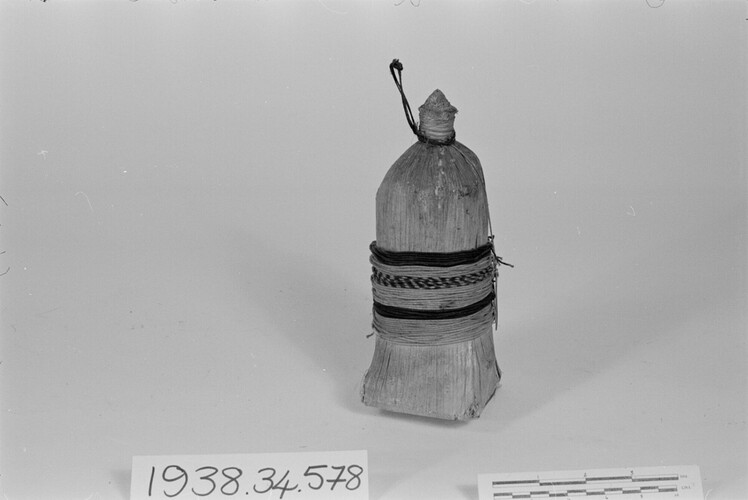 1938.34.578.1-88 harp strings wound round palm-leaf parcel1938.34.578.1-8
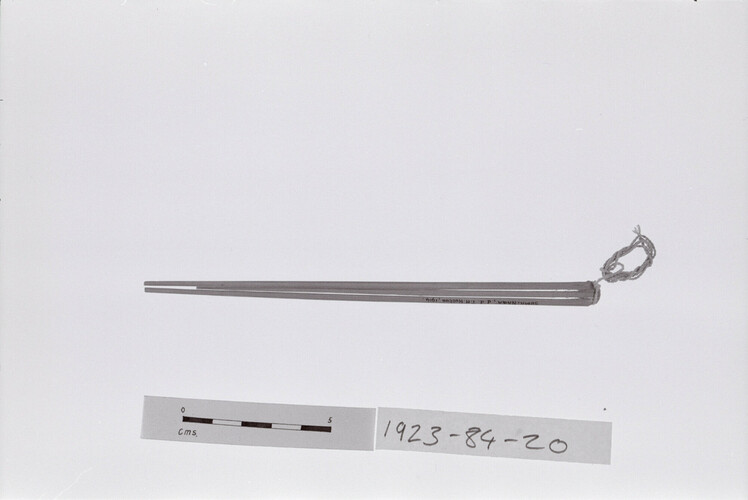 1923.84.20Jew's-harp.1923.84.20
 1923.84.23Jews-harp.1923.84.23
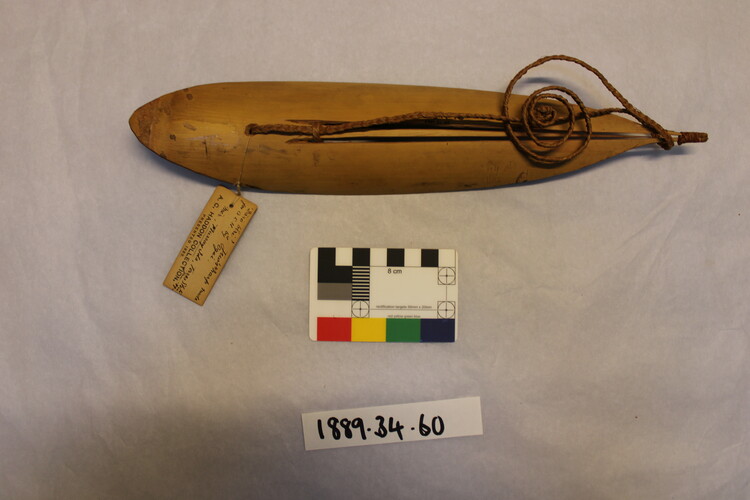 1889.34.60Jew’s harp1889.34.60
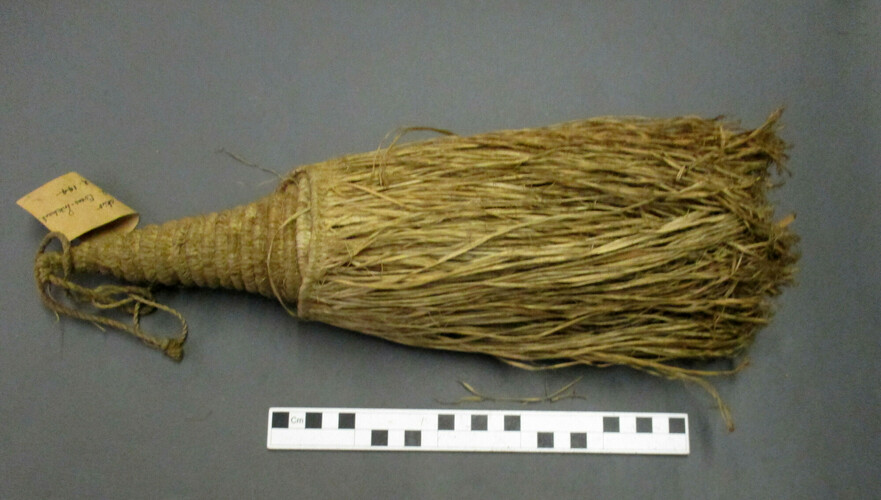 1948.2.144Fringed skirt made from split plant fibre. [FB 26/02/2015]1948.2.144
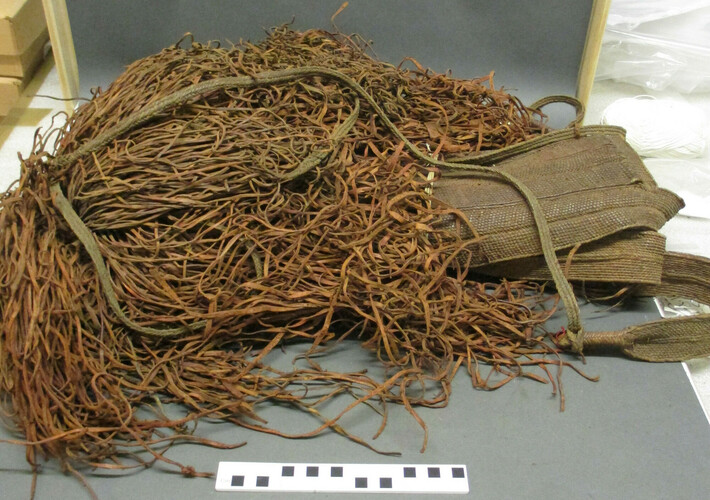 1954.5.170.3Leather piece with long fringe, probably for bull's flanks. This object is tied by string to [1954.5.170 .4]. For the corresponding objects see [1954.5.170 .1 for the leather trappings, 1954.5.170 .2 for woven strip with bells and 1954.5.170 .4 for the other leather piece with fringe.] [SB [OPS Move] 6/6/2017]1954.5.170.3
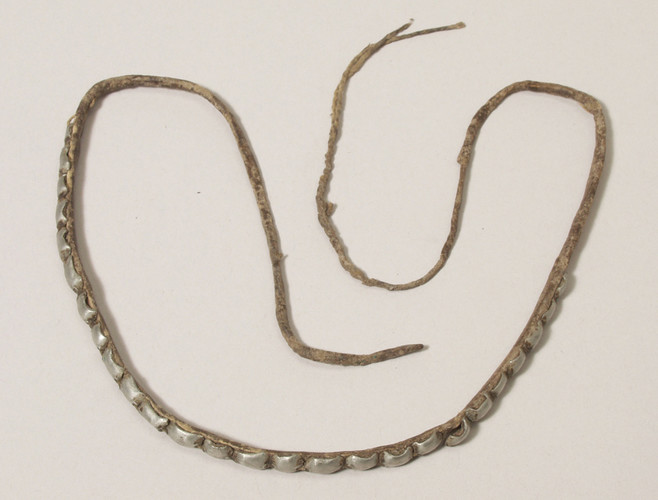 1903.16.120Necklet made from a narrow leather strip with aluminium or tin segments sewn onto one side [RTS 29/3/2004].1903.16.120
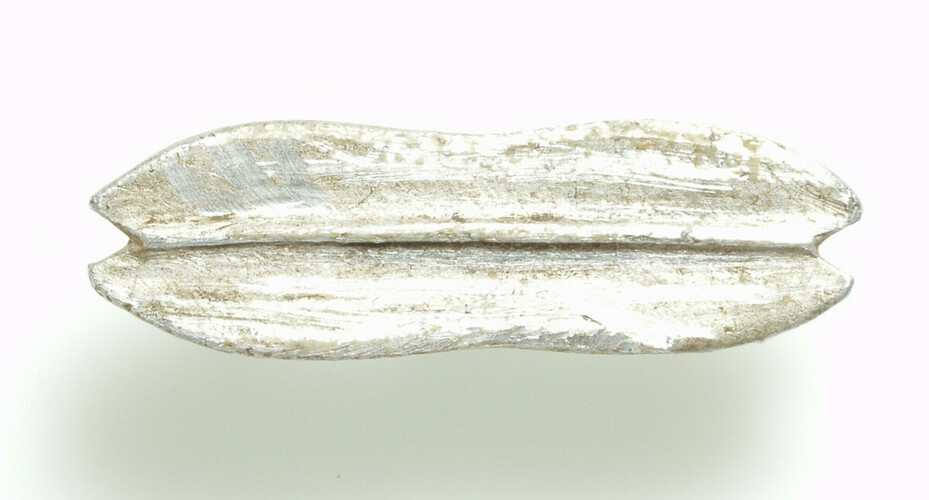 1979.20.158.1Aluminium or tin ear stud with three-pronged base, part of a pair [RTS 12/5/2004].1979.20.158.1