
- Collection type
- Object
- Description
- Figure, with pointed arm (one arm broken), pointed nose and a long straight body. Painted all over with linear designs. Very similar to previous entry 1966.32.8. [MdeA]16/9/98
- Long description
- Figure, with pointed arm (one arm broken), pointed nose and a long straight body. Painted all over with linear designs. Very similar to previous entry 1966.32.8. Flat, with a flared base. Extends at the top of the head to form a spiral, possibly depicting a curled hairstyle. The top of the head flares to form a bowl-like head-dress. [IL [OPS Move] 19/7/2017]
- Person
- Field collector Denis Alfred Jex Buxton
- PRM source The Estate of Denis Alfred Jex Buxton
- PRM source Cecilia Rachel Buxton
- Date / Period
- Date made: 700-600 BC Archaeological period: Iron Age Archaic Greek
- Date collected
- By 1966
- Acquisition information
- Donated: 1966
- Materials and processes
- Material Terracotta Pottery, Material Pigment, Process Thrown, Process Painted
- Dimensions
- Depth: max 36 mm, Width: max 60 mm, Height: max 162 mm
- Object numbers
- Accession number: 1966.32.9 Other numbers: 524
- Research and responses
This object was examined by Dr Yannis Galanakis, Ashmolean Museum, as part of the fell funded project Characterizing the World Archaeology Collections. He advised that it was a plank figurine that was Archaic in date (seventh to sixth century BC). Some of the plank figurines preserve traces of coloured decoration. At the time of their collection these were known as ‘Papádes’, so-called because of their supposed resemblance to Greek Orthodox priests, despite the fact that they are clearly female figures (see e.g. WALTERS, H.B. 1905: History of Ancient Pottery. London, 290; BURROWS, R. M. AND URE, P.N. 1908: ‘Excavations at Rhitsóna in Boeotia’, The Annual of the British School at Athens 14, 226-318, 297. [AS 11/05/2010]
See RDF for donor's typed list of material which was to go to the Pitt Rivers and of the material for the Ashmolean Museum. This list gives the donor's own numbers for the objects and also a description and provenance of the object. [MdeA]16/9/98
Search terms: Figure, Pottery, Religion, Religious Object
Further items to explore
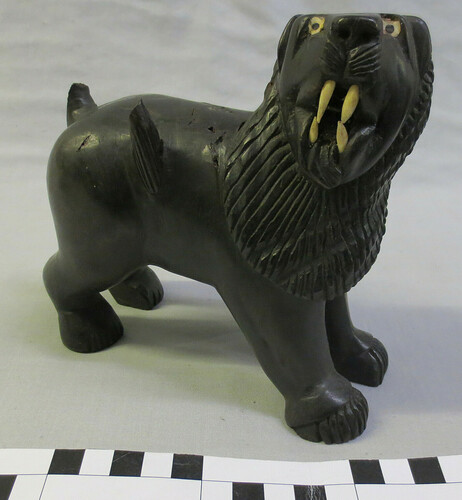 1954.9.192Figure of lion, made of wood with bone teeth and eyes. The features of the mane have been carved. [PR [OPS move] 22/3/2017]1954.9.192
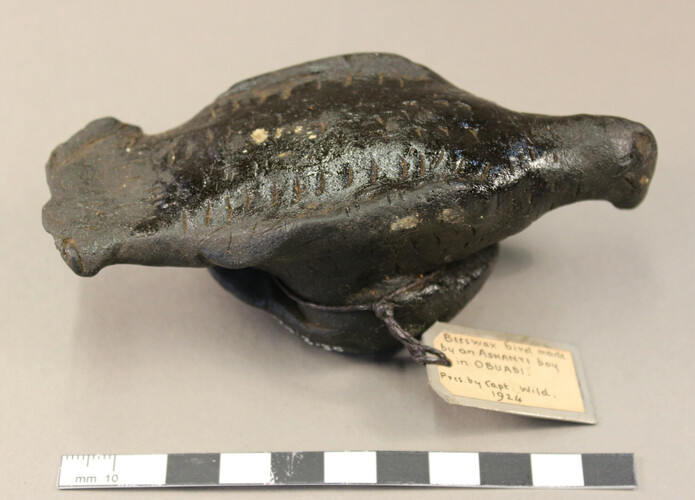 1924.2.35Beeswax model of a bird.1924.2.35
 1921.75.44.3Tiny pendant in the form of a fly. The stone is white alabaster. [MJD (Verve) 30/3/2016]1921.75.44.3
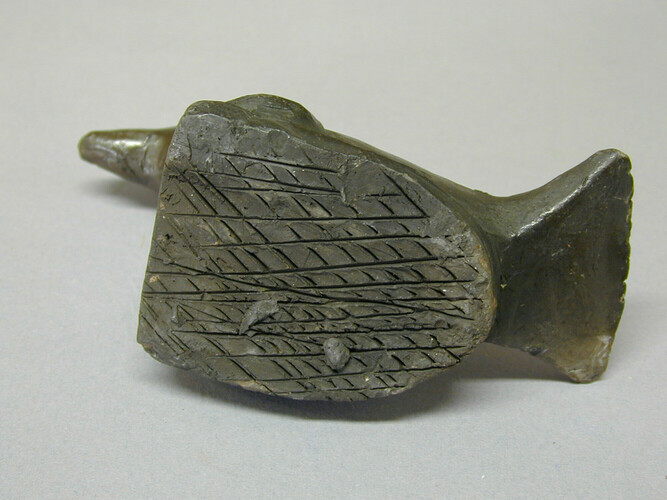 1884.70.47Black foot scraper in the form of a bird. [JP 23/10/2001]1884.70.47
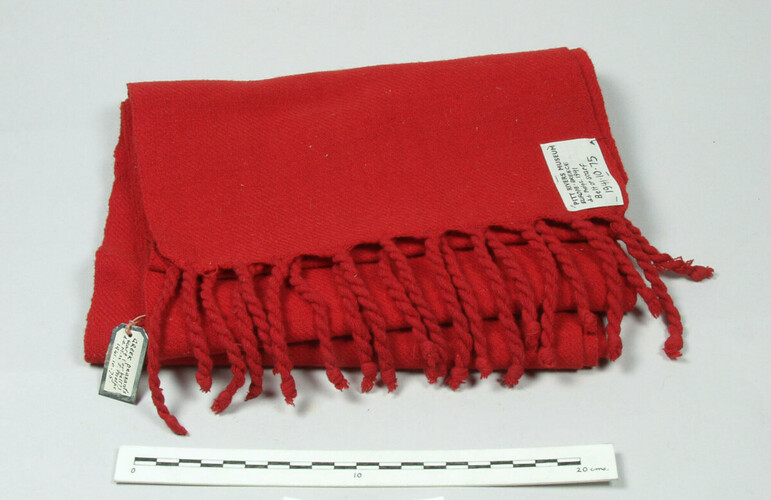 1941.10.75Belt or scarf, woven of bright red wool, with fringe of twisted yarn [L.Ph 'DCF 2004-2006 What's Upstairs?' 25/4/2005]1941.10.75
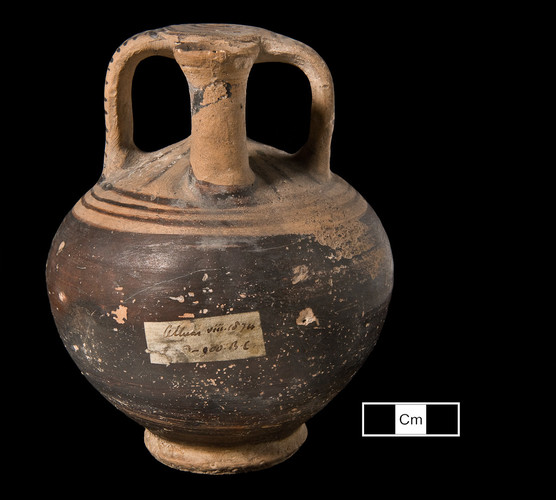 1887.1.48Ceramic stirrup jar with two handles; from Greece. Bronze Age (Late Helladic IIIC/Late-/Sub-Mycenaean) in date. [Dan Hicks 02/05/2012]1887.1.48
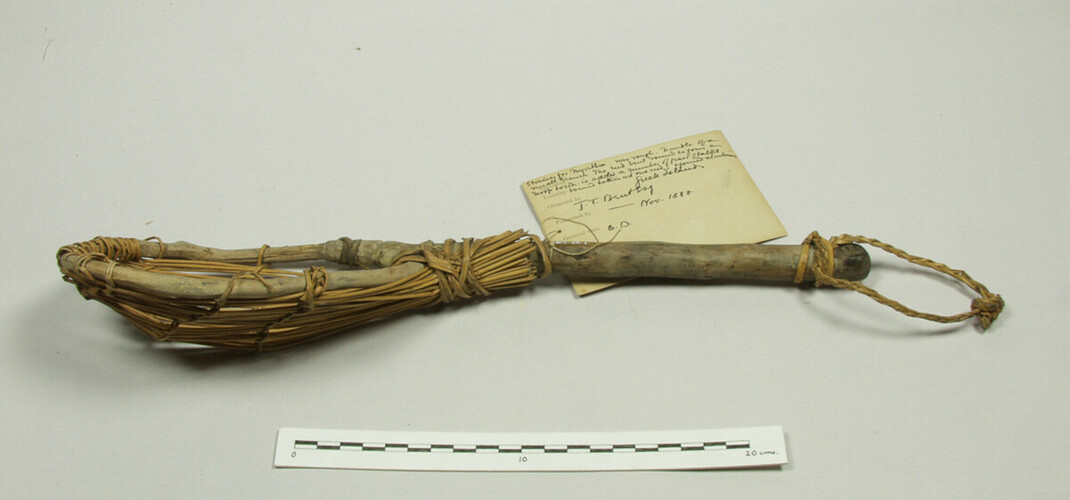 2005.68.1Strainer made of split branch netted at one end with lengths of plant fibre. Handle has length of plaited plant fibre tied at end [L.Ph 'DCF 2004-2006 What's Upstairs?' 15/4/2005]2005.68.1
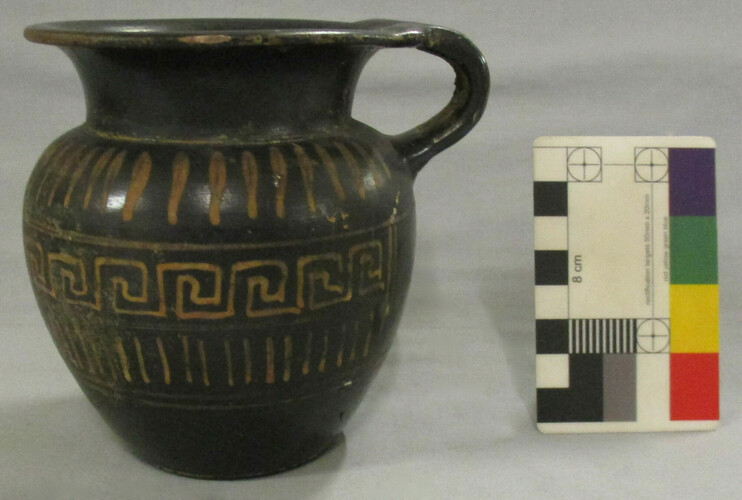 1884.64.7Black ware pottery vessel (oinochoe) with a flat base, rounded body and an inverted neck with a flared rim. [ASh [OPS move] 27/04/2016]1884.64.7