
- Collection type
- Object
- Description
- Carving consisting of two tiers of figures on a circular base. [MdeA / CW 30 4 98]
- Long description
- Carving consisting of two tiers of figures on a circular base. The bottom tier has four standing figures. One of these figures holds a small child, another has its arms crossed over its chest, another has breasts and the last has signs of male genitalia and appears to be carrying something. On the upper tier is a large upright male figure wearing a loincloth and a hat decorated with red fabric. Facing him is a reclining female figure holding a staff (which is nailed to her hand) and a ?fan. The large male figure rests his elbows on 2 standing figures, one male and one female. In front of the figure's right arm is another female figure, with hands held together at the chest. In front of the figure's left arm is a male figure, hunched forward, with a large object in his mouth. All the figures show signs of faded white pigment and black specks of decoration. The large figure holds a tusk-like object in its right hand and a ?staff in its left. [MdeA / CW 30 4 98].
- Cultural groups
- Igbo
- Date / Period
- Date made: Before 1888
- Date collected
- 1888
- Acquisition information
- Donated: 1902
- Materials and processes
- Material Wood Plant, Material Pigment, Material Textile, Process Carved, Process Painted, Process Tied, Process Woven
- Dimensions
- Height: max 1020 mm, Diameter: max 303 mm base, Depth: max 305 mm, Width: max 345 mm, Weight 8400 g
- Object numbers
- Accession number: 1902.9.30
- Associated publications
- Illustrated in black and white as Figure 11 on page 52 of 'Fieldwork and the Text Preceding the (Question) Mark: Prolegomena for a Response to Mudimbe's "African Art as a Question Mark"', by Ikem Stanley Okoye, in Res: Anthropology and Aesthetics, no. 39 (Spring 2001), pp. 41-60. Caption (with image, same page) reads: 'Side view of shrine altar/object from Asaba. A similar division into dual registers is apparent here, though several enslaved figures have made their way to the upper level as supports to the ancestral/deified figure wearing a hat. Pitt Rivers Museum, PRM 1902.9.30: "National idol of the people of Asaba" given to the Museum by the Reverend William Allan in 1902. Photograph: Ikem Stanley Okoye. Courtesy of Pitt Rivers Museum, University of Oxford.' For Okoye's discussion of the significance of 'dual registers', see pages 51-2. [JC 25 8 2004, 25 7 2008, 31 7 2008]
Search terms: Figure, Religion, Religious Object
Further items to explore
 1985.52.1113.2Amulet, lid for an oval-shaped silk brocade reliquary, with a base [.1] containing a figure of the Virgin Mary, textile relics and saint names. [ACA 02/05/2012]1985.52.1113.2
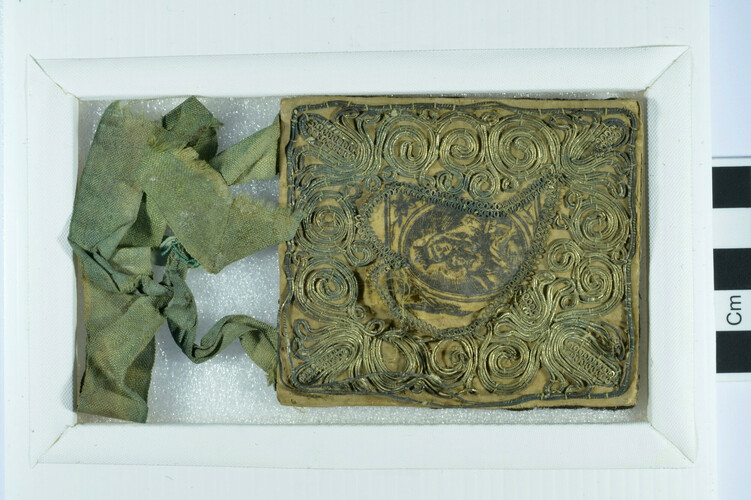 1985.52.504Amulet, green textile scapular, embroidered with metal thread, with a heart shape in the centre and the Virgin Mary printed on textile. [ACA 19/03/2012]1985.52.504
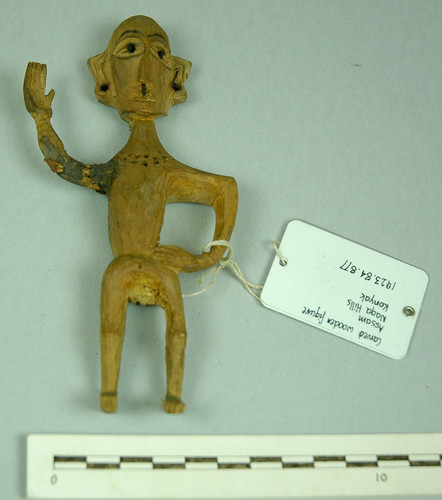 1923.84.877Standing carved wooden figure with pyroengraved dots forming necklace. Figure's right hand has been reattached with resin. [MJD 03/09/2009]1923.84.877
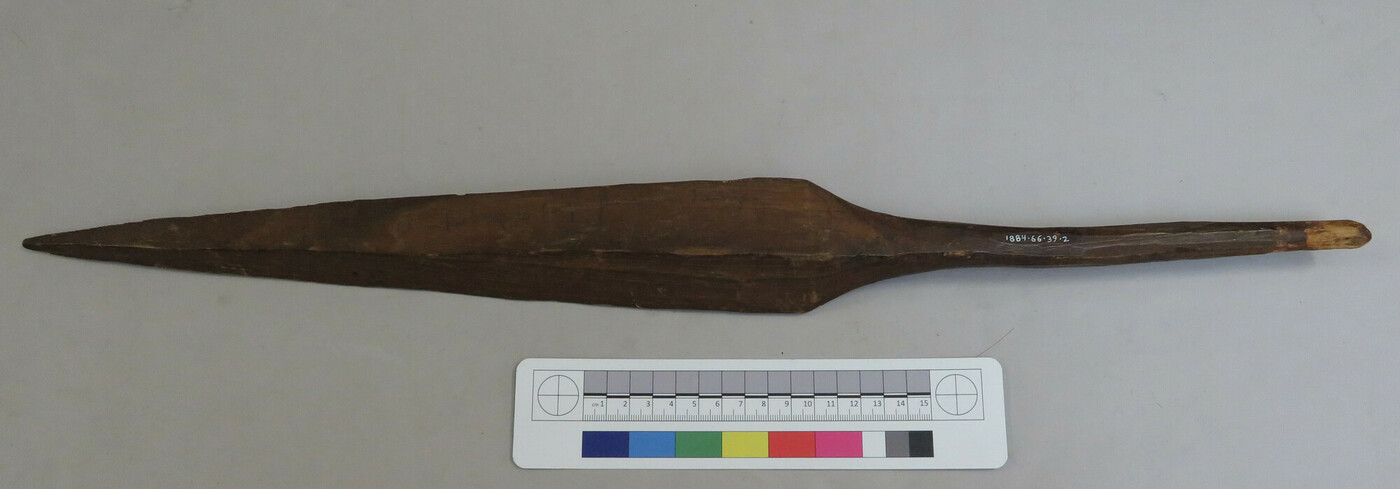 1884.66.39.2Wooden spear for carved figure. [For figure see entry 1884.66.39.1] [SM 09/03/2011]1884.66.39.2
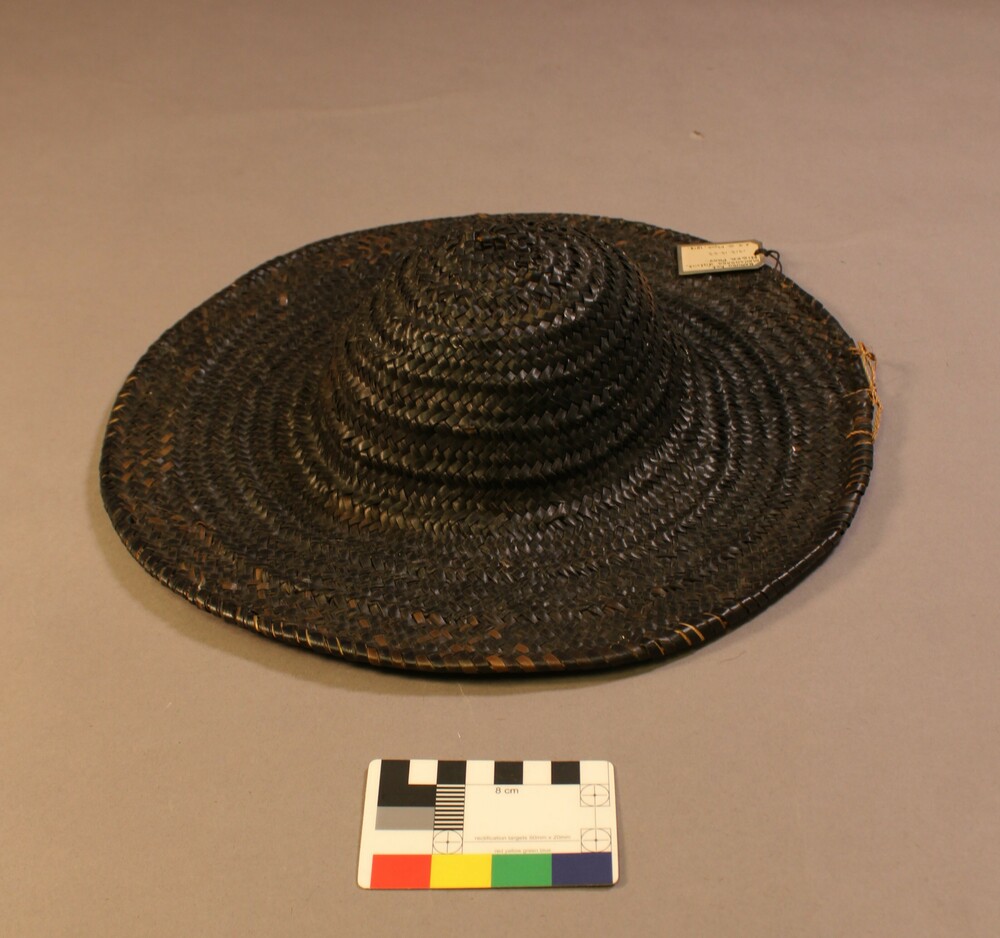 1913.14.43Palm-leaf hat.1913.14.43
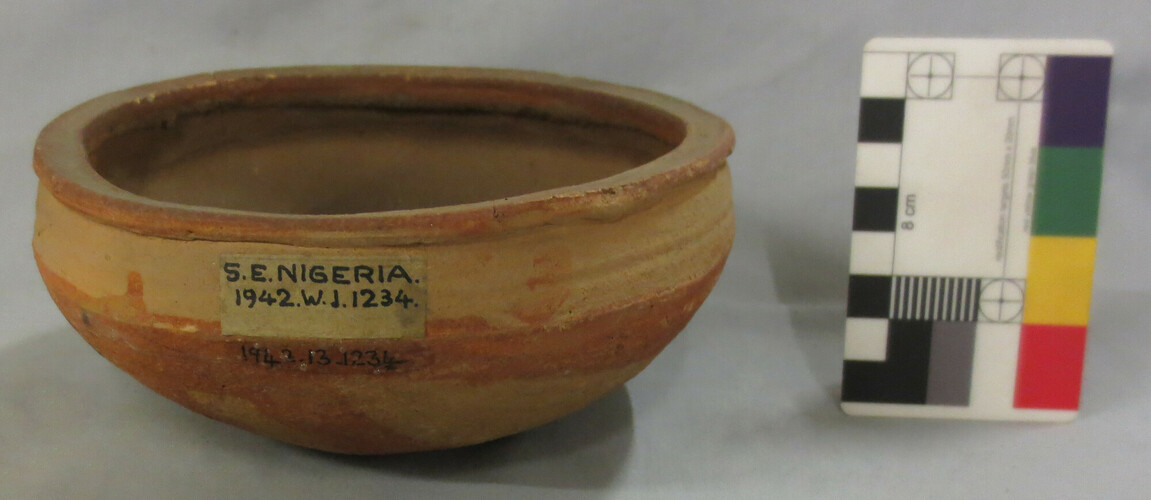 1942.13.1234Circular bowl of red pottery and decorated with painted red stripes. The rim is cracked.1942.13.1234
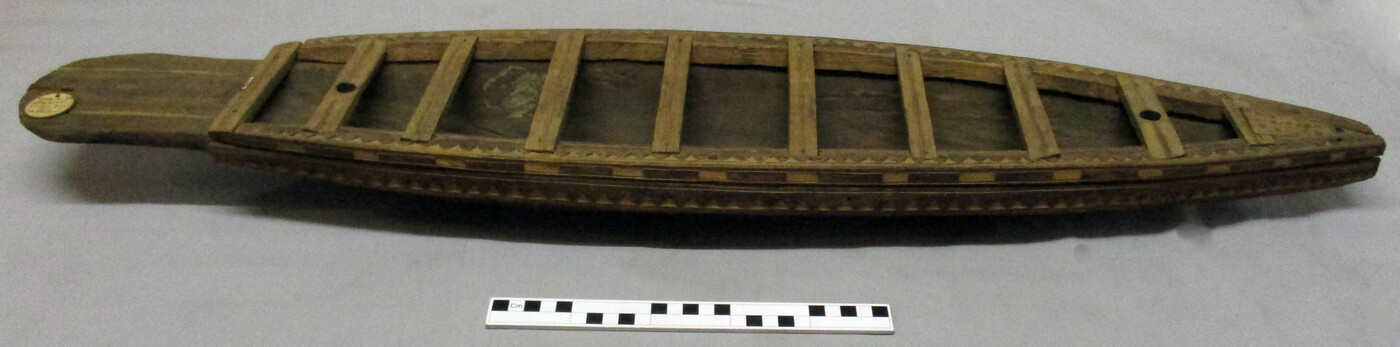 1946.2.34Carved model of a river boat with ten 'benches' across and decorated with carving in geometric shapes, including zig-zags and squares. Perforations in the end benches. [ASh [OPS move] 07/09/2016]1946.2.34
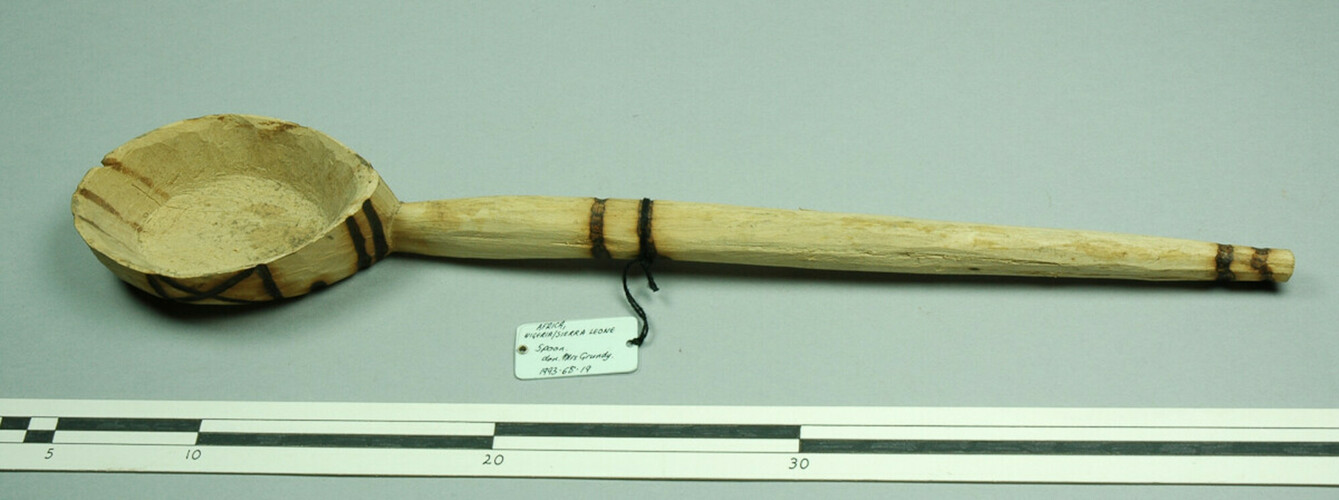 1993.68.19Wooden spoon with oval bowl, decorated with burnt lines. [El.B 'DCF 2004-2006 What's Upstairs?' 15/3/2006]1993.68.19