- Collection type
- Object
- Description
- Wooden spear for carved figure. [For figure see entry 1884.66.39.1] [SM 09/03/2011]
- Long description
- Wooden spear for carved figure. [For figure see entry 1884.66.39.1] Carved spear, with a roughly cylindrical handle, and a pointed head with a lozenge shaped section. Stained a dark brown colour. [IL [OPS Move] 17/7/2017]
- Geographical reference
- Unknown
- Date / Period
- Date made: Before 1884
- Date collected
- Prior to 1884
- Acquisition information
- Donated: 1884
Found unentered: Unknown date
- Dimensions
- Depth: max 35 mm, Width: max 58 mm, Length: max 590 mm
- Object numbers
- Accession number: 1884.66.39.2
PR no.: 2/ 10750
- Associated publications
- This object features in the Museum's audio tour produced in 2010. Transcription as follows: "This large figure is from Burma, now officially known as the Union of Myanmar. It was acquired by General Pitt Rivers, probably at auction, sometime before 1880. It is carved from teak and its twin stands on the opposite side of the platform. Together they guard the entrance to the Museum, much as they would have done in their original context. For they are bilu, ogre- or gargoyle-like beings which would have stood on either side of a doorway to a pagoda or temple. Most Buddhist temples have a pair of guardians at the entrance but this ogre belongs to Burmese Buddhism, which combines Buddhism with elements of animism. Ogres have been a Burmese architectural feature for at least a thousand years dating back to the Bagan period in Burma’s history. This ‘palace bilu’ is recreated in puppet plays where he is distinguished from the less civilized ‘forest bilu’ by his spiked headdress and aristocratic clothes. He holds a ceremonial sword called a dao and has a hairy and ugly face with very visible long tusk-like teeth. This menacing appearance is to ward off evil spirits and keep the temple grounds free of demons and thieves. However, the lotus flower on his breast reveals a slightly softer side to this mythical being –he is a strict vegetarian who only eats flowers." (Written by Helen Hales) References: Objects PRM, notes by Sanda Dudley; Spiro, M. E., Buddhism and Society: a great tradition and its Burmese vicissitudes, Los Angeles/Berkeley; University of California Press (1970), p. 203; Falconer, J. and L. Invernizzi Tettoni, Burmese design and architecture, Singapore: Periplus Publishing (2000), p. 152 [HH 26/10/2010]

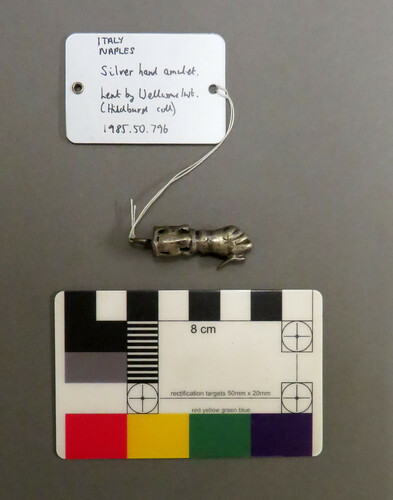 1985.50.796Hand amulet, in the form of a clasped hand holding an unidentified crescent shaped object. [CW [OPS move] 8/9/2017]1985.50.796
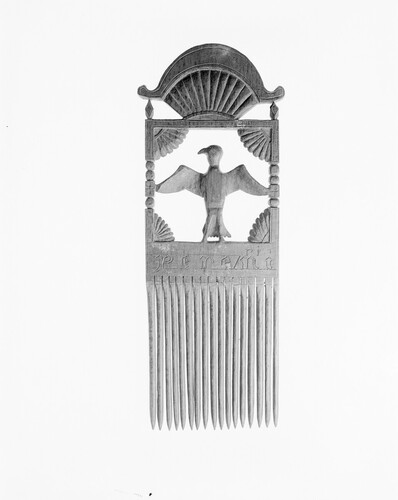 1937.45.2Carved wooden comb with bird figure. Inscribed on one side: 'ri Pere/ni'. [LM 'DCF 2004-2006 What's Upstairs?' 8/2/2006]1937.45.2
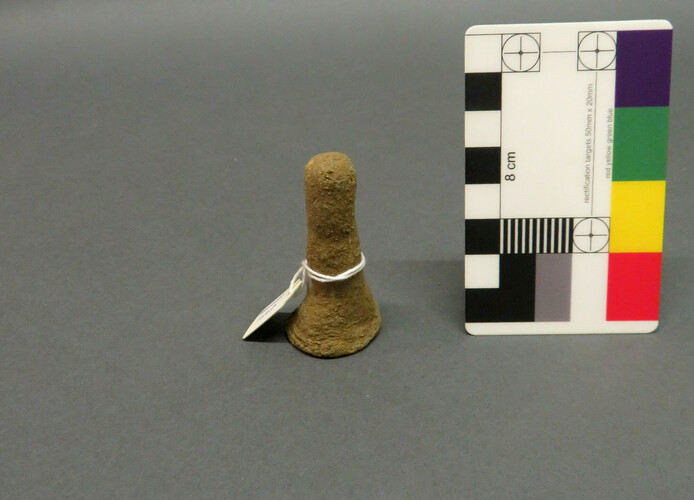 1958.11.3.93Clay Mkaramo figure. An off-centre, tapering cylinder with a rounded head and wide base. Probably phallic. [BA [OPS Move] 6/7/2017]1958.11.3.93
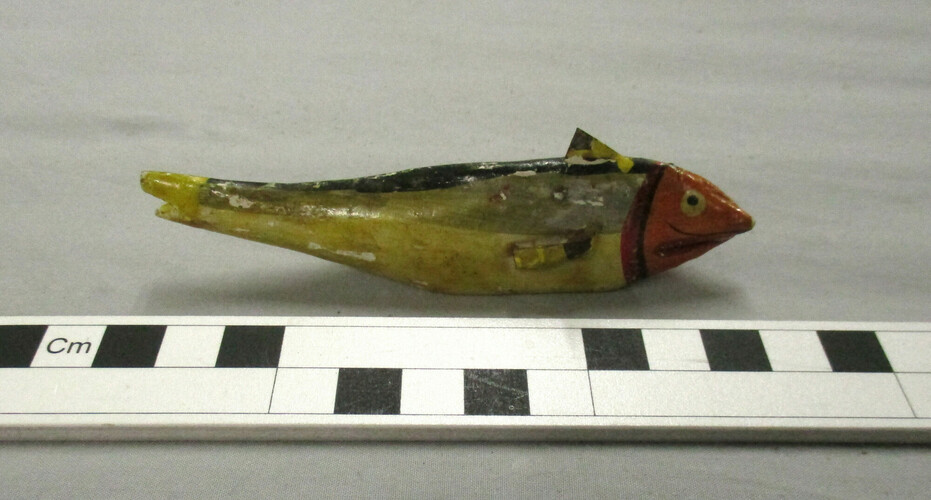 1985.36.219.10Wooden figure of a fish with a metal fin. The body is painted yellow with fins and other details painted with red, green, orange and black detail. [1 of] An assortment of wooden animal or bird shaped toys, painted a variety of colours, and in a variety of sizes and shapes. These objects are from a variety of unidentified places. [ASh [OPS move] 13/06/2016]1985.36.219.10