
- Collection type
- Object
- Description
- Women's dress of hand-spun and hand-woven natural linen with qabbah (square chest panel). Decorated with tatreez embroidery in red silk and couching.
- Long description
- Embroidered women's dress. Made from natural, undyed handspun linen with embroidery decoration, mainly in red silk thread, featuring geometric and floral patterns. The embroidery is predominantly cross-stitch. There is a square chest panel of couched embroidery on the front. The dress has long, straight sleeves. The lower half of the sleeves are decorated with embroidery in bands of geometric, floral and foliate motifs. The rest of the decoration is formed in similar bands of motifs running from the mid-section to the hem of the dress, which is also embroidered. The dress has slits from the bottom on both sides. There is some discolouration to the linen from wear.
- Date / Period
- Date made: Before 1974
- Date collected
- 1974
- Acquisition information
- Donated: 03/03/2016
- Materials and processes
- Material Linen Flax Bast Fibre Textile Plant, Material Cotton Seed Fibre Yarn Plant, Material Silk Yarn Animal, Process Embroidered, Process Woven, Process Embroidered, Process Stitched
- Dimensions
- Width: max 1545 mm, Length: max 1500 mm
- Object numbers
- Accession number: 2018.37.19 Other numbers: P4
- Research and responses
Article about the dress from Asian Textiles: Journal of the Oxford Asian Textiles Group Issue Number 71, Autumn 2018 pp 3-5, which details the motifs and also highlights its use in the Multaka-Oxford project.
Embroidery and Identity; A Palestinian thōb from the Pitt Rivers Museum by Abigael Flack
“The Palestinian thōb, illustrated below, is part of a collection of textiles from across the Arabic-speaking world, which was collected and recently offered to the Pitt Rivers Museum by Dr Jenny Balfour-Paul, a prominent authority on indigo. The collection of about one hundred pieces comes from across the Middle-East and North Africa, and includes a range of textile techniques, from ikat weaving to indigo burnishing. The Multaka-Oxford project, funded by the Esmée Fairbairn Collections Fund, is now drawing on the collection. Multaka-Oxford creates roles for volunteers and activities for visitors and uses museum collections as a ‘meeting point’ for people from a variety of backgrounds to comment on and interpret some of the objects. The thōb is from central Palestine, probably Ramallah, and dates from the 1920s–1930s. It was purchased in Amman in 1974. It is made from hand-woven, undyed linen, and decorated with a vibrant red silk embroidery, distinctive of the Ramallah region. This red floss silk was most often imported from nearby Syria. The dress has many of the features of traditional Palestinian costume, including the rich colour of the threads and intricate motifs which are laid out in a square chest panel (qabbah), around the bottom, and on the sides and the sleeves. The embroidery on the dress is all hand-stitched and is mainly in crossstitch and couching, and has beautiful geometric, floral and foliate patterns. The weave of the linen base fabric is quite open, which facilitates using countedthread embroidery such as cross-stitch.
The motifs, and the way they are laid out, are significant in traditional Palestinian dress, and say a great deal about who made an item and where it is from. Creating embroidered dresses was, and still is, an art traditionally carried out by Palestinian women, and is passed down through families. Particular patterns are deeply tied to identity. Dresses, particularly those made in the 19th and early-20th centuries, have specific motifs which identify family, age, social status and location. The dress features motifs such as ‘feathers’ and ‘tall palms’ Along with some others from the Balfour-Paul collection, this piece was brought out for a group of traditional Dabke dancers who were visiting from Ramallah through the Oxford Ramallah Friendship Association. Some recalled seeing female relatives embroider or being taught embroidery by them, and some of the women performed traditional songs. There is video footage of this on the Multaka-Oxford tumblr page: https://multaka-oxford.tumblr.com/post/178174546434/over-the-summer-the-pittrivers-was-lucky-to-host#notes. One of the group, Refa, told us how women used to embroider near a river or lake, where the reflections from the water would maximise the light from the sun. Members of the group also told how the embroidery would be made in sections before being sewn together. Some recalled that the chest panel could be attached in such a way that the sides were open to facilitate feeding infants. The beauty and artistry of the dress is evident. What was also demonstrated from bringing audiences to the Balfour-Paul collection is the emotive nature of clothing and textiles, and, in terms of their culture and identity, how they are both deeply personal and universal.”
Palestinian embroidery and dress is discussed in detail in Chapters 32 and 33 of 'Encyclopaedia of the Arab World', edited by Gillian Vogelsang-Eastwood, published by Bloomsbury Academic in 2016. [AF [EFCF project] 16/4/2018]
Palestinian dress, colour and embroidery is deeply tied to identity. The motifs featured in this dress include 'feathers' and 'palms' and possibly 'moon of Bethlehem'. See Palestinian Costume and Jewellery by Yedida Kalfon Stillman pp. 109-112 and Palestinian Embroidery by Shelagh Weir. [AF [EFCF project] 16/4/2018]
[Multaka-Oxford Project notes] - During a visit through ORFA (see below) visitors thought this dress could be from the villiage of Bayt Nabala near Ramallah [AF [EFCF project] 29/6/2018]
[Multaka-Oxford Project notes] - During a visit from a group of Palestinian Dabke dancers organised by the Oxford Ramallah Frienship Association (ORFA). The group discussed how the layout, colours and motifs featured in Palestinian embroidery can tell you lots about the identity of the wearer: "You see the dress, you see the stories". Refe commented: Much embroidery in the old days would be done near water to make use of the reflected light.
The group also sang a traditional song that would be performed during weddings. Aya: "Song and embroidery are our culture..." A video is shown on the project Tumblr blog: https://multaka-oxford.tumblr.com/post/178174546434/over-the-summer-the-pitt-rivers-was-lucky-to-host [AF [EFCF project] 11/1/2019]
The Jenny Balfour-Paul collection [2018.37] was extensively researched and studied as part of the Multaka Oxford Project. The Multaka Oxford project is an inclusive volunteering programme using the collections as a springboard for intercultural dialogue about cultural heritage delivered jointly by the Pitt Rivers Museum and the History of Science Museum, University of Oxford. Any input from Multaka volunteers have been included as project notes on the database records for specific objects. [ThW [Multaka Project] 26/1/2021]
[Multaka-Oxford Project notes] From the Pitt Rivers Museum online exhibition Weaving Connections: Floss silk thread used for embroidering Palestinian women’s costumes was produced in Homs and Mount Lebanon (sometimes from imported cocoons) and dyed the range of required colours in Homs and Damascus. In 1843 a European-owned factory started to manufacture so-called ‘Syrian’ silk thread on Mount Lebanon. As a result, between 1843 and 1914 ‘Syrian’ silk and the export of silk cocoons became an internationally traded cash crop, of paramount importance in the economy of the mountain. The silk factory reached its height in the 1880s, accounting for about 80% of total exports. However, it all but disappeared by 1914. [ThW [Multaka Project] 26/1/2021]
[Multaka-Oxford Project notes] From the Pitt Rivers Museum online exhibition Weaving Connections Abigael Flack, Former Multaka-Oxford Collections Officer: ‘This dress shows many of the features of traditional Palestinian costume, including the rich colour of the threads and the Qabbah (square chest panel) with embroidered motifs.’ Abigael has also written a short journal article about this dress in Asian Textiles. [ThW [Multaka Project] 26/1/2021]
[Multaka-Oxford Project notes] From the Pitt Rivers Museum online exhibition Weaving Connections Refe, Oxford Ramallah Friendship Association (ORFA) commented that much embroidery in the old days would have been done by the water to make use of the reflected light. [ThW [Multaka Project] 26/1/2021]
[Multaka-Oxford Project notes] From the Pitt Rivers Museum online exhibition Weaving Connections Volunteer Sally Barakjl said: ‘Palestinian clothing is extremely rich in embroidery and each city has its own tradition. Each city and village has distinctive and unique outfits which express their environment.’ [ThW [Multaka Project] 26/1/2021]
[Multaka-Oxford Project notes] From the Pitt Rivers Museum online exhibition Weaving Connections, Jenny Balfour-Paul's note: ‘This is another favourite - believe it or not I used to wear this to parties in the 1970s! By the 1990s I was keeping it safe and now the museum is doing so, and others are interpreting it and enjoying it.’ [ThW [Multaka Project] 26/1/2021]
- Associated publications
- This dress is featured in an article by Abigael Flack in Asian Textiles: Journal of the Oxford Asian Textiles Group Issue Number 71, Autumn 2018 pp 3-5, which details the motifs and also highlights its use in the Multaka-Oxford project. [AF [EFCF project] 11/1/2019] Balfour-Paul, Jenny, Indigo in the Arab World, Routledge, 1997 [AF [EFCF project] 23/8/2019] Balfour-Paul, Jenny, Indigo: Egyptian Mummies to Blue Jeans by , British Museum Press, 1998 [AF [EFCF project] 23/8/2019]
Search terms: Textile, Clothing, Clothing Textile, Dress, Embroidery
Further items to explore
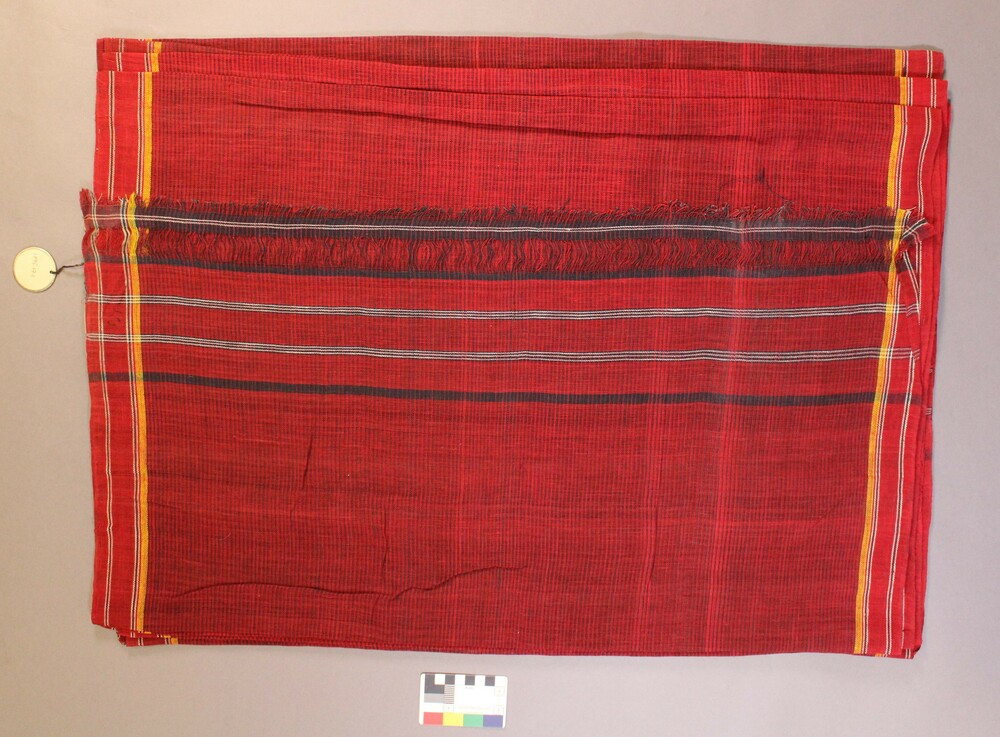 1895.17.1Sari1895.17.1
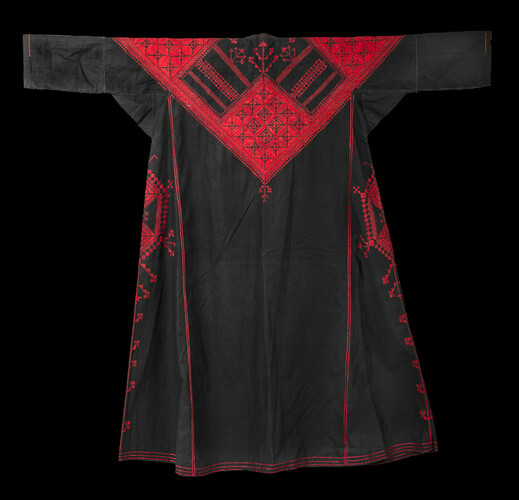 2018.37.6Embroidered dress. The dress is made from black cotton and embroidered with coloured threads predominantly coral and red. [FB 6/3/2018]2018.37.6
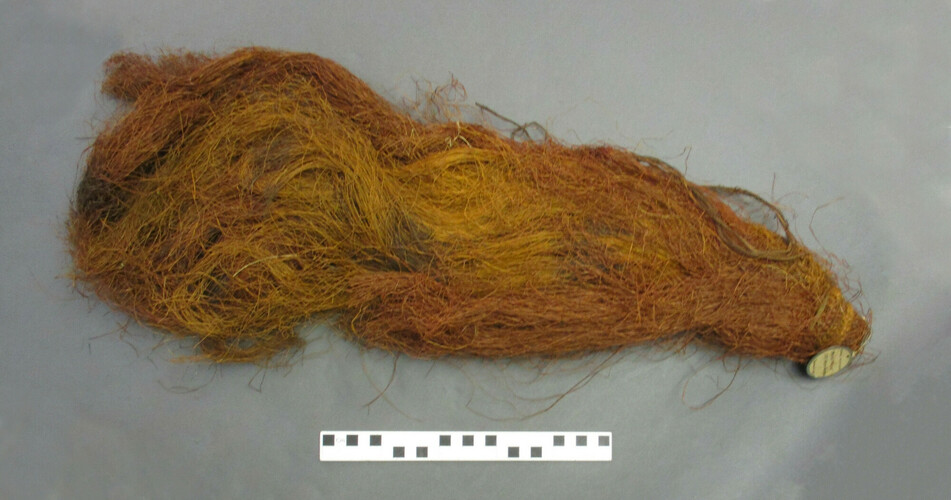 1893.68.14Skirt made from bundles of split plant fibre tied to a plant fibre waistband. [FB 13/11/2014]1893.68.14
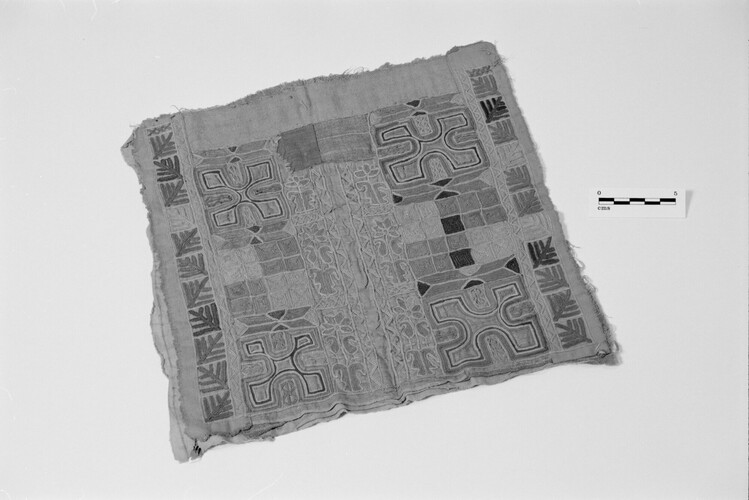 1999.33.53Embroidered panel for a woman's dress.1999.33.53
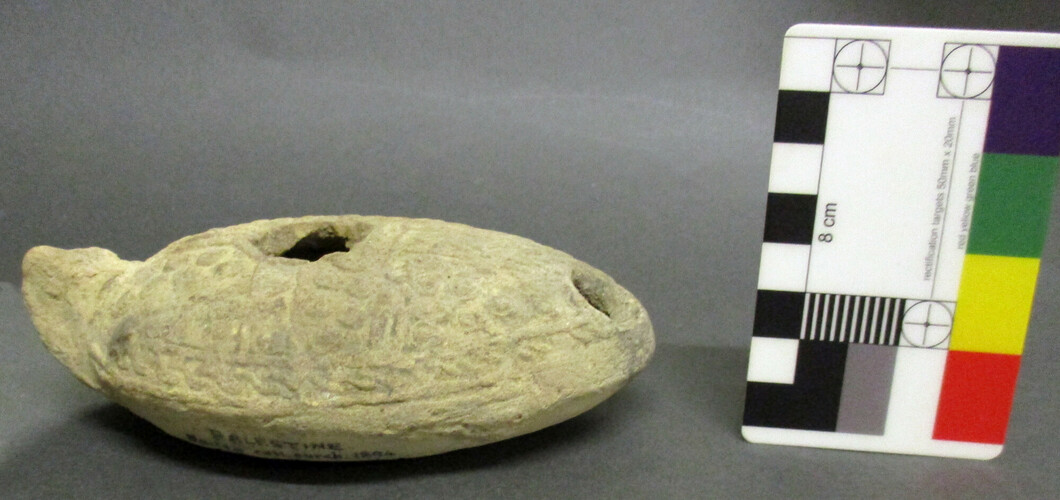 1932.88.367Pottery lamp of beige or buff ware. Pointed oval shape with lug handle at the back. [MOBB [OPS move] 10/11/2016]1932.88.367
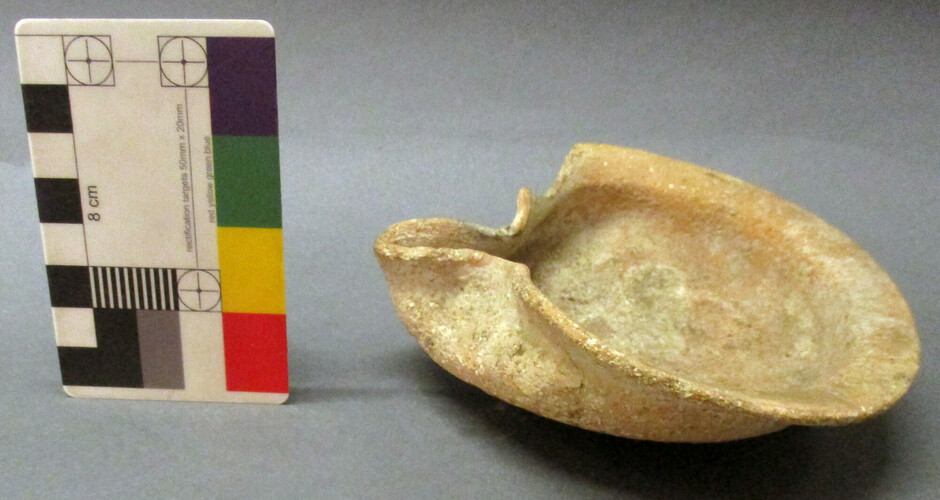 2016.179.1Pottery lamp of red ware. [MOBB [OPS move] 15/11/2016]2016.179.1
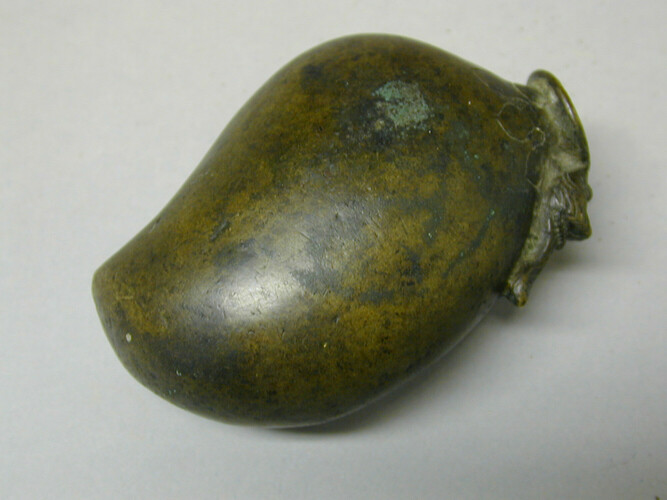 1990.33.1Heavy brass bottle with incised and relief decoration at neck. [EC 'DCF 2004-2006 What's Upstairs?' 20/2/2006]1990.33.1
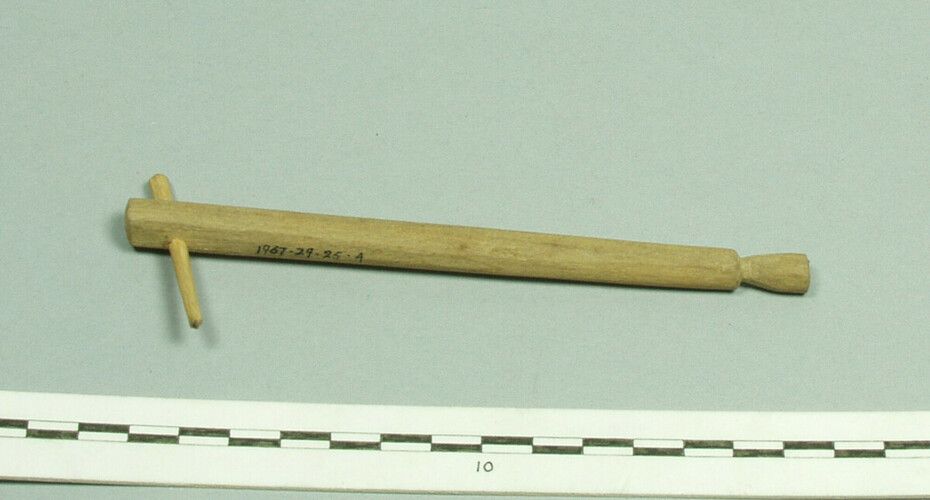 1967.29.25.4Model of a pole to be attached to the yoke. [El.B 'DCF 2004-2006 What's Upstairs?' 11/5/2005]1967.29.25.4