
- Collection type
- Object
- Description
- Pair of puckered toe moccasins, very fragile. [ZM 4/2/2005]
- Long description
- Pair of moccasins, very fragile. Vamps have porcupine quill embroidery, cuffs are red wool beaded with silk ribbon applique. Laura Peers, 2/3/2005
- Geographical reference
- Cultural groups
- Native American
- Date / Period
- Date made: Circa 1750-1850
- Date collected
- By 1952
- Acquisition information
- Loaned: 05/1952 Purchased: 01/1966
- Materials and processes
- Material Animal Skin, Material Porcupine Quill Animal, Material Textile, Process Quillwork, Process Woven
- Dimensions
- Length: max 274 mm, Length: max 269 mm
- Object numbers
- Accession number: 1952.5.04.1 Accession number: 1952.5.04.2
- Research and responses
Cuffs may have been added after moccasins made, to renew them; the red wool of the cuffs does not match the quilled vamps in style or period. The rest of the Shirley collection is mid- to late-18thC so I have given a date of c1750-1850 for these. Laura Peers, 2/3/2005
Examined in February 2007 by Carolyn Gilman from the Missouri Historical Society who noted that the sunburst quillwork pattern is unusual in this style of moccasin. [See related documents file for notes made by Gilman] [ZM 02/03/2007]
Examined by the GRASAC research team on 11 December 2007 as part of a research project to create a digital database. This will incorporate information about collections of indigenous material culture from the Great Lakes region of North America that are housed in a number of museums on several continents; see https://icslac.carleton.ca/grasac/. The team identified these as puckered toe style moccasins made from deer or moose hide on body, coarse red stroud for cuff, dark and light blue silk ribbon edging, dyed porcupine quills, beads (size 16), black worsted yarn and yellow silk ribbon. Motifs consist of 3 sets of concentric circles on the vamp, equal armed crosses at the cuff, and beading that has been looped at intervals. Possible sun and four-direction symbolism on moccasins but hard to tell due to damage. Dated as late eighteenth/ early nineteenth century due to small bead size and fact stroud not lined. North American nation of origin identified as Cree. [see researchers file GRASAC]. [ZM 31/03/2008]
Final GRASAC entry: 'Date Made or Date Range: 1770s to 1820s Rationale for Assigned Date or Date Range: CW suggested a date of manufacture somewhere in the late 18th or early 19th century, based on materials - the tiny beads and stroud unlined stroud. Materials: The moccasins are made of deer or moose hide, with a coarse red stroud cuff edged in dark blue and lighter blue silk ribbon. Porcupine quills, dyed red, black and white, decorate the vamps, and size 16 seed beads, black worsted yarn, and yellow silk ribbon decorate the cuffs. Format/Techniques: Quillwork, beading and silk ribbon applique are found on the moccasins. Each cuff was made in one piece. LP notes it is possible that the cuff was added after moccasins made, to renew them, as the red wool does not match the quilles vamps in style or period. Motifs and Images: On the vamp, 3 sets of concentric circles are done in quillwork. The cuff has equal armed cross motifs, and beading looped at intervals. Symbolism and Interpretation: The circle and cross motifs may be sun and four direction symbolism, but the motifs difficult to fully appreciate due to damage.
Condition: RP said the moccasins were "once absolutely splendid." There is evidence of wear - an impression of a foot is visible in both moccasins, as well as clear evidence of moth damage. The Pitt Rivers conservator, Heather Richardson, said they are in "poor condition." ' [L Peers, 29/04/2009]
- Associated publications
- The possibility that this was formerly the property of James Bisset and acquired by Colonel Shirley via the Leamington Museum is discussed in 'Painted Coats for a Coronation? (Research Notes)' by Linda Mowat in Journal of Museum Ethnography, no. 8 (1996), pp. 109-110 (photocopy in RDF). [JC 20 5 1996]
Search terms: Clothing Footgear, Shoe
Further items to explore
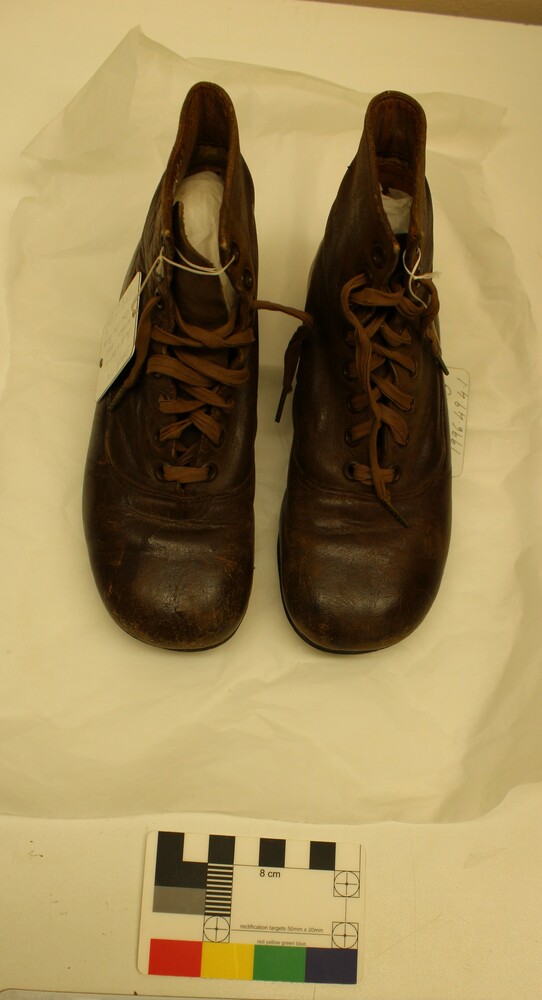 1996.49.4.1Pair of child’s leather short boots.1996.49.4.1
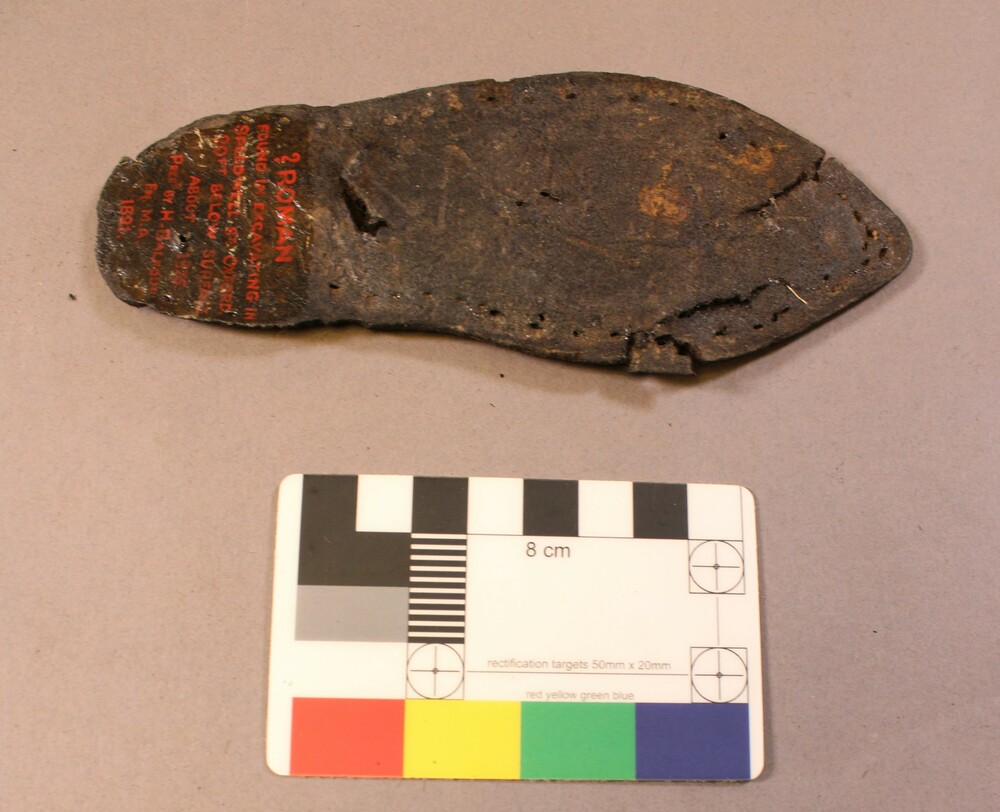 1891.9.1Leather sole of child's shoe probably Roman, with zigzag depression showing where the uppers were laced together below, in making the shoe1891.9.1
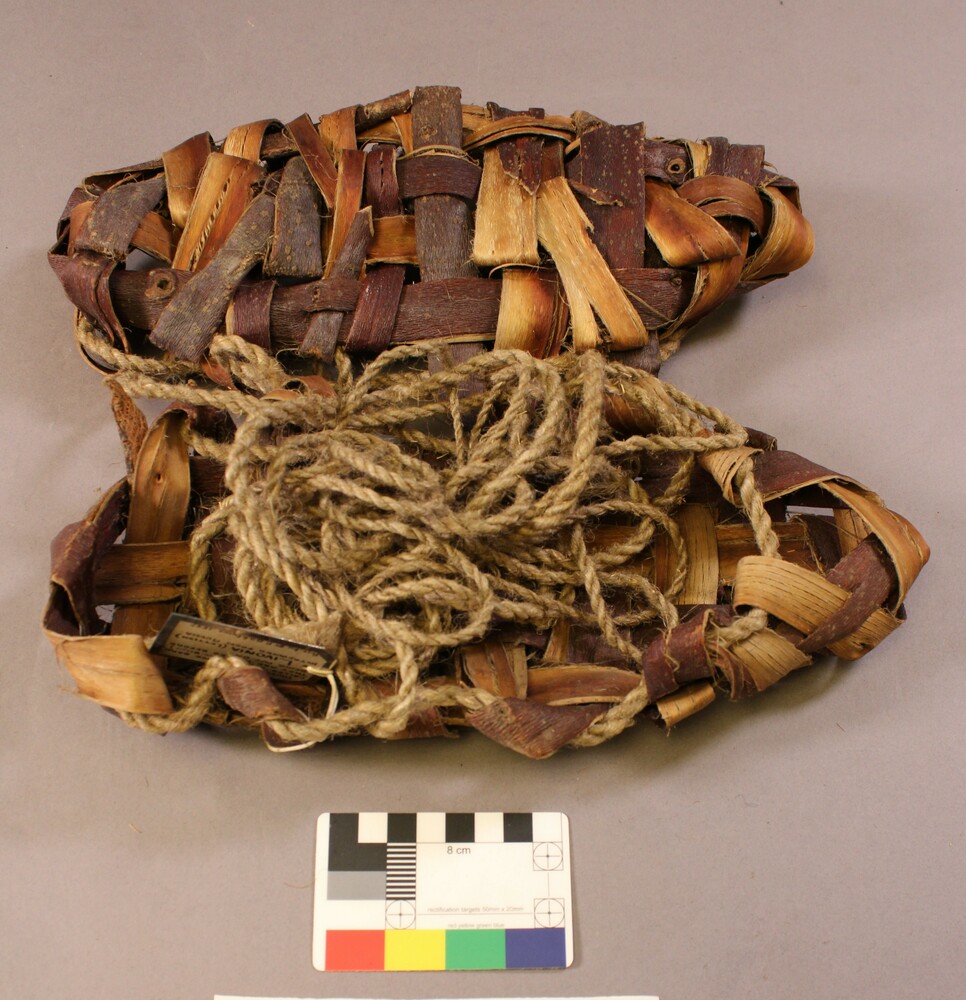 1897.37.2.1-2Pair of lime-tree bark shoes1897.37.2.1-2
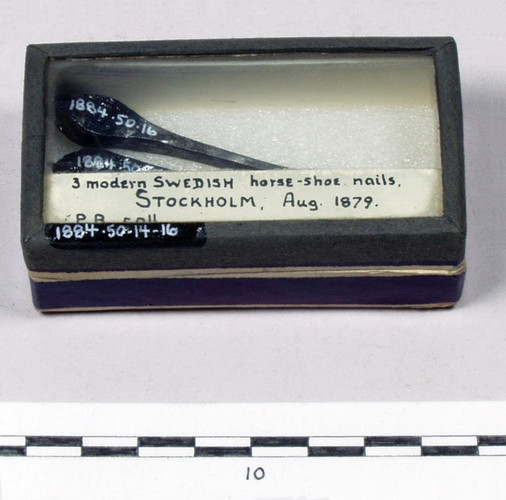 1884.50.14Metal horse shoe nail with sharp head [E.S-R 'DCF 2004-2006 What's Upstairs?' 1/12/2004]1884.50.14
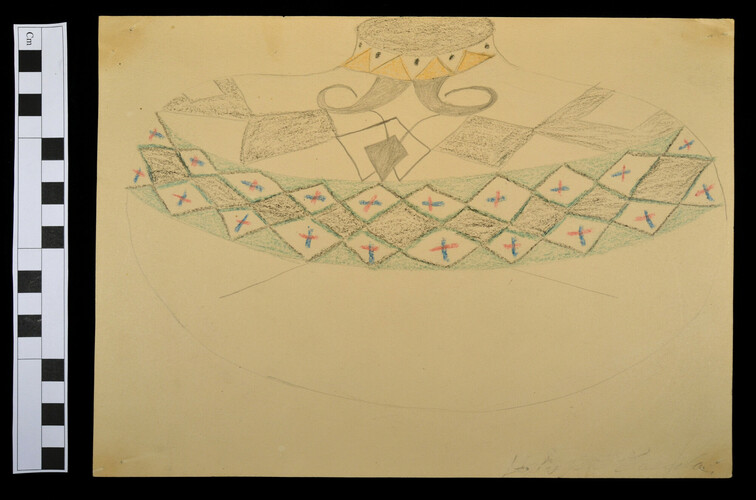 1994.15.83Drawing of a pot in pencil and coloured wax crayon. [MJD 14/01/2015]1994.15.83
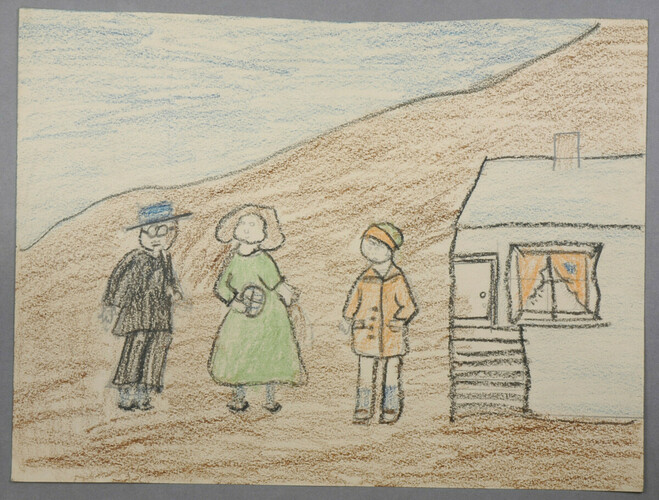 1994.15.2186Drawing in pencil and wax crayon of a man, a woman and a child in front of a house. [El.B 02/05/2008]1994.15.2186
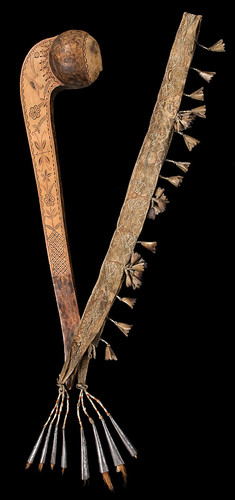 1884.65.14Ball-headed club, the ball carved into a face, incised shaft and leather strap decorated with quillwork. [ZM 16/11/2007]1884.65.14
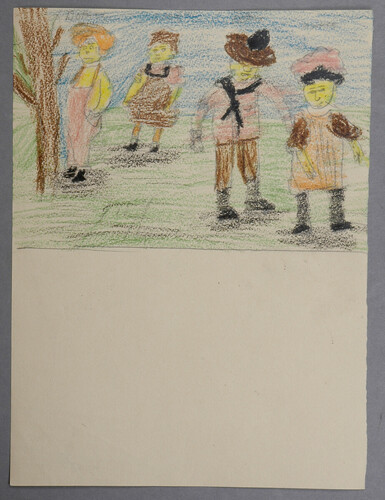 1994.15.2291Drawing in pencil and wax crayon of two boys, two girls and a tree. [El.B 14/05/2008]1994.15.2291