
- Collection type
- Object
- Description
- Stone stela with hieroglyphics. The stone is rectangular with a round top. [MJD (Verve) 19/4/2016]
- Long description
- Stone stela with hieroglyphics. The stone is rectangular with a round top. It depicts four figures in the upper register; one seated, one kneeling and two standing. The register below depicts eight kneeling figures. Hieroglyphics are inscribed in four lines below. The back shows tool marks. [MJD (Verve) 19/4/2016]
- Geographical reference
- Person
- Field collector Unknown Collector
- PRM source Augustus Henry Lane Fox Pitt Rivers founding collection
- Date / Period
- Archaeological period: Ancient Egyptian New Kingdom
- Date collected
- By 1874
- Acquisition information
- Donated: 1884
- Dimensions
- Depth: max 34 mm, Width: max 230 mm, Length: max 430 mm, Weight 7800 g
- Object numbers
- Accession number: 1884.98.3
- Research and responses
This stela was examined by Dr Elizabeth Frood, University of Oxford. It depicts the owner in the upper register, the scribe of the temple of Ptah, Seba, kneeling in adoration before Osiris, Isis, and Hathor. The register below depicts eight kneeling figures, including Seba’s father Mose, craftsman in the place of truth, and possibly his wife and daughters. An offering formula to Osiris, Horendotes, Isis, and Ptah-Sokar for Seba and his father is inscribed in four lines below. [AS 06/09/2010]
- Associated publications
- Illustrated in colour as Figure 6.5 on page 95 of 'Egypt and Sudan: old Kingdom to Late Period', by Elizabeth Frood, in World Archaeology at the Pitt Rivers Museum: A Characterization, edited by Dan Hicks and Alice Stevenson (Oxford: Archaeopress, 2013), pp. 90-114. Caption (same page): 'Figure 6.5 (right) Round-topped limestone stela (PRM Accession Number 1884.98.3) of late New Kingdom date (c. 1200-1075 BCE), depicting the owner in the upper register, the scribe of the temple of Ptah, Seba, kneeling in adoration before Osiris, Isis, and Hathor. In the lower register, Seba's father Mose, craftsman in the place of truth, is shown as the first male figure after three women, two of whom are on a noticeably larger scale; these women are probably Seba's wife and daughters.' and referred to on page 94. Frood writes 'Two small round-topped limestone stelae of late New Kingdom date (c. 1200– 1075 BCE) are also typical of the inscribed Egyptian objects that were desirable to Victorian collectors. ... The second stela also depicts the owner in the upper register, the scribe of the temple of Ptah, Seba, kneeling in adoration before Osiris, Isis, and Hathor (1884.98.3; Figure 6.5). The register below depicts eight kneeling figures, including Seba’s father Mose, craftsman in the place of truth, and possibly his wife and daughters. An offering formula to Osiris, Horendotes, Isis, and Ptah-Sokar for Seba and his father is inscribed in four lines below. Both stelae, which are unpublished, are of prosopographic interest and will be the subject of a more detailed study (Frood in prep.).'. [MJD 27/05/2014; 7/1/2016]
Search terms: Writing, Figure, Inscription
Further items to explore
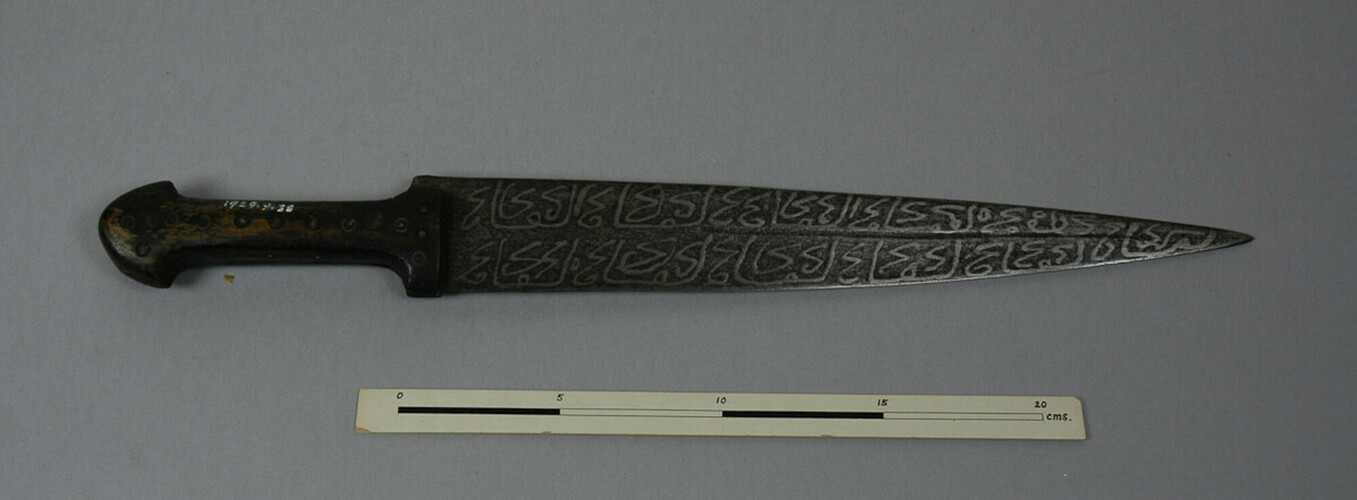 1929.9.38Dagger with broad double edged blade that is decorated with an etched arabic inscription and wooden grip [SM 24/04/2007]1929.9.38
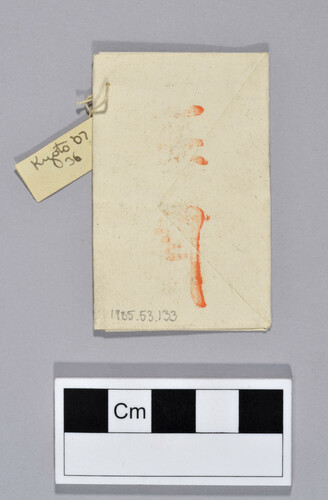 1985.53.133Paper charm with characters written in black and red ink. [MJD 01/02/2013]1985.53.133
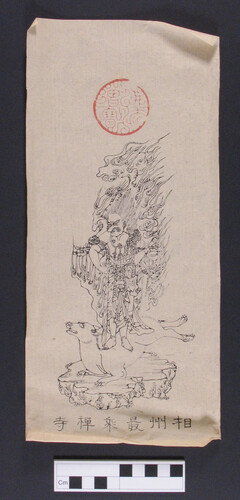 1985.53.470Paper with a picture of Doryo standing on a fox surrounded by flames, with inscription and a red stamp. [El.B 21/10/2013]1985.53.470
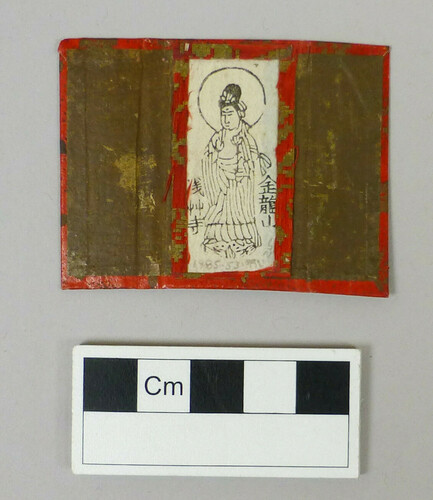 1985.53.491.25Amulet of cardboard folded into three panels, the back covered with blue and gold paper, with a printed picture of Kwannon. The side panels are covered with gold paper. Part of a set of amulets - for paper wrapper see [1985.53.491 .1] and for other amulets see [1985.53.491 .2 - .24] and [1985.53.491 .26] [EH [OPS Move] 26/4/2017]1985.53.491.25
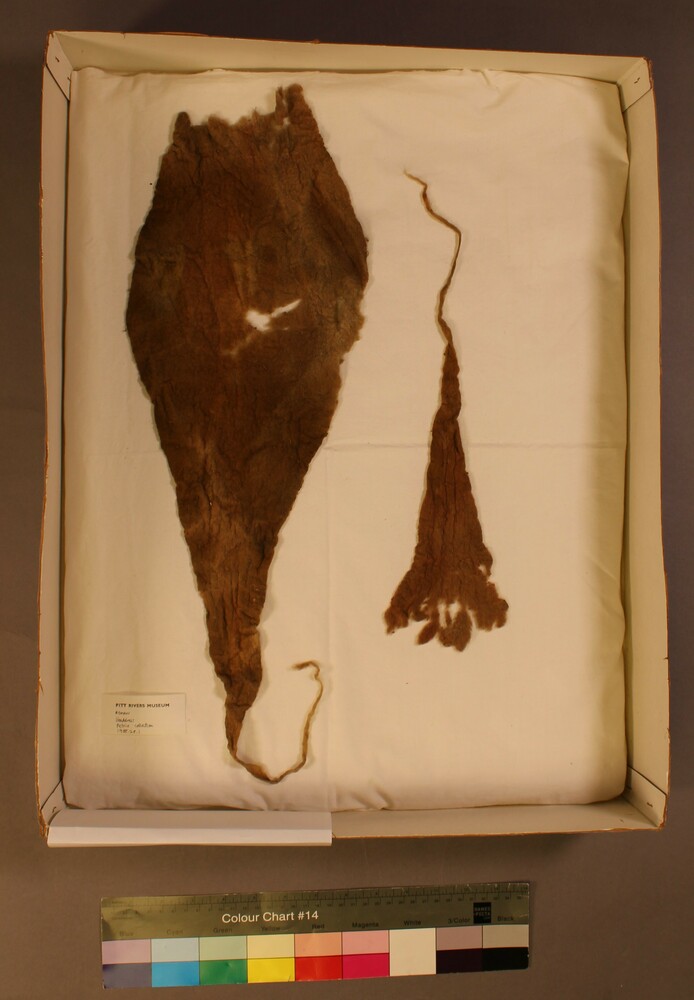 1988.28.1Headdress consisting of a strip of felt with tapering ends.1988.28.1
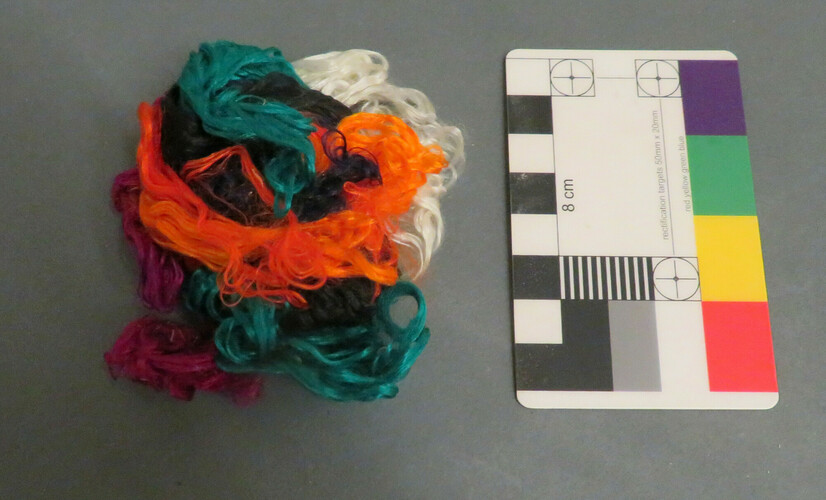 1985.54.2873Amulet. Mass of silk threads, dyed multiple colours including dark pink, orange, green and black. Used in composition of charms. [ASh [OPS move] 27/11/2017]1985.54.2873
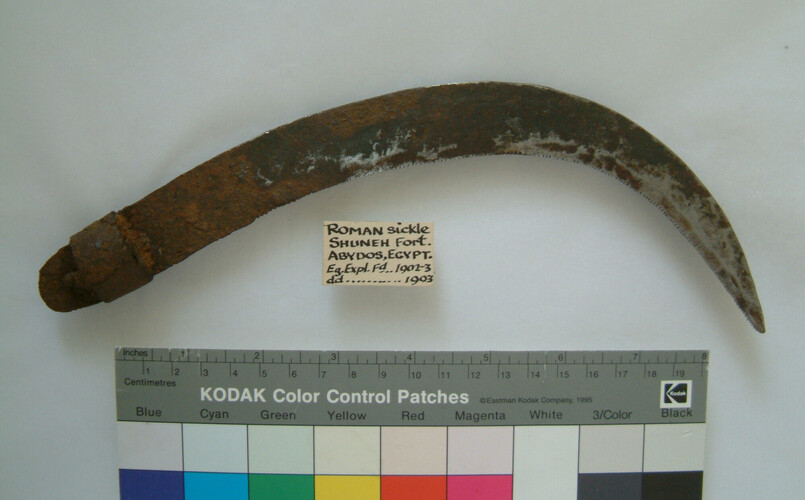 1903.22.3Sickle blade.1903.22.3
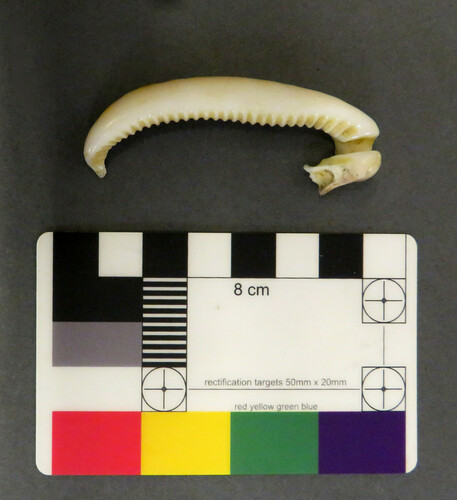 1985.54.2326Amulet. Portion of a shell, which is cream and brown in colour. The shell comprises the opening or mouth section only. Used to cure burns. [ASh [OPS move] 03/11/2017]1985.54.2326