
- Collection type
- Object
- Description
- Sabre [.1] with curved European blade and stamped leather sheath [.2] with 4 saucer pommels and a plaited leather carrying strap. [SM 08/11/2007]
- Long description
- Sabre [.1] with curved European blade and stamped leather sheath [.2] with 4 saucer pommels and a plaited leather carrying strap. The blade is single edged. The hilt is bound with leather and decorated with stamped lines. It has a brass pommel. The sheath is curved and is decorated all over with stamped or incised lines, zigzags, circles and dots. Its four saucer pommels are decorated with lines and zigzags too. [SM 08/11/2007]
- Geographical reference
- Person
- Maker Unknown Maker
- Field collector Unknown Collector
- PRM source Augustus Henry Lane Fox Pitt Rivers founding collection
- Date / Period
- Date made: Possibly before 1862
- Date collected
- ?By 1862
- Acquisition information
- Donated: 1884
- Materials and processes
- Material Animal Leather Skin, Material Brass Metal, Material Pigment, Material Steel Metal, Material Iron Metal, Process Forged (Metal), Process Bound, Process Stamped, Process Incised, Process Plaited, Process Knotted
- Dimensions
- Length: max 955 mm sword in sheath, Width: max 63 mm sheath - excluding pommels
- Object numbers
- Accession number: 1884.24.110.1 Accession number: 1884.24.110.2 PR Cat other PR nos: 1072
- Research and responses
This is a high status Manding composite sword from the Gambia, reflecting exactly the phenomenon of importation and re-hilting of European blades which I was discussing above. The blade of these prestige weapons is usually that of a French cavalry sabre – reflected by the curved profile it exhibits. Over and above this colonial expression in the blade, the significant characteristic of this Manding dress sword is its high-quality dyed and woven leatherwork scabbard and baldricks, producing a weapon of great beauty. Such Manding dress swords were the exclusive prerogative of men of high social standing (Spring, 1988: 40-1), and intended to enhance their impressive and martial appearance. The flaring leaf-shaped lower portion of the scabbard reflects a shared Sudanic trait with the straight kaskara of the Eastern Sudan, on the far side of the Sahara. Reed (1987: 201) has suggested that the most plausible explanation for this form in the case of the kaskara is that it represents the head of a crocodile. Such swords are notable in the absence of any form of guard for the hand. Research Conducted for DCF Cutting Edge 2006/2007 [AM].
Further items to explore
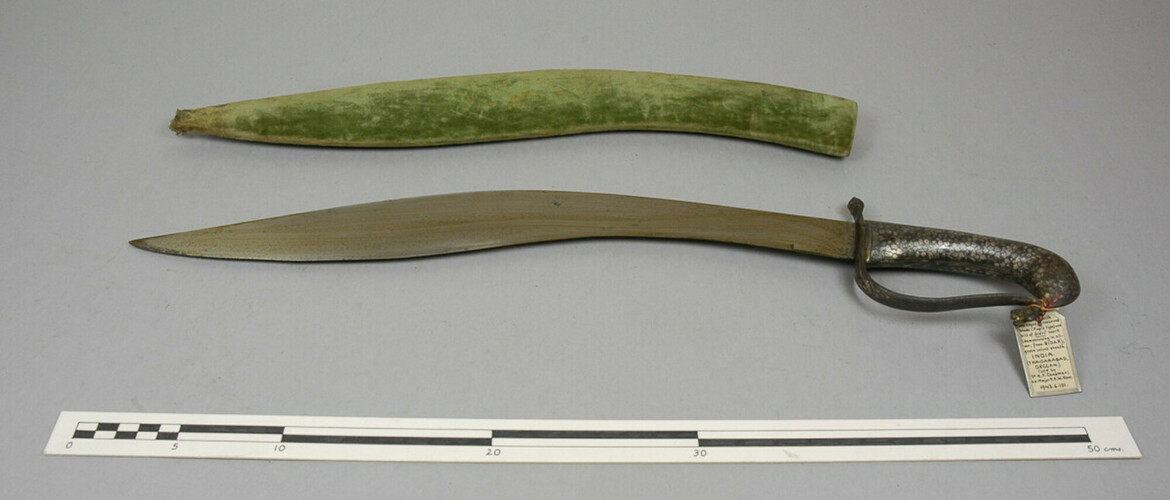 1943.6.101.1Sword [.1] with one-edged incurved steel blade with an Arabic inscription one one side in gold. Bird-headed pistol grip and knucklebow with floral bidri inlay work in silver. Sheath [.2] of wood covered with green velvet. [LM 04/09/2007]1943.6.101.1
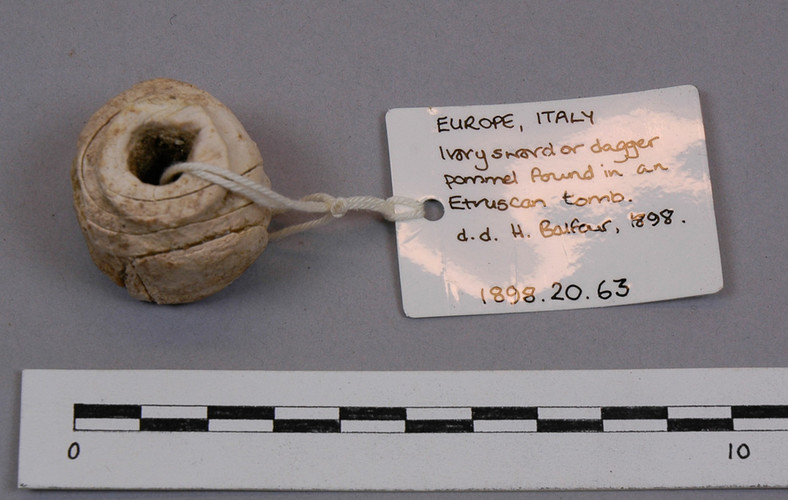 1898.20.63Ivory sword or dagger pommel with a hole through the centre. Found in a tomb. [SM 25/01/2008]1898.20.63
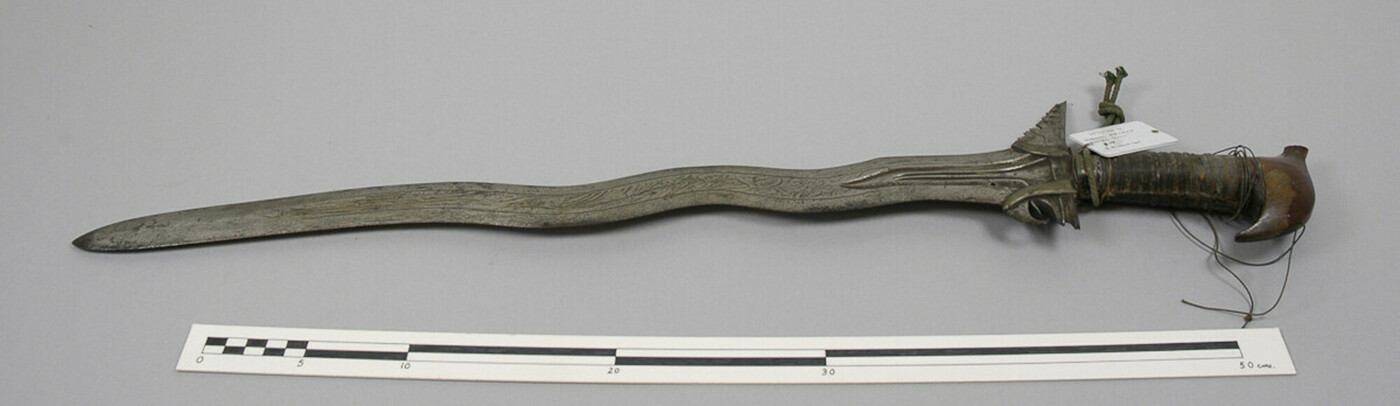 1970.32.4Kris with double edged wavy blade, wooden hilt bound with string and pommel carved into curved shape. Silver junction of hilt and blade. [El.B 2/3/2007]1970.32.4
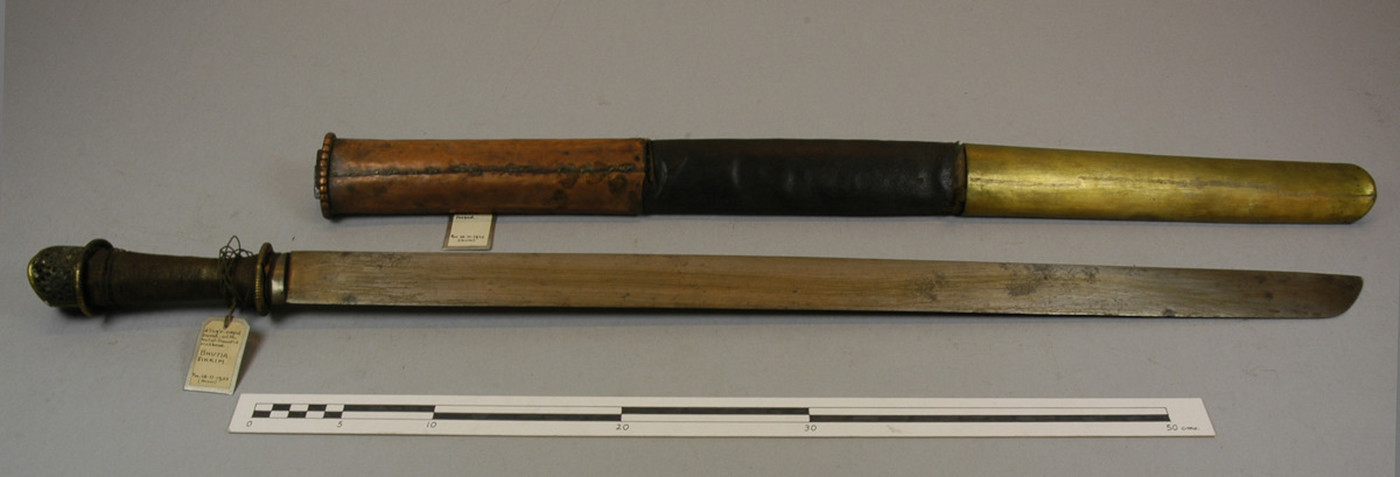 1933.90.36.1Sword [.1] with single edged blade and brass-mounted hilt with leather, copper and copper alloy covered wooden sheath [.2] [SM 01/10/2007]1933.90.36.1
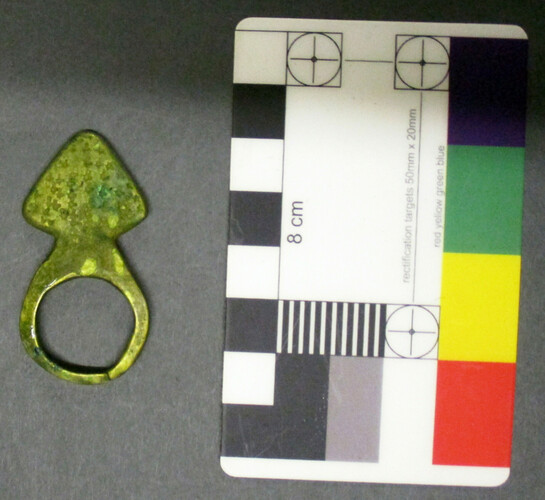 1940.7.0236Brass ring. Circular ring section with an arrow pointing upwards on the top of the ring. [ASh [OPS move] 7/11/2016]1940.7.0236
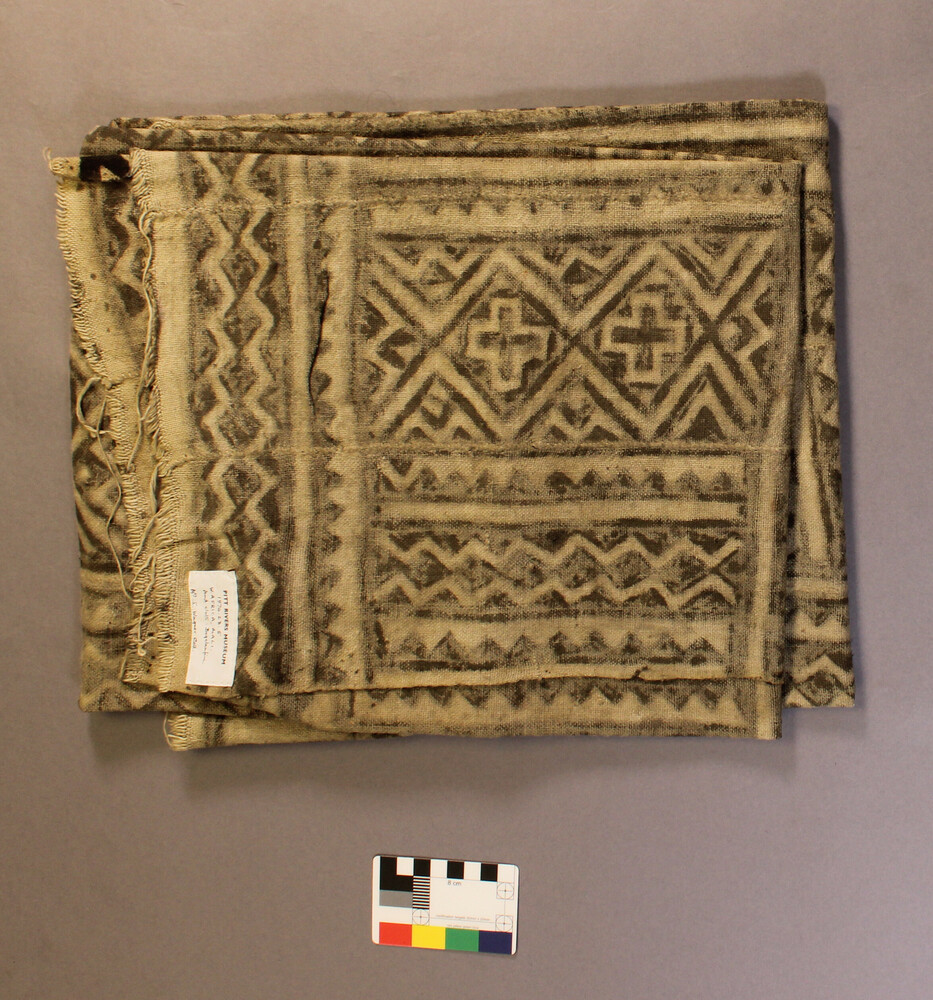 1974.23.5Bogolanfini, cotton cloth patterned with painted repeated geometric designs using iron-rich mud pigment.1974.23.5
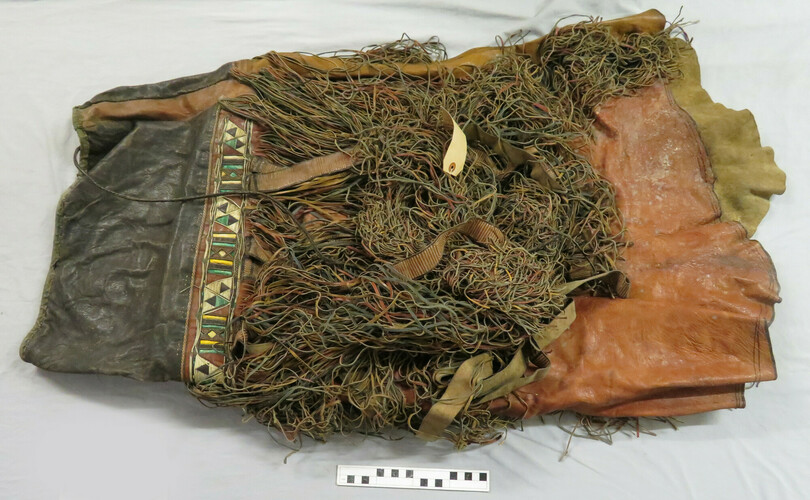 1940.7.0210Leather skirt, worn by women for marriage ceremony. The skirt is decorated with tassels on one side, extending from a leather band decorated with geometric shapes which are dyed green and yellow. The other side of the skirt is also decorated and dyed. [SB [OPS Move] 14/6/2017]1940.7.0210
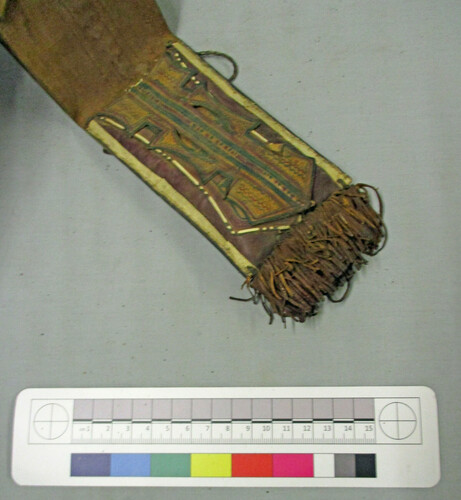 1972.4.2.1Tobacco pouch. The inner case of a two-part tobacco pouch. For the outer case see 1972.4.2 .2. [AB [OPS Move] 5/10/2016]1972.4.2.1