
- Collection type
- Object
- Description
- String ornament with wool binding at the centre, possibly designed to hang from the waist at the back [RTS 30/3/2005].
- Long description
- String ornament, possibly designed to hang down from the back of the waist. This consists of 6 bundles of grass fibre strings, with from 12 to 21 strings in each group. At their centre, each bundle has been wound round with yellowish brown twisted wool (Pantone 7508C), and bound onto the neighbouring group, creating a rectangular top section; two loose ends of this wool extend from opposite corner and are knotted in the centre, creating a suspension loop. The fibre strings extend beyond either end of this binding, to hang down as a thick mass. Each individual string is made of 2 fibres twisted together, and ends with a knot at its base. These vary in colour from yellowish (Pantone 7508C) to reddish brown (Pantone 7525C). The object is complete, although some fibres seem worn and have become entangled with their neighbours, and there is surface discolouration in places. It has a weight of 90.8 grams, and is 1120 mm long, when extended fully, or 550 mm long, as hung; the woollen section is 38 mm long, 36.5 mm wide and 5.5 mm thick, while each string bundle is 6 mm wide, and each individual string has a width of 1 mm [RTS 30/3/2005].
- Cultural groups
- Omerok
- Date / Period
- Date made: Before 1940
- Date collected
- By 1940
- Acquisition information
- Loaned: 1940
- Materials and processes
- Material Grass Fibre Plant, Material String, Material Wool Yarn Animal, Process Twisted, Process Knotted, Process Bound
- Dimensions
- Thick: max 5.5 mm, Width: max 1 mm string, Width: max 6 mm string bundle, Width: max 36.5 mm, Length: max 1120 mm extended, Length: max 550 mm hanging, Length: max 38 mm woollen bound area, Weight 90.8 g
- Object numbers
- Accession number: 1940.7.0224
- Research and responses
A province known as 'Equatoria' or 'Al Istiwa'iyah' was in existance from some time in the 1940's to 1981, after which point it was divided into the districts of Eastern and Western Equatoria; in the 1990's these were subdivided further into the modern administrative districts of Western Equatoria, Bahr el Jebel, and Eastern Equatoria. Opari is a town in Eastern Equatoria [RTS 11/11/2003].
The 'Omerok' have not yet been identified, although the mention of Opari provides their rough geographical location [RTS 30/3/2005].
Search terms: Clothing, Ornament, Waist Ornament
Further items to explore
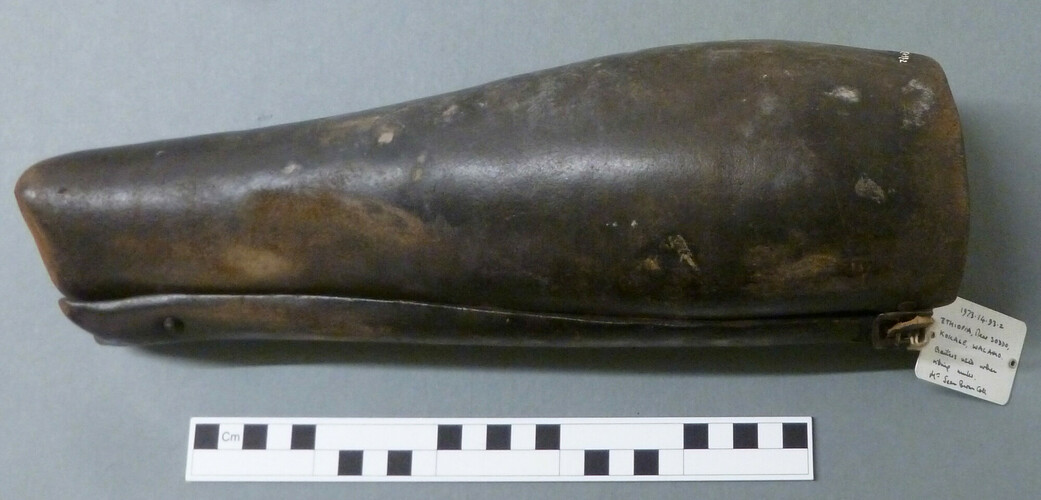 1973.14.93.2One of a pair of cattle hide gaiters. Dark brown in colour, with buckle at top and pin at ankle. [LKG 22/07/2010]1973.14.93.2
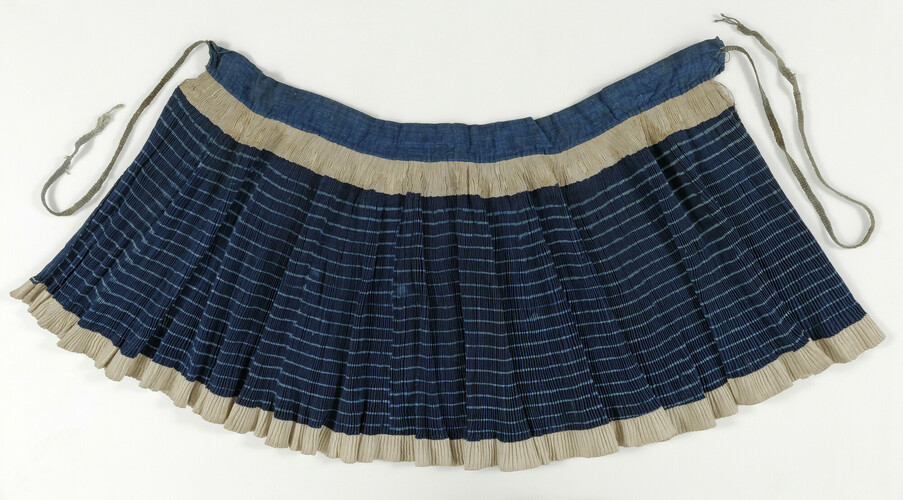 2009.135.73Woman's pleated skirt. [FB 08/06/2012]2009.135.73
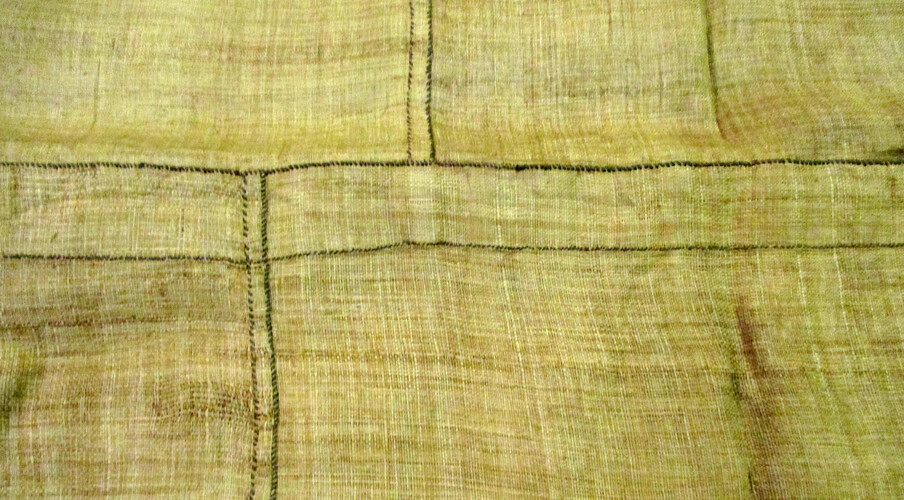 1965.1.35Piece of woven raffia cloth made from several smaller pieces stitched together. [FB 29/01/2015]1965.1.35
 2012.106.1.1Baby garment [.1] made from hide and decorated with porcupine quillwork and beadwork hung on a hide covered clothes hanger [.2]. [FB 05/12/2012]2012.106.1.1
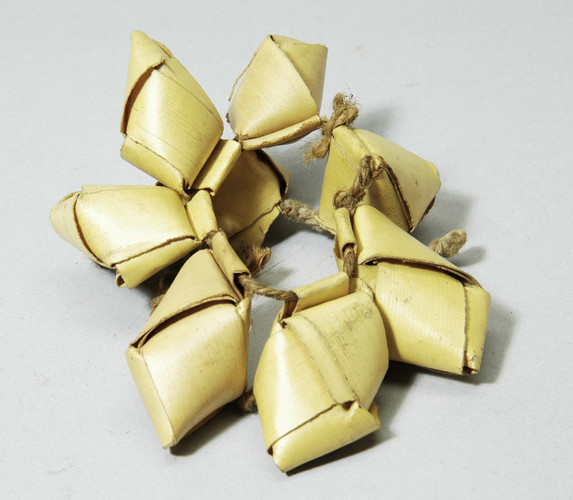 1931.66.32Dance rattle made from palm strips woven into 8 capsules containing small seeds, tied together into a circlet with plant fibre cord [RTS 6/12/2004].1931.66.32
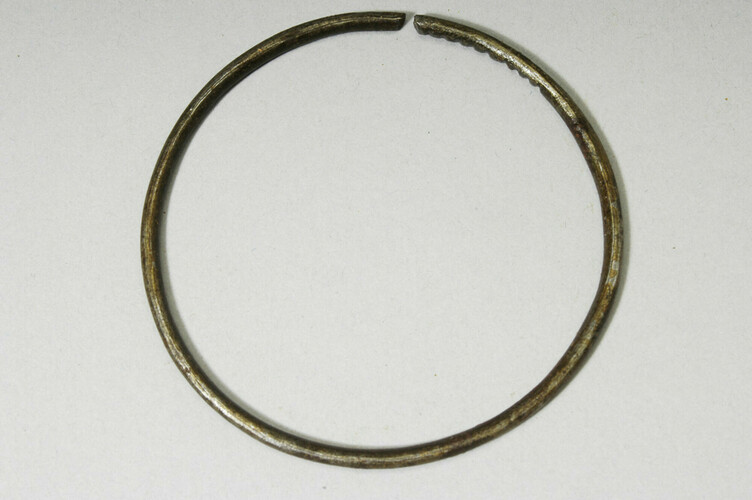 1966.1.517.18Penannular iron arm or leg ornament with circular section and 9 notches on the inside face [RTS 21/7/2005].1966.1.517.18
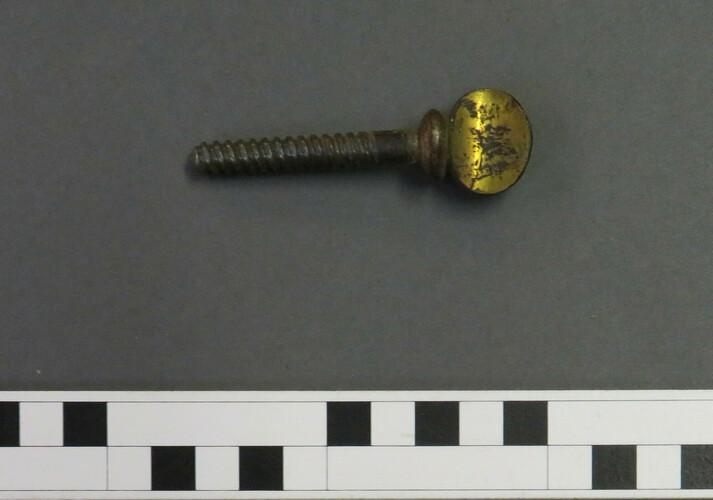 1929.72.1.7Brass screw. For the associated components of this loom see 1929.72.1 .2 - .8 [BS [OPS Move] 12/5/2017]1929.72.1.7
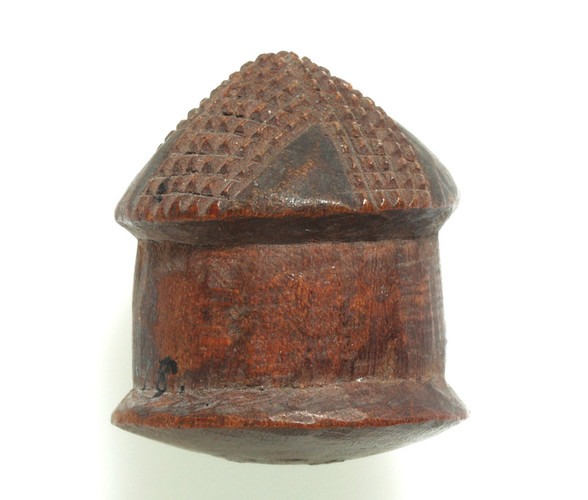 1884.84.85Cylindrical wooden lip stud with crosshatched, conical top, worn by women in their lower lip [RTS 10/5/2004].1884.84.85