
- Collection type
- Object
- Description
- Cylindrical wooden lip stud with crosshatched, conical top, worn by women in their lower lip [RTS 10/5/2004].
- Long description
- Small lip stud carved from a single piece of wood, consisting of a conical top with pointed apex, offset from a squat, cylindrical body that flares out at the bottom to form a slightly convex underside that is slightly oval in plan view. The upper surface, which would have been the most visible, has been divided into sections by four oblique bands of crosshatching that meet near the top. Small triangular spaces have been left blank between each band. The stud is complete and intact, with numerous tool marks visible on most surfaces. The underside has been polished, and is currently a dark reddish brown colour (Pantone 4625C). The upper surface is darker, and may have been burnt for decorative effect, as suggested by Wood (J.G. Wood, 1868, The Natural History of Man Vol. I, p. 499). The object has a length of 19 mm, is 18.5 mm wide, 22.4 mm high and weighs 4.3 grams [RTS 11/5/2004].
- Geographical reference
- Cultural groups
- Bongo
- Person
- Maker Unknown Maker
- Field collector John Petherick
- PRM source Augustus Henry Lane Fox Pitt Rivers founding collection
- Date / Period
- Date made: Possibly before 1858
- Date collected
- 1856 - 1858
- Acquisition information
- Donated: 1884
- Materials and processes
- Material Wood Plant, Process Carved, Process Incised, Process Polished, Process Decorated, Process Burnt
- Dimensions
- Length 19 mm, Width 18.5 mm, Height 22.4 mm, Weight 4.3 g
- Object numbers
- Accession number: 1884.84.85 PR Cat other PR nos: 3296
- Research and responses
John Petherick led three separate trading expeditions that passed through Bongo territory between 1856 and 1858; this material was shipped back to England in 1859. See Petherick 1861, Egypt, The Sudan and Central Africa for more details.
Petherick described Bongo lip ornaments in his 1861 volume, Egypt, The Sudan and Central Africa, p. 401 ‘the women would be handsome were it not for a disfiguration of the under lip, in which circular pieces of wood are inserted, varying in size according to age from a sixpence to a florin'. Wood adds this description of an example in his own collection, possibly this actual example, although it is shorter than Wood describes: 'It is cylindrical, with a conical top, and measures three-quarters of an inch in diameter, and exactly an inch in length. The base, which comes against the lower teeth and gum, is nearly flat, and well polished, while the conical top, which projects in front of the mouth, is carved very neatly with 'a 'cross-hatching' sort of a pattern, the effect of which is heightened by the charring of certain portions of it, the blackened and polished surfaces contrasting well with the deep red colour of the wood. In order to keep it in its place, a shallow groove runs round it. This is one of the smaller specimens, but it is the custom of the owner to wear larger and larger lip ornaments until some of them contrive to force into their lips pieces of wood three inches in circumference' (J.G. Wood, 1868, The Natural History of Man Vol. I, p. 499). See also G. Schweinfurth's description, In The Heart of Africa Volume I, 1873, pp 296-298. By the time that Evans-Pritchard encountered the Bongo, in the 1920's, the use of large pegs in the lower lips seemed to have gone out of fashion, although they were reportedly still used by the Löli Jurs and the Dogodjo tribe (E.E. Evans-Pritchard, 1929, "The Bongo", Sudan Notes and Records XII part I, p. 10. [RTS 4/7/2005].
Search terms: Ornament, Lip Ornament, Body Art Accessory
Further items to explore
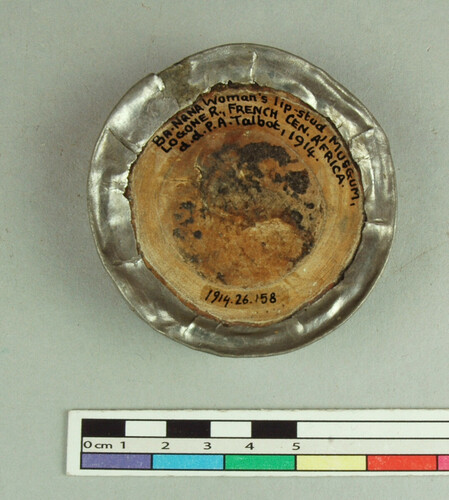 1914.26.158Cylindrical lip plug made from wood and roughly covered with a layer of aluminium.1914.26.158
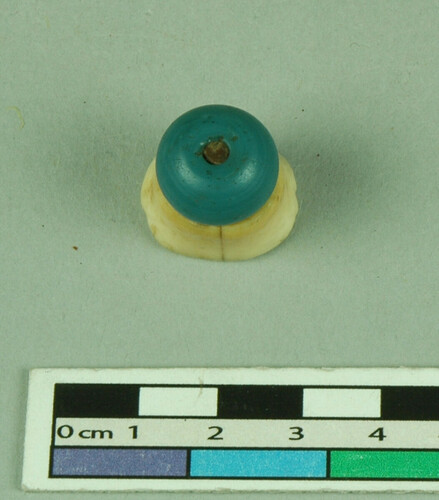 1954.9.145Ivory labret with blue glass bead attached. [El.B DDF Body Arts Project 2010/2011 15/10/2010]1954.9.145
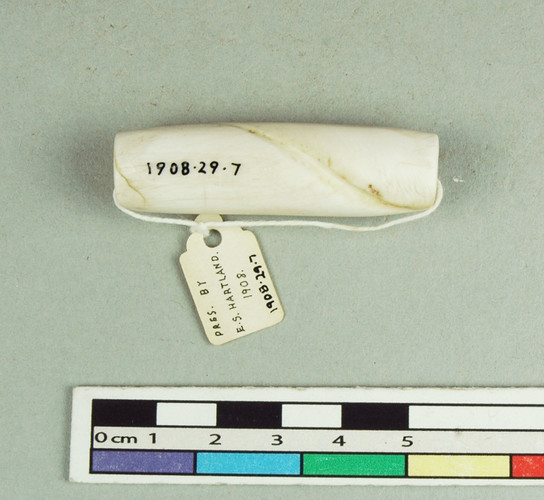 1908.29.7Perforated bar of shell, a lip ornament. [El.B DDF Body Arts Project 2010/2011 06/10/2010]1908.29.7
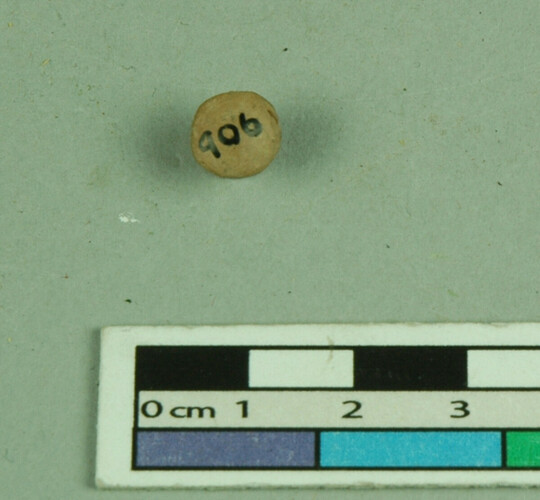 1949.12.78.2Pottery stud. [El.B DDF Body Arts Project 2010/2011 13/10/2010]1949.12.78.2
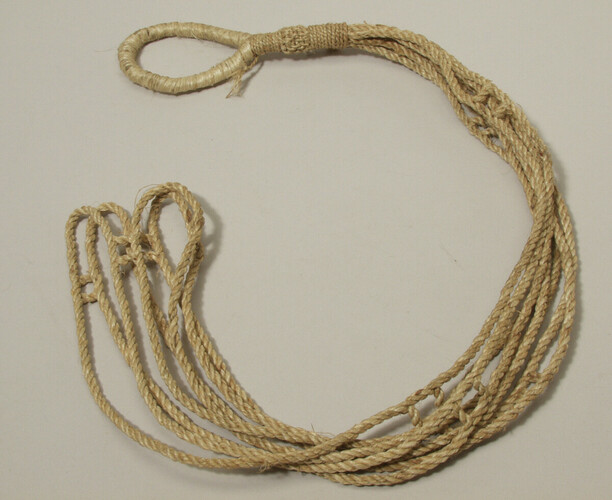 1979.20.32Sling made from twisted grass cords, used to carry or hang vessels [RTS 18/8/2004].1979.20.32
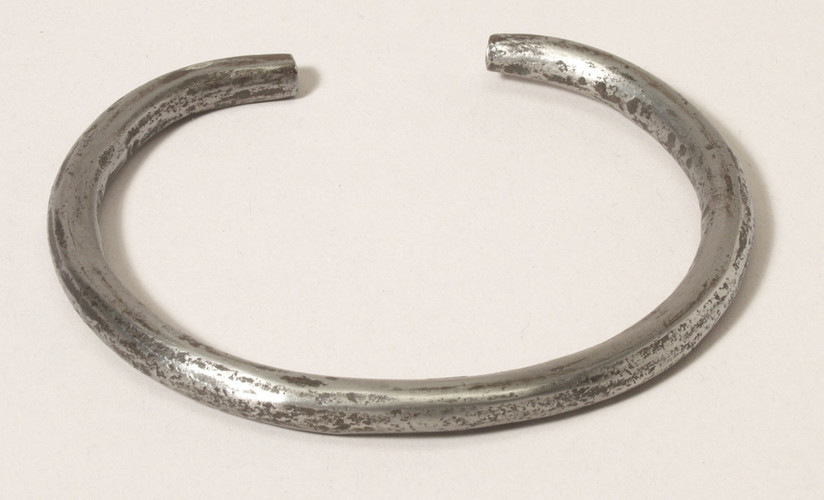 1884.82.28Narrow iron anklet with wide open ends [RTS 16/3/2004].1884.82.28
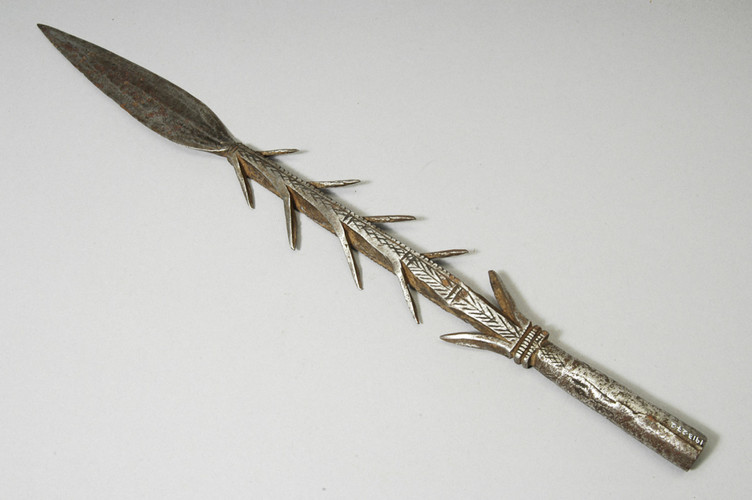 1913.27.2Iron spearhead with leaf-shaped blade, long barbed and decorated shaft and socketed base [RTS 24/6/2005].1913.27.2
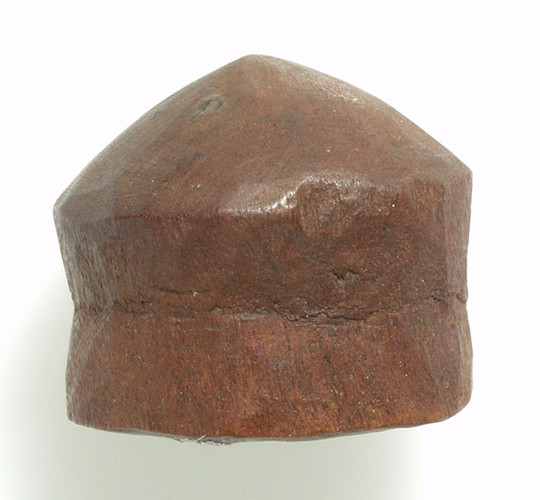 1884.84.92Undecorated cylindrical wooden lip stud with conical top and concave sides, worn by women in their lower lip [RTS 11/5/2004].1884.84.92