
- Collection type
- Object
- Description
- Penannular iron arm or leg ornament with circular section and 9 notches on the inside face [RTS 21/7/2005].
- Long description
- Penannular arm or leg ornament, made from an iron rod with a circular section, flattened in places, and bent into a circular loop with ends 2 mm apart. These have been cut flat, and are decorated on their inside face with 9 notches on one side of the opening; there is also an additional shallow incision where the blow for the notch was misplaced, and not carried through. The iron is a pale metallic gray colour (Pantone 420C) with some surface rust. The object is complete, with a weight of 20.6 grams. It has an external diameter of 88.2 by 87.2 mm and an internal diameter of 82 by 80 mm, while the bar from which this has been shaped is 3.8 mm wide and 3.8 mm thick [RTS 21/7/2005].
- Geographical reference
- Panikware
- Cultural groups
- Acholi
- Person
- Field collector Frederick John Jackson
- PRM source Ipswich Museum
- PRM source Patricia Margaret Maclaren Butler
- Date / Period
- Date made: Before 01/06/1912
- Date collected
- 1st June 1912
- Acquisition information
- Purchased: 1966
- Materials and processes
- Material Iron Metal, Process Forged (Metal), Process Hammered, Process Bent, Process Notched, Process Decorated
- Dimensions
- Depth: max 3.8 mm, Diameter: max 88.2 mm, Diameter: max 82 mm internal, Weight 20.6 g
- Object numbers
- Accession number: 1966.1.517.18
- Research and responses
This ring could have been worn on the upper arm, around the wrist or ankles; the suggestion that it was worn on the arm may be based on the fact that the ring is quite slender and of moderate diameter, but this is by no means a certainty. Several of the rings in this group are notched on the inside edges; this kind of notching was often used to help the owner arrange a group of ornaments in order, often of increasing diameter. Many Nilotic peoples wear multiple armlets or anklets in this fashion, including the Acholi (Trowell, M. & Wachsmann, K.P., 1953, The Tribal Crafts of Uganda, 216, as group wrist ornaments worn by women, and 219-220, worn around ankles and below the knee). Compare this also with other Acholi items from the Ipswich collection, 1966.1.518 - a multiple group of rings that are fastened together with bark fibre, and 1966.1.571, a neck ornament made of multiple iron rings fastened in a similar fashion.
The name Panikwar appears written on the handle of 1966.1.272, with a collection date of the 1st of June 1912 then the comment 'Jackson colln.', i.e: from Frederick John Jackson, who formed a collection of Acholi material while governor of Uganda, a post which he held from 1911 to 1917. This suggests that the other Acholi items in the Ipswich group associated with this name are also probably part of the Jackson collection. In 1922 C.G. Seligman recorded visiting somewhere called 'the Panikware resthouse' in what is now the district of Eastern Equatoria, around 12 miles from the Acholi village of Magwe. This makes it seem likely that Panikwar is a geographical place than a person's name. However the tendency for the same name to be used for different places within a region has been noticed in this part of Sudan, which may mean that Jackson's Panikware was not the same as that visited by the Seligmans [partly based on information collected by Fran Larson from the unpublished diaries of C.G. and B.Z. Seligman in the Archives of the London School of Economics (Seligman manuscripts, files 1/4/1 and 1/4/6) [RTS 21/7/2005].
Search terms: Ornament, Arm Ornament, Leg Ornament
Further items to explore
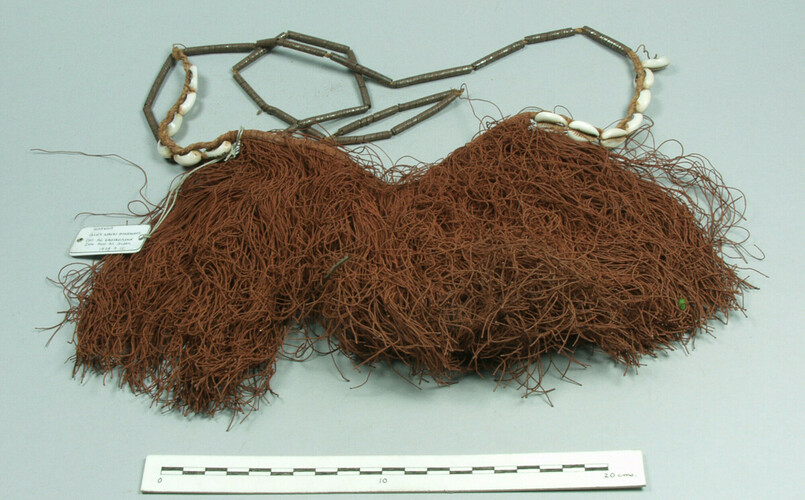 1978.9.12Girl's waist ornament of a reddened vegetable fibre string fringe on a cord covered with cowrie shells and iron spirals. [EC 'DCF 2004-2006 What's Upstairs?' 14/2/2006]1978.9.12
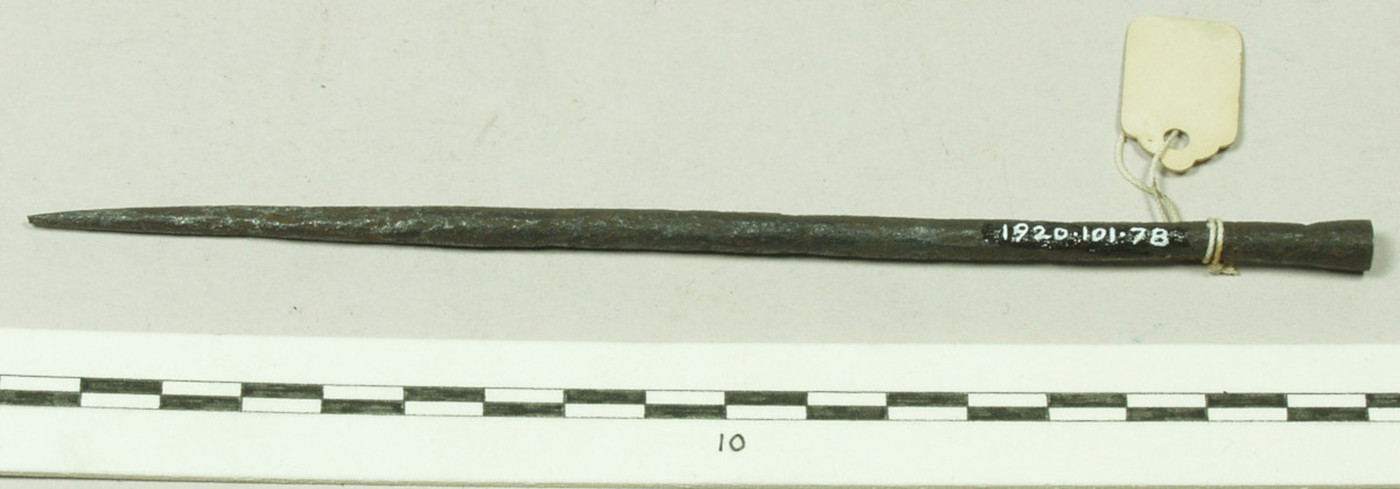 1920.101.78Cautery-iron, for blistering to cure headache.1920.101.78
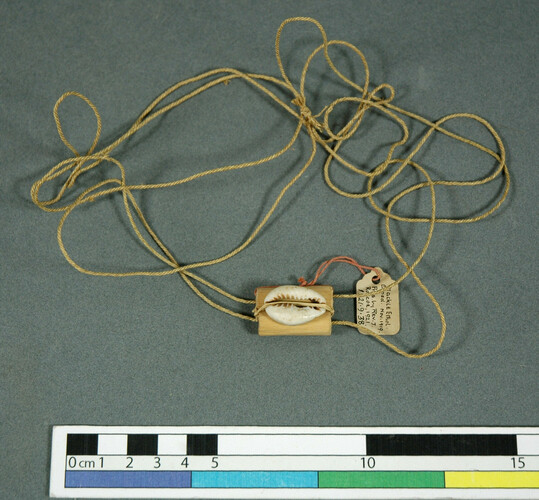 1921.9.38Amulet worn by pregnant women.1921.9.38
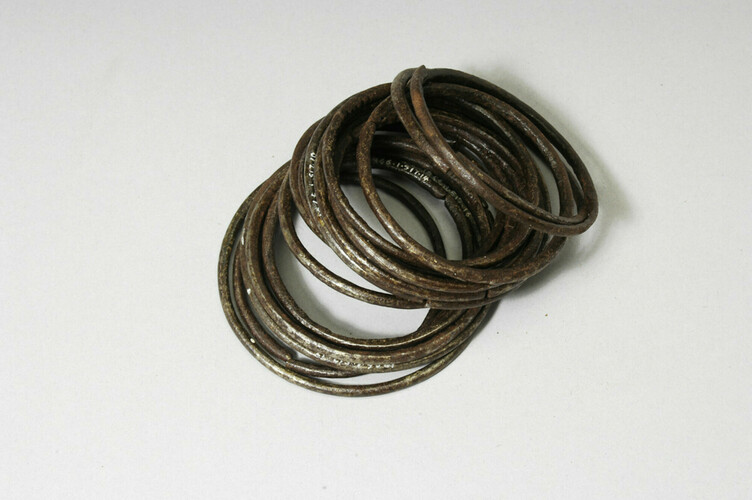 1966.1.517.13Penannular iron arm or leg ornament with oval to trapezoidal section and overlapping ends [RTS 21/7/2005].1966.1.517.13