
- Collection type
- Object
- Description
- Hide back apron with thin ties, edged with small glass beads down one side [RTS 22/6/2004].
- Long description
- Back apron made from a piece of light yellow hide (Pantone 7508C), the surface largely discoloured a darker brown (Pantone 7533C), with patches of red ochre (Pantone 7524C) and a small piece of resin adhering. The hide has been cut to form a broad back flap with a mostly straight top edge that rises at the centre to form a short triangular peak; the ends of this taper to form two rectangular strips that serve to tie the apron in place around the waist. These strips have been folded over and compressed through use, from a width of around 25 mm to 5 mm. Black animal hair has been left on the surface of the side ties in patches. The side edges of the back apron taper in towards a curved lower edge. One of these sides has been decorated with a band of beadwork, made up from 617 small opaque glass ring or seed beads with convex sides, consisting of 594 white, 18 dark blue (Pantone 281C) and 5 sky blue beads (Pantone 305C), arranged in 149 rows, with four to five beads in each row. The first 18 rows near the top of the apron have columns made up of four white beads with a dark blue bead at the base; there is one similar column with a sky blue bead in place of the dark blue bead. The rest of the columns are made up of white beads, except for one column of four sky blue beads. The beads have been sewn together using fibre thread, possibly cotton, with the thread stitched onto the edge of the hide and then passed up and down each short column of four to five beads, with occasional knots along the outer edge. This stitching appears to have come loose in 2 places. The apron, while largely complete, has numerous damage holes across the surface; a long tear has also been mended locally with fibre thread. The apron is 490 mm long, and 1030 mm wide across the top (including the ties), or 470 mm (back flap only). Two sizes of ring bead have been used; the smaller type, which appears in all three colours, is typically 2.5 mm in diameter and around 1.5 mm thick, while the larger bead, used for white beads only, for the last 41 rows of the band, is 3.5 mm in diameter and 2 mm thick. The hide is less than 1 mm thick [RTS 22/6/2004].
- Cultural groups
- Bari (Nilotic)
- Person
- Field collector Percy Horace Gordon Powell-Cotton
- Field collector Hannah Powell-Cotton
- PRM source Percy Horace Gordon Powell-Cotton
- Date / Period
- Date made: Before 1933
- Date collected
- 22nd January 1933
- Acquisition information
- Donated: 1934
- Materials and processes
- Material Animal Hide Skin, Material Glass, Material Cotton Seed Fibre Yarn Plant, Process Beadwork, Process Strung, Process Stitched, Process Repaired (local)
- Dimensions
- Length 490 mm, Width 470 mm back flap top, Width 1030 mm
- Object numbers
- Accession number: 1934.8.44 Other numbers: 24
- Research and responses
The accession book entry implies that the object was collected from the town of Mongalla, rather than from the province of that name; this town is located in the modern administrative district of Bahr el Jebel.
Powell-Cotton gives the Bari name for this object as kaperia, and it is worn at the back - note however that he gives a similar term, kapera, for girl's waist fringe 1934.8.46, so the word may be either incorrect, or only a generic term for this particular set of clothing. For a similar Bari apron, see 1903.2.6.2; this was part of a set worn by women, with back apron and front fringe apron [RTS 6/9/2005].
Search terms: Clothing, Ornament, Bead, Apron, Groin-cover, Waist Ornament
Further items to explore
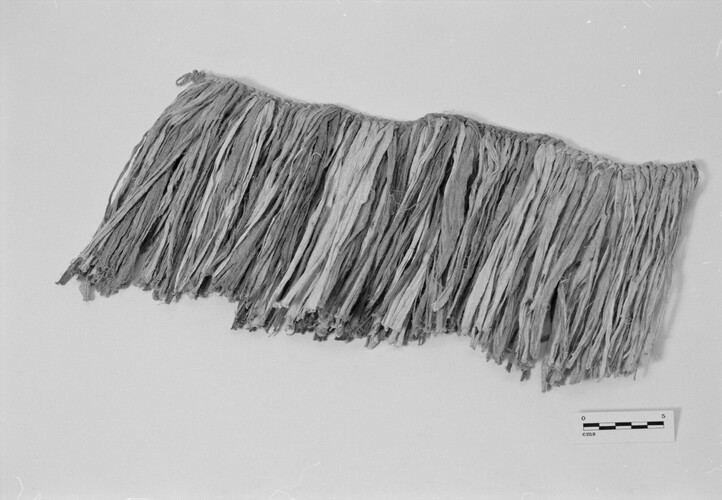 1996.40.27Waist ornament or apron made from strips of dyed and self-coloured plant fibre tied to a string top. There is a string at the back for tying it around the body.1996.40.27
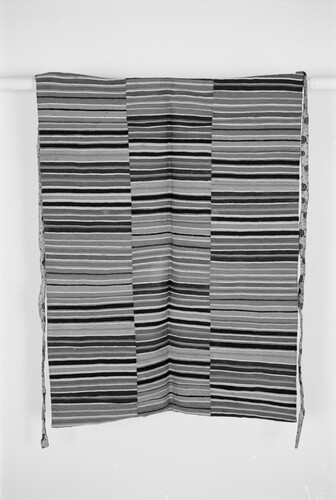 1996.36.1One of four Tibetan women's aprons1996.36.1
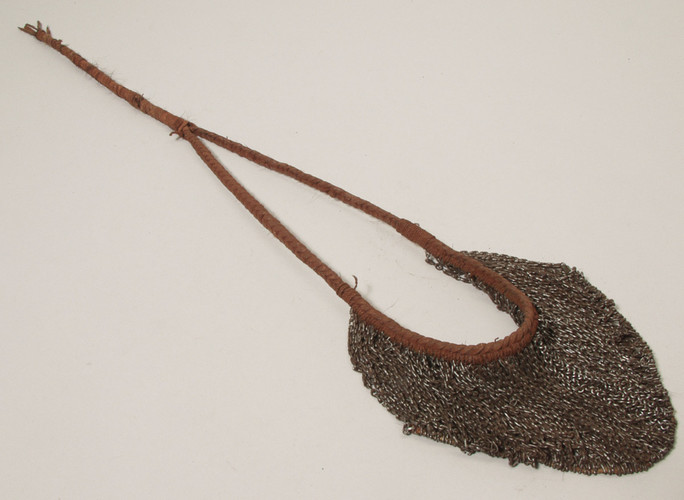 1925.14.8Plaited hide girdle with iron chainwork apron in front, worn by unmarried women or women who have not yet borne two children [RTS 10/6/2004].1925.14.8
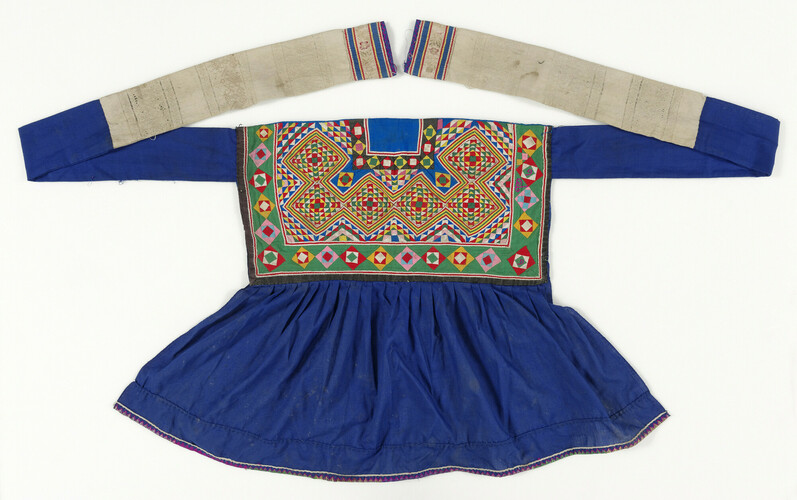 2009.135.129Apron with appliqué decoration. [FB 24/07/2012]2009.135.129
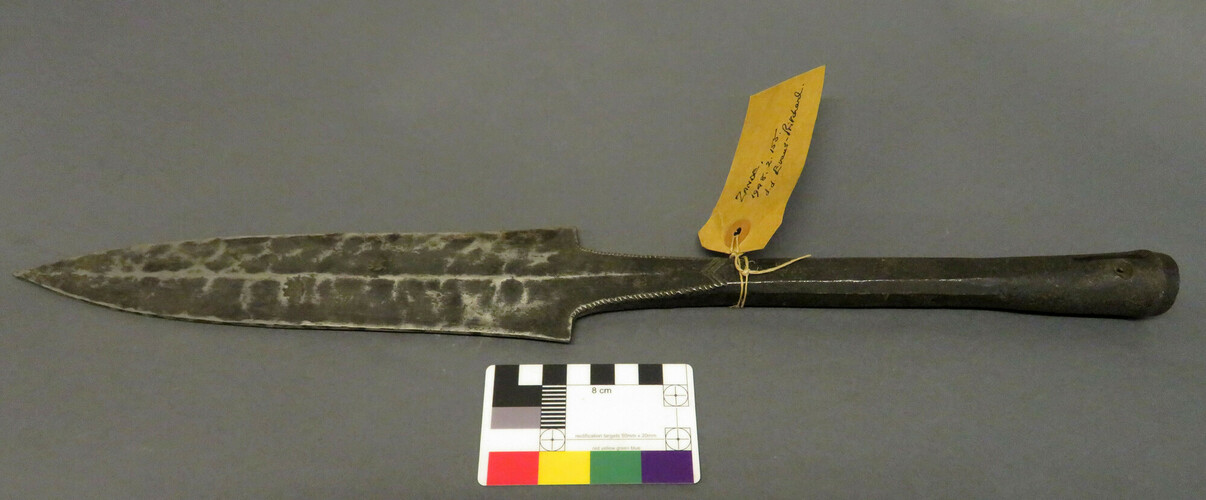 1948.2.155Iron spear head, socketed. [ASh [OPS move] 26/9/2017]1948.2.155
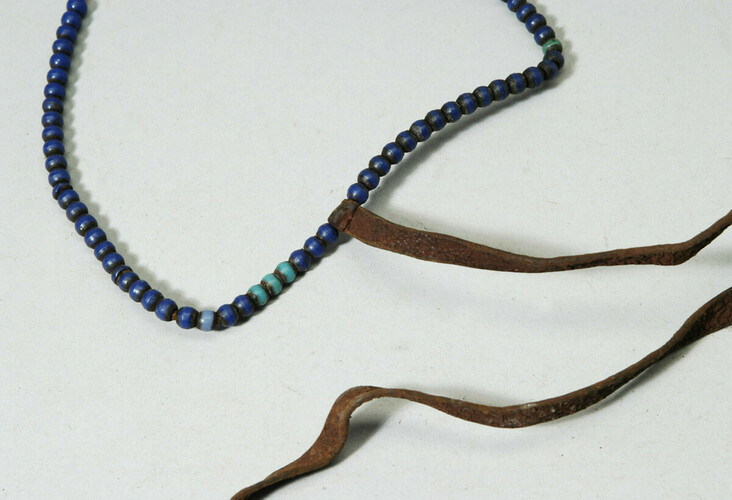 1940.7.081.2Waist ornament consisting of thin hide belt strung with blue and turquoise glass beads, with a long hide strip hanging from the centre, worn by women [RTS 1/4/2005].1940.7.081.2
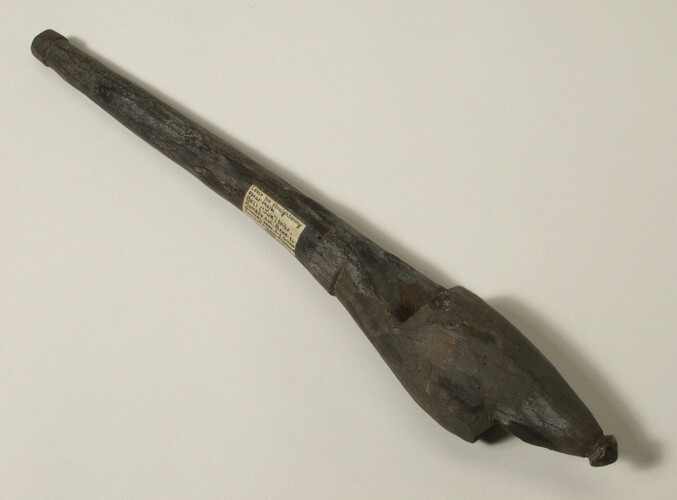 1929.47.1Wooden tool for straightening spear shafts [RTS 16/2/2004].1929.47.1
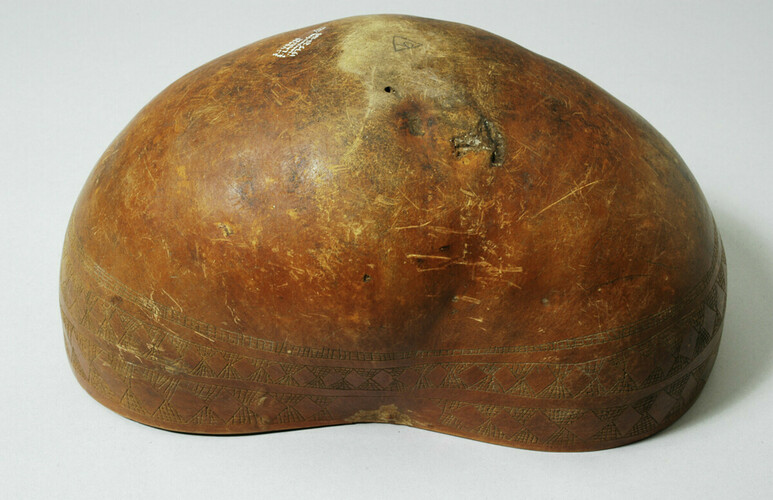 1979.20.168Oval gourd food bowl with incised decoration below the rim [RTS 24/3/2005].1979.20.168