
- Collection type
- Object
- Description
- Large fragment of deer antler, possibly used as a pick. Part of crown still attached. [RH [OPS Move] 19/4/2017]
- Geographical reference
- England Norfolk Breckland Weeting-with-Broomhill Grimes Graves
- Date / Period
- Archaeological period: Neolithic, uncertain
- Date collected
- July 1929
- Acquisition information
- Donated: 1941
- Materials and processes
- Material Animal Antler
- Dimensions
- Length: max 415 mm, Depth: max 70 mm, Width: max 92 mm
- Object numbers
- Accession number: 1941.10.57
- Research and responses
Please note that the Donor Index cards at the Ashmolean Museum, Department of Antiquities, lists a W.H. Young as donating an object in 1966. They also note that he is the Restorer at the Ashmolean Museum 1900 - 1937. [L.Ph 26/3/2004]
Note that according to an article in British Archaeology Armstrong dug at Pit 15 between 1937-9, he must also have dug that earlier [AP 25/09/2006]
Grimes Graves [TL 8177 8976] is a later Neolithic flint mining complex in the parish of Weeting with Broomhill, Breckland district of Norfolk. The site covers approx. 6 hectares [14.83 acres] and at least 443 shafts are thought to survive. The first recorded investigations at the site occurred in the 1850s. Starting in 1914 the Prehistoric Society of East Anglia undertook 25 years of continuous excavation at the site under a series of distinguished directors [details can be found on the NMR record listed below]. A L Armstrong was director of fieldwork between 1920 and 1939. [MN 22/06/2009]
Grimes Graves is recorded on the English Heritage maintained National Monuments Record under monument no. 382869. This record can be accessed online, see http://pastscape.english-heritage.org.uk/hob.aspx?hob_id=382869. [MN 22/06/2009]
The site is recorded on the Norfolk Historic Environment Record under NHER no. 5640. This record can be accessed online at http://www.heritage.norfolk.gov.uk. [MN 22/06/2009]
There are numerous publications relating to excavation at Grimes' Graves, those listed below simply the most pertinent to items in the PRM. Canon Greenwell excavated 1868-70, and published his results in 1870 in The Journal of the Ethnological Society of London 4 : 419-439. Major excavations were undertaken by the Prehistoric Society of East Anglia between 1919-1939 with AE Peake and later AL Armstrong directing and with many members taking part or visiting the site. All the following papers were published in Proceedings of the Prehistoric Society of East Anglia: HGO Kendall, vol. 3:104- 108, 192- 199, 290- 305; AE Peake, vol. 3: 73-93; D Richardson, vol. 3: 243- 258; WG Clarke, vol. 3: 431- 433; AL Armstrong, vol. 3: 434- 443, 548- 558 vol. 4: 113-125, 182- 202 vol. 5: 91- 136 [CB 8/12/2009]
Search terms: Tool, Animalia, Pick, Animal Part
Further items to explore
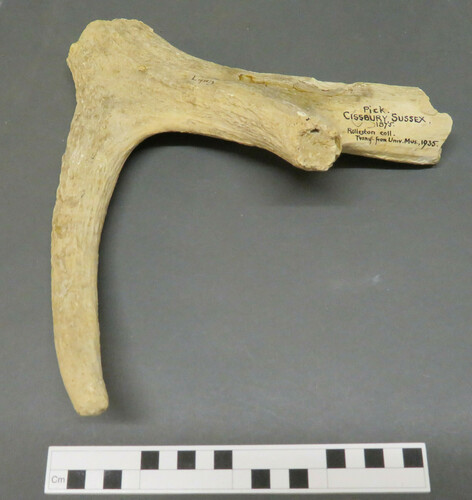 1935.46.9Deer antler fragment possibly used as a pick. There is evidence of extensive repair on one side. [RH [OPS Move] 19/4/2017]1935.46.9
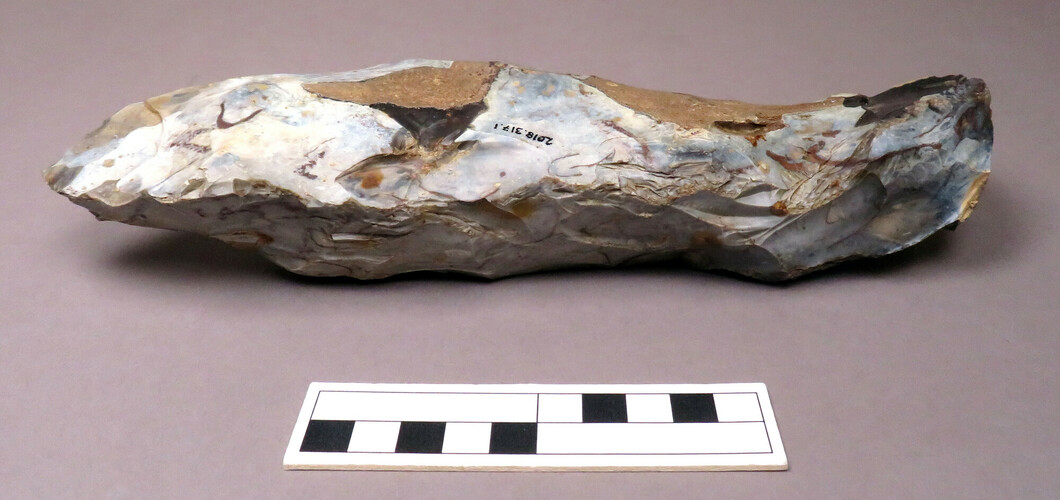 2018.317.1Knapped flint pick dating to the Mesolithic Period (10,000 - 4,000 BC). [JMC 21/12/2018]2018.317.1
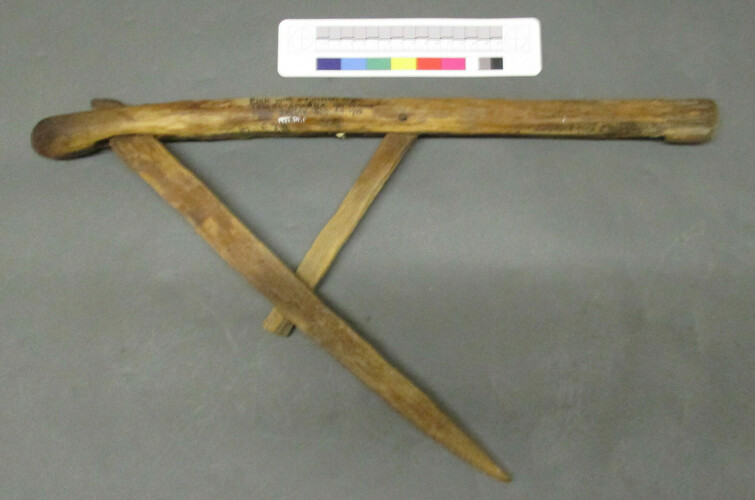 1922.30.1Wooden pick, made from three interlocking pieces of wood, forming roughly an A-shape.1922.30.1
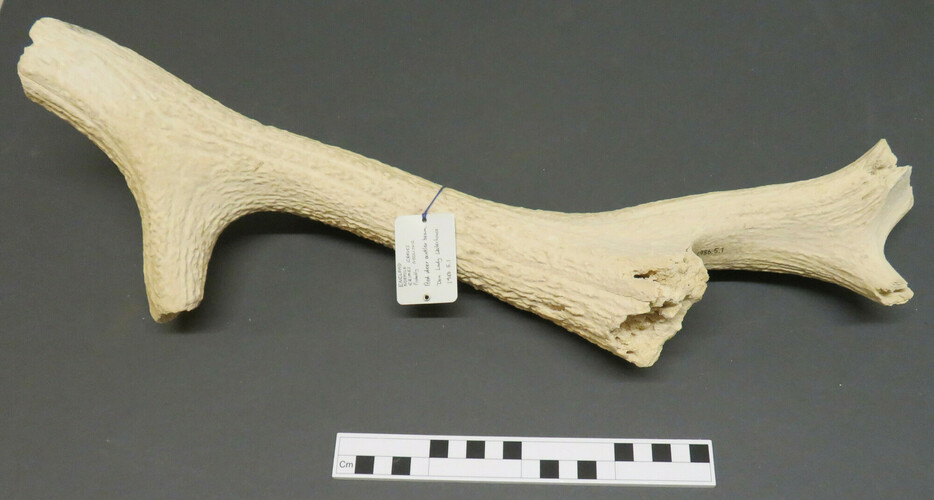 1986.5.1Large beam fragment of red deer antler, probably used as a pick. The bone is bleached white. [RH [OPS Move] 19/4/2017]1986.5.1
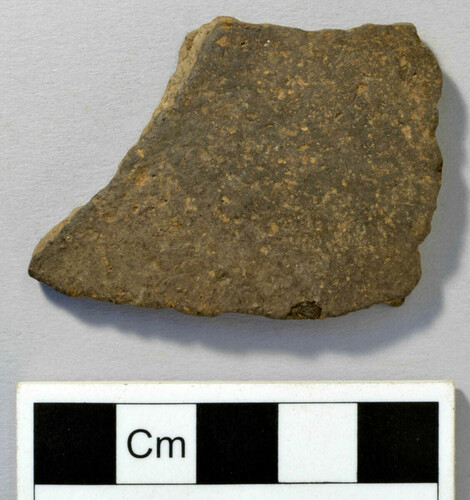 1884.137.65.13Ceramic sherd1884.137.65.13
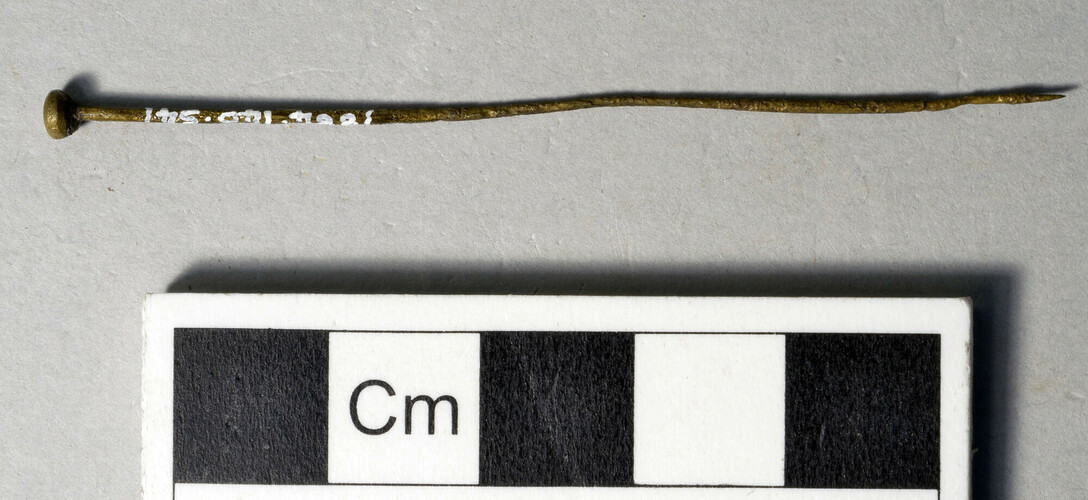 1884.140.541Bronze pin1884.140.541
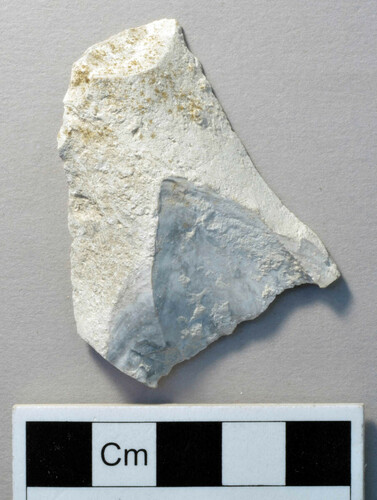 1884.136.42Stone flake1884.136.42
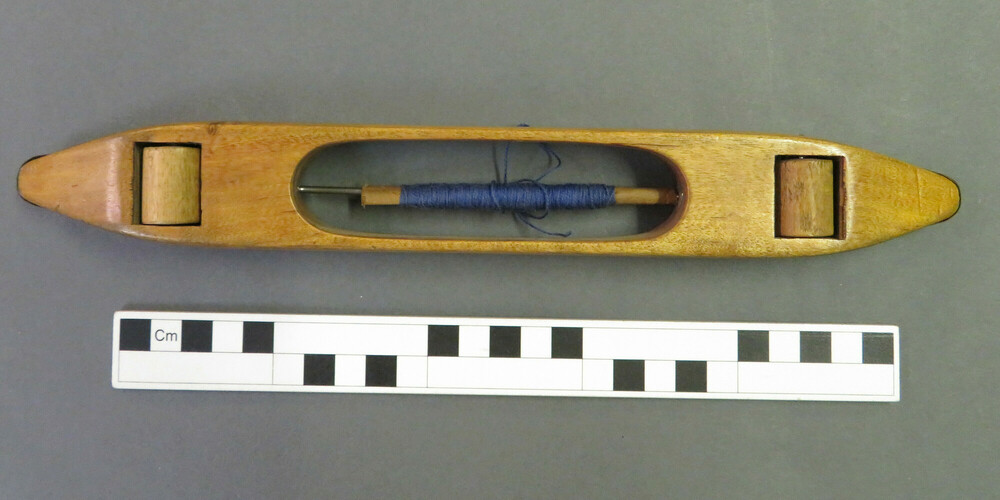 2002.21.1Bobbin or weaving shuttle made of wood and metal. Attached to the shuttle is a pirn or quill of rolled paper wound with dark blue machine spun cotton yarn.2002.21.1