
- Collection type
- Object
- Description
- Two-edged iron rapier blade of lozenge section, grooved near the hilt on both sides and with a perforated tang.
- Long description
- Two-edged iron rapier blade of lozenge section, grooved near the hilt on both sides and with a perforated tang. In both grooves is the inscription 'SAHAGVM' with an incised oval at each end of the word.
- Geographical reference
- Cultural groups
- English
- Date / Period
- Date made: Before 1906
- Date collected
- 1906
- Acquisition information
- Donated: 1911
- Materials and processes
- Material Iron Metal, Material Steel Metal, Process Inscribed, Process Forged (Metal), Process Incised, Process Perforated
- Dimensions
- Length: max 1035 mm
- Object numbers
- Accession number: 1911.29.9
- Research and responses
Alonzo de Sahagun, sword-cutler, Spaniard, of the sixteenth century, called the elder, was living in 1570 [http://atkinson-swords.com/marks-and-stamps/makers-marks/marks-of-individual-chief.html accessed 30/03/2015]. The Wiscasset Antiques website records a sword they have engraved 'Sahagum' with an image of the Passau running fox and “Crown XX”. Due to the known blades that were made in Germany in the 17th century with the “Sahagum” or “Sahagon” mark copying the world renowed Spanish sword maker and the running fox, they believe their sword to be of German manufacture. [http://www.wiscassetantiquescenter.com/edged_weapons.htm accessed 30/03/2015] [MJD 30/03/2015]
The reference to Egerton Castle ''Schools and Masters of the Fence: From the Middle Ages to the Eighteenth Century' p.225 says 'Only a few of our warriors, who have had practical experience in combat 'á l'arme blanche' against Asiatic swordsmen, take any special interest in their side arm, and they often solve the difficulty by inserting an authentic blade some three hundred years old, signed 'Sahagum' or 'Ferrara', into a modern regulation hilt. [MJD 30/03/2015]
According to the British History Online article on Jesus College 'In 1906–8 the Ship St. buildings and the Leoline Jenkins Laboratories were built. The laboratories were formally opened on 23 June 1908, although they had been in use for the greater part of the academic year 1907–8.'. 'Jesus College', in A History of the County of Oxford: Volume 3, the University of Oxford, ed. H E Salter and Mary D Lobel (London, 1954), pp. 264-279 http://www.british-history.ac.uk/vch/oxon/vol3/pp264-279 [accessed 31 March 2015]. [MJD 31/03/2015]
Search terms: Weapon, Writing, Sword, Inscription
Further items to explore
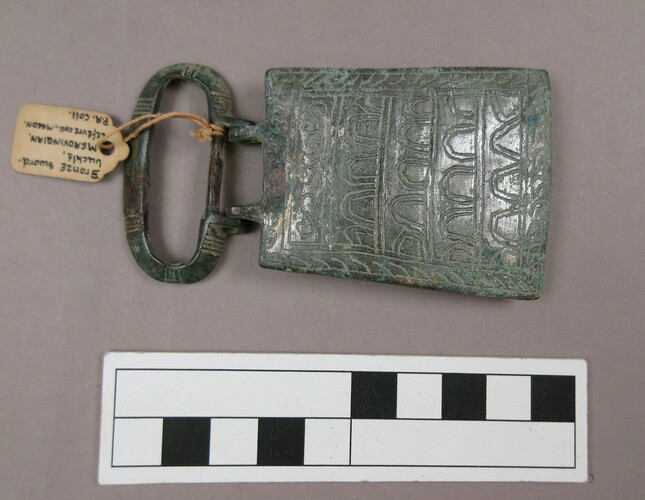 1884.80.48.1Merovingian quadrangular plaque [.1], with oval sword buckle [.2]. Incised decoration1884.80.48.1
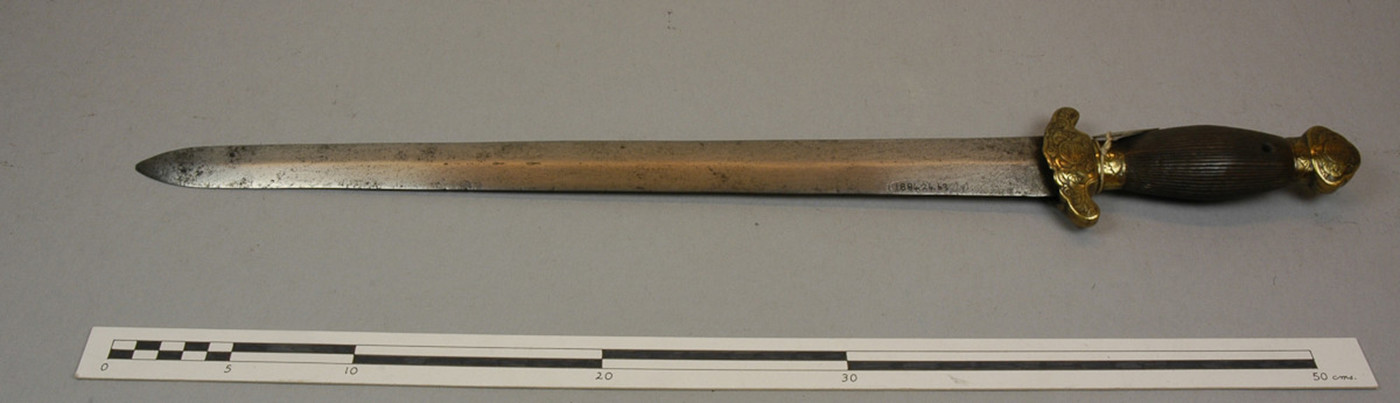 1884.24.63Sword with straight two-edged blade, grooved and perforated wooden grip; brass guard and pommel with relief decoration of bats. [LM 14/11/2007]1884.24.63
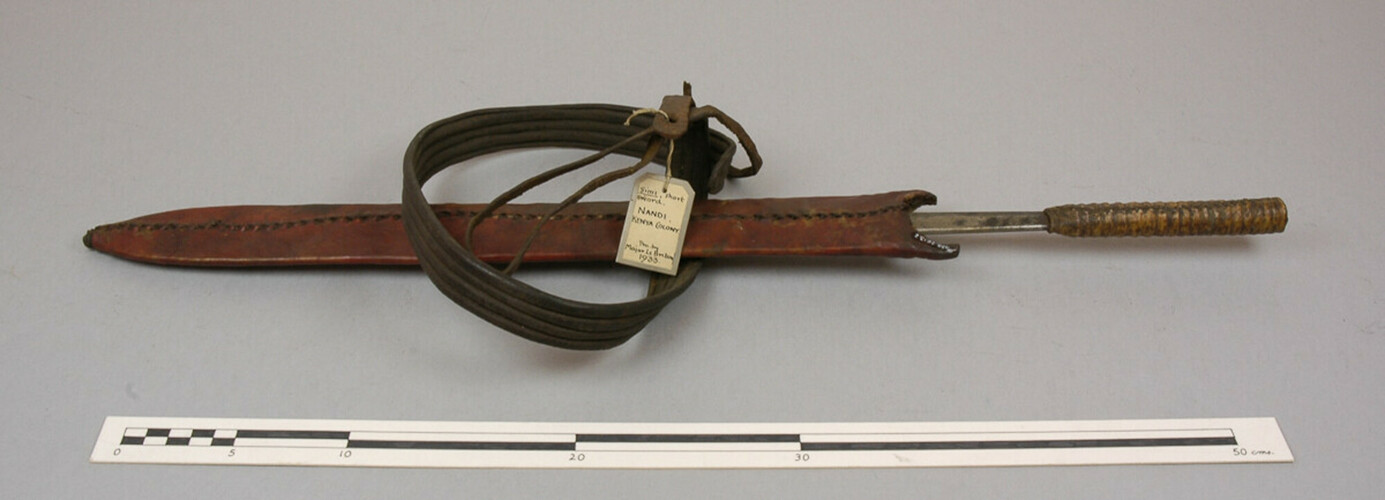 1933.26.13.1Short sword [.1] hilt bound with natural coloured leather and red leather sheath [.2] with attached leather belt.1933.26.13.1
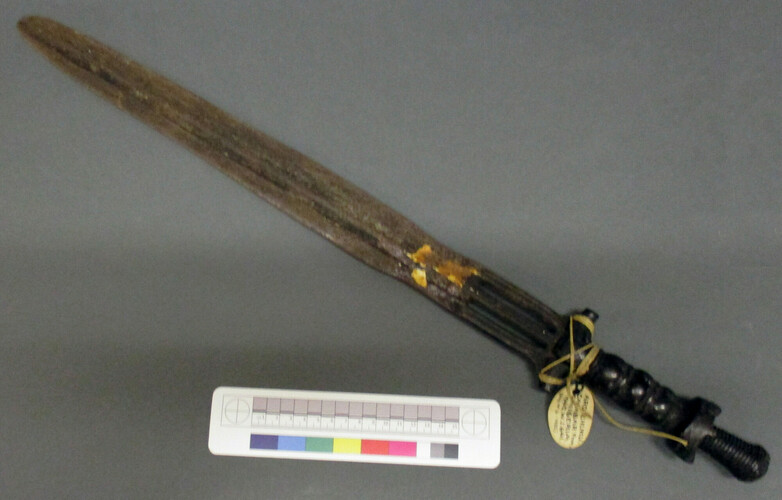 1942.13.641Sword, with straight, two-edged, fluted blade. Probably for sacrificial use. [AB [OPS Move] 22/11/2016]1942.13.641
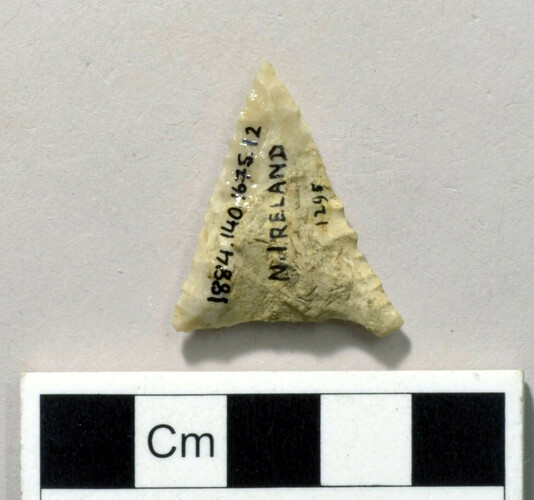 1884.140.1675.12Stone arrow-head1884.140.1675.12
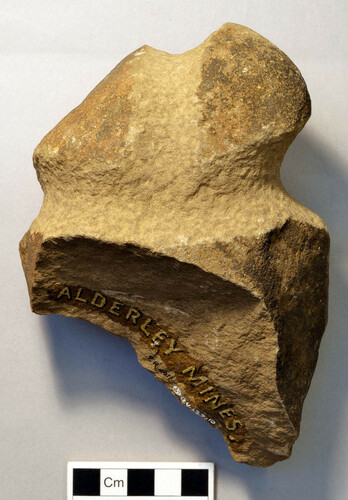 1884.127.10Hammer-stone; fragment.1884.127.10
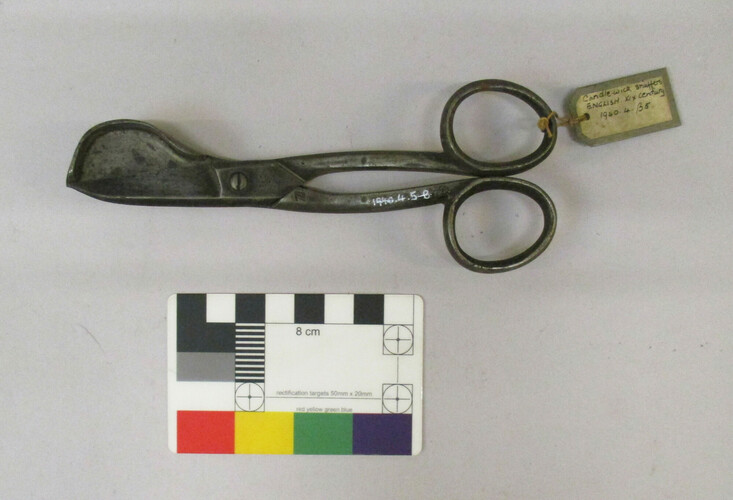 1940.4.5BScissor candle snuffers. [MdeA [OPS move] 07/07/2016]1940.4.5B
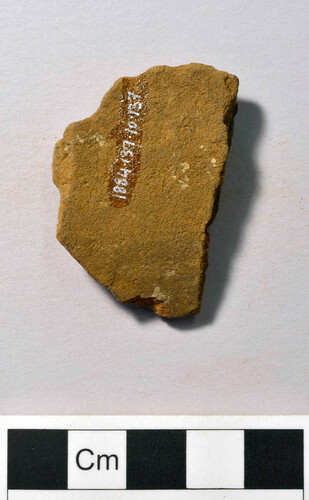 1884.137.10.137Ceramic sherd1884.137.10.137