
- Collection type
- Object
- Description
- Hammer-stone; fragment.
- Long description
- Fragment of a sandstone hammer-stone with groove marks from where it was formerly hafted. [CG [Excav. PR] 10/09/2013]
- Geographical reference
- England North-West Cheshire Macclesfield Alderley Edge
- Person
- Maker Unknown Maker
- Field collector William Boyd Dawkins
- PRM source Augustus Henry Lane Fox Pitt Rivers founding collection
- Date / Period
- Archaeological period: Romano-British
- Date collected
- By 1875 Oct 11
- Acquisition information
- Donated: 1884
- Materials and processes
- Material Sandstone Stone, Process Grooved
- Dimensions
- Thick: max 78 mm, Width: max 108 mm, Length: max 171 mm, Weight 1133 g
- Object numbers
- Accession number: 1884.127.10
- Research and responses
JAI vol v page 2 has a paper given by Prof W Boyd Dawkins FRS at the Anthropological Institute meeting on 9.2.1875 when he also exhibited a series of stone mining tools from Alderley Edge. He had been walking in the excavations of the copper mines at Alderley Edge with H Wilde when he has spotted the worked tools [AP Leverhulme project on founding collection 1995-1998]
See http://www.derbyscc.org.uk/alderley/ for details about the mines at Alderley Edge, they were used to mine copper and lead [AP 03/08/2006]
The English Heritage maintained National Monuments Record holds maintains a record on the site under monument no. 76343. The record states the following about the site: Old mine-workings for copper have been identified at Engine Vein (SJ 8605 7748), Brindlow (c. SJ 855 773), Stormy Point (SJ 8611 7784), in Windmill Wood quarry (SJ 8550 7760) and at Saddlebole (SJ 8604 7810), but only at Brindlow were they undisturbed by later workings. They were open workings and a large number of grooved stone hammers have been recovered either from the pits or their tips. The hammers (illustrated in 1) were first assigned c. 1874, to the Bronze Age by Professor Boyd Dawkins, but later because an oak shovel...and an iron pick were found in association with hammers (the shovel at an unspecified spot between 1876 and 1878, and the pick at Engine Vein c. 1904) were considered Romano-British. The record can be accessed online at http://pastscape.english-heritage.org.uk/hob.aspx?hob_id=76343. [MN 12/06/2009]
- Associated publications
- Boyd Dawkins, W. 1876. On the Stone Mining Tools from Alderley Edge, Cheshire. Journal of the Anthropological Institute of Great Britain and Ireland 5: 2-5 http://www.jstor.org/stable/2841358 [Dan Hicks 04/07/2013]
Search terms: Tool, Metallurgy, Hammer-stone
Further items to explore
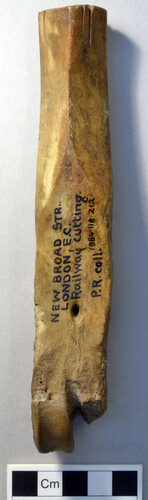 1884.118.212Bone anvil1884.118.212
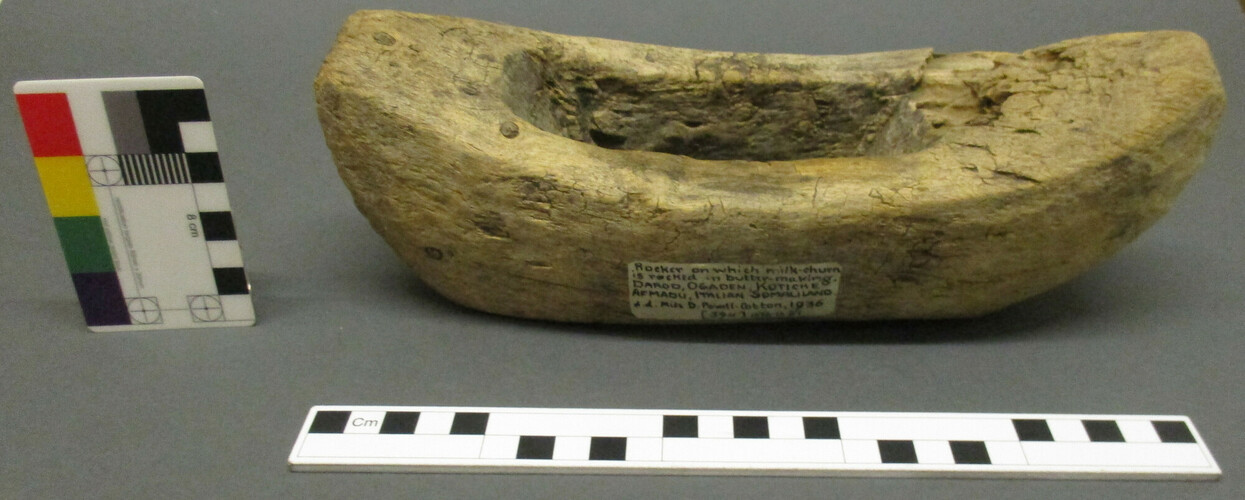 1936.16.84Wooden rocker. This wooden rocker is used upon a milk-churn and is rocked when butter-making. Made from a semicircular length of wood with a hollowed out rectangle in the centre of the piece. Rough edges. [ASh [OPS move] 17/10/2016]1936.16.84
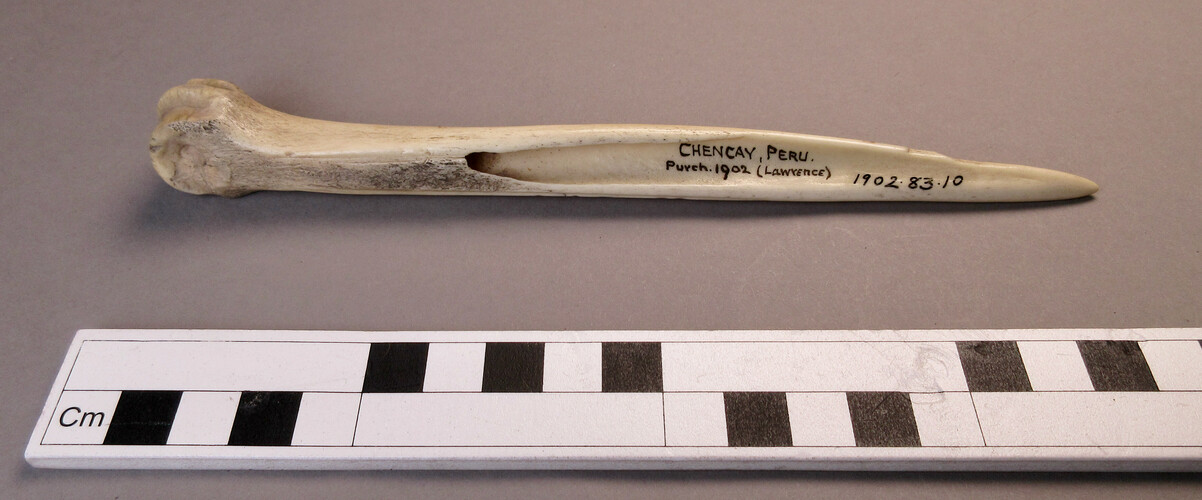 1902.83.10Bone awl or dagger1902.83.10
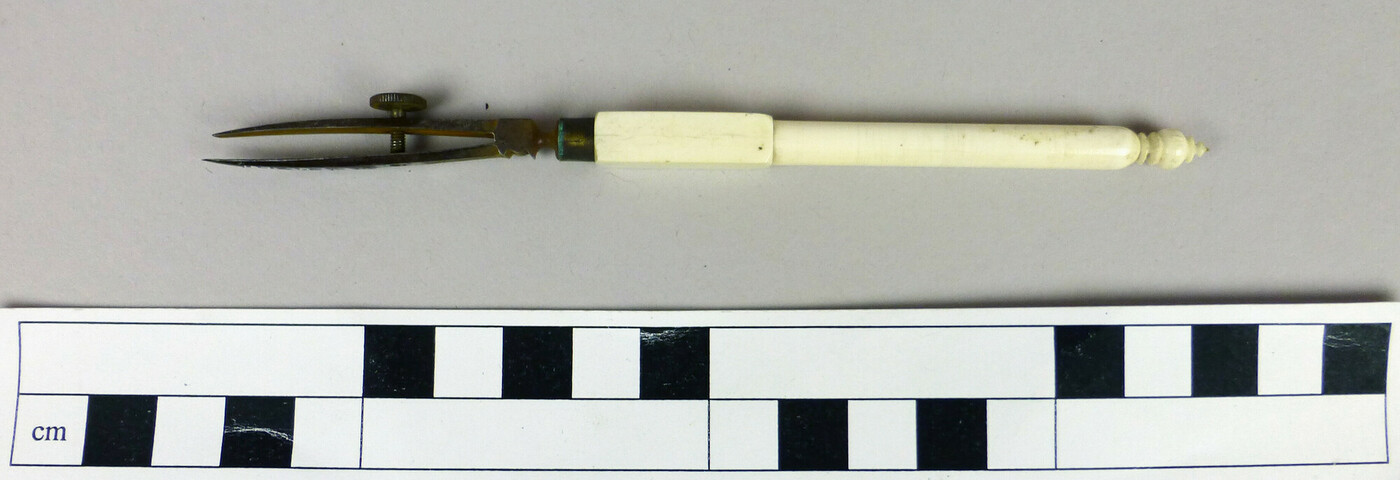 1971.30.3.3A drawing instrument with ?ivory handle [SM (Verve) 12/6/2017]1971.30.3.3
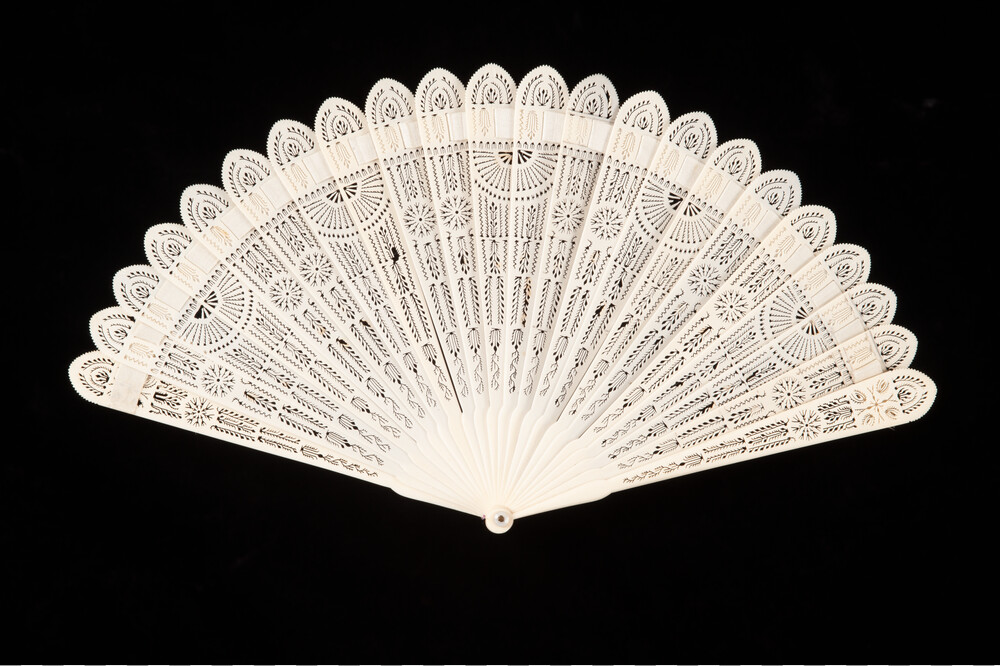 1942.6.202.1Carved Victorian ivory fan. [with box, see 1942.6.202 .2-.3]1942.6.202.1
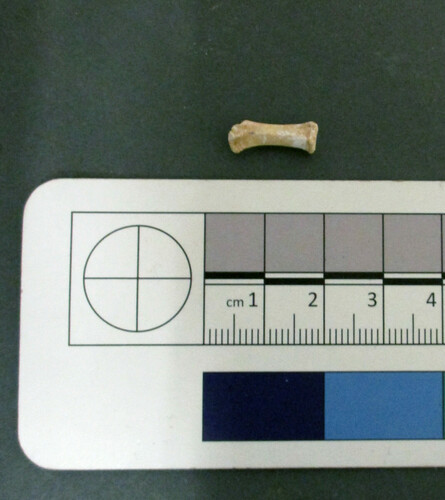 1935.46.14.115Small animal long bone, one end is chipped. [RH [OPS Move] 19/5/2017]1935.46.14.115
 1933.90.13Fire steel with ends bent upwards and meeting in the middle. [El.B 10/12/2007]1933.90.13
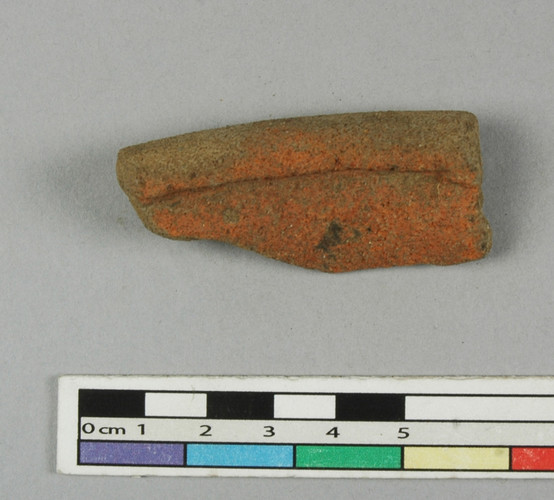 1884.138.4.23Ceramic rim sherd1884.138.4.23