
- Collection type
- Object
- Description
- Mudstone [greywacke] tag.
- Date / Period
- Archaeological period: Ancient Egyptian Predynastic
- Date collected
- By 1901
- Acquisition information
- Donated: 1901
- Materials and processes
- Material Slate Stone, Material Mudstone Stone, Material Stone, Process Carved
- Object numbers
- Accession number: 1901.29.25
- Research and responses
Photograph of objects on pl. VII of excavation report (1902). [AS 07/06/2012]
Tomb a88 was considered by the excavators to be one of the richest most interesting graves at the site, as described on p. 36-37 of the excavation report: "a88 was a grave of Class 3, interesting for the remarkable outfit of small objects of personal use placed with the woman who was buried with it. These are shown in pl. vii. 2, arranged in exactly the relative positions which they occupied in the grave. The woman was lying on her right side, her two arms were sharply bent and the hands brought up almost to the face. The two slate objects at the top of the picture were just in front of the lower jaw; the ivories, limestone pegs, and ivory tags which follow lay just above the left hand, and along the left arm almost to the elbow. It is very difficult to suggest any explanation of the meaning of this outfit. Possibly it formed the complete paraphernalia of a witch-doctor. Individually all the articles belonging to it are well known and frequently occur in other graves, but the combination seen in the present case is quite peculiar (S.D. 36-39)."
These objects were originally identified in the 19th century as 'slate' palettes, a geological identification that became synonymous with palettes. This, however, is incorrect. Rather the material used for these artefacts was mudstone (also referred to with the broader term greywacke and sometimes siltstone - all related stones but with different grain sizes) from the Wadi Hammamat in the Eastern Desert . [As 24/04/2009]
- Associated publications
- Randall MacIver, D. and Mace, A. (1902) El Amrah and Abydos 1899-1901. London: Egypt Exploration Fund. [AS 07/06/2012] These objects are also discussed on pages 521, 523, 530 and 542 of Hendrickx, S. and Eyckerman, M. (2011) 'Tusks and tags: between the hippopotamus and the Naqada plant'. In Friedman, R. and Fiske, P. (eds) Egypt at its Origins 3. Leuven: Peeters Publishers (OLA 205), 497-570. [AS 07/06/2012]
Search terms: Tool, Death, Religion, Palette, Grave Good
Further items to explore
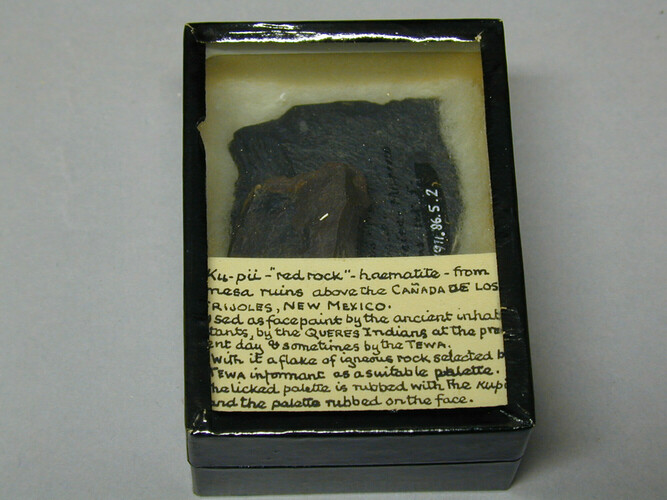 1911.86.5.1Haematite sample [.1] and palette [.2].1911.86.5.1
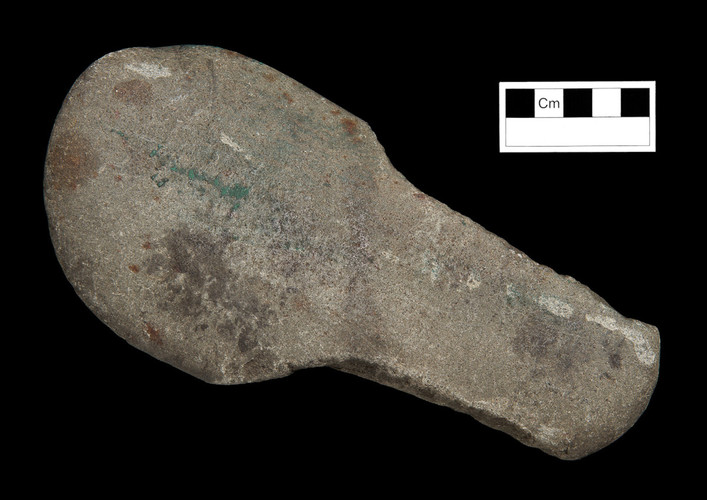 1924.33.7Flat stone tool, rounded and wider on one half and narrower and straighter on the other half. [CAK 17/05/2010]1924.33.7
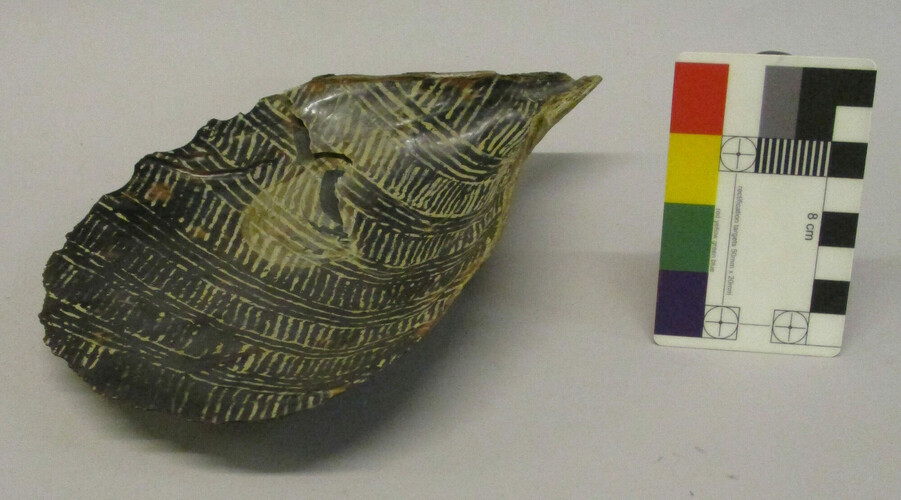 1884.61.8Shell vessel painted on inside, rows of white vertical lines divided by bands of white horizontal lines. [ZM 10/01/2006]1884.61.8
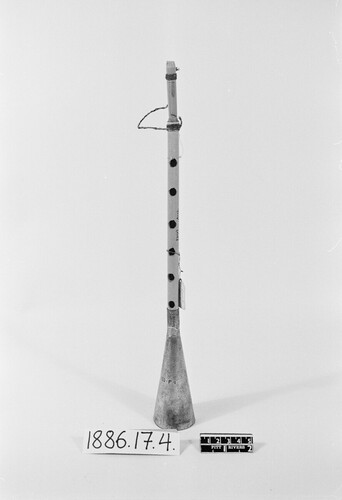 1886.17.4Reed pipe, with moveable sounding reed of smaller sized reed, attached by a string, the tongue slit from above downwards, 6 finger holes expanding bell mouth of tin.1886.17.4
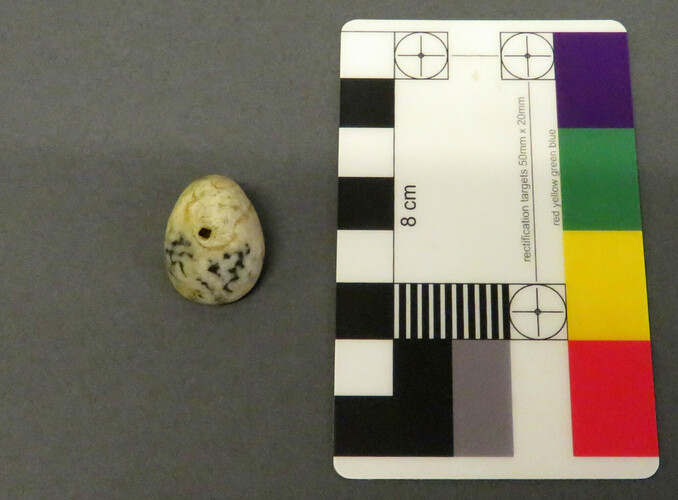 1985.54.3036Amulet, consisting of a shell, white in colour with a mottled grey pattern. Rounded in shape, with a perforation in the top. [AF [OPS Move] 05/12/2017]1985.54.3036
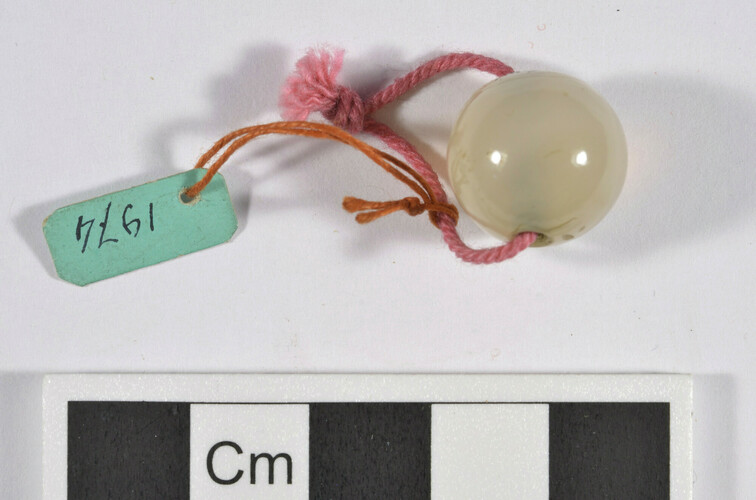 1985.52.993Amulet, opaque stone bead, perforated through the centre for suspension. [RB 23/04/2012]1985.52.993
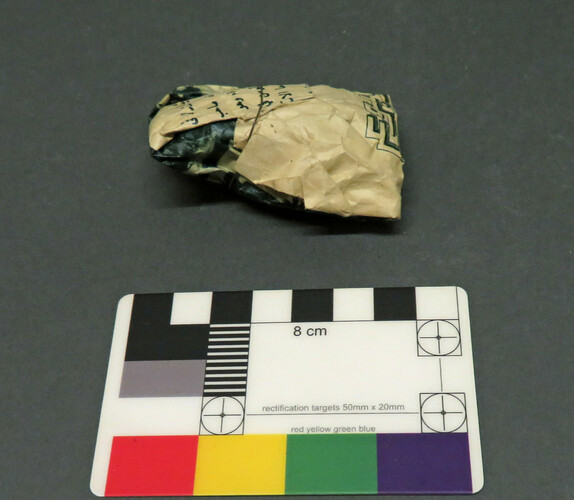 1985.54.484Amulet, packet of medicine? [ASh [OPS move] 22/08/2017]1985.54.484