
- Collection type
- Object
- Description
- Flat stone tool, rounded and wider on one half and narrower and straighter on the other half. [CAK 17/05/2010]
- Long description
- Flat stone tool, rounded and wider on one half and narrower and straighter on the other half. Green and brown materials or pigments and scratches are present. The grain of the stone is greyish in colour. [CAK 17/05/2010]
- Geographical reference
- British Columbia Haida Gwaii (Queen Charlotte Islands) NW Coast
- Cultural groups
- Haida
- Date / Period
- Date made: Before 1924
- Date collected
- By 1924
- Acquisition information
- Donated: 1924
- Dimensions
- Length: max 240 mm, Width: max 115 mm
- Object numbers
- Accession number: 1924.33.7
- Research and responses
There appear to be traces of iron oxide on one side, and perhaps copper oxide on another. [CAK 29/05/2009]
The following information comes from Haida delegates who worked with the museum’s collection in September 2009 as part of the project “Haida Material Culture in British Museums: Generating New Forms of Knowledge”:
This tool was viewed alongside other stone tools on Monday Sept 14, 2009. Delegates proposed a variety of uses for this tool. One suggestion was that it was used as a weapon or a slave killer if lashed to something. It was deemed to be too fat to be used to hammer fishing weirs, and too heavy to be used as a fish club. Christian White thought this was a club or hammer, called 'tlaawaa' in the Northern dialect. (He further added the phrase 'to club to death' in the Northern Dialect which is 'sgi k'ut'ahl'.) Other delegates also thought it would be too cumbersome to be used as a weapon, and that its size would mean its user would have to be very close to their opponent in order to strike them and therefore endanger themselves. Because of the green pigment on the stone and 'drag' marks, it was suggested the stone was used to grind or break down pigment. Another suggestion related to the pigment is that it was used as a palette for mixing paint. One suggestion was that the pigment would be mixed with fish eggs. One delegate identified two ovoids, indicating eyes, on the stone.
In response to the collection of stone tools, delegates commented that the manufacture of stone tools occurred on Haida Gwaii and that it is possible to identify places where tools were made today based on archaeological analysis of detritus at the sites. They noted that there are a variety of stone types on Haida Gwaii and most of the tools found on Haida Gwaii were produced locally. There are sources of obsidian, for instance, although basalt is more common. [CAK 17/05/2010]
Further items to explore
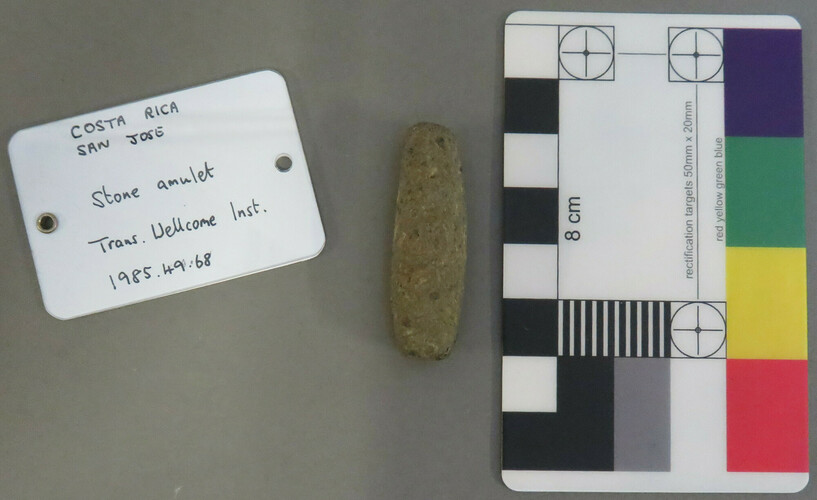 1985.49.68Stone amulet or pendant. Circular in section, wider in the middle than at the ends. [EH [OPS move] 1/11/2017]1985.49.68
 1919.66.2.2Grinder/ rubber of sandalwood used for making marriage perfume.1919.66.2.2
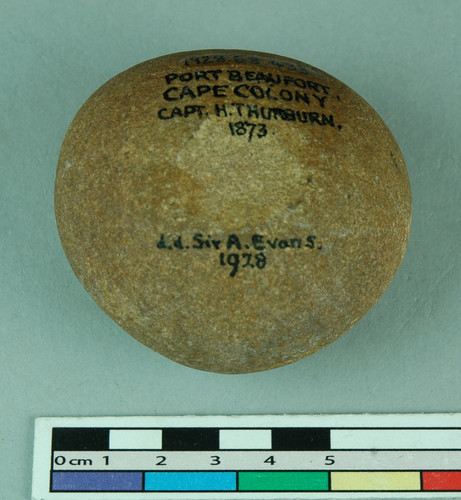 1928.68.433Pebble shaped quartzite grinder, with central pit on top and bottom surfaces. [MJD 27/04/2010]1928.68.433
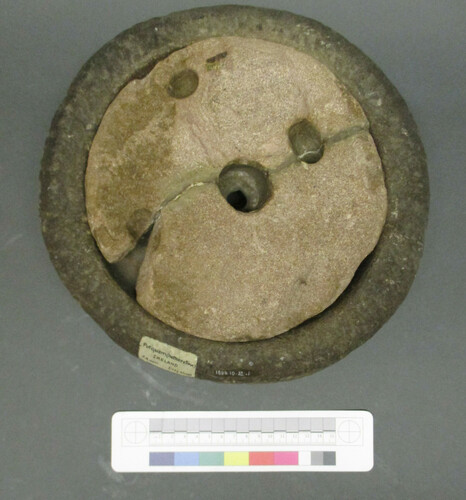 1884.10.32.1Three-footed netherstone potquern with a central perforation and perforation on the inner circumference. For upperstone see [1884.10.32 .2]1884.10.32.1
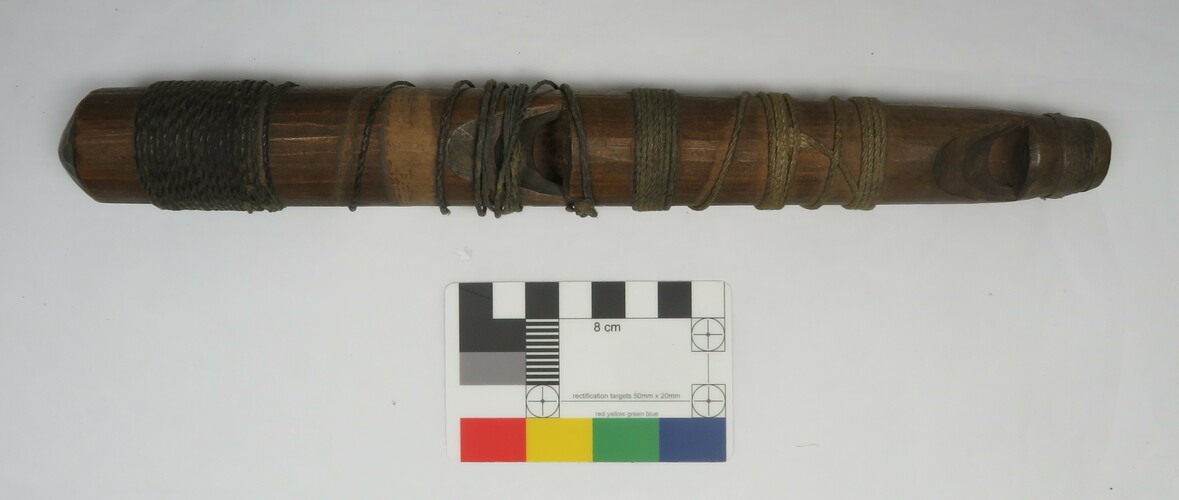 1954.9.104Globular whistle, carved in two halves and bound with twine.1954.9.104
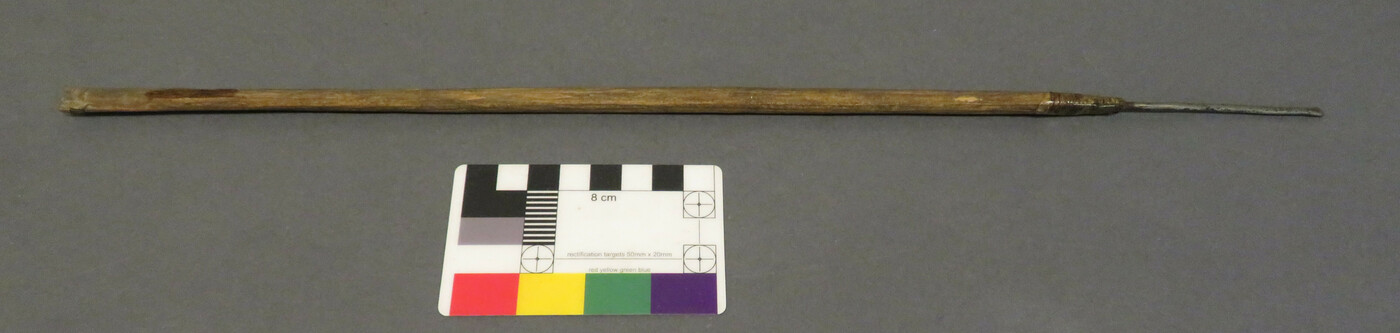 1951.7.4.7Arrow with wooden shaft and plain iron tip. For the other associated bow and arrows see 1951.7.4 .1 - .6 [ASh [OPS move] 27/9/2017]1951.7.4.7
 1903.49.14.3Steadying socket made from drift wood also used as hearth, part of fire-making set. [El.B 21/11/2011]1903.49.14.3
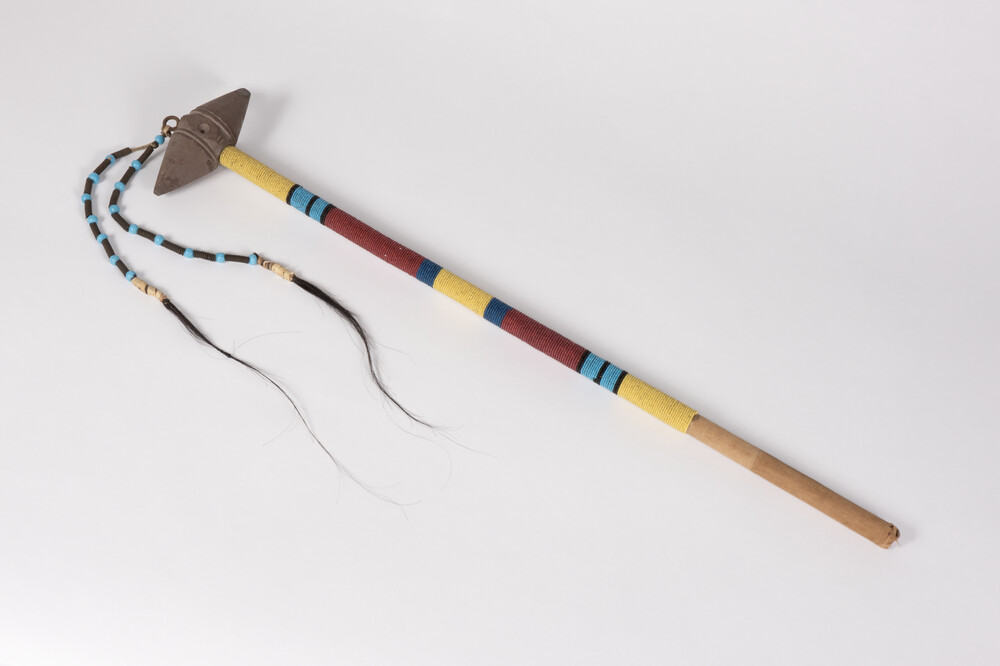 1952.10.7Club, with stone head hafted to wooden handle by iron pin, decorated with strings of coloured beads. [SM 08/08/2007]1952.10.7