
- Collection type
- Object
- Description
- Loom-weight of pottery with moulded sitting human figure and two holes at the top. [MJD 01/06/2009]
- Geographical reference
- Puglia [Apulia] Provincia di Taranto Taranto
- Date / Period
- Archaeological period: Ancient Greek Archaeological period: Iron Age
- Date collected
- By 1896
- Acquisition information
- Donated: 1896
- Materials and processes
- Material Pottery, Process Moulded, Process Perforated
- Dimensions
- Diameter: max 72 mm
- Object numbers
- Accession number: 1896.29.18
- Research and responses
Yannis Galanakis suggested that this assemblage of 21 ceramic loom-weights from Taranto (1884.29.3-23) dates from the 4th century BC (Iron Age Classical Greek). [Dan Hicks 05/05/2012]
This object was examined by Dr Yannis Galanakis and Stella Skaltsa as part of the Fell funded project Characterizing the World Archaeology Collections. They advised that this was a loom-weight, not a fishing net weight. These loom-weights, unlike their more common and plainer conical and pyramidal counterparts, fall into two categories: discoid and horse-shaped, all mould-made or stamped with relief decoration. They date to the fourth century BC and stand out because of their rich iconographic representations including: Leda/Aphrodite with the swan; dolphins; owls; female heads; chariots pulled by birds, and other, rather, playful scenes. Primarily utilitarian objects, loom-weights could occasionally obtain a symbolic function, by being dedicated as votive offering in sanctuaries (see Foxhall 2008, 47: Loomweights from Pantanello. In Anonymous (ed.), The Study of Ancient Territories. Chersonesos and South Italy, 2006–2007 Annual Report, Institute of Classical Archaeology, The University of Texas at Austin, 46–7). This collection of loom-weights at the Museum is the largest in Oxford. [AS 06/01/2011]
The city of Taranto (Taras in ancient Greek), a coastal city in Apulia in South Italy, was founded in 706 BC by settlers from Sparta. The city flourished in the Archaic and Classical period, becoming one of the most important commercial and artistic centres in Magna Graecia. The pottery workshops of the fourth century BC produced fine pottery, known as Basilican. The modern city is built over the ancient Greek necropolis, where richly-furnished tombs have come to light. In the nineteenth century Taranto attracted the attention of scholars and collectors. Arthur Evans declared in his article of 1886 that ‘there are few sites in the Hellenic World that in recent years have been so prolific of discoveries as that of Tarentum’ (see Evans, A.J. 1886: Recent discoveries of Tarentine Terra-Cottas. The Journal of Hellenic Studies 7, 1–50). [AS 06/01/2011]
Further items to explore
 1986.23.1.10Heddle. Cylindrical rod, dyed or painted black. [IL [OPS Move] 29/3/2017]1986.23.1.10
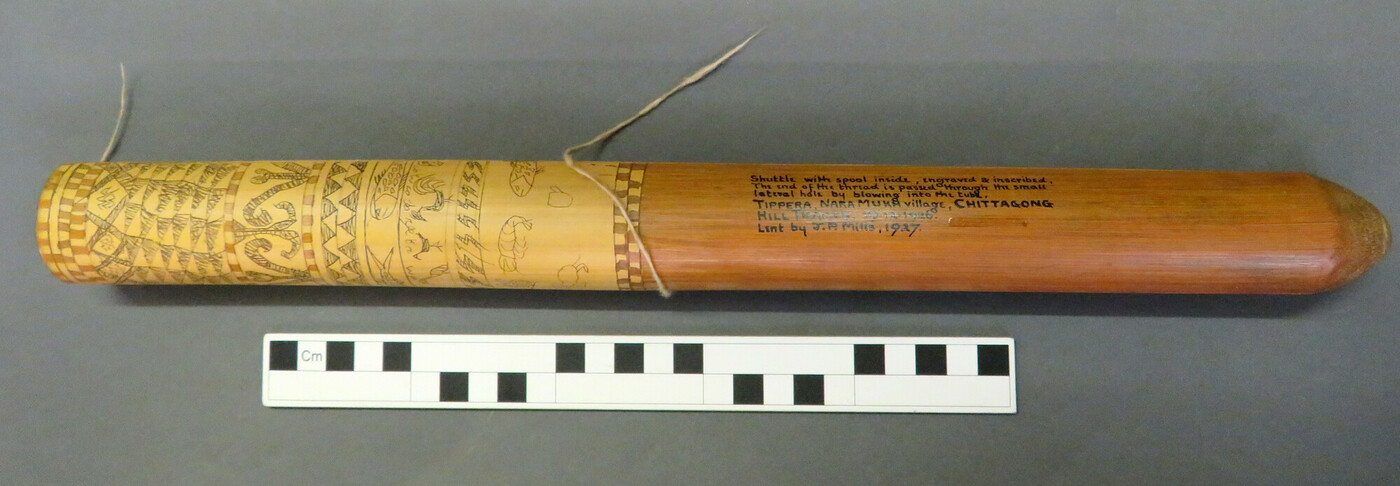 1928.69.976.1Bamboo cylinder shuttle with roundly tapered head. [IL [OPS Move] 31/3/2017]1928.69.976.1
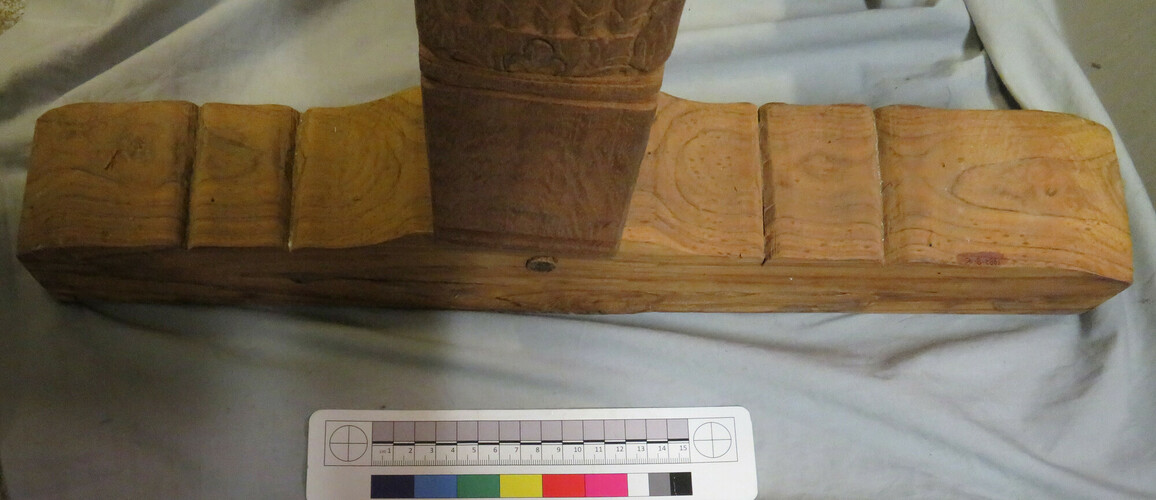 1982.8.45Backstrap loom part: carved foot. Inserts into 1982.8.41. For the other components of this loom see 1982.8.28 - .56 [BS [OPS Move] 21/6/2017]1982.8.45
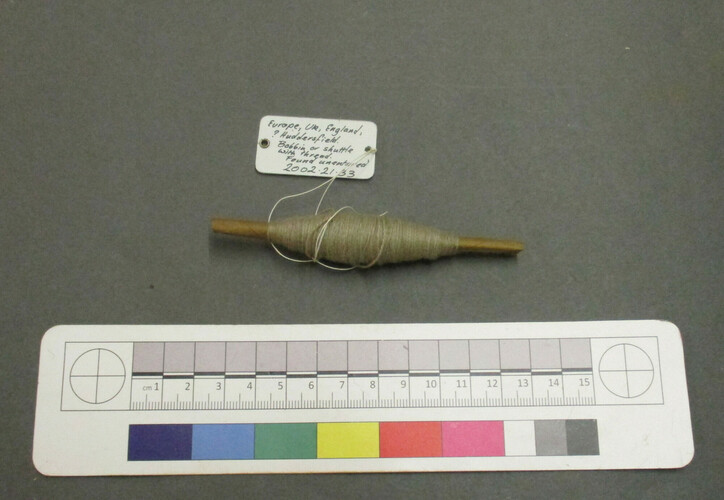 2002.21.33Bobbin or weaving shuttle of brown paper wound with brown machine? spun yarn. The yarn is made of cotton, possibly mixed with some wool. [EH [OPS Move] 12/6/2017]2002.21.33
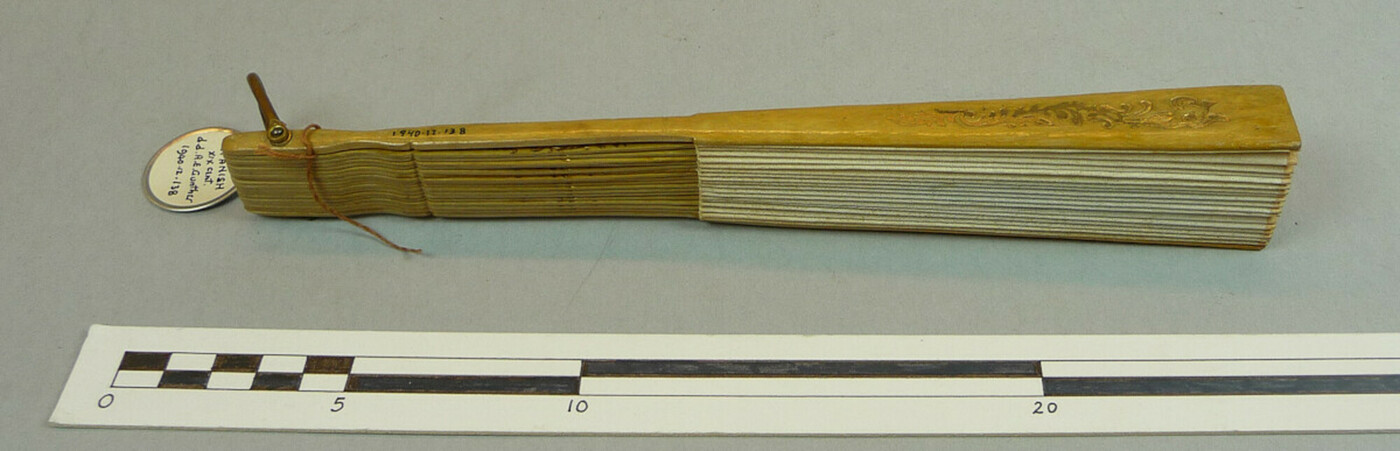 1940.12.138Fan of wood and painted canvas. [El.B 31/07/2009]1940.12.138
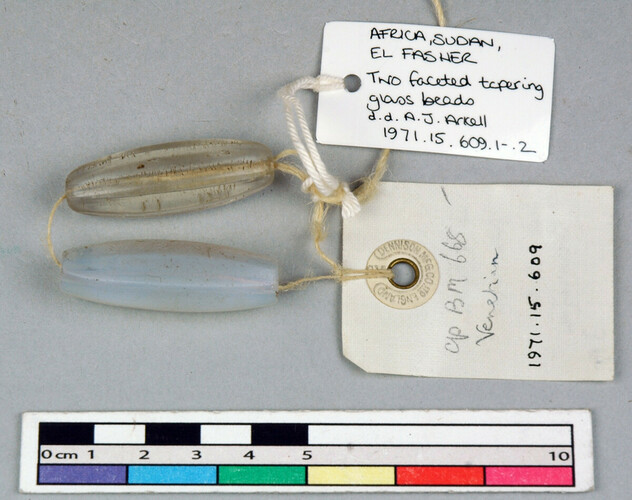 1971.15.609.1Two octagonal facetted tapering glass beads, one is clear [.1] and the other is opaque [.2] Strung together by the collector. [SM 15/10/2010]1971.15.609.1
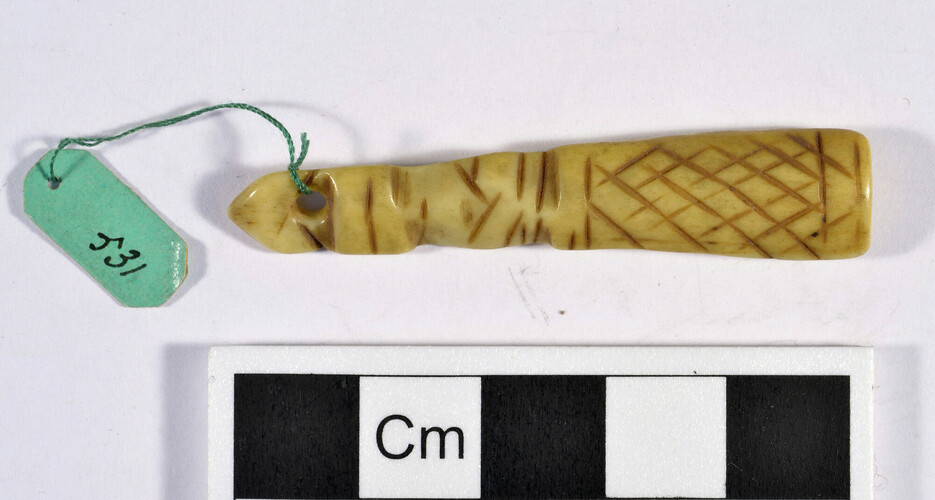 1985.52.295Amulet, pendant depicting St Anthony of Padua, carved and incised in bone, perforated for suspension, as it would have been hung on a rosary. [ACA 02/03/2012]1985.52.295
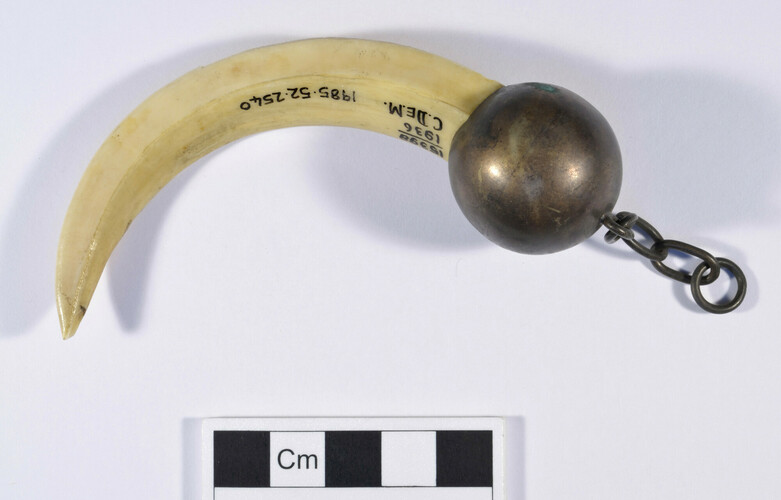 1985.52.2540Amulet, a wild boar's tooth with a metal ball mounted on the broader end of the tooth, and with a metal chain attached to the ball for suspension. [RB 08/08/2012]1985.52.2540