
- Collection type
- Object
- Description
- Cradleboard decoration decorated quillwork with tassels ending in metal cones. [ZM 15/8/2005]
- Long description
- Cradleboard decoration decorated quillwork with tassels ending in metal cones. [ZM 15/8/2005] A horizontally-oriented rectangular red wool cloth panel is bound over vertical sticks at each end, with four horizontal woven quillwork strips, ribbonwork appliqué, and a quilled fringe with tinkle cones containing hair tufts. The woven quillwork strips are highlighted at each end with four rows of red beads. They are decorated with navy ribbonwork zigzaging vertically at each end of the panel pointing in. Laura Peers 28/3/2001.
- Geographical reference
- Manitoba Red River
- Date / Period
- Date made: 1820-1860 Date made: Before 1878
- Date collected
- By 1878
- Acquisition information
- Transferred: 17/02/1886
- Materials and processes
- Material Animal Leather Skin, Material Textile, Material Iron Metal, Material Silk Textile Animal, Material Quill, Material Glass, Material Hair, Process Quillwork, Process Beadwork, Process Stitched, Process Dyed, Process Woven
- Dimensions
- Height: max 510 mm incl. fringes, Width: max 440 mm
- Object numbers
- Accession number: 1886.1.843 Other numbers: 150 829
- Research and responses
Information from Dr Laura Peers, 1999: This item is described as a ‘dog-saddle’ but she thinks it is probably a cradleboard decoration. There are metal cones on the fringes. It probably dates to 1800 to 1850 approximately and has cultural roots of Northern Cree/ Metis. The ribbon work is typical of Ojibwe work and the quillwork of Cree style. She thinks there is an item similar to this at Winnipeg. [JN 27/10/99]
[The similar specimen referred to in in the Hudson's Bay Company Collection, now at the Manitoba Museum, and illustrated in The Spirit Sings (Toronto: McClelland and Stewart, 1987, p79). It was collected in 1822. [Laura Peers, 2/3/2005]
There are three tabs along each side, two quill interlaced forming an overlapping V pattern, a design also seen on Great Lakes Materials [Judy Hall 28/3/2001].
This object has since been positively identified as a cradleboard cover/ ornament by Judy Hall, a visiting researcher, 28/3/2001. [LP 9/5/2001]
Correspondence and photocopies in RDF, dated April 1987, from Barbara Hail, Executive Director/Curator at the Haffenreffer Museum of Anthropology, Brown University, Rhode Island, USA. 'I am enclosing zeroxes [sic] of woven quill materials from the museum at Lower Fort Garry National Historic Park. My collegue, Dr. Kate Duncan, thought that you would be interested in them as you have similar materials at Pitt-Rivers. ...' Photocopies are identified as 'Dog Trapping' and 'Dog Saddle'. [MOB 4/9/2001]
During research visit February 2005, Christian Feest also confirmed that this is not a dog saddle but a cradleboard decoration, and suggested a date of ca.1820-60 for it, stating that the red pony beads used as vertical edging at the ends of the quilled strips date to ca1820-40. He noted that the dyes on the quills may have been obtained by boiling commercial fabric; the pink colour in the quillwork is unusual, and does not seem to be faded red. [Laura Peers, 2/3/2005]
Search terms: Children and Childcare, Transport and Travel, Cradle, Ornament
Further items to explore
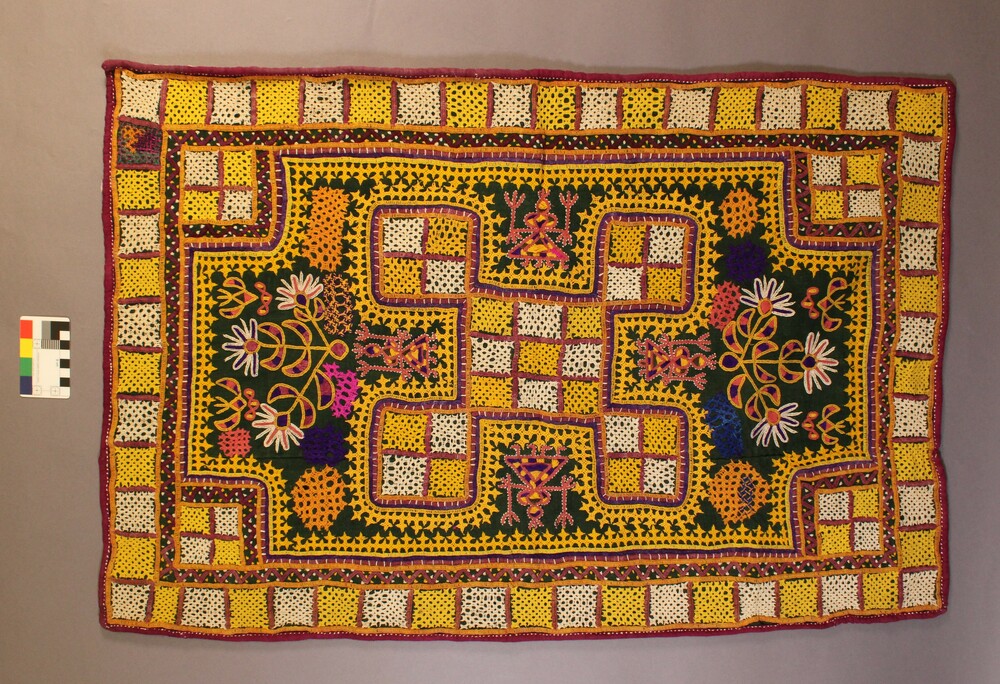 1981.16.13Baby hammock1981.16.13
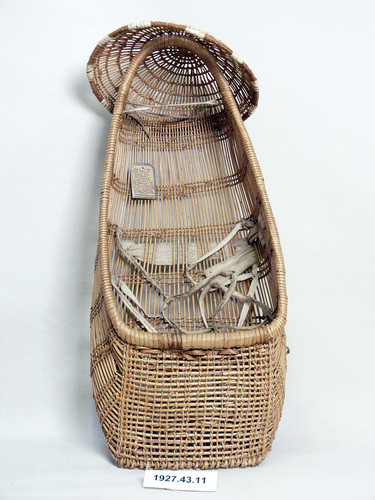 1927.43.11.1Cradle [.1] of openwork basketry with similar lid [.2] for shading the baby's head.1927.43.11.1
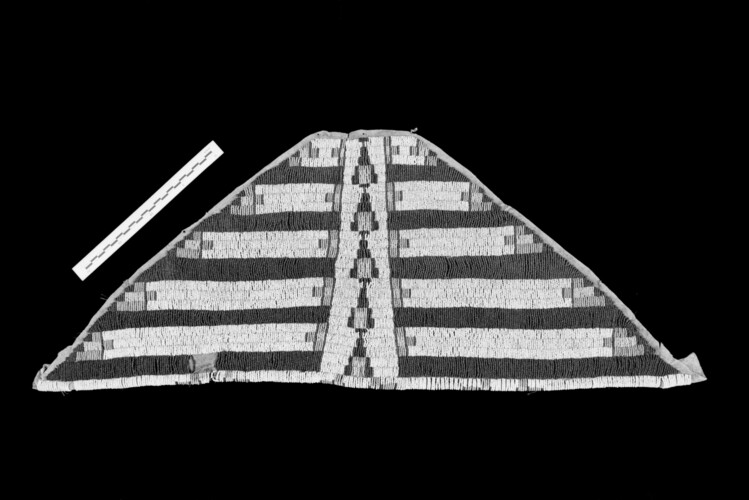 1994.4.76Triangular piece of hide, covered on one side with white, blue, yellow and red beadwork; for use as the top panel of a hooded cradle. [N.B. 'DCF 2004-2006 What's Upstairs?' 28/7/2005]1994.4.76
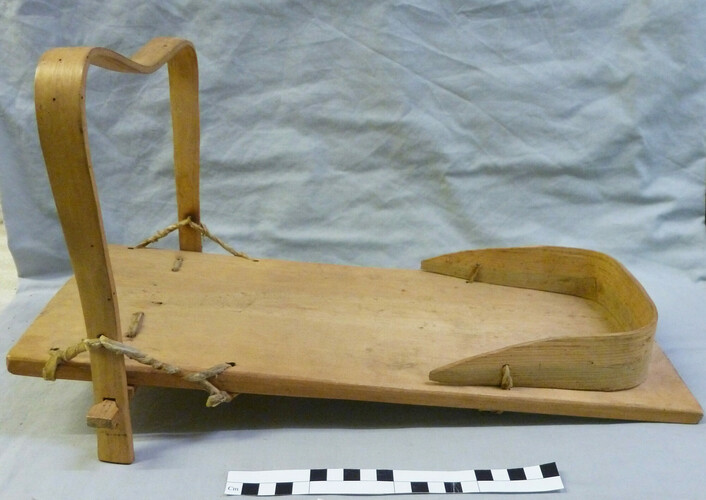 1939.6.24BPlain model of cradle in undecorated wood. [JN 24/5/99]1939.6.24B
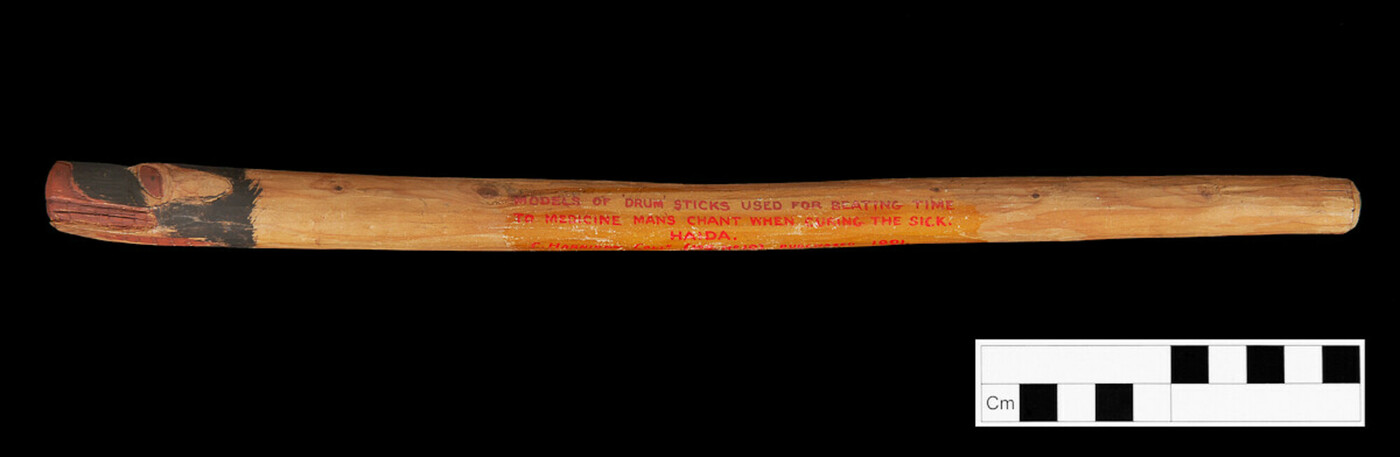 1891.49.31Model wooden stick carved and painted with animal figure at one end. [CAK 19/05/2009]1891.49.31
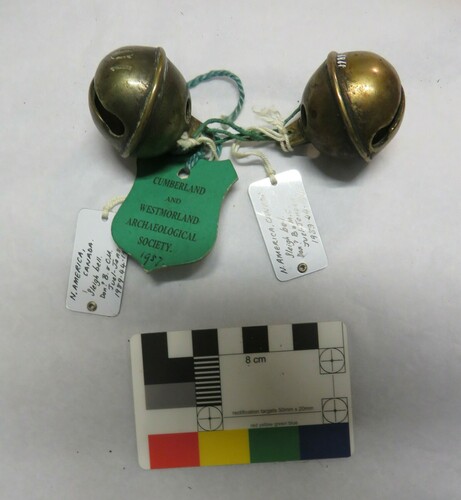 1989.44.193Brass sleigh bell with the number 10 cast into it. See 1989.44.194 for other bell. [LC 21/1/2020]1989.44.193
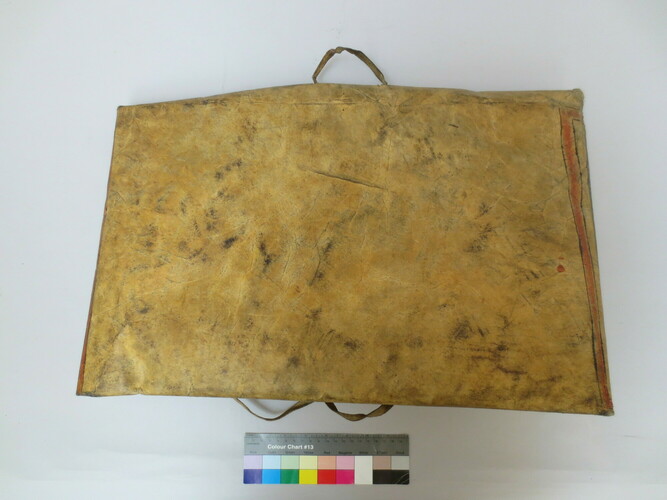 1902.84.4Clothing case of rawhide decorated with painted geometric designs [SM (Verve) 04/03/2014]1902.84.4
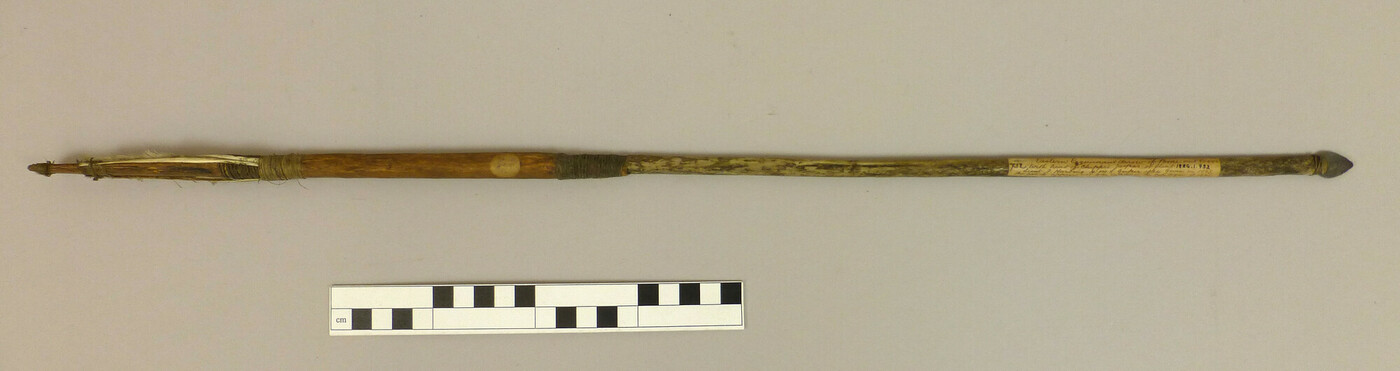 1886.1.732.1Arrow with wooden shaft, sinew binding and flint head. The foreshaft is made of bone. [El.B 23/2/2007]1886.1.732.1