
- Collection type
- Object
- Description
- Small ivory side-blown trumpet with circular embouchure set in a raised lentoid-shaped mouthpiece on concave side, and fingerhole at proximal end [RTS 3/12/2004].
- Long description
- Small side-blown trumpet carved and hollowed out from a single piece of yellowish cream coloured ivory (Pantone 7508C), with the surface then polished. This has a narrow proximal end with flattened edge and circular opening that acts as a finger-hole to vary the note, then a curved body that follows the natural shape of the parent tusk, tapering out to a wider bell mouth that is oval in plan view, and has a narrow lip. A raised lentoid-shaped mouthpiece has been carved on the concave surface just above the proximal end, with a circular embouchure in the centre that connects into the body of the trumpet. The object is essentially complete, but a portion of the interior wall has broken away from near the rim; this interior surface has been stained a dark brown to reddish brown colour and was originally said to smell heavily of tobacco, suggesting reuse of the trumpet as a tobacco container. There are numerous cracks along the length, following the grain of the ivory. It has a weight of 193.7 grams, and is 265 mm long. The proximal end measures 13.7 by 12.3 mm across, and has a fingerhole that is 7 mm wide; the bell mouth measures 46 by 39 mm, with an internal opening of 42 by 34 mm, while the raised mouthpiece is 39 mm long and 21.4 mm wide, with an embouchure that is 16 mm in diameter. The length from finger-hole to the edge of the embouchure is 33 mm [RTS 3/12/2004].
- Geographical reference
- Cultural groups
- Bongo
- Date / Period
- Date made: Possibly before 1858
- Date collected
- 1856 - 1858
- Acquisition information
- Transferred: 28/09/1885
- Materials and processes
- Material Animal Ivory Tooth, Process Scraped Carved, Process Hollowed, Process Perforated, Process Polished
- Dimensions
- Diameter 16 mm mouth hole, Width: max 46 mm bell, Depth: max 39 mm bell, Length 265 mm, Weight 193.7 g
- Object numbers
- Accession number: 1886.1.522 Other numbers: 70 493 Ashmolean 522
- Research and responses
John Petherick led three separate trading expeditions that passed through Bongo territory between 1856 and 1858; this material was shipped back to England in 1859. See Petherick 1861, Egypt, The Sudan and Central Africa for more details. An early description of the Zande mentions their use of ivory trumpets: "some of the officers, or leaders, have large war trumpets made of elephant's tusks... they are sounded from the side, like a flute", illustrating examples made in a single piece, or of wood and ivory bound together (J.G. Wood, 1868, The Natural History of Man Vol. I, p. 493).
Note that the smell of tobacco mentioned in the Ashmolean Vellum Volume is no longer very strong [RTS 3/12/2004].
The term side-blown is preferred to side-blast for this type of object [RTS 6/12/2004, after pers. comm. HLR].
- Associated publications
- The Accession book entry is published in A. MacGregor et al., 2000, Manuscript Catalogues of the Early Museum Collections 1683-1886 (Part I), p. 297, cat. 522 [RTS 26/1/2004].
Search terms: Music, Narcotic, Musical Instrument, Trumpet, Tobacco Accessory
Further items to explore
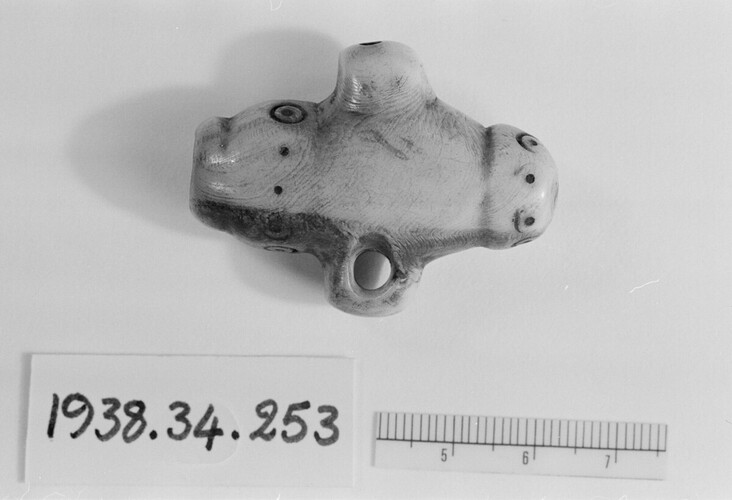 1938.34.253Small ivory whistle, ornamented with circle marks. Well worn, end blown, one fingerhole on side projection balanced by projection on the other side for suspension cord.1938.34.253
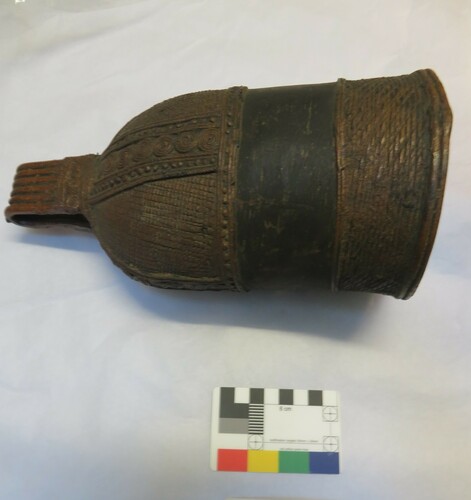 1941.2.116Bronze bell1941.2.116
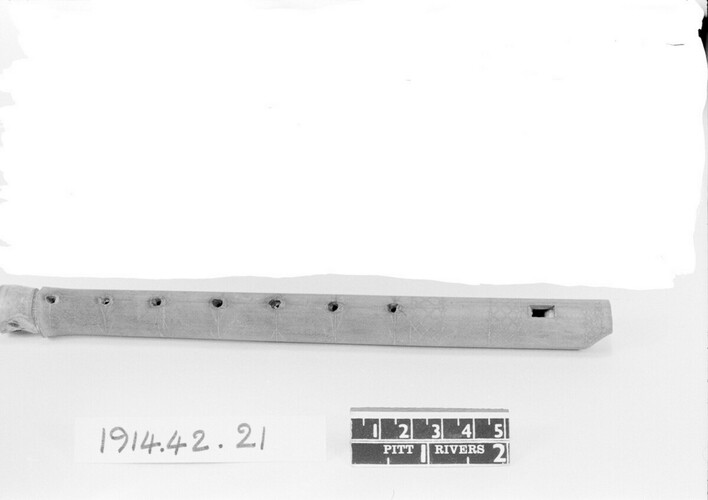 1914.42.21Flute-a-bec, sarunei, of bamboo. 7 fingerholes 1 thumb. Lightly scratched designs. Oblong window.1914.42.21
 2023.5.4Pianola or mechanical piano roll, boxed. "With Verdure Clad" by Haydn.2023.5.4
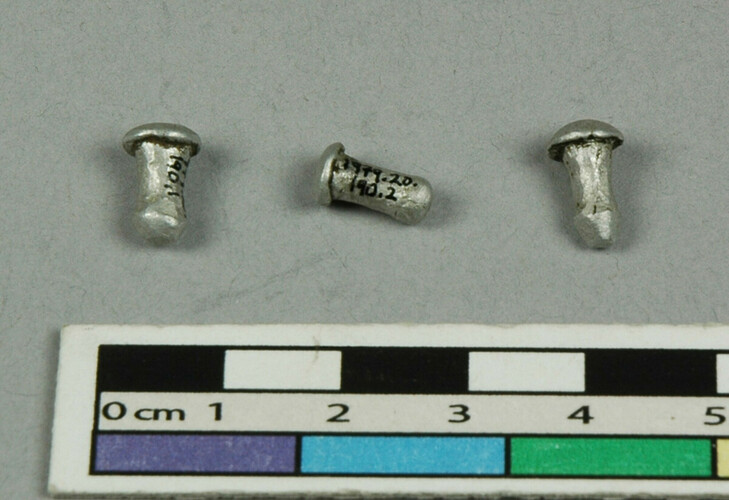 1979.20.190.1Small tin ear stud with hemispherical head [RTS 12/5/2004].1979.20.190.1
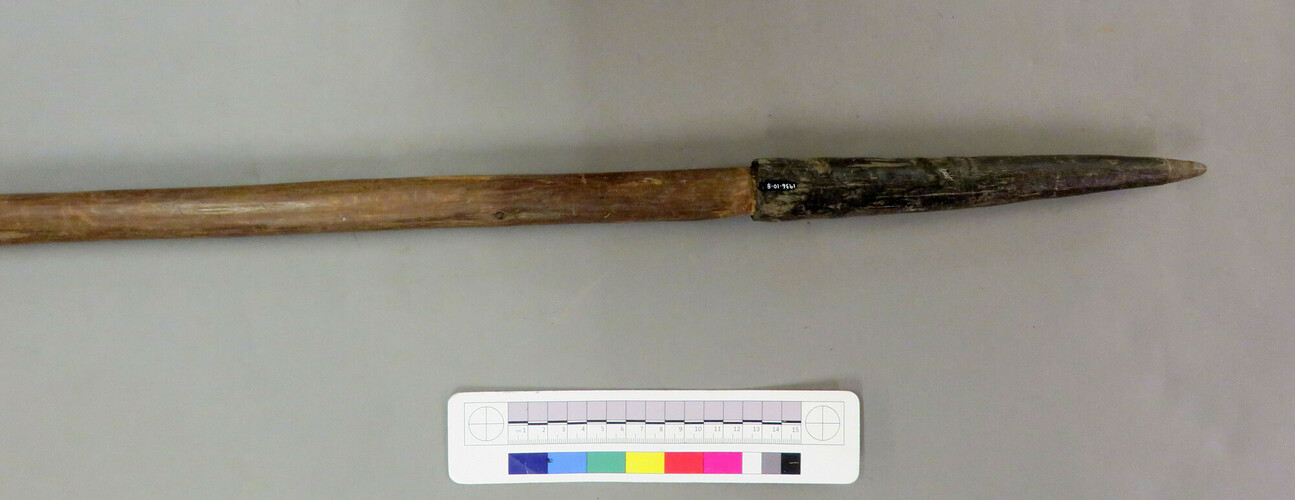 1936.10.8Fishing spear or harpoon, of type with detachable iron head [missing], on wooden shaft with antelope horn butt. [RTS 27/6/2005].1936.10.8
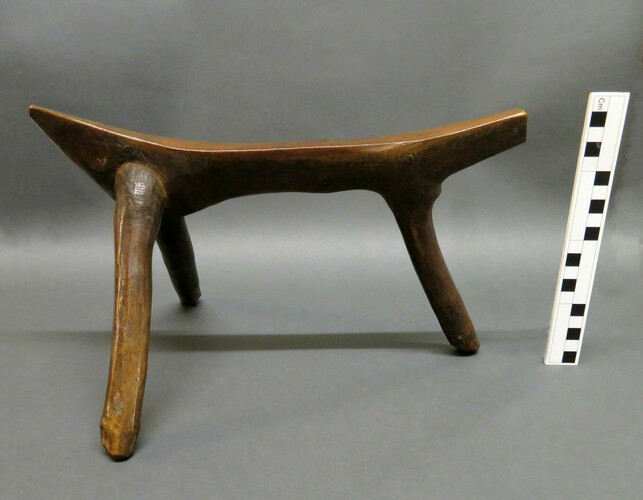 1936.10.56Headrest carved from a tree branch, with narrow seat and 3 angled legs [RTS 3/6/2005].1936.10.56
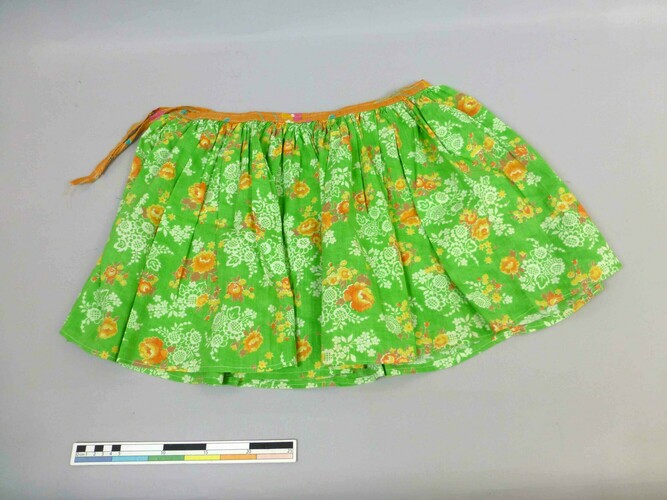 2014.69.1Skirt worn by Dinka women. [FB 27/10/2014]2014.69.1