
- Collection type
- Object
- Description
- Jew’s harp.
- Geographical reference
- Sumatra Sumatera Utara province Nias Island (Pulau Nias)
- Date / Period
- Date made: Before 1907
- Date collected
- By 1907
- Acquisition information
- Bequeathed: 1939
- Materials and processes
- Material Palm Wood Plant, Material String, Process Carved, Process Tied
- Dimensions
- Length: max 115 mm
- Object numbers
- Accession number: 1938.34.508
- Associated publications
- This object features in the Museum's audio tour produced in 2010. Part transcription as follows: “The Jew’s harp is one of the world’s oldest instruments. It is thought to have originated in China in ancient times, but it has now become part of musical traditions across Asia, Oceania and northern Europe. It is played near the mouth but it is not a wind instrument. Instead, it is pressed against the teeth or lips and the other hand plucks the central ‘tongue’ to produce a sound, the player’s open mouth acting as a resonator. Alternatively, as you can see on some examples from Indonesia(1938.34.508), the tongue is sometimes attached to a toggle, which is jerked to produce a similar effect. In this case you can see different types Jew’s harps, including, on the upper right, one from Russia made from a prehistoric woolly mammoth tusk (1915.50.101). Ones made from bamboo and palm, popular in South Asia (1928.69.880–.881), Cambodia and Papua New Guinea (1913.88.292), sound like this…[music insert] ...The Jew’s harp is an instrument that’s easy to get a sound from, but it requires a lot of skill to play melodically. The pitch is constant but the player can change the tone and volume by subtly changing the shape of their mouth, the position of the tongue, and their breathing patterns. The basic drone sound often accompanies dancing or shamanic rituals in some cultures. For the Naga people of Assam in north-east India, the sound is thought to be rather seductive and it is used in serenades. Among some indigenous tribes of Taiwan, the Jew’s harp actually constitutes a love letter. A man plays the instrument in front of a girl’s house and if he leaves it with her, it is considered a proposal of marriage. By accepting the Jew’s harp, she accepts him as her husband.” (Written by Helen Hales) References: Wright, Michael, ‘How to Play the Jew’s Harp’, English Dance and Song magazine (2002), accessed at: http://www.jewsharper.info/?s=teach; Wright, Michael, ‘Jue Harpes & Jue Trumpes, 1481’, Journal of the International Jew’s Harp Society (2004), p. 7–10; Steafel, Harold, ‘Jew's Harp’, The Galpin Society Journal, Vol. 29, (May, 1976), pp. 122–123; Jenkins, J. L., Musical Instruments, London: Horniman Museum (1970), pp. 36–37; Fox, L. (ed), The Jew’s Harp: a Comprehensive Anthology, Cranbury, NJ: Associated University Presses (1988); Montagu, Jeremy, ‘The Crozier of William of Wykeham’, Early Music (November 2002), Oxford, pp. 541–562 (Jew’s harp discussed on page 554) [HH 26/10/2010]
Search terms: Music, Musical Instrument, Jews Harp
Further items to explore
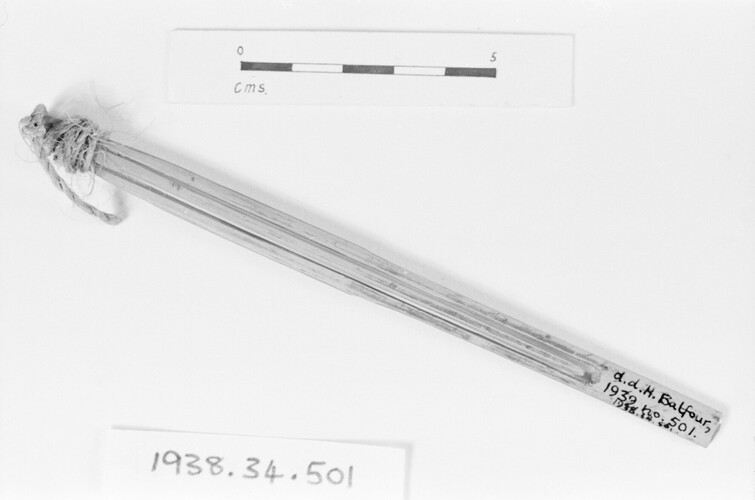 1938.34.501Jews harp.1938.34.501
 1884.108.33Pellet bell. Part of a set of pellet bells [1884.108.29-37]. [JID 4/2/2020]1884.108.33
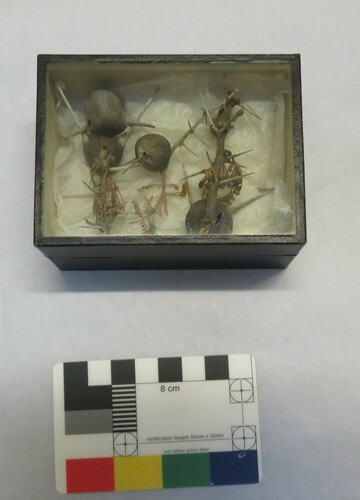 1928.21.22Acacia thorns used as whistles [number unknown]1928.21.22
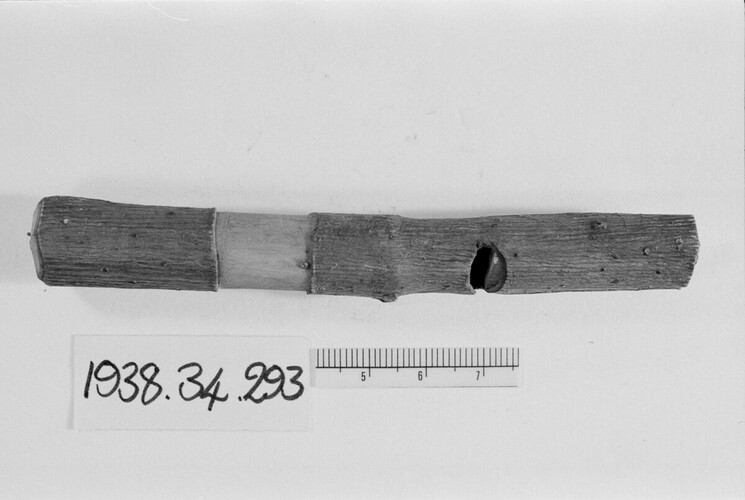 1938.34.293Willow wood whistle. Made by stripping off the bark and cutting away the pith. The bar is then slipped back on leaving a patch of pith bare in the centre.1938.34.293
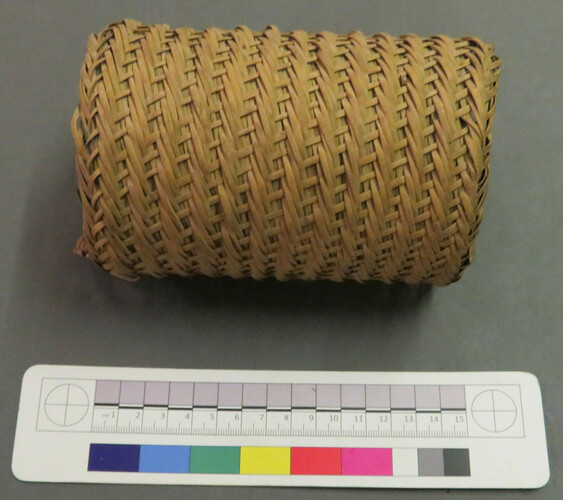 1895.47.13Arm guard made from woven cane. The arm guard is roughly cylindrical in shape and tapers slightly towards one end. On the wider opening there is a looped handle attached. [SB [OPS move] 31/7/2017]1895.47.13
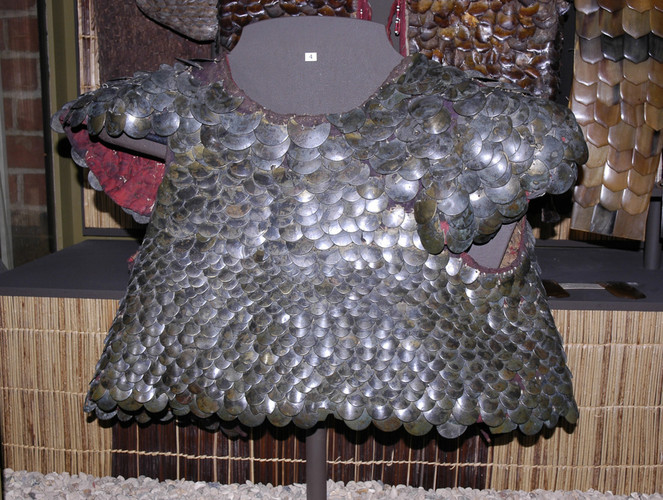 1884.31.25Jacket of scale armour, overlapping brass scales sewn on canvas [El.B 29/3/2007]1884.31.25
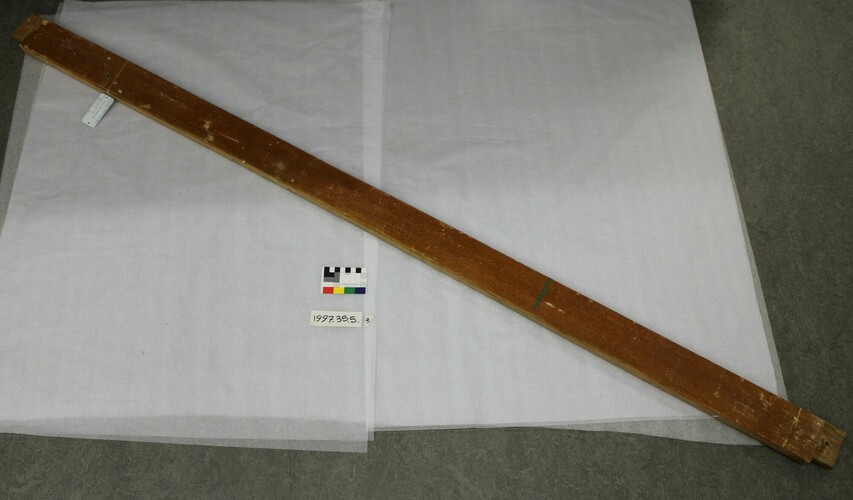 1997.35.5.3Part of a frame for an anklung, a musical instrument consisting of hollow bamboo tubes suspended in a frame and rattled to provide musical accompaniment for dances etc.1997.35.5.3
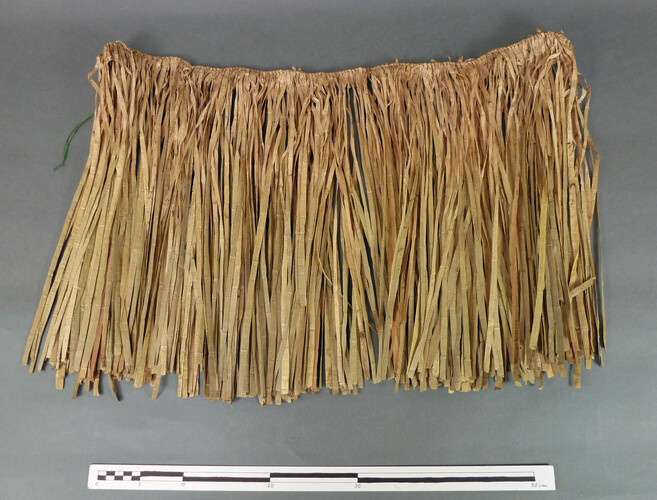 2009.3.3Woman's leaf skirt. [FB 25/04/2012]2009.3.3