
- Collection type
- Object
- Description
- One of three cloths for making women's skirts, woven and patterned by "tie-and-dye" process. [CW 2 6 1998]
- Cultural groups
- Iban
- Person
- Field collector Charles Anthony Johnson Brooke
- PRM source Third Rajah of Sarawak, Charles Vyner de Windt Brooke
- PRM source Bertram Norman Sergison Brooke
- Date / Period
- Date made: Before 1923
- Date collected
- By 1923
- Acquisition information
- Donated: 1923
- Materials and processes
- Material Textile, Material Pigment, Process Woven, Process Ikat Resist Dyed
- Dimensions
- Length 553 mm, Width 1080 mm
- Object numbers
- Accession number: 1923.86.84
- Research and responses
See also two letters from Bertram Brooke which have been pasted into the front of the accessions book. [MdeA 12 6 1998]
See: Hose and McDougall, 'The Pagan Tribes of Borneo vol. I & II', London : Macmillan and Co., 1912. [CF 2/3/2001]
According to Traude Gavin, author of The Women's Warpath: Iban Ritual Fabrics from Borneo (Los Angeles: UCLA Fowler Museum of Cultural History, 1966), the local name for this skirt should be 'Kain Kebat'. "So far, there is no recorded instance of Bidang being used by Iban weavers as a term for skirt. In Iban, Malay, Bidayuh and Indonesian, Bidang is a numeral classifier for things that are spread out flat when in use, such as mats, cloth, land, leaf matting, etc. It appears that the term Bidang for a woman's skirt was only used by British expatriates living in Sarawak, dating back to the nineteenth century (but it does not appear as a term for skirt in dictionaries compiled by resident Englishmen at the time). In the 1980s and 90s, it was for a while adopted by urban Iban and Chinese in Sarawak, probably because it had appeared in print in exhibition catalogues etc. (for more details, see Gaven, Iban Ritual Textiles, KITLV, forthcoming)". 'Kain' means cloth; 'kebat' means patterned by the ikat technique. [CF 22/7/2002]
Search terms: Textile, Clothing Textile, Specimen, Skirt
Further items to explore
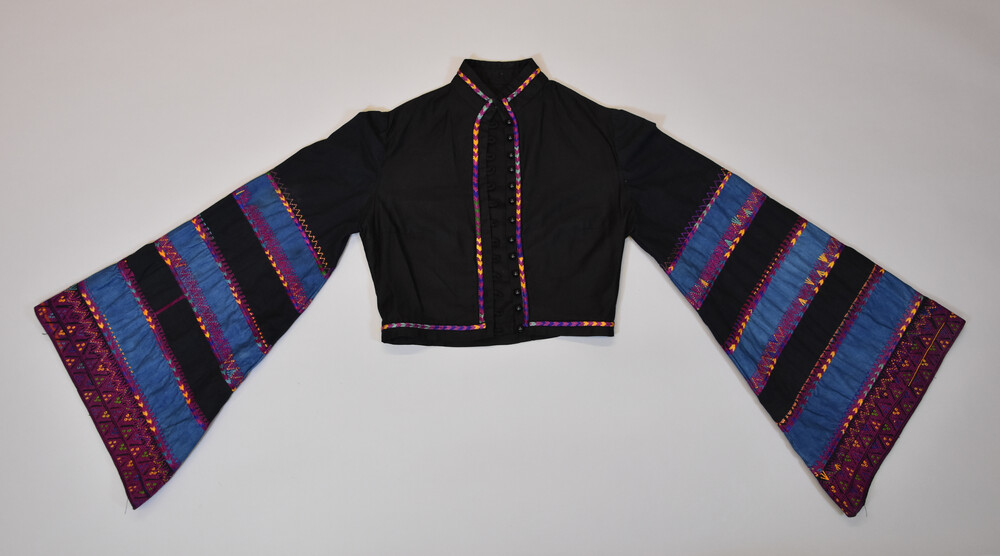 2025.5.4Black cotton jacket with triangular sleeves featuring bands of indigo dyed cotton and embroidery refashioned from sections of a traditional Al Khalaga (Salt dress).2025.5.4
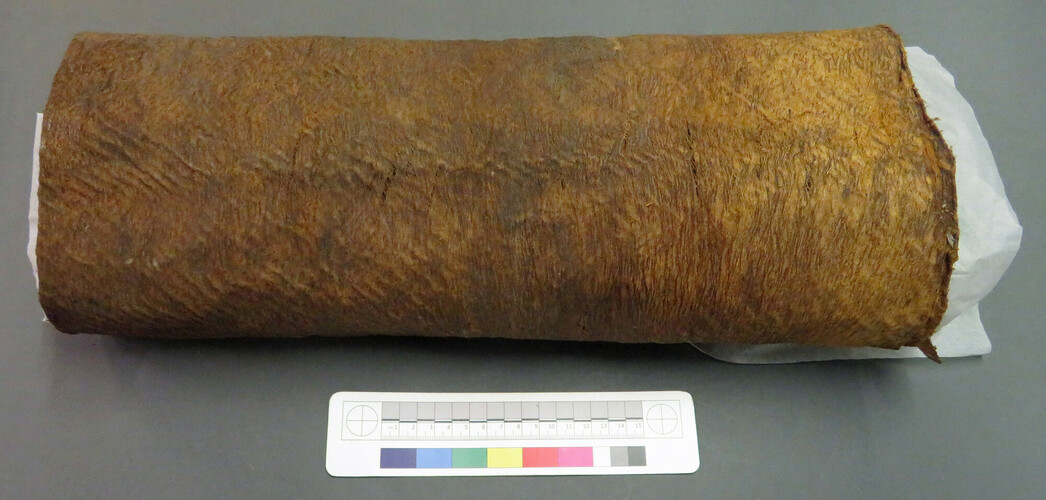 1899.72.6.2Brown, rectangular piece of barkcloth used as a mat. For parts of associated loom see [1899.72.6 .1 & .3 - .15] [EH [OPS Move] 5/7/2017]1899.72.6.2
 2009.135.155Man's turban. [FB 24/07/2012]2009.135.155
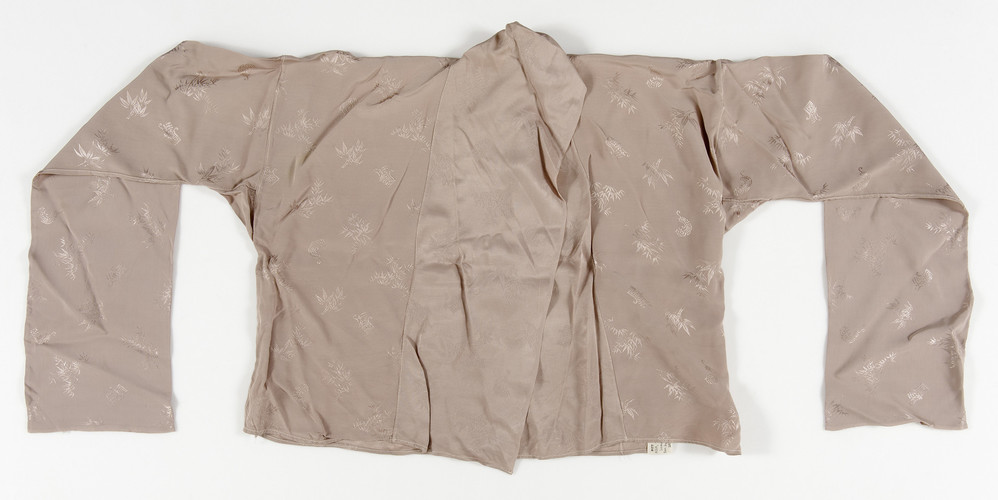 2008.96.9Woman's shirt made from a synthetic beige coloured material. [FC 29/10/2009]2008.96.9
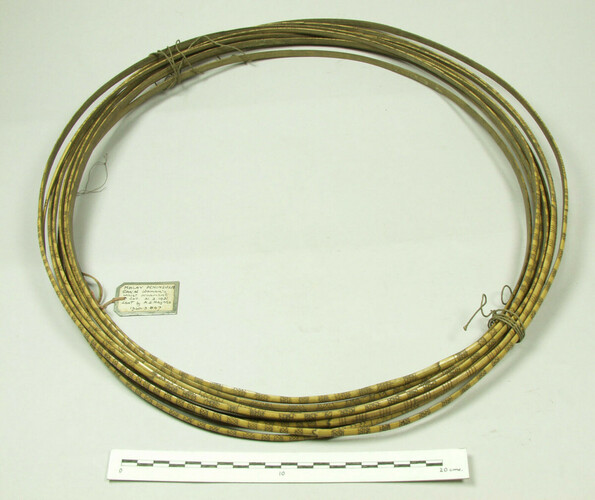 1940.3.047Rolled-up length of incised cane, used as a woman's waist ornament. [N.B. 'DCF 2004-2006 What's Upstairs?' 25/4/2005]1940.3.047
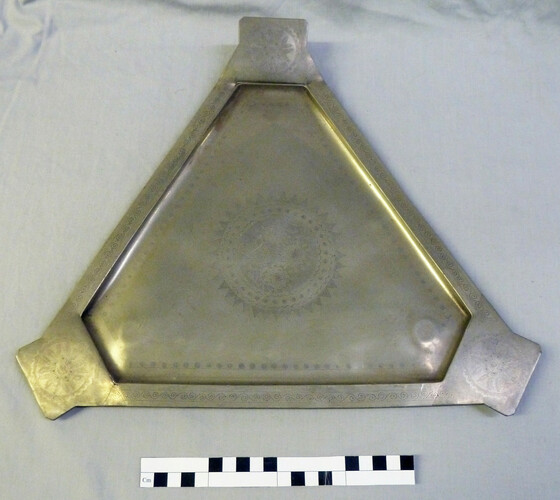 1944.6.112Triangular tin vessel with a floral design, Standing on three knobs. [BH [OPS move] 8/8/2016]1944.6.112
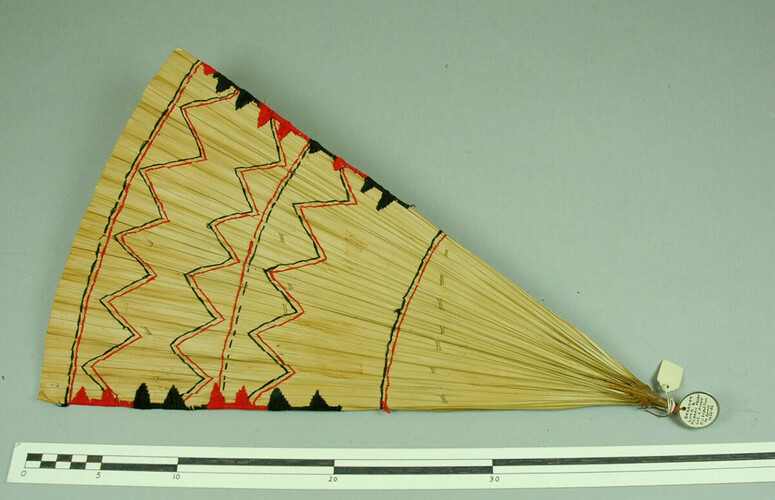 1956.12.62BFan with stitched on pattern of zig zagging lines in red and black thread. [LKG 04/09/2009]1956.12.62B
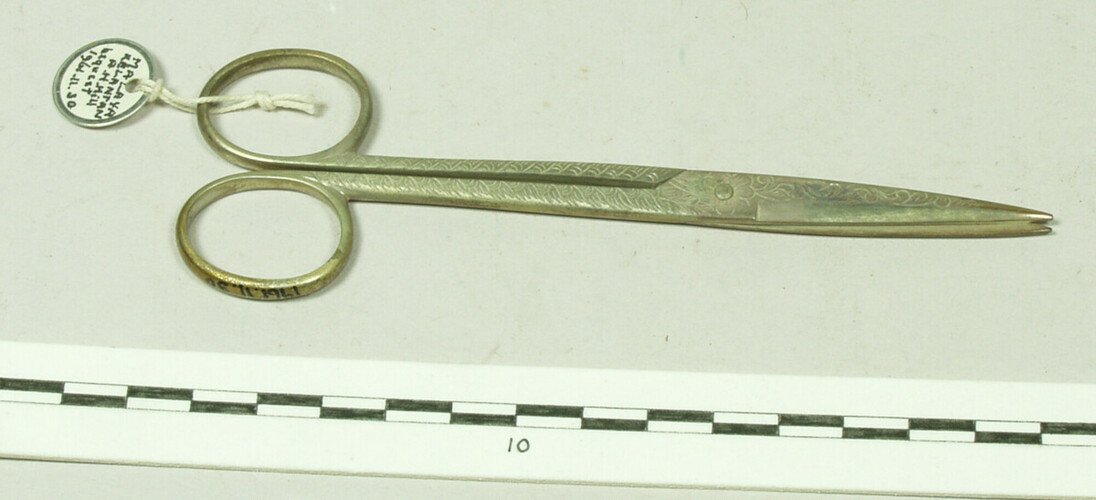 1961.11.30Silver scissors, engraved with designs.1961.11.30