
- Collection type
- Object
- Description
- Plug-bayonet, two-edged, with sharp edges of unequal length, with ivory hilt. The blade is decorated on both sides with leaf design, on one side also with an animal. [El.B 24/10/2007]
- Cultural groups
- French
- Date / Period
- Date made: Circa 1825-1875?, uncertain
- Date collected
- By 1935
- Acquisition information
- Purchased: 1935
- Materials and processes
- Material Metal, Material Animal Ivory Tooth, Process Forged (Metal), Process Carved, Process Incised
- Dimensions
- Length: max 370 mm
- Object numbers
- Accession number: 1935.63.2
- Research and responses
Plug bayonets represent a very specific period in the technological history of European arms, when bayonets had been developed, and the rifling of barrels had not yet been applied, thus preventing the insertion of such plugs into the barrel of a gun. Such bayonets rendered the musket itself useless, and were therefore much the last resort of the musketeer after his powder had run out, rather than the dual-purpose weapon that later bayonets became. The plug bayonet was a short-lived nascent form. It was developed in the rural French town of Bayonne (hence the name) in the mid-17th century, during a period of civil unrest, when local musketeers ran out of powder, and improvised a shortened spear from their knives and muskets. In these early days of musketry, when the firing rate could be as low as one ball per minute, the discovery of a dual-use for arming infantry was rapidly taken up. Plug bayonets were issued to regiments of fusiliers and dragoons in France and England from the 1670s onwards, but the loss of battles due to the stopping up of the muskets themselves meant that it was rapidly superseded by the Ring and Socket Bayonet, and had become largely obsolete by the early 18th century (Burton, 1884). Consequently, it is unlikely that this weapon was made outside of the period 1650-1700. The socket bayonet has had a much more widespread impact – perhaps most universally in developing the spring-loaded push-and-twist ‘Bayonet Fitting Lightbulb’ – a fine example of the way in which military technology finds multiple disseminations in civilian life. Research Conducted for DCF Cutting Edge 2006/2007 [AM].
Search terms: Firearm Weapon, Firearm Accessory, Bayonet
Further items to explore
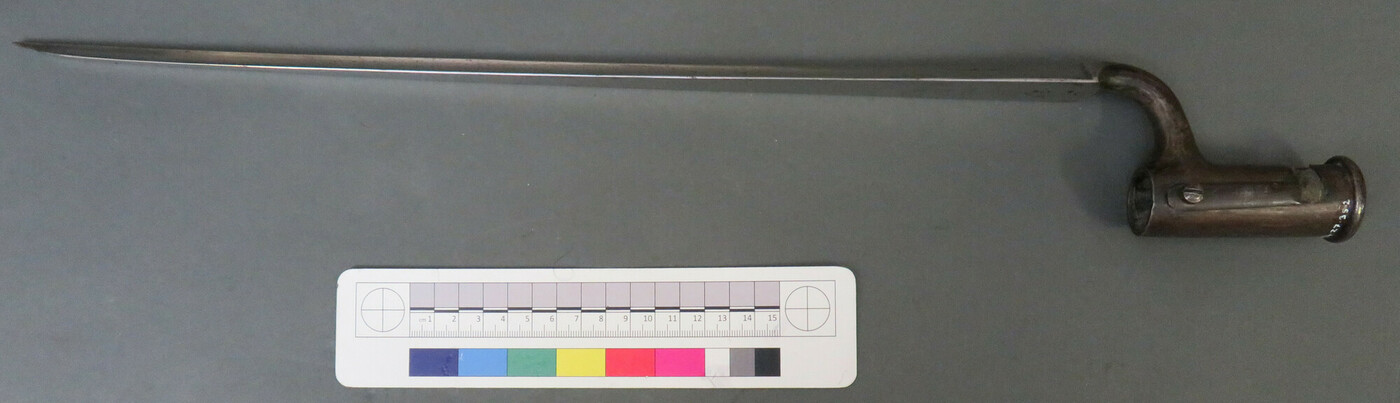 1884.27.35.2Bayonet for 'Brown Bess' musket 1884.27.35 .1.1884.27.35.2
 1937.56.29Lee-Metford cartridge-case. In glass-topped box with 1937.56.26-28, 30-32. [LM 10/10/2007]1937.56.29
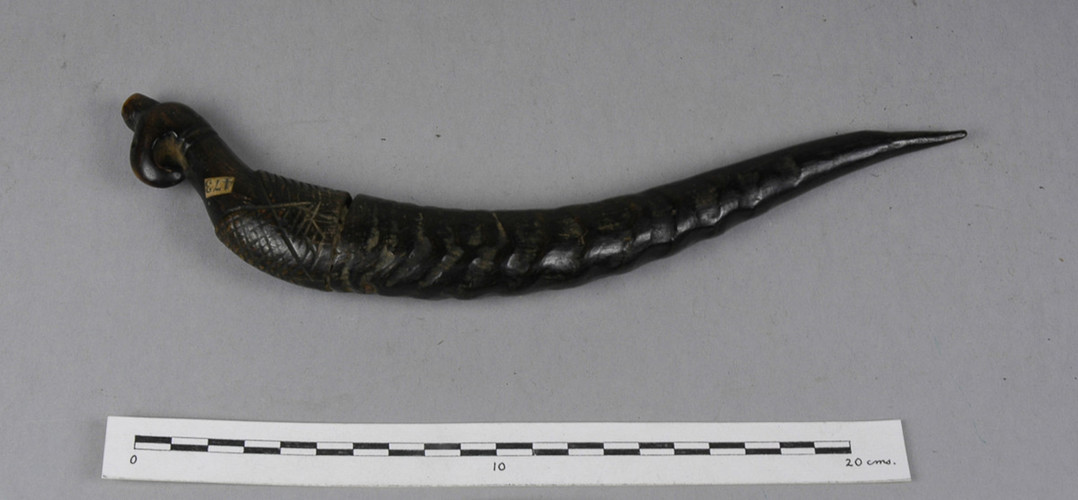 1884.140.29Goat horn flask with carved wooden top in the shape of a parrot. [SM 01/11/2007]1884.140.29
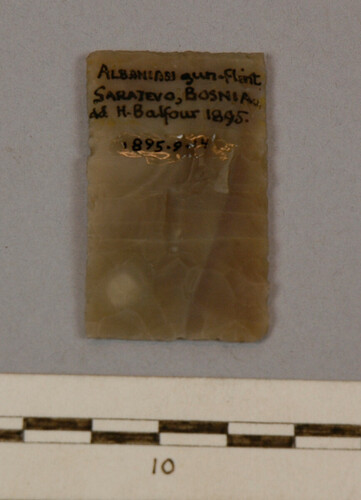 1895.9.14Rectangular gun flint. 1895.9.14
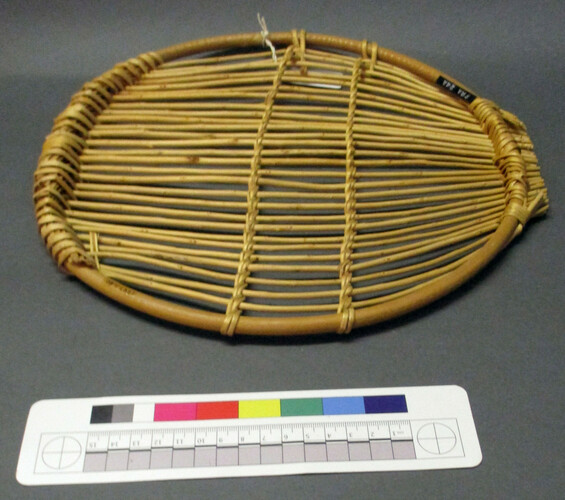 1997.11.80Round flat basket of white willow: parallel stakes held together with a row of fitching (twining) and lashed to a round cane frame. [CW [OPS move] 16/11/2016]1997.11.80
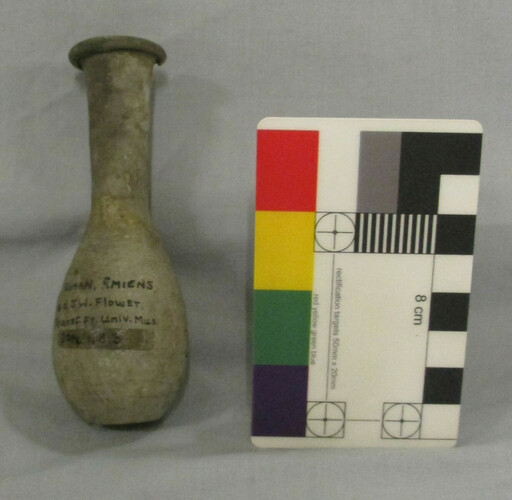 2004.148.3Grey ware pottery vial with a rounded body, elongated neck and a curved lip at the top of the neck. Unglazed. [ASh [OPS move] 06/05/2016]2004.148.3
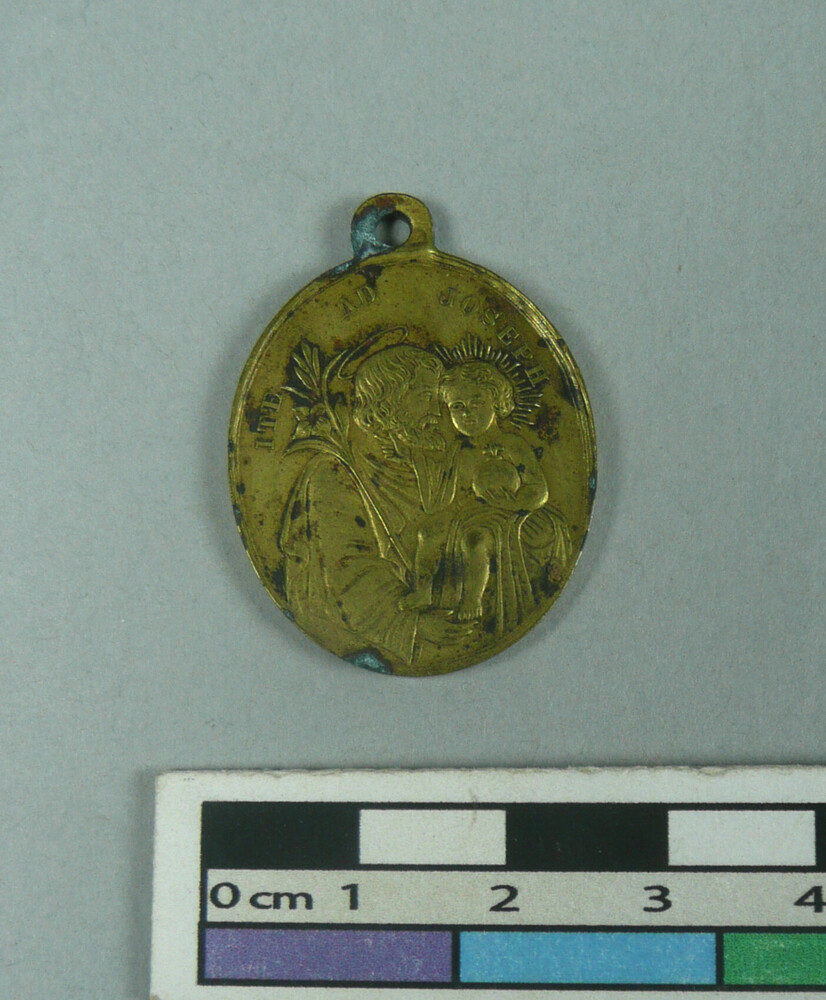 1985.51.508Devotional medallion depicting Joseph and Jesus as a child on one side and an angel and child on the other. [SM 24/02/2011]1985.51.508
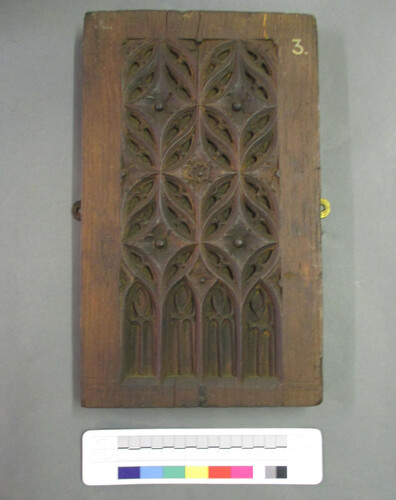 1884.61.46Wood panel. [BS [OPS Move] 10/7/2017]1884.61.46