
- Collection type
- Object
- Description
- Bayonet for 'Brown Bess' musket 1884.27.35 .1.
- Long description
- Bayonet for 'Brown Bess' musket 1884.27.35 .1. Blade is polished metal, tapering to the point and triangular in section. There are several maker's stamps. It is attached at slight elevation to a tubular piece of metal that forms the attachment to the gun. This has an 'L' shaped perforation and oblong hinged catch.
- Geographical reference
- Cultural groups
- English
- Person
- Maker Unknown Maker
- Field collector Unknown Collector
- PRM source Augustus Henry Lane Fox Pitt Rivers founding collection
- Date / Period
- Date made: Before 1874
- Date collected
- Prior to 1874
- Acquisition information
- Donated: 1884
- Dimensions
- Length x Width x Depth: max 536 x 66 x 31 mm
- Object numbers
- Accession number: 1884.27.35.2
- Research and responses
From 1851 Pitt Rivers was interested in the development of new firearms as a result of his work for the Schools of Musketry. This object was probably part of this work. Brown bess: the bronzed flint-lock musket of the British Army during the 18th and early 19th centuries [AP Leverhulme project on founding collection 1995-1998]
See http://en.wikipedia.org/wiki/Brown_bess: Brown Bess is a nickname of unknown origin for the British Army's Land Pattern Musket and its derivatives. This musket was used in the era of the expansion of the British Empire and acquired symbolic importance at least as significant as its physical importance. It was in use for over a hundred years with many incremental changes in its design. These versions include the Long Land Pattern, Short Land Pattern, India Pattern, New Land Pattern Musket, Sea Service Musket and others.
The Long Land Pattern musket and its derivatives, all 0.75 calibre flintlock muskets, were the standard long guns of the British Empire's land forces from 1722 until 1838 when they were superseded by a percussion cap rifled musket. At the time, the British Ordnance System did not have a policy of replacing functioning firearms in armories and the Brown Bess saw service until the middle of the nineteenth century. Some were still in service during the Indian rebellion of 1857 and some were sold to Mexico where troops used them during the Texas Revolution of 1836 and the Mexican-American War of 1846 to 1848. ... [AP 29/09/2006]
Search terms: Firearm Weapon, Firearm, Bayonet, Firearm Accessory

Further items to explore
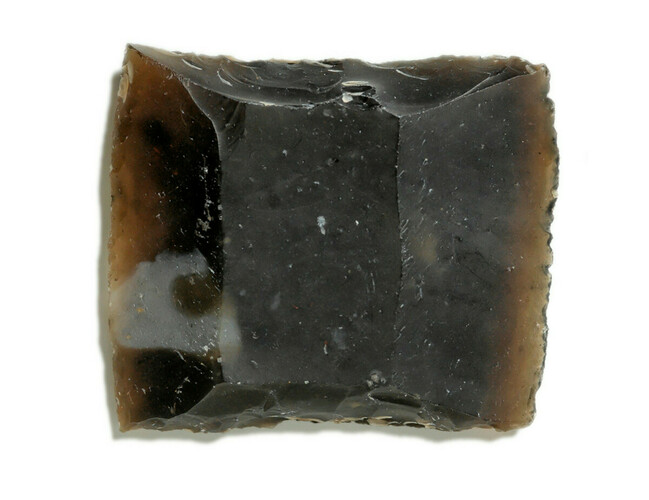 2006.81.8Gun-flint2006.81.8
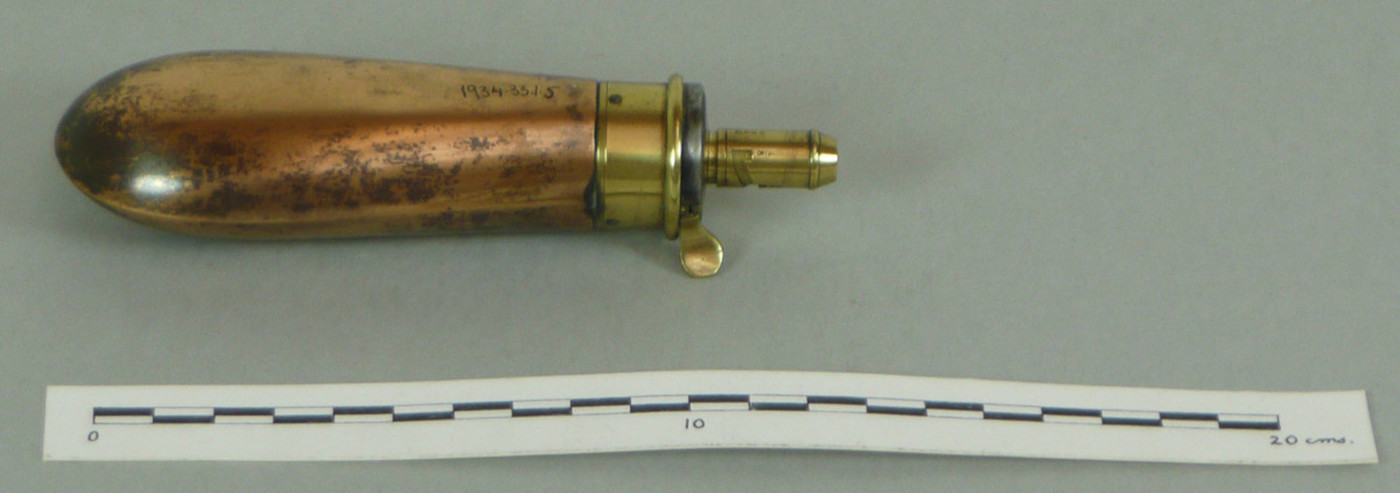 1934.33.1.5Powder flask.1934.33.1.5
 1894.32.31Matchlock gun used for making a noise. The gun is muzzle-loading and has a ramrod. It also has a pricker for the touch hole. [MdeA 20/11/2008]1894.32.31
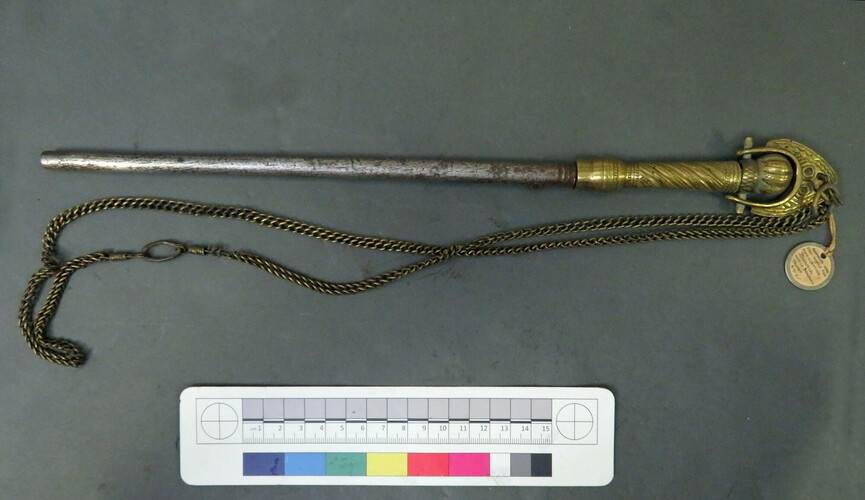 1938.35.1235Ramrod [with fire tongs combined]. Made from metal. The ramrod is straight with an open tip. The handle is made from copper alloy metal with incised spiral decoration. The handle ends with a knob with a decorative loop and chain attached. The handle cannot be removed to investigate the fire tongs inside the ramrod. [AB [OPS Move] 21/6/2017]1938.35.1235
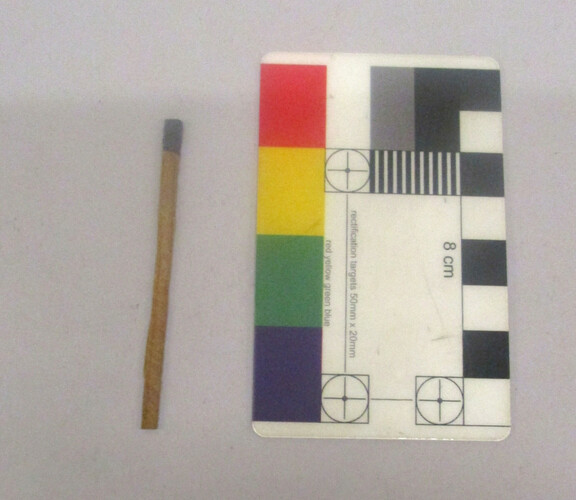 1966.3.2.4Match. Thin rectangular piece of wood with black compound on one tip. [MOBB [OPS move] 29/06/2016]1966.3.2.4
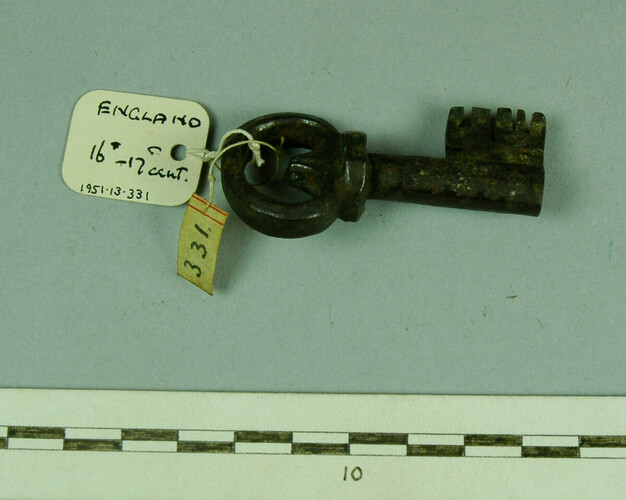 1951.13.331Iron key with oval bow with peak rising from the base, tubular stem and bit with irregular teeth. [El.B 27/03/2009]1951.13.331
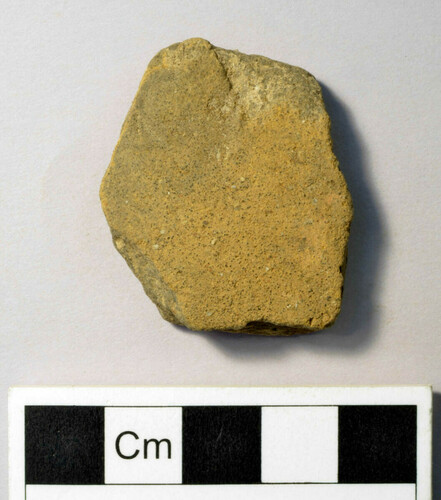 1884.137.23.71Ceramic sherd1884.137.23.71
 1938.35.1153.3Iron candlestick with moveable socket, part of a tinder box. Cylindrical in shape with a ring around the rim. The candlestick sits on a circular base with a perforated rectangular extension which slots in the lid of the tinder box. A round slider operates a moveable internal socket. For the other constituent parts see [1938.35.1153 .1 - 2] and [1938.35.1153 .4 - 8.] [CW [OPS Move] 29/3/2017]1938.35.1153.3