
- Collection type
- Object
- Description
- Metal Tiffin Can consists of three parts which stack on top of one another. Removable lid and handle. [ThW 11/2/2020]
- Long description
- Metal Tiffin Can consists of three parts which stack on top of one another. Removable lid and handle. Held together with two brackets. Decorated with incised patterns. Due to its condition only separates into two parts with the bottom two being firmly attached. [ThW 11/2/2020]
- Geographical reference
- Date
- Acquisition information
- Donated: 03/03/2016
- Dimensions
- Diameter: max 238 mm, Height: max 260 mm
- Object numbers
- Accession number: 2018.37.222
- Research and responses
The Jenny Balfour-Paul collection [2018.37] was extensively researched and studied as part of the Multaka Oxford Project. The Multaka Oxford project is an inclusive volunteering programme using the collections as a springboard for intercultural dialogue about cultural heritage delivered jointly by the Pitt Rivers Museum and the History of Science Museum, University of Oxford. Any input from Multaka volunteers have been included as project notes on the database records for specific objects. [ThW [Multaka Project] 26/1/2021]
[Multaka-Oxford Project notes] From the Pitt Rivers Museum online exhibition Weaving Connections Volunteer Niran Altahhan said:‘Syrian heritage is full of industries and handicrafts, among them the manufacture of copper household appliances. This is an ancient and historical craft that has been passed down for generations but is about to disappear. One of these copper products was safartas “a travel vessel”. They often consist of three or four consecutive plates stacked on top of each other. Each section is dedicated to a different type of food cooked with love and tenderness.’ Photographs taken by Niran’s cousin from his antique shop in Damascus. [ThW [Multaka Project] 26/1/2021]
[Multaka-Oxford Project notes] From the Pitt Rivers Museum online exhibition Weaving Connections Volunteer Antoinette Nguyen wrote this poem:
White Rice, A Poem About Lunch and My Vietnamese Father
‘Ba, can you cook some rice?
the al dente way like the Italians do
don’t put too much water
we don’t have to run away anymore
we can let it sit overnight and eat it tomorrow too the spirits are dancing tonight, Ba
they’re mingling in smoke clouds up to the ceiling why do they have to leave us, Ba?
I want them to come for dinner at least
and eat with us one last time
and stay here forever.’
[ThW [Multaka Project] 26/1/2021]
Multaka-Oxford Project notes] From the Pitt Rivers Museum online exhibition Weaving Connections Volunteer Sally Barakjl said: ‘This is a type of lunch box used to carry food from one place to another. The three tiers are used to separate the type of food. For example: the first-tier used for rice the others for vegetables and meat.’ [ThW [Multaka Project] 26/1/2021]
Search terms: Vessel, Food and Drink, Food Accessory
Related
- 2018.37.222.2Removable part of metal Tiffin Can [ThW 11/2/2020]2018.37.222.2
- 2018.37.222.1Removable part of metal Tiffin Can with handle and lid [ThW 11/2/2020]2018.37.222.1
- 2018.37.222.3Removable part of metal Tiffin Can, metal bracket which holds the vessel together. [ThW 11/2/2020]2018.37.222.3
- 2018.37.222.4Removable part of metal Tiffin Can, metal bracket which holds the vessel together. [ThW 11/2/2020]2018.37.222.4
Further items to explore
 1884.1.3.15Wooden pole for tent support tapered at both ends. (see 1884.1.3)1884.1.3.15
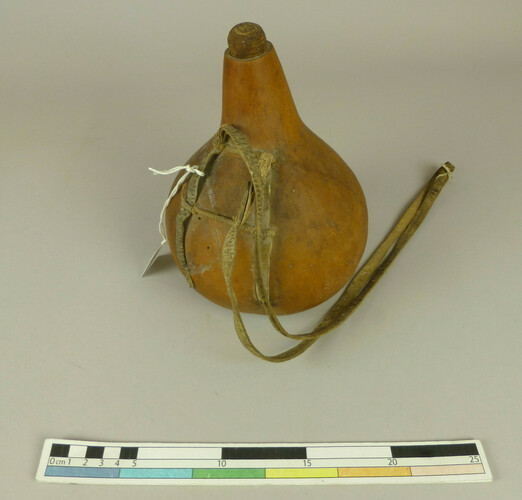 2016.44.4Gourd vessel with crack which has been repaired locally with plant fibre stitching. The gourd has a wooden stopper and hide carrying loop.2016.44.4
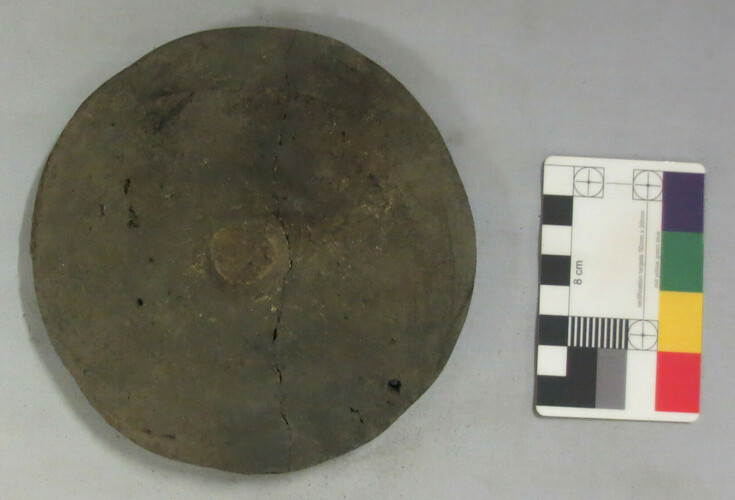 1942.13.260Black pottery vessel lid. [ASh [OPS move] 18/02/2016]1942.13.260
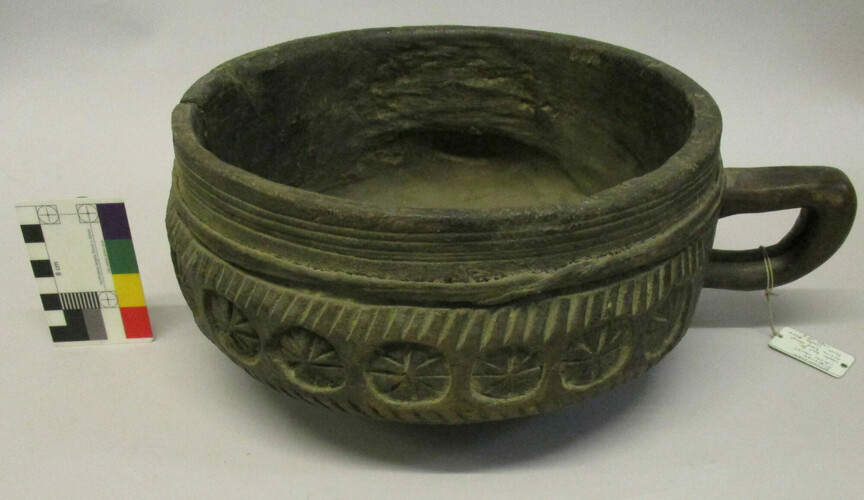 1984.10.6Round wooden bowl with handle, carved with diagonal lines and round rank symbols. A single handle on one side. [RM [OPS move] 23/8/2016]1984.10.6
 1956.10.4Harvest-trophy of bearded wheat bound with coloured silver paper and cotton cloth.1956.10.4
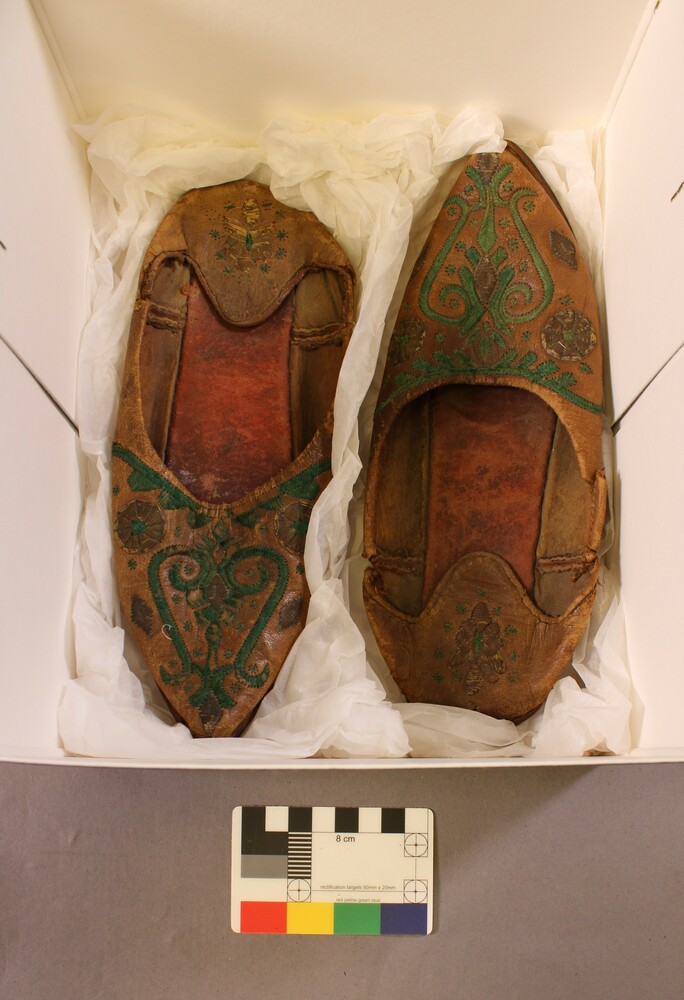 1979.14.6.1-2Pair of brown leather shoes.1979.14.6.1-2
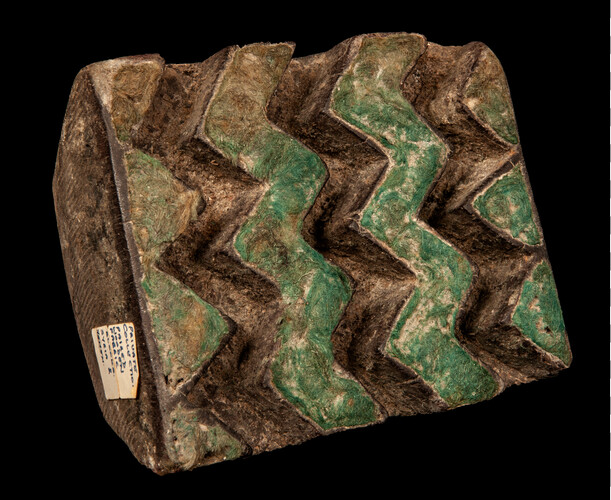 2018.37.10Wooden printing block.2018.37.10
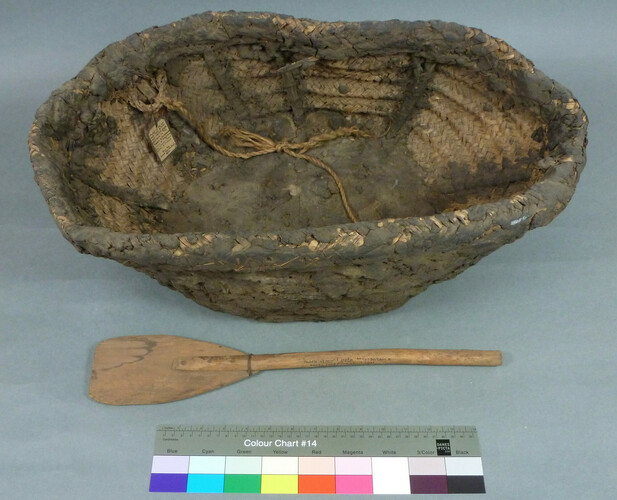 1921.51.1.1Model of a bitumen covered boat [.1]. For paddle please refer to [1921.51.1.2]. [BH [OPS move] 27/09/2016]1921.51.1.1