
- Collection type
- Object
- Description
- Copper alloy water vessel with a bulbous body and a long straight spout, for sprinkling and pouring. [JMC 29/5/2019]
- Long description
- Copper alloy water vessel with a bulbous body and a long straight spout, for sprinkling and pouring. The spout rises directly upwards from the centre of the body. There is a flared circular expansion halfway up the spout, after which it tapers rapidly to the top. The bulbous body has sloped shoulders and narrows slightly towards the circular base. One one side of the shoulder is another very short, curved spout, for filling the vessel with water. [JMC 29/5/2019]
- Geographical reference
- Date / Period
- Date made: 918-1392
- Date collected
- Before 1917
- Acquisition information
- Purchased: 1917, uncertain Found unentered: 29/05/2019
- Materials and processes
- Material Copper Alloy Metal, Material Bronze Metal, Process Repaired (local), Process Cast
- Dimensions
- Diameter: max 125 mm, Height: max 355 mm
- Object numbers
- Accession number: 2019.12.1
- Research and responses
Research notes from 2005.36.1, an identical vessel from the Wakefield collection: "This type of vessel is known as a jungbyung in Korea and was produced and used during the Goryeo Dynasty, between 918 and 1392 A.D.. Originally used in Buddhism for sprinkling water for purification this type of vessel became an object used by all types of people in their daily lives. This form of vessel originated in India where it is known as a kundika, a Sanskrit word meaning bottle. Sehee Park, from Korea, identified this object and helped provide the information above while working at the Museum, as an intern with Conservation during 2004 and 2005". [JMC 29/5/2019]
Search terms: Vessel, Ritual and Ceremonial, Religion, Religious Offering, Jug
Further items to explore
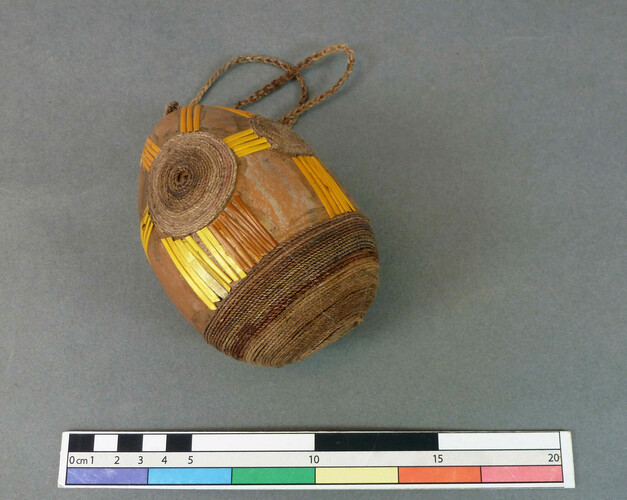 2012.36.11Water carrier. [FB 25/04/2012]2012.36.11
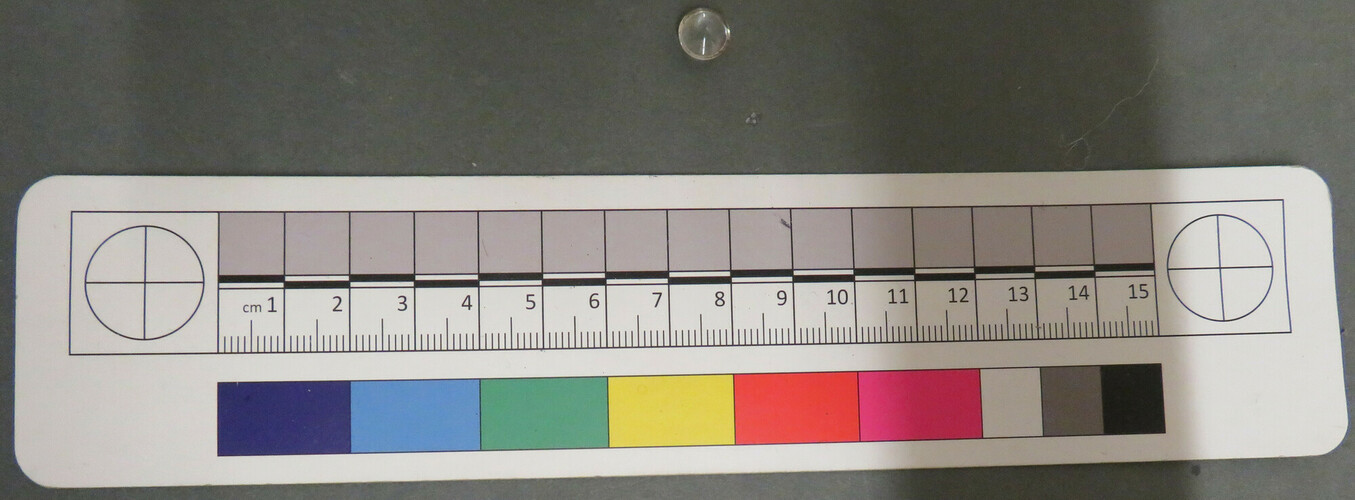 1985.53.638.4Lid from a small crystal or glass vessel. Cylindrical bottom section and convexly curved top section. For associated vessel see [1985.638 .4] and for box in which the vessel and lid are contained see [1985.53.638 .1 - .2] [EH [OPS Move] 2/5/2017]1985.53.638.4
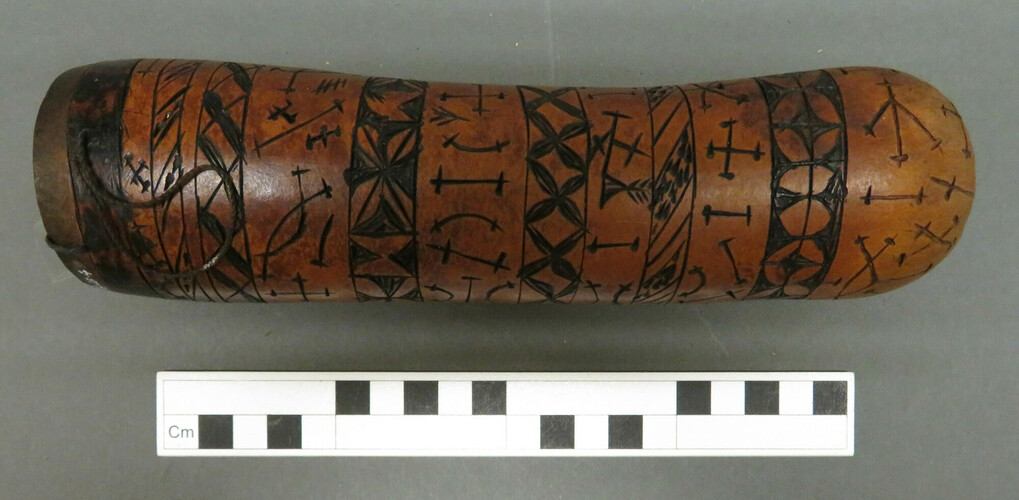 1914.26.4Gourd vessel inscribed with nsibidi writing on the surface. Cylindrical in shape with a circular opening at one end with a painted black rim. The main body of the vessel is red/brown in colour. [ASh [OPS move] 3/5/2017]1914.26.4
 1971.31.2.3Model gourd of carved wood, to go with figure [1971.31.2 .1]. The gourd is round with seven large ribs and a curved stalk. The gourd is placed in head carrier [1971.31.2 .2] with gourd [1971.31.2 .4]. For model hoe see [1971.31.2 .5]. [JC [OPS Move] 14/6/2017]1971.31.2.3
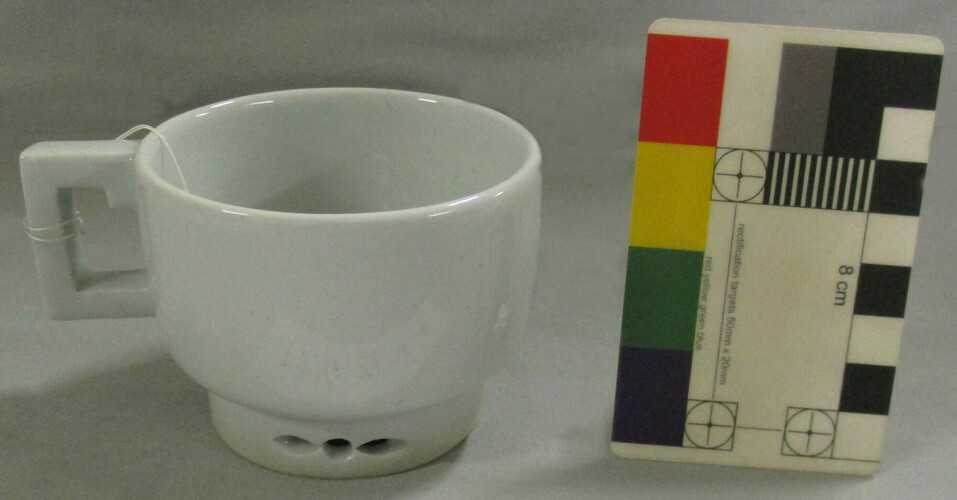 1996.31.4.4White glazed ceramic tea cup, with straight sides with square handle and pedestal foot. Part of a set of tea set [1996.31.4 .1 - .14 .2] [MOBB [OPS move] 20/04/2016]1996.31.4.4
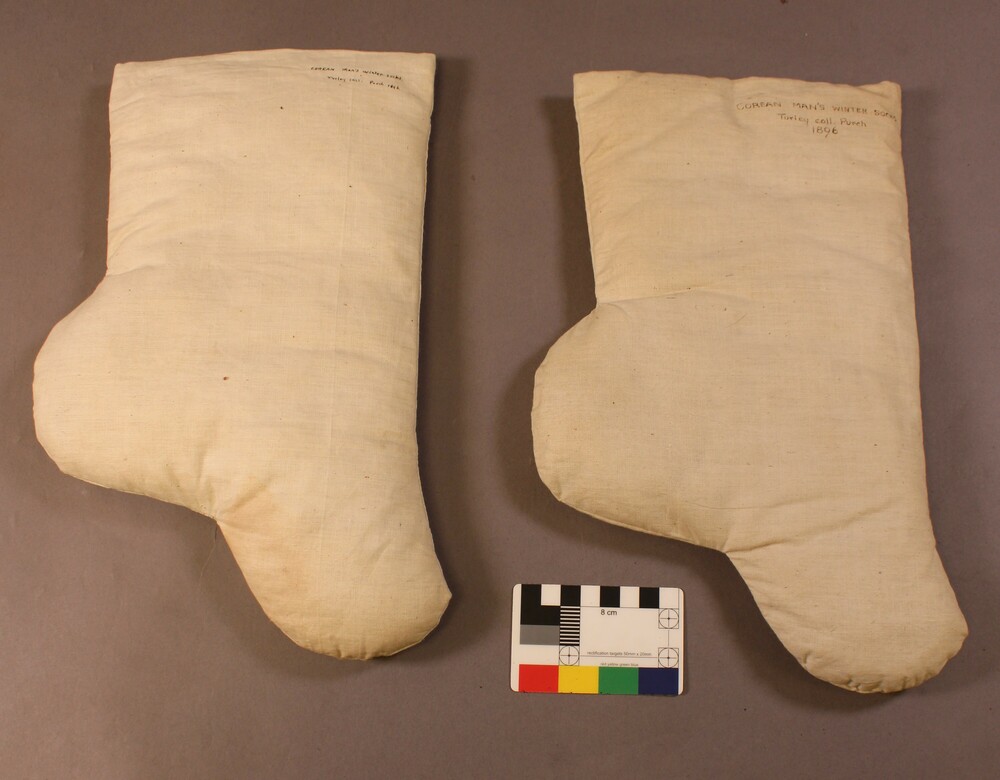 1896.62.208.2.1-2Man's winter socks padded all the way up with a seam running down the front of the leg along the centre of the sole and up the back. Cut out under the instep and above the heel at the back.1896.62.208.2.1-2
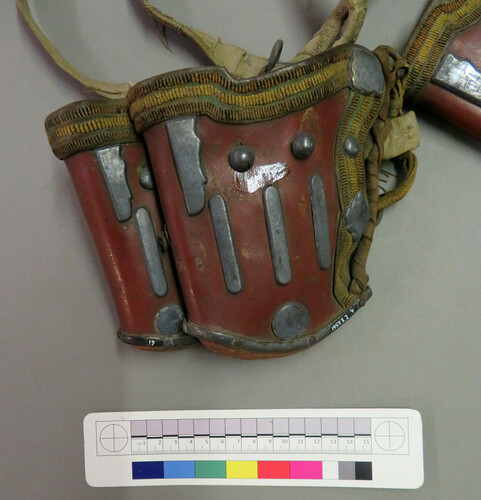 1959.3.2.4Miniature ‘pocket-quiver’ worn ceremonially with court dress. The quiver contains a wooden arrow-block, and it is attached to a belt [same belt as 1959.3.2. 3 ?].1959.3.2.4
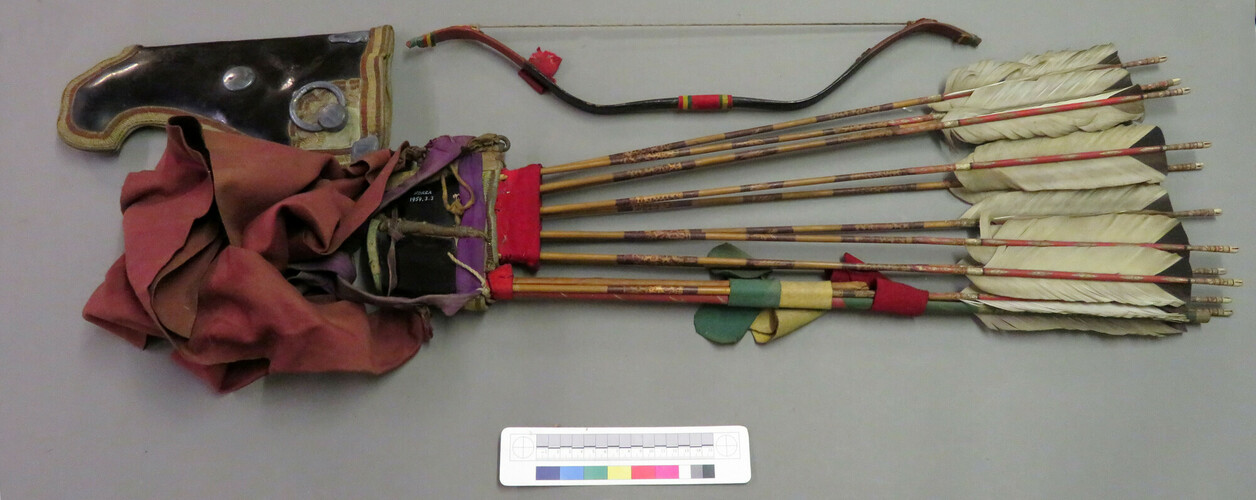 1959.3.3.1Miniature bow, usually worn ceremonially with a court dress. [ASh [OPS move] 20/9/2017]1959.3.3.1