
- Collection type
- Object
- Description
- Gilded figure of a passive deity standing on top of a lotus flower and a torana behind. The flower sits on top of a gilded pedestal. The figure's hands are in prayer position and is wearing an ornate headdress. For the shrine see 1920.16.18 .1, for the shrine pedestal see 1920.16.18 .2 and for the other figures see 1920.16.18 .3 - .9 & .11 - .14. [RH [OPS move] 1/9/2017]
- Geographical reference
- Date / Period
- Date made: Before 1920
- Date collected
- By 1920
- Acquisition information
- Donated: 1920
- Materials and processes
- Material Wood Plant, Material Lacquer Varnish, Material Pigment, Material Metal, Process Lacquered Varnished, Process Gilded, Process Painted, Process Carved, Process Openwork
- Dimensions
- Height: max 205 mm, Depth: max 70 mm, Width: max 60 mm
- Object numbers
- Accession number: 1920.16.18.10
- Research and responses
Note that some of the Japanese items are marked as being obtained by J. Cole Hartland and donated via his brother Edwin Sidney. It seems hard to believe that the other items from Japan were not also obtained by J. Cole Hartland. Note that there is no evidence to date that Edwin Sidney Hartland ever visited Japan [AP 16/2/2009]
In Mahayana Buddhism, increased devotion to the Buddha became elaborated as a belief in many celestial beings, notably Amitabha and Avalokiteshvara (Kwannon). Shingon esotericism is a part of Vajrayana, or Tantric Buddhism, however, in Japan the doctrine was much modified and systematized by the great religious leader Kukai, known posthumously as Kobo Daishi, one of the best-known Buddhist saints in Japan. [Source: Encyclopaedia Britannica [MR 23/2/2000]
Search terms: Religion, Figure, Furniture Dwelling, Shrine, Religious Object
Further items to explore
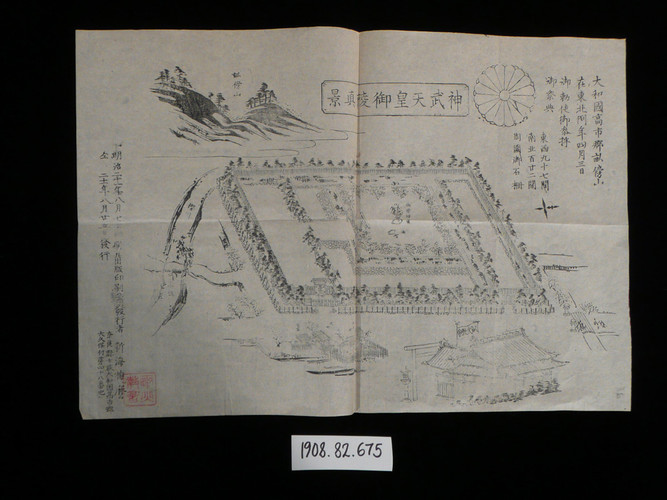 1908.82.675Picture of burial place. The pictures depicts a shrine surrounded by a wall and trees with a rivers running alongside the left of the page [CAR 9/10/2008]1908.82.675
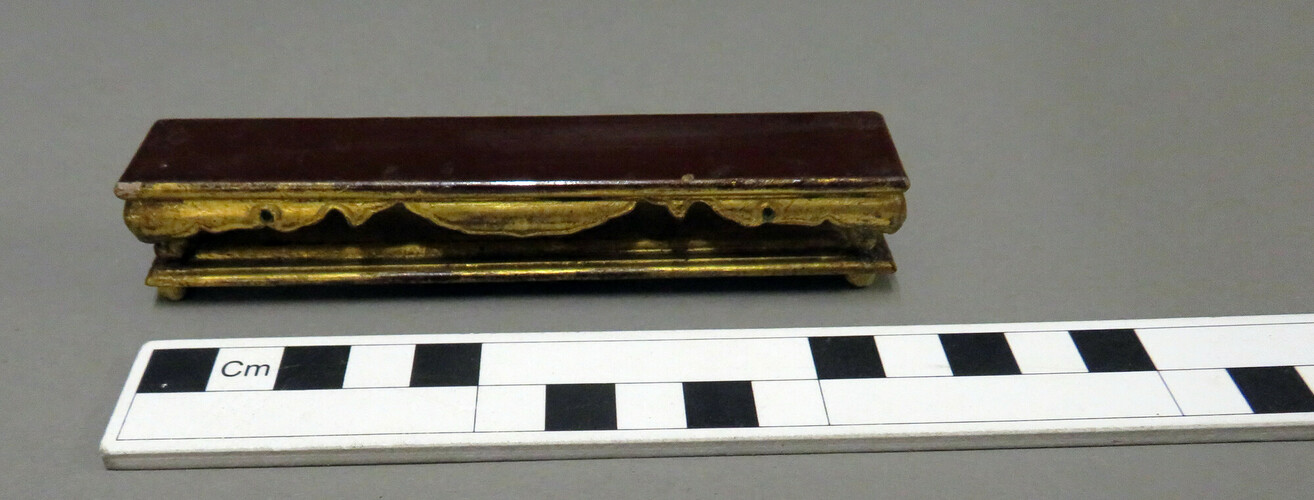 1996.17.305.10Wood bench with red lacquer on the seat and a gilded frame. For the associated parts see shrine cabinet [1996.17.305 .1], shrine lid [1996.17.305 .2]; shrine stand and drawers [1996.17.305 .3 -.6] and other shrine contents [1996.17.305 .8, .9 & .11 - .21]. [RH [OPS move] 6/9/2017]1996.17.305.10
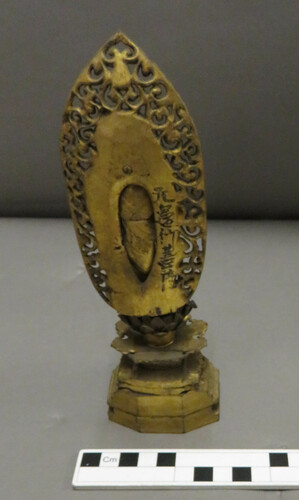 1920.16.18.9Gilded figure of a passive deity standing on top of a lotus flower and a torana behind. The flower sits on top of a gilded pedestal. The figure's hands are in prayer position and is wearing an ornate headdress. For the shrine see 1920.16.18 .1, for the shrine pedestal see 1920.16.18 .2 and for the other figures see 1920.16.18 .3 - .8 & .10 - .14. [RH [OPS move] 1/9/2017]1920.16.18.9
 1892.41.420Pair of candlesticks [.1 - .2], part of Chinese shrine. Pricket candlesticks with a flared base and a wide, circular drip tray with a spike in the centre. [ASh [OPS move] 7/4/2017]1892.41.420
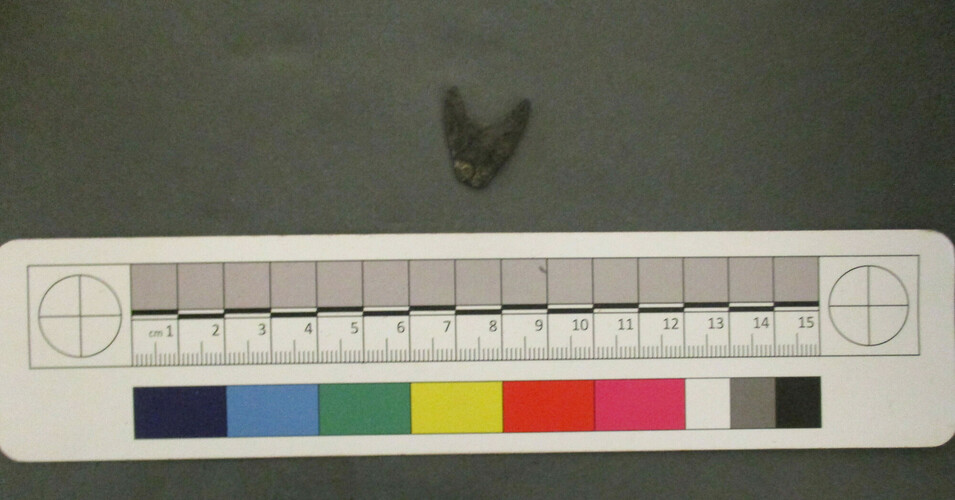 1985.53.789Arrow-head of dark grey chert, barbed. [El.B 27/11/2013]1985.53.789
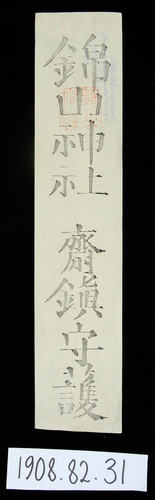 1908.82.31Amulet. Printed paper strip consisting of black characters and one red stamp. [JFK 10/10/2008]1908.82.31
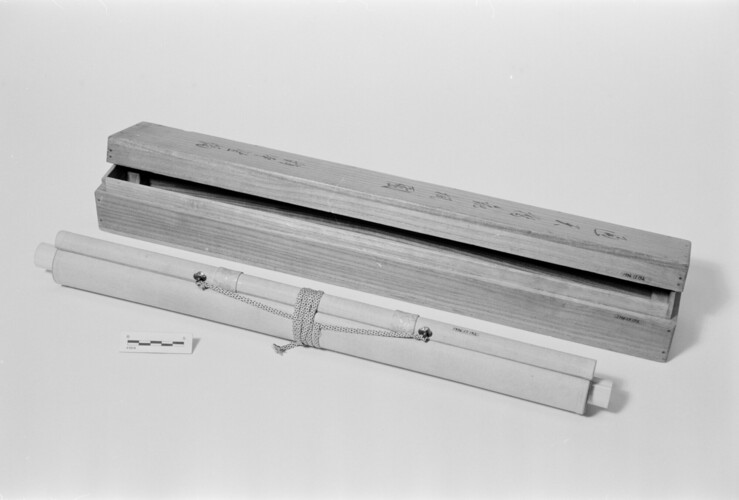 1996.17.192.1Scroll painting [.1] of autumn maple colours at Tsutenkyo Bridge, Tofuku-ji temple, in a wooden box [.2] with lid [.3] [SM 24/04/2008]1996.17.192.1
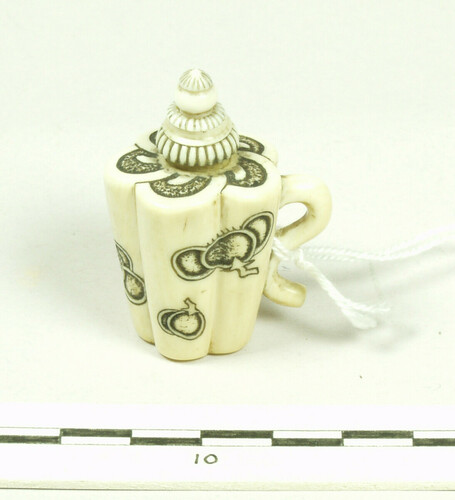 1980.34.392.1Netsuke toggle of jar with handle [.1] and lid [.2] [L.Ph 'DCF 2004-2006 What's Upstairs?' 5/4/2005]1980.34.392.1