
- Collection type
- Object
- Description
- Very elaborate cradle. Cradleboard painted red and green. Frame hung with dentalium shells, two circular beadwork pendants and strings of large glass and shell beads terminating in brass thimbles. The circular pendants appear to be threaded, net-like, like dreamcatchers, and the beadwork on the sac is in three panels. Textile baby-bag with curvilinear patterns in beadwork, laced with thongs. Elaborately woven carrying strap of hemp warp and wool weft. Baby bag stuffed with finely shredded vegetable fibre. Leather 'doll's head' made partly of kid gloves and stuffed with rags, with hair glued on top, has been affixed at top of baby bag by a stick which runs down into the wadding in the baby bag. No inner moss bag. Back of cradleboard is plain, painted green. The bar going across the back of the board, which ends in red painted disks, has been moved upwards. Old repair (wood and screws) to L inside of bumper bar.
- Geographical reference
- Date / Period
- Date made: Before 1842
- Date collected
- 1842
- Acquisition information
- Purchased: 1893
- Materials and processes
- Material Brass Metal, Material Wood Plant, Material Bead, Material Dentalium Shell, Material Animal Skin, Material Textile, Material Glass, Process Beadwork, Process Painted, Process Woven, Process Recycled
- Dimensions
- Length: max 940 mm
- Object numbers
- Accession number: 1893.67.192
- Research and responses
Originally catalogued as ?Blackfoot or Piegan. Philip Shackleton (visited 2.4.1985) considered it more likely to be E. Woodlands. Ted J. Brasser of the National Museum of Man, Canada (18.12.1985) identified it as Plains Ojibwa.
- Associated publications
- This object was featured in the Museum's audio guide produced during the DCF-funded 'What's Upstairs?' project, 2004–2006. [BR 'DCF 2004-2006 What's Upstairs?' 8/11/2005] This object was featured in the Museum’s ‘web gallery’ (‘Selected Objects from the Lower Gallery’) produced during the DCF-funded ‘What’s Upstairs?’ project, 2004–2006, with the following caption: ‘This elaborately decorated cradleboard has dentalium shells, glass and shell beads, and brass thimbles hanging from it. These are decorative but would also have amused the baby. Towards the back there are hanging beaded rings, resembling dreamcatchers, which would have protected the baby from bad dreams. The baby’s head in this baby carrier is made of kid gloves. It is not known when the head was added, but it is likely that it was put there by the collector’s wife, for her children to play with. This cradleboard was collected in 1841 or 1842 by Edward Hopkins, secretary to the governor of the Hudson's Bay Company. Its beadwork and decoration reflect several tribal styles, and suggest that it came from one of the fur trade communities in western North America, perhaps Fort Vancouver where Hopkins' party stopped.
Search terms: Children and Childcare, Furniture Dwelling, Transport and Travel, Cradle, Baby-carrier
Further items to explore
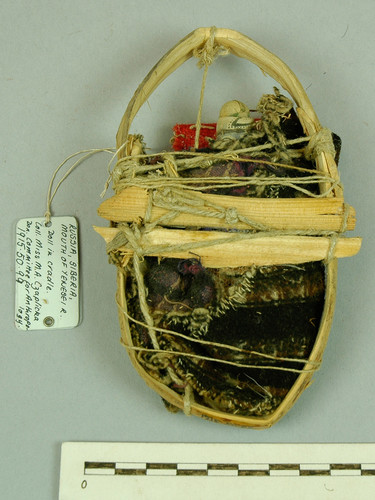 1915.50.99Doll made from textile in wooden and textile cradle.1915.50.99
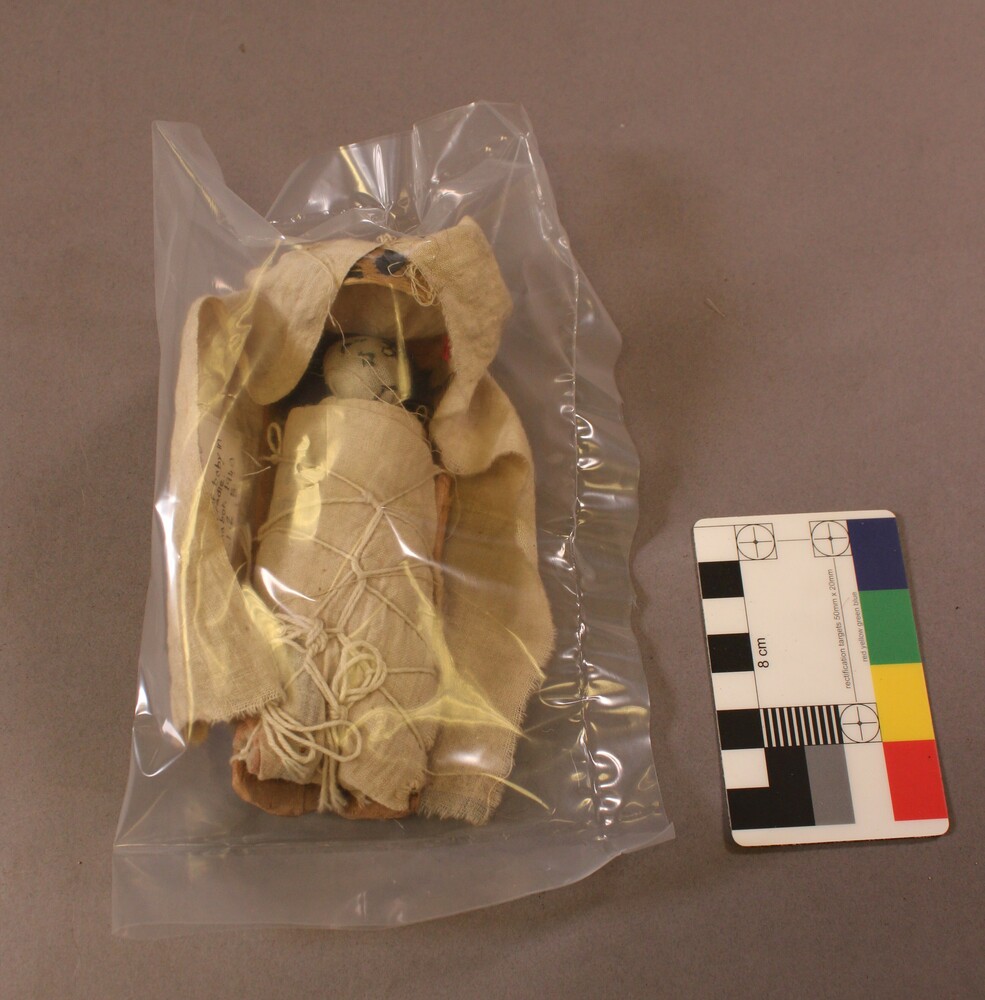 1947.4.22.1BFigure of a baby in a cradle. Part of a complete model of loom with weaver [.2].1947.4.22.1B
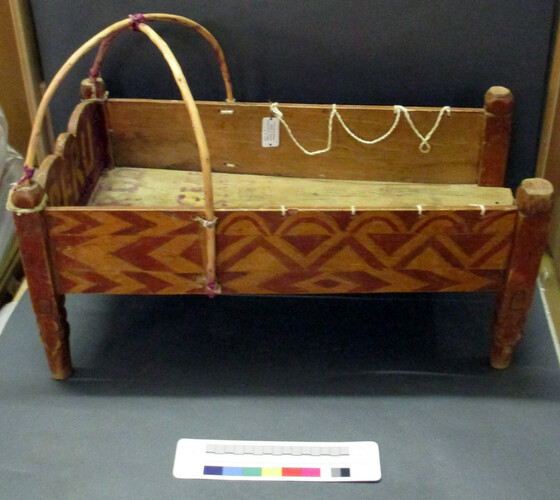 1972.16.4Wooden baby cradle. [CW [OPS Move] 1/6/2017]1972.16.4
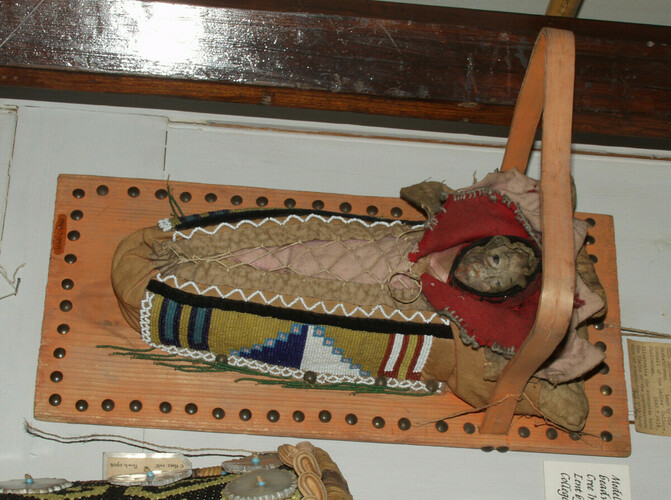 1940.7.0414Model cradle, decorated with beads.1940.7.0414
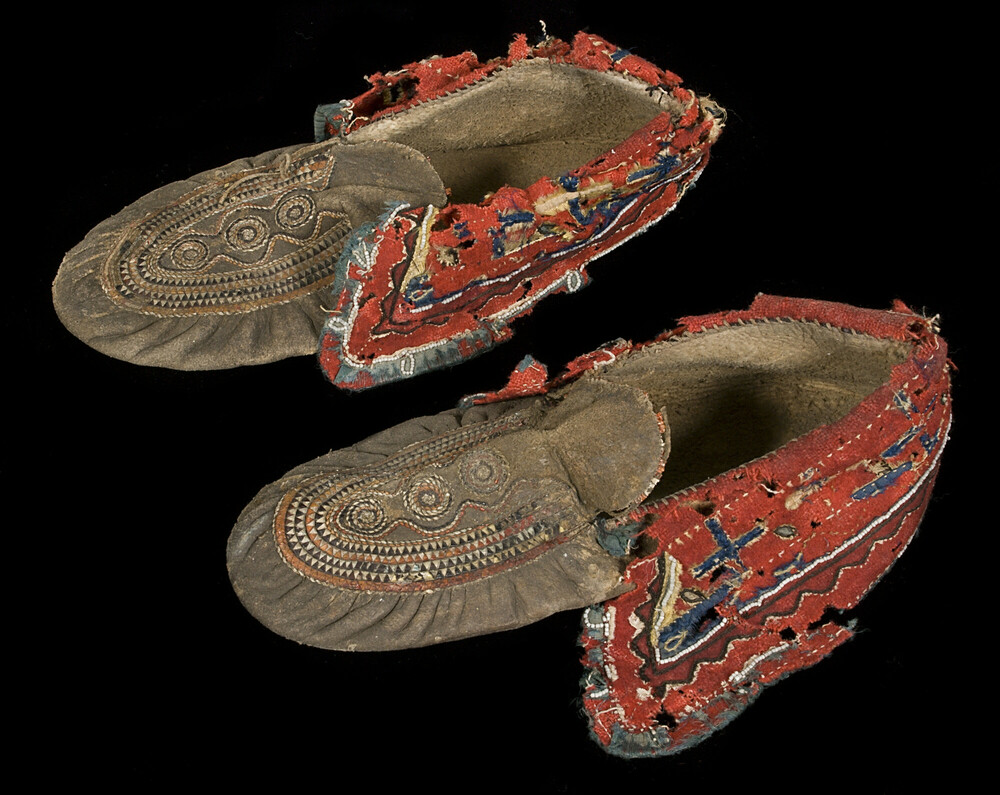 1952.5.04.1Pair of puckered toe moccasins, very fragile. [ZM 4/2/2005]1952.5.04.1
 1992.22.10.1Soft-soled moccasin with red, blue and white beadwork.1992.22.10.1
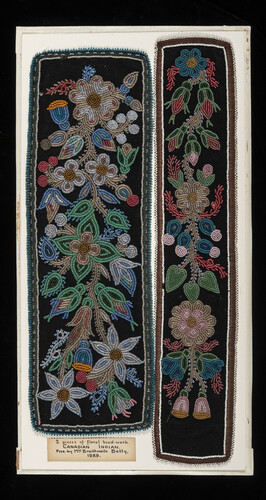 1929.62.2[1 of] 2 rectangular pieces of black cloth decorated with floral designs in beadwork.1929.62.2
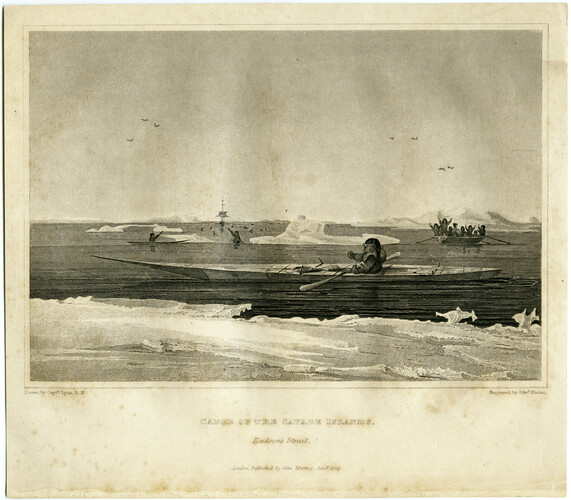 2013.15.6Engraving of Inuit hunters by Edward Finden (after a drawing by Captain George Francis Lyon)2013.15.6