
- Collection type
- Object
- Description
- Embroidered apron. [FB 12/09/2012]
- Long description
- Embroidered apron. The apron is made in four pieces. Three front of the apron has been embroidered with geometric patterns in red, green, yellow, pink and white silk yarn in surface satin stitch. Two edges of the apron are made from indigo dyed cotton textile embroidered with black woollen yarn. The bottom edge of the apron has been edged with red cotton textile. The top section of the apron is made from indigo dyed cotton that has been calendered to a sheen. The very top section is made from calendered indigo dyed cotton decorated with a panel of green silk paper embroidered with a stylised flower and geometric design in yellow, red, white, pink, blue and black silk yarn. This has been hand stitched to the main body of the apron with green and yellow cotton yarn. The ties for the apron are made from indigo dyed calendered cotton with a silver button on on tie and a loop of red cotton textile the fasten on the other tie. The lower part of the back of the apron is covered with brown paper. [FB 12/09/2012]
- Geographical reference
- South Guizhou Province Qiannan Sandu County Near Dujiang Yangweng Village
- Cultural groups
- Hmong
- Date / Period
- Date made: Before 03/10/1997
- Date collected
- 3 October 1997
- Acquisition information
- Donated: 2006
- Materials and processes
- Material Cotton Seed Fibre Yarn Plant, Material Cotton Seed Fibre Textile Plant, Material Silk Yarn Animal, Material Metal, Material Wool Yarn Animal, Process Dyed, Process Woven, Process Stitched, Process Embroidered
- Dimensions
- Width: max 880 mm, Length: max 1035 mm
- Object numbers
- Accession number: 2009.135.184 Other numbers: 117
- Research and responses
Shiny indigo cloth is prized by the Miao. Calendering is done by folding the material and beating it with a wooden mallet on a flat stone. Male professional dyers, and some families, use a huge 'rocking-stone' in a technique also used by the Han Chinese. The cloth is put on a roller, which is placed under the stone. The man then stands on the stone, rocking from side to side while supporting himself on the rafters. Others rock the stone with their arms. In the south an even greater shine is achieved by dipping the indigo-dyed cloth in a liquid made from forest tubers and roots. After the cloth has been dried in the sun, egg white is applied and it is spread out and again left to dry, to a highly glazed finish. [FB 12/09/2012]
See Miao Costumes from Guizhou Province South West China by Deryn O' Connor. Catalogue of an exhibition at James Hockney Gallery, WSCAD, Farnham. [FB 24/07/2012]
- Associated publications
- Miao Costumes from Guizhou Province South West China by Deryn O' Connor. Catalogue of an exhibition at James Hockney Gallery, WSCAD, Farnham. [FB 08/05/2012]
Further items to explore
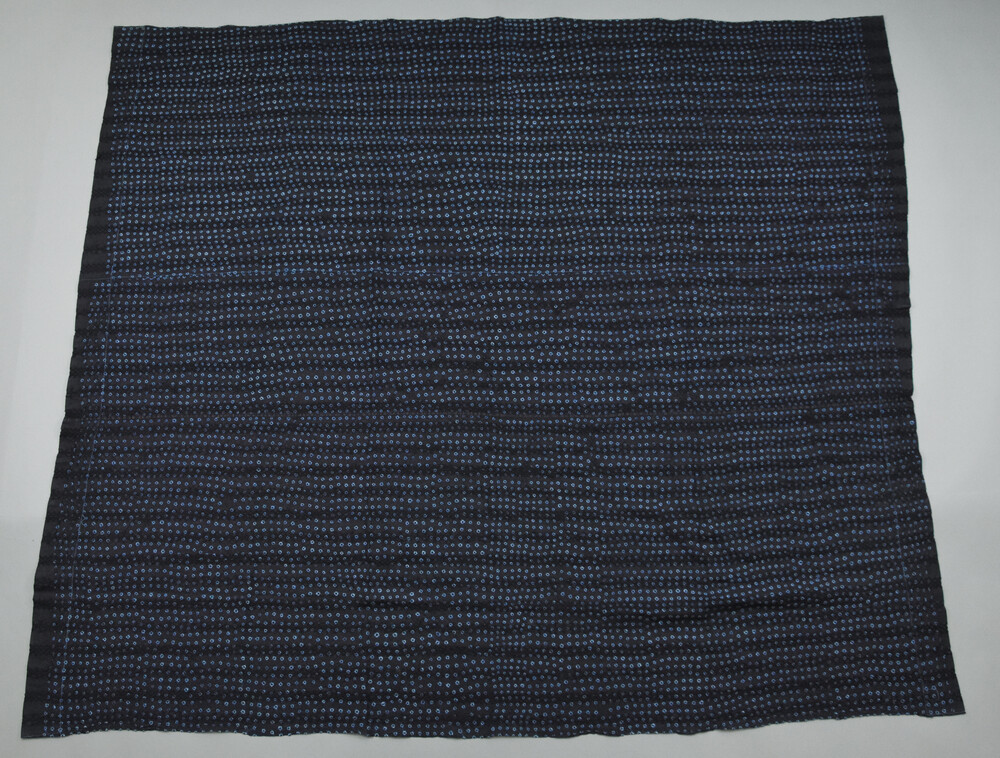 1971.28.9Adire cloth patterned with tie dye technique.1971.28.9
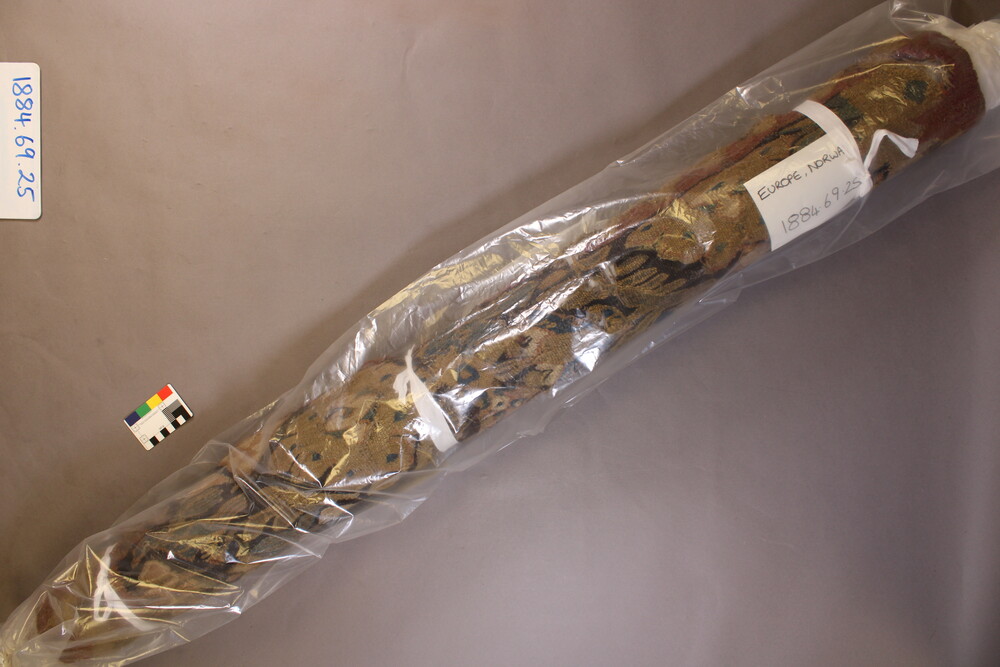 1884.69.25Tapestry1884.69.25
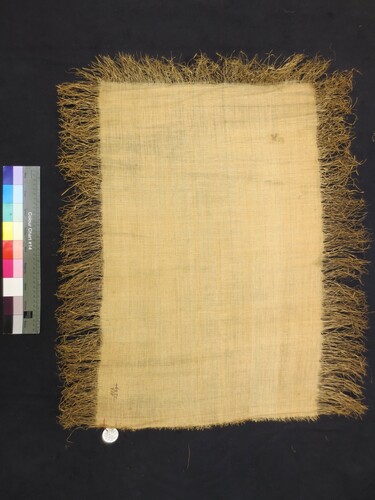 1884.140.1769Small mat of plant material with fringe on three sides1884.140.1769
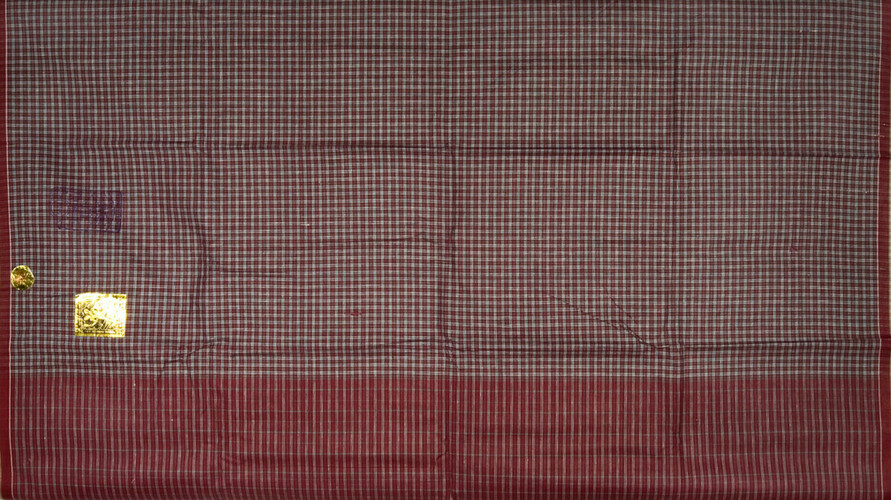 2003.69.45.1Deep maroon coloured sarong with small chequed pattern created by overlapping narrow green, white and blue stripes.2003.69.45.1
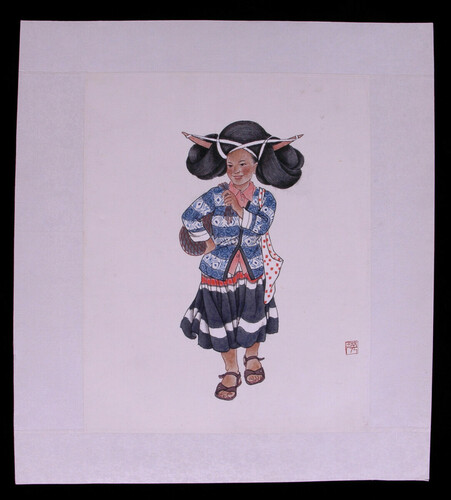 1986.35.5Painting of a girl with elaborate hairstyle. [El.B 19/03/2008]1986.35.5
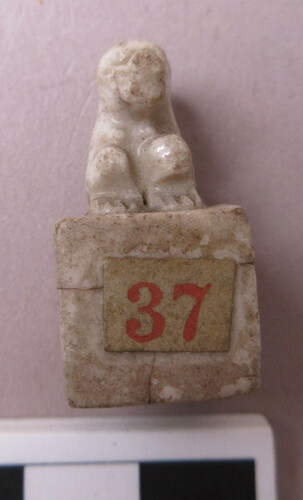 1884.140.453Stone seal with animal top.1884.140.453
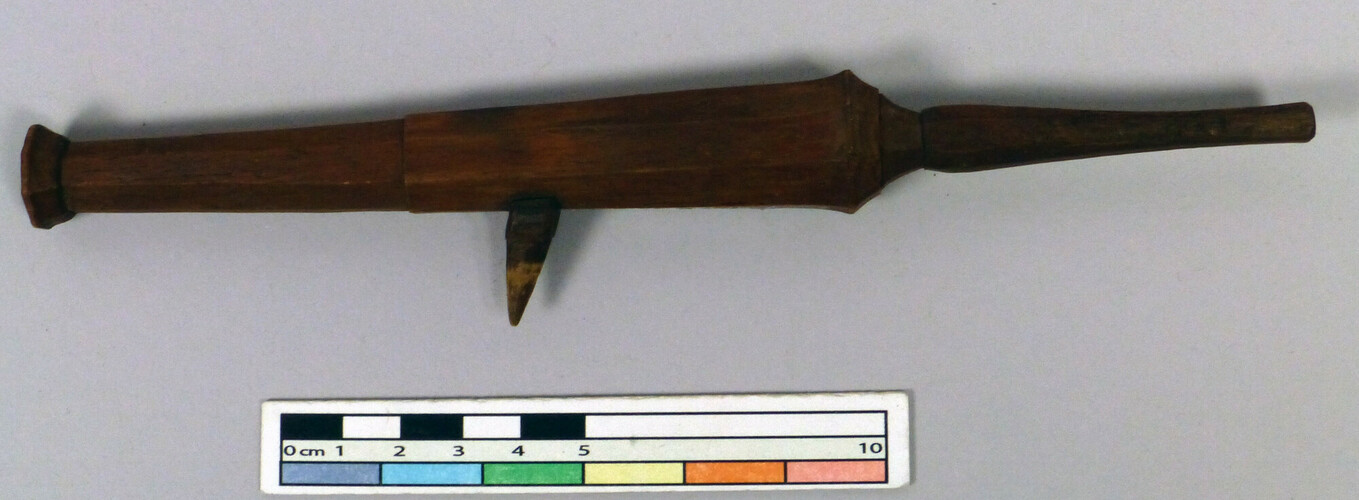 1884.81.16.2Carved and stained wooden pivot gun, part of model Chinese war junk 1884.81.16 [ZM 11/2/2016]1884.81.16.2
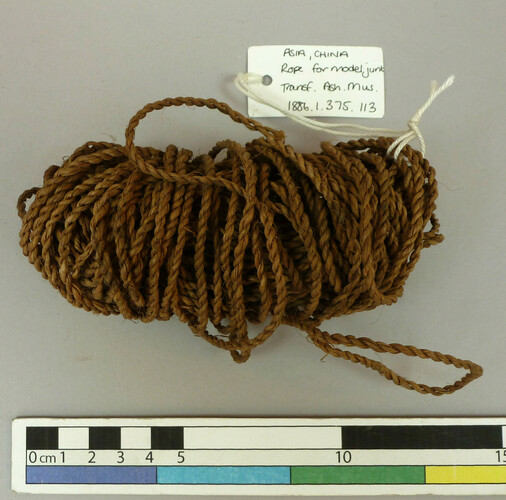 1886.1.375.113Ball of plant fibre rope [.113]. Probably part of the rigging. For Chinese Junk. [See entries 1886.1.375.1-130] [SM (Verve) 25/04/2013]1886.1.375.113