
- Collection type
- Object
- Description
- Embroidered girl's hat.
- Long description
- Embroidered girl's hat. The hat is made from silk that has been dyed so as to appear as a shiny bronze, green colour. This textile has been used at the top of the hat and has been embroidered with red silk braid and in the centre with bands of orange, red, blue and white cotton thread. The textile has been pleated at the top of the hat. The side of the hat has been made from the same shiny green dyed textile as the top of the hat and three quarters of the side of the hat has been embroidered with bands of appliquéd silk ribbons in red, orange and blue. The central band of embroidery consists of a geometric pattern in red, pink, white and blue silks embroidered in counted satin stitch and chain stitch. The outer bands are embroidered with counted satin stitch and two needle stitch and the narrow bands of blue silk embroidery is embroidered with counted satin stitch with dots in red, orange, green and white. The hat is lined on the inside with white cotton yarn.
- Geographical reference
- Cultural groups
- Hmong
- Date
- Acquisition information
- Donated: 2006
- Materials and processes
- Material Cotton Seed Fibre Textile Plant, Material Cotton Seed Fibre Yarn Plant, Material Pigment, Material Silk Textile Animal, Material Silk Yarn Animal, Process Woven, Process Stitched, Process Dyed, Process Embroidered, Process Appliqué
- Dimensions
- Diameter: max 80 mm, Height: max 80 mm
- Object numbers
- Accession number: 2009.135.24 Other numbers: 24
- Research and responses
Taken from Miao Costumes from Guizhou Province South West China by Deryn O' Connor. Catalogue of an exhibition at James Hockney Gallery, WSCAD, Farnham p.49 "...The story of the second colour is very intriguing. It is found on cotton and silk, on both handwoven and commercially woven cloth in the area of Huangping, 90 to 95. It appears as a shiny bronzy green, sometimes very yellow, sometimes more brown., but after handling cloth of this colour one's fingers are tinged with purple. The colour is produced by beating into the cloth, with a wooden mallet, some green crystals the women buy in the markets, 82 and 84. These are crushed and mixed with a little water - if there is too much water the cloth is dyed purple. It seems most likely that this is one of the many Rosaniline purple dyes, the so-called triphenyl methane dyes, invented in the latter part of the 19th century and prepared from aniline. This group contains dyed which were marketed under such names as Hofmann's violet, Crystal violet, Methyl violet, Spiller's purple etc. Synthetic dyes were available in China from the 1870s but it may be that these green crystals were introduced to this area for another purpose. Crystal violet, Methyl violet and Methyl rosanline were used to make Gentian violet, an antiseptic and bacteriocidal agent, often painted on the skin in the recent past in the west, and seen on a child's face in Guizhou in 1993. Practical experiments using both the crystals bought in Kaili market in Guizhou and green crystals of Gentian violet, labelled crystal violet, obtained from a chemist in Surrey, gave an identical green colour when applied to the cloth as a paste and then beaten. It is tempting to speculate that the green crystals were first introduced to the Miao by the English missionaries of the China Inland Mission who established a base near Huangping at Panghaiin 1895..." [FB 08/05/2012]
- Associated publications
- Miao Costumes from Guizhou Province South West China by Deryn O' Connor. Catalogue of an exhibition at James Hockney Gallery, WSCAD, Farnham. [FB 08/05/2012]
Search terms: Clothing Headgear, Textile, Children and Childcare, Hat, Headgear, Head Ornament
Further items to explore
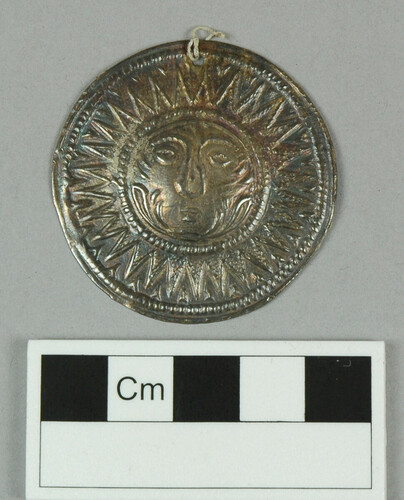 1985.51.724Circular medal with repoussé decoration of a face and a circular zigzag design and perforation. Charm worn by children. [SM 04/05/2011]1985.51.724
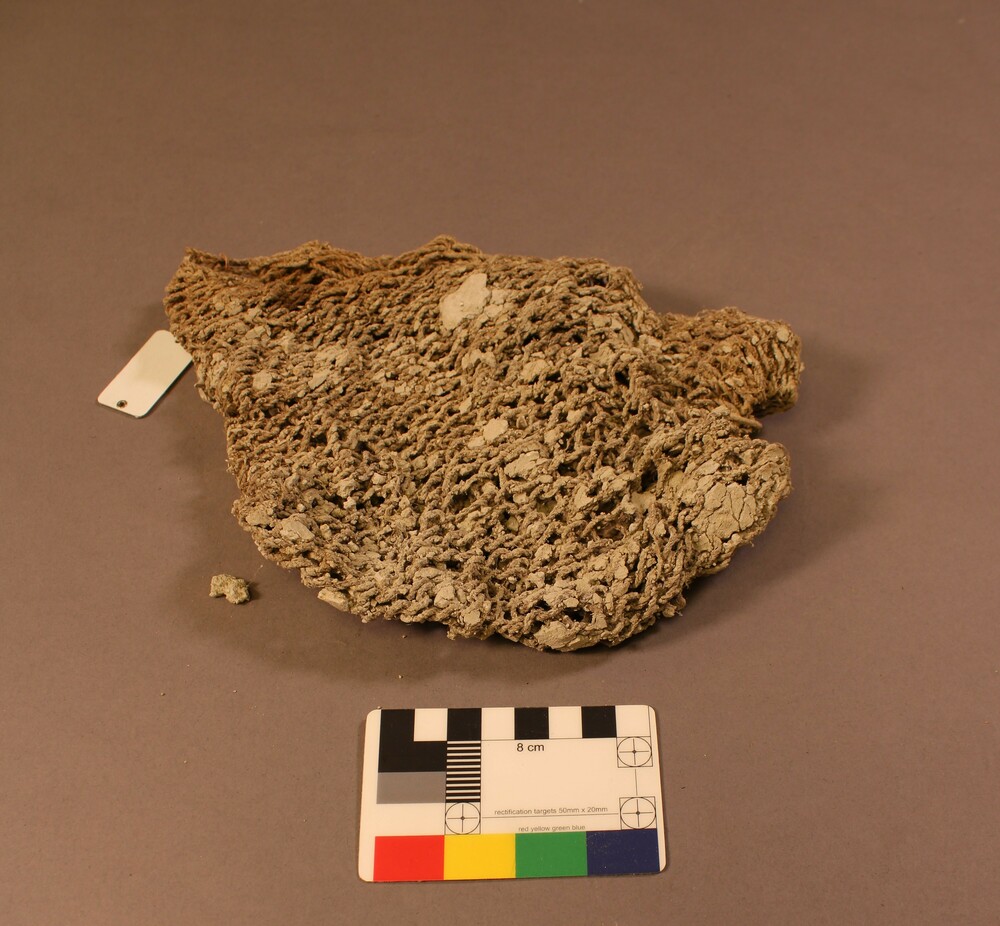 1979.21.83Man's netted hat.1979.21.83
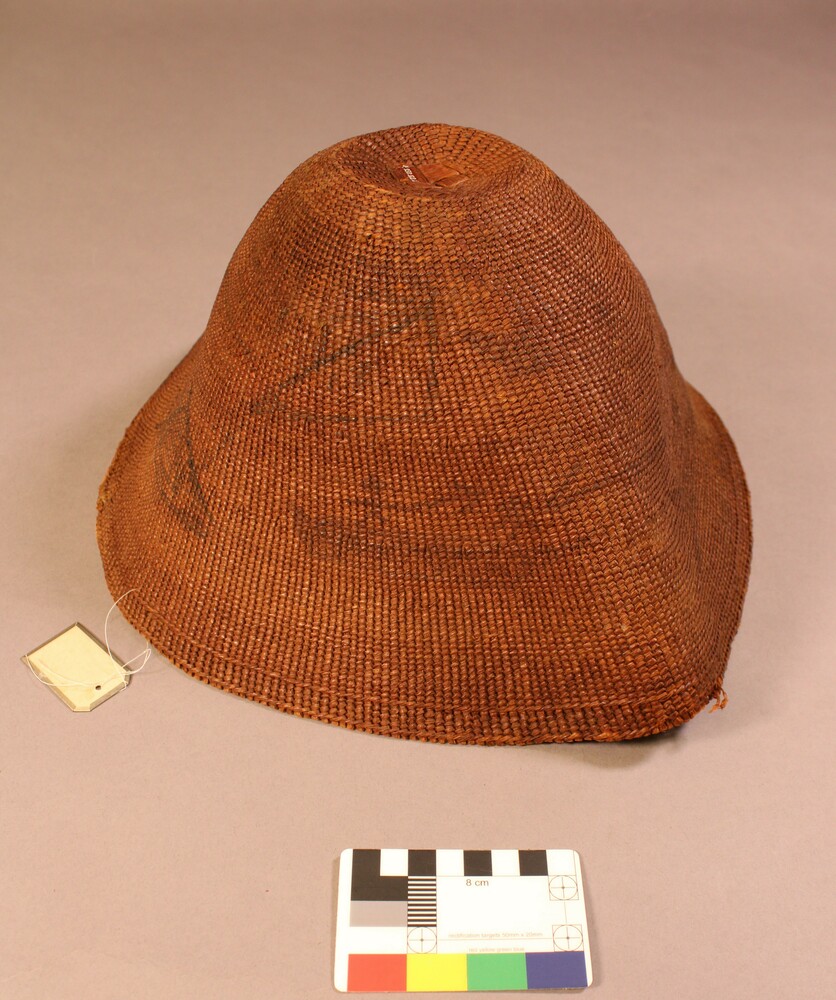 1937.52.21Circular basketry hat painted with designs of native whaling scenes.1937.52.21
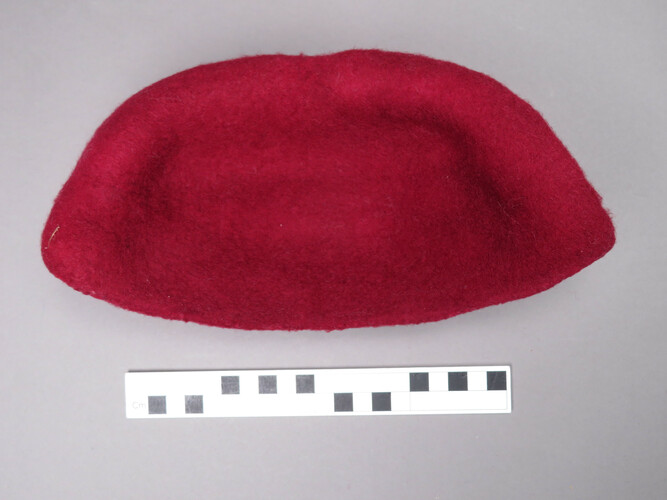 2018.37.117.2Chechia (cap) of red felted wool, part of a set of materials for chechia-making.2018.37.117.2
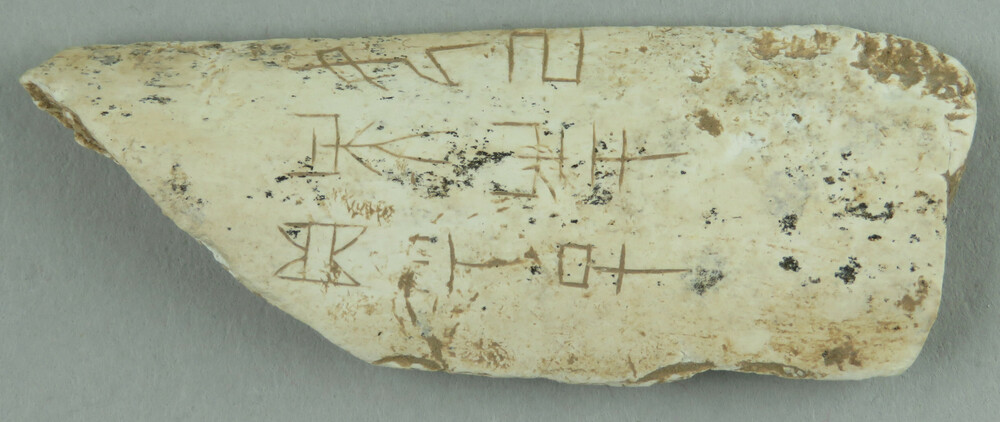 1923.20.2Piece of bone engraved with very early Chinese characters, Han period.1923.20.2
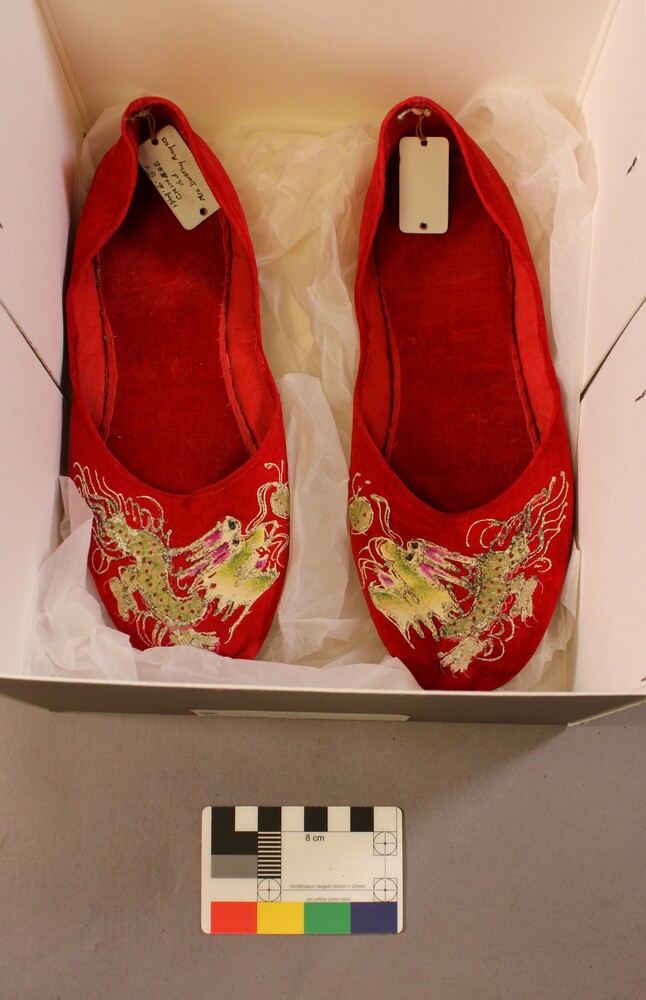 1969.16.5.1Pair of slippers.1969.16.5.1
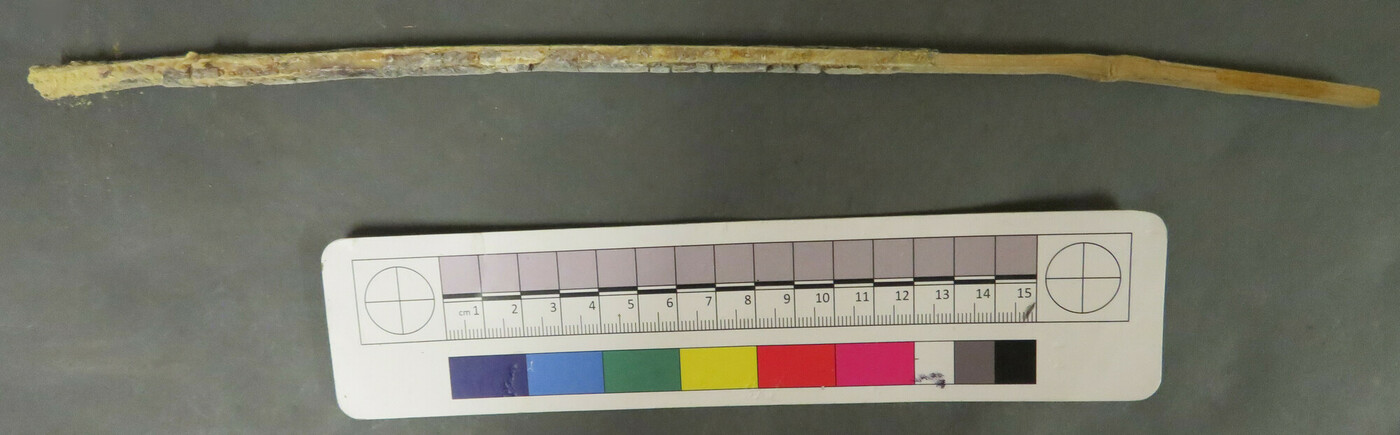 1913.45.4.2Resin candle. Made from a bamboo splint steeped in resin. The bamboo is straight and the resin covers approximately two-thirds of the splint. The resin is highly deteriorated and crumbling into a fine powder. One of a set, for the full set see 1913.45.4 .1 - .13 [AB [OPS Move] 5/5/2017]1913.45.4.2
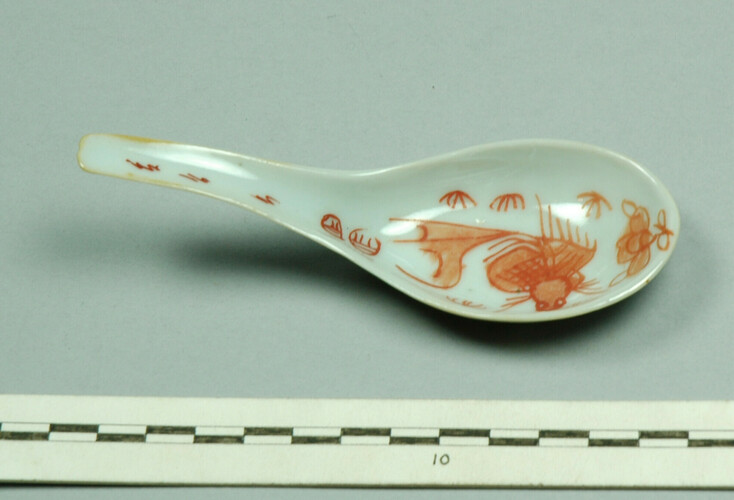 1909.68.46Porcelain spoon of Chinese origin; pale blue-white with fish and other designs painted in orange. [EC 'DCF 2004-2006 What's Upstairs?' 24/3/2006]1909.68.46