
- Collection type
- Object
- Description
- Ceramic figure of squatting man and animal [.1], with 4 stone and shell beads [.2-.5]
- Long description
- Ceramic figure of squatting man and animal [.1], with 4 stone and shell beads [.2-.5] and a fitted pottery pottery plug [.6] on the back. Represents a squatting man with animal behind him, animal's head projecting over his (a headdress?). In the receptacle formed by the back of the animal are 4 stone and shell beads. The figure has a tail. The pottery is red in colour. [MJD (Verve) 25/1/2016]
- Geographical reference
- Date / Period
- Date made: 1500-1550 Archaeological period: Maya
- Date collected
- By 1949
- Acquisition information
- Loaned: 11/1949
- Materials and processes
- Material Pottery, Material Stone, Material Shell, Material Bead, Process Handbuilt, Process Fire-Hardened
- Dimensions
- Height 95 mm, Width: max 57 mm, Length: max 86 mm
- Object numbers
- Accession number: 1949.11.01.1 Accession number: 1949.11.01.2 Accession number: 1949.11.01.3 Accession number: 1949.11.01.4 Accession number: 1949.11.01.5 Accession number: 1949.11.01.6
- Research and responses
This object was examined by Dr Elizabeth Graham, UCL, as part of the 'Characterizing the World Archaeology Collections' project. She advised that this is a rare and important piece. This is a late Maya piece, either Terminal Postclassic (early 16th century, possibly late 15th) or early Historic (mid-16th century). It is a cache item and the beads are very likely from within. Other common items contained in historic times are sharks' teeth or sting ray spines or chert small side-notched arrow points. This piece is almost certainly from northern Belize from the sites of Lamanai or Santa Rita. The representation is of an elite personage, masked, with either a dog or coyote or perhaps even a pisote (coatimundi or cuash) headdress. It is common for the headdress to be made and positioned so that the person's head is seen emerging from the mouth, a theme associated with Maya elites. If the head is a coyote however it does show Central Mexican influence which is common at this time. The little effigy vessel also shows a monkey's tail curled around it. This blend of motifs from more than one animal is also common at this time. It probably dates no later than mid-16th century, most likely from the first half of the 16th century. [AS 29/01/2010]
- Associated publications
- Illustrated in colour as Figure 18.8 on page 394 of 'Central America', by Elizabeth Graham, Dan Hicks and Alice Stevenson, in World Archaeology at the Pitt Rivers Museum: A Characterization, edited by Dan Hicks and Alice Stevenson (Oxford: Archaeopress, 2013), pp. 383-400. Caption (same page): 'Figure 18.8 (Right) Cache vessel from Belize dating from the 16th century CE (PRM Accession Number 1949.11.01), representing an elite, masked individual with a canine headress. Four stone and shell beads (1949.11.01 .2-.5) were originally placed within the vessel.' and referred to on page 394. Graham, Hicks and Stevenson write 'One particularly notable rare artefact is a small pottery container, almost certainly originally buried (cached) as an offering or ceremonial deposit of some kind. Collected by ‘J.S. Westcott’ in Belize, it is complete with its stopper (1949.11.01 .1, Figure 18.8), and is a style now known to be characteristic of the late Pre-Columbian (early 16th-century) and early Historic (Spanish colonial) periods (mid 16th-century or later). Associated with it are 4 stone and shell beads, which were originally placed within the container (1949.11.01 .2–.5). Other items that were commonly placed in cache vessels in historic times include sharks’ teeth, stingray spines and small side-notched chert (flint) arrow-heads. The vessel in the PRM collection is almost certainly from northern Belize, either from the site of Lamanai or from Santa Rita. The representation is of an elite person, masked, with an effigy headdress of a dog or coyote or perhaps even a pisote (coatimundi, or quash). The headdress was made and positioned so that the person’s head emerges from the mouth, a theme associated with Maya elites. If the head is a coyote, it serves to document artistic influence from central Mexico, which was common at this time. The vessel also depicts a monkey’s tail curled around it. The combination of motifs drawn from more than one kind of animal was a frequent approach to the manufacture of effigy vessels in the late 15th and early 16th centuries. The effigy was presented to the PRM in 1949, but the circumstances of its original acquisition are unknown, and Westcott did not donate any other objects to the PRM. It is, however, a type of artefact recovered in other circumstances from both Lamanai and Santa Rita by Thomas Gann.'. [MJD 04/07/2014]
Search terms: Figure, Bead, Pottery, Animal Figure
Further items to explore
 1928.29.71Shadow puppet with a bird body and a human head [HR 'DCF 2004-2006 What's Upstairs?' 1/7/2005]1928.29.71
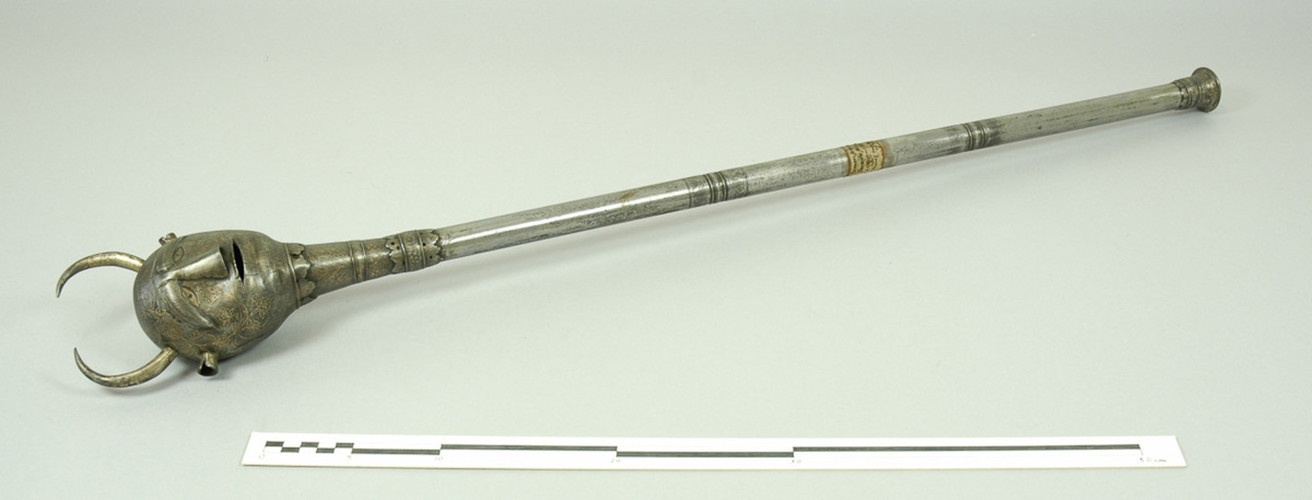 1932.89.118Steel damascened mace, with large, hollow head in the form of a horned demon’s head and pommel [SM 13/02/2007]1932.89.118
 1985.50.146Bone heart-shaped pendant with carved suspension loop at the top. [RH [OPS move] 13/9/2017]1985.50.146
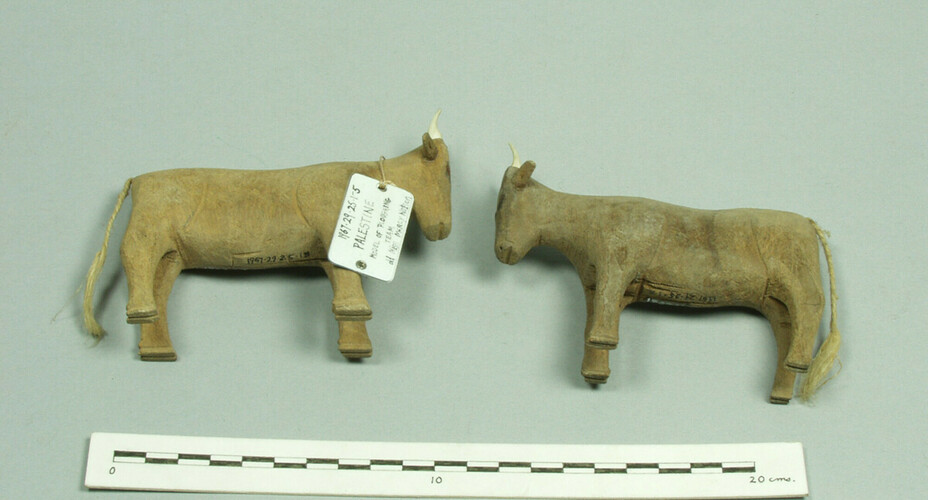 1967.29.25.1.1Wooden model of ox with metal stud eyes, ivory horns and string tail. [El.B 'DCF 2004-2006 What's Upstairs?' 11/5/2005]1967.29.25.1.1
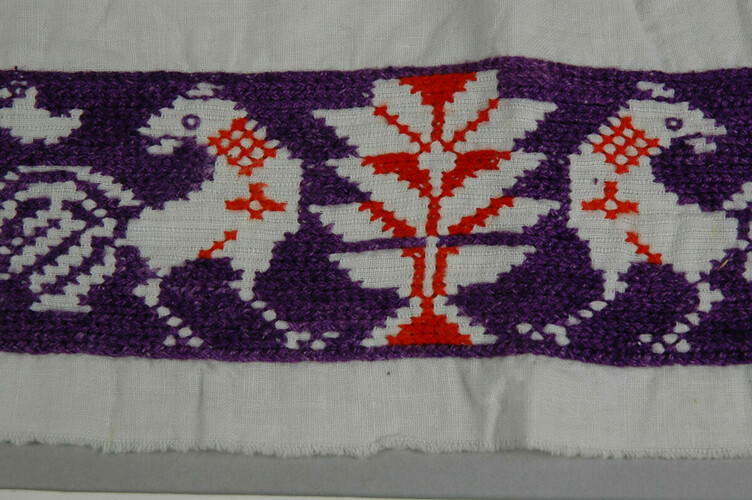 2008.57.79One of two strips of cotton textile embroidered with a band of bird and foliage designs in purple and orange yarn. Used for decorating blouses or 'camisas'. See 2008.57.79 and 2008.57.80 for both strips. [MdeA 24/08/2009]2008.57.79
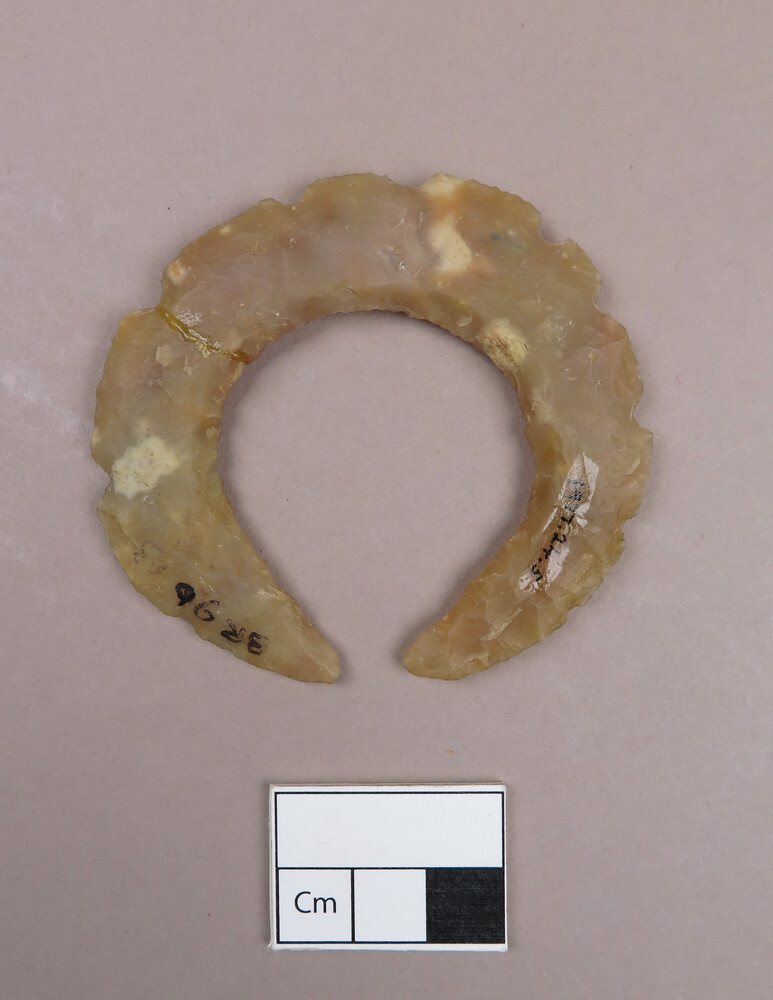 1977.24.5Crescent-shaped flint, notched.1977.24.5
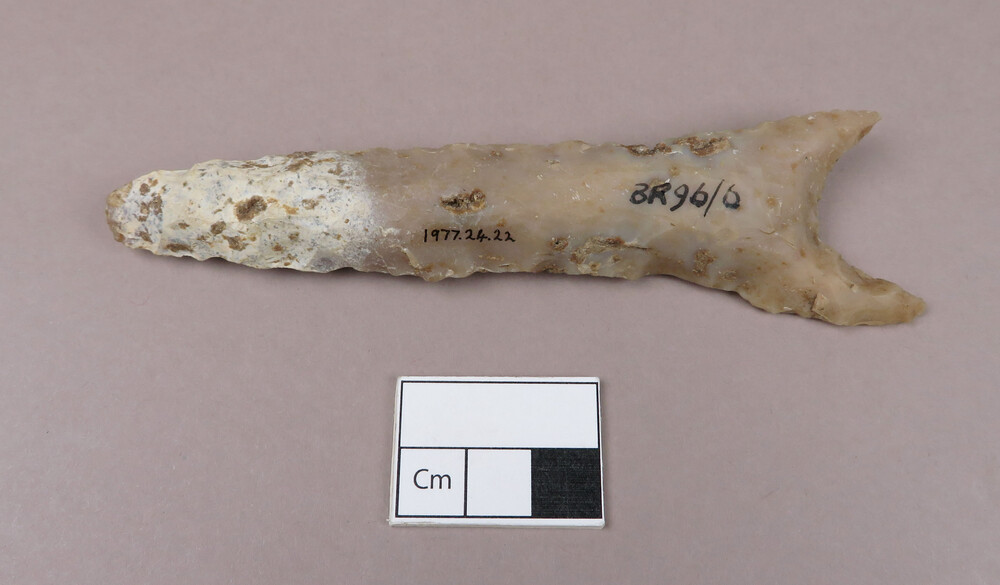 1977.24.22Eccentric flint, possibly an effigy form.1977.24.22
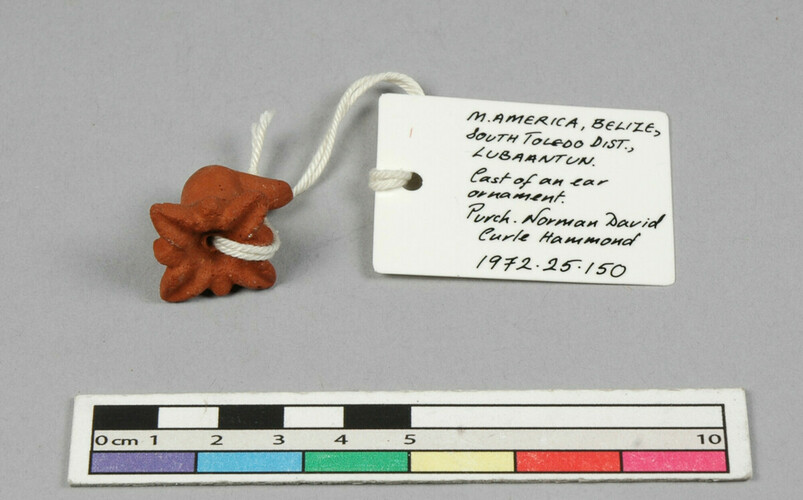 1972.25.150Cast of stone ear ornament.1972.25.150