
- Collection type
- Object
- Description
- Skull cap (tyubiteika). [FC 04/01/2010]
- Long description
- Skull cap (tyubiteika). The cap is square at the bottom with a conical top. The cap is made from a navy blue sateen textile which has been embroidered with four patterns; 'peppers' in white thread, one on each side. These four patterns are said to protect a mans health from four sides. Along the bottom edge of the cap a series of sixteen patterned 'arches' have been embroidered in the same white thread, wishing the wearer a big and happy family. The bottom of the hat has been edged with a black gross grain braid approximately 16 mm wide. The bottom edges of the inside of the cap have been lined with a red cotton textile approximately 64 mm wide. he rest of the inside of the hat is lined with a printed patterned textile which is white with narrow blue and green diagonal stripes and the black thread from the stitching can been seen. The hat is folded in two places making it possible to store in a pocket. [FC 04/01/2010]
- Person
- Maker Malohat Abdurahimova
- Field collector Sheila Rosemary Paine
- PRM source Julia Nicholson
- PRM source Pitt Rivers Museum
- PRM source Dreweatts Auctioneers
- PRM source Felicity Wood
- Date / Period
- Date made: Before 2008
- Date collected
- October 1997
- Acquisition information
- Donated: 2008
- Materials and processes
- Material Cotton Seed Fibre Textile Plant, Material Cotton Seed Fibre Yarn Plant, Material Cardboard Paper Plant, Material Silk Textile Animal, Material Silk Yarn Animal, Material Satin Textile, Process Stitched, Process Embroidered, Process Dyed
- Dimensions
- Height: max 170 mm, Width: max 150 mm folded
- Object numbers
- Accession number: 2008.116.13 Other numbers: 123 124 SP As116.13 124
- Research and responses
Taken from the sales catalogue, information about the time Sheila Paine spent in Uzbekistan: "In my pursuit of the Afghan amulet, and after managing to get into Afghanistan and Iran, I badly wanted to go to Central Asia to continue looking for motifs and amulets. this was 1994 and it was impossible to get visas, except for groups or businessmen, and especially so for a woman alone. I went to see Omar Massom, Turkmen, who at the time worked for Joss Graham in his gallery, to see if he could help. We were talking in the back office - and he was telling me not to go - when two men walked in and enquired about a suzani. They were from the travel company Steppes East and promised to get me visas, if I would plan a textile tour for them. I never dreamt they would expect me to led it, and excepted the offer.
I wandered around central Asia and was mugged in Bukhara, and then beaten up in Kunya Urgench and finished up in hospital in Dashauz. This was like a Victorian prison and had no water and no food. The gash on my forehead was sewn up and I asked the doctors to get hold of the Steppes East rep in Tashkent to get me home. It took him three days to get to Dashauz. Meanwhile, an Indian working for a German company who sent him food brought me some every day. I offered to pay the doctor and give him all the dollars I had left, which I now wouldn't need - about $200. He refused saying there was absolutely nothing they could buy with it anyway. The rep for Steppes East flew me to Tashkent and put me on the flight to England. My face was still covered in dried blood. The doctors at the John Radcliffe said it had been sewn up with 'old rope, we wouldn't even use on a leg', but that it had been well done.
Once mended, I flew back to Central Asia and wandered around, eventually going down to Islamabad. I wrote about these travels in The Golden Horde. The next year (1995) I took my first textile tour to Uzbekistan and Turkmenistan and then continued to take at least one each year until 2004. I wasn't always easy for me to buy good textiles as i had to let the group buy what they wanted first, as I was only there at their expense. In the early years there was a lot of good stuff around, both textiles and jewellery, especially in the Ashgabat market, but by the time I ended the tours there was mostly rubbish - bags and cushions made for tourists out of old embroideries. However, there were still good pieces to be found in Bukhara, and occasionally in Samarkand. Dealers would also save special things for me, as they were grateful for the business I brought." [FC 04/01/2010]
Notes made by Sheila Paine at the house of cap maker Malohat Abdurahimova: "Woman of the whole family help, each doing a separate operation. Mother and grandmother both made caps, grandmother lived to 105 and made caps till the end. Caps are different sizes and they match bases to crowns. The bands are lined and then folded back and measured, then turned. She measures crown to edge. Rolled paper, wrapped round a core is pushed in to the ridges between the stitched lines and, either in small pieces or in one long roll. Trims square crown of lining, rolled paper strips and black fabric. Hair laquer is poured into a bowl, then rubbed with cloth onto square sheets of metal from old photo plates. The cap is placed between two square sheets, and two half size are placed between the folded cap. A pile of about 12 is set up.
Black cotton fabric dyed with indigo from abroad, dyeing done in Maregilan by men or women. Dye 1000 to 2000 metres in a day - whole day and night. Cotton sateen much more expensive, only made to order, 10,000 cym. Black braid edging from Moscow, made for sailors' caps. Cotton lining fabric from Tashkent and Bukhara, and some from Andijan.
Purple thread from Moscow and Riga, also purple paper. Used because purple fades to white in sun after one day in the summer or one week in the winter, whereas white silk turns yellow. Sewing machine needles from Moscow - Indian ones broke.
Margilan pattern is a chilli pepper - protected people from the evil eye as it tastes very strong. Circles are just decoration. The tiny eyelets are from ancient times and have always been called 'back of the cat' (anus). Andijan uses an almond pattern - no symbolism (fertility-SP). She doesn't know what the pattern round the bottom means, but just followed her parents and didn't ask. 16 'fences' on all caps. Margilan caps special and famous in Uzbekistan - they are made to order for sale in Kokand. Many woman support themselves by this craft. Malohat had 12 apprentices, now working for themselves.
Crown of cap caught on to base by hand at corners. Machines together, with stiff band upright. Then turns. Daughter-in-law folds over band lining and catches down by hand, supporting on knee, none use thimbles. Malohat turns inside out and bites edges between teeth and stretches band. Daughter-in-law pushes out corners and edges with heavy glass jar, turning cap upside down. Finishes feeling soft and pliable, but band still stiff. Lot of manipulation in the whole process - stretching, pulling, rubbing, biting, placing on knee, fingers into corners, heavy pot pushed into corners.
Malohat trims loose threads, with same huge scissors, awkward to get into crown. More hair laquer brushed on to cap, with ordinary thick paintbrush, all over (laquer Russian). Malohat blows water all over inside along edges, then bites edges with teeth, folds into four and bites again all round. Creases inner edges with handle of teaspoon. (every action beautifully defined). Puts caps under fan (not hot) to blow-dry and also nickel photo-plates and wooden squares of same size (pine, but used a lot so dark in colour), changed once a year, as also nickel plates (very expensive - from Baltic states, one set - 2 squares and 2 half-squares 5000 cym (£5), worse quality in bazaar 2000 cym). (Any other Westerners been here? No. She would allow a group to watch). Sits on six caps to squash them, three under each buttock.
Lays down: wood square, black tape (tied to first wood plate), wood, nickel plate, folded cap, two half pates, one between each fold, other half of cap, nickel plate, wood plate, nickel plate, another folded cap (continues through 12 caps, maximum 15).
Sits on other half of the caps, then half way through gets them out and puts them between plates. Finishes with wood. Stands on pile to press, ties round with tape from base into bundle. Metal plates of the presses have been heated on fire till hot. Pile of caps placed between hot plates and press screwed down. Bottom part of press like a jack, pumped up. Presses (2) made by husband. Tightened further by handle. Fan heaters placed on both sides, set at normal for 1 hour, melts laquer. When metal plate too hot to touch, fan turned off. 25 years ago, before they had to use hair laquer, there was a factory here that made pure cotton sateen, from the time of Nicholas II, also came from Russia.
In the morning (6.30, should have been 5 and Dee and I were up and ready to watch), caps taken out of press and nickel and wood plates removed. Nickel plates had to be peeled off. Each outside plate taken off first, and then inner ones. Caps hard and highly glazed. Stretches each cap out. (Must pay licence money each month, which takes all their money. Asked government to help, now free for five years. Three gone, after Jan 2002, must pay again. Used to have to pay 60 cym at the end of each month for each cap sold, even though sold for 40 cym so losing money. So they charge more and don't tell the government. 'Very difficult country' said Ramil). For these caps for Kokand will get 1300-1500 cym - 12 altogether.
Metal dish of very thick glue, adds small bowl of water, switches on hotplate. Heats glue and brushes inside band and then crown. (Sometimes wants to drop this business, but there is no other work). Glue boils, adds more water. Imported stuff expensive e.g. djiyak - black narrow grosgrain ribbon from Russia 40 cym for each cap. Switches on fan to dry caps. Grandfather said I don't want you to do this craft - his wife died of it - you must study. Strong smelling glue from Moscow - if they can't get it, use gelatine. (makes head and hair smell). When glue dry measures circumference of each hat and notes size in white pencil on one outside corner. Folds them again. Notes sizes in book. Places each cap back in its nickel and wood plates. Presses handle down with feet and ties up. Places back in press. Son cranks press, caps left for 15 minutes. Removes each from wood and nickel plates , opens up, stretches from inside and places again inside out against wall and fans them (fan on cold). Malohat has been making caps for 28 years. Started when husband was in prison (driver of a car involved in an accident). Made first when 9 years old - she was very interested in it. Made one when her first son was 10 days old and went to bazaar, but woman should stay at home 40 days after birth and not go out. Only the family see the baby and mother for the first 40 days. Young girls are married at 19 at the oldest, usually 16/17. At 22 she had for children. Folds each cap into shiny paper and takes them to Kokand market. I buy two.
Embroidery: Other woman embroider for Malohat and her family. Gulnora Ashnurva (long hair to mid-calf) comes to house to show me. Embroiders on a pad and small cloth on knee, no frame. Fine card template, works over it with satin stitch. has embroidered outline of pepper, now works circles. Anchors small piece of fabric (cut shape for cap) with pin. Draws needle towards her. Mouline thread. End of pepper not template, nut back? stitch. Buys cut pieces of glazed fabric in bazaar, and also threads. Come from Riga and Moscow and dyed by woman selling in bazaar. Paper templates made in Tashkent, dyed here by same woman. Takes two days to embroider one cap. Band in Uzbeck: kulok, crown: tepa. Why purple and mauve? Synthetic thread and fades in the sun. More economical - white thread gets dirty. Only purple and white traditional - purple since 8 years ago. Threads before were better quality, Soviet pure white silk. Became expensive and couldn't get them. Cotton cloth dyed with indigo and glazed with laquer - also used for men's trousers.
Same people cut cloth into cap crown and band. Templates, thread brought in bazaar. Thimble on third finger. Fabric used to be silk for young boys, now only cotton. For young boys brighter, more decorative caps made. Makes 15 caps in a month, has worked since 10 years old. Woman must work at home, live in mother and father-in-law's house, do all the housework etc. and emb. caps in spare time. Machined caps for young girls, after marriage scarves. Here pure Uzbek region, not Tajik as Burkhara and Samarkand. All woman dressed in long dresses and trousers." [FC 04/01/2010]
- Associated publications
- Listed and reproduced in colour on page 42 as Lot 123 in the sales catalogue The Sheila Paine Embroidery Collection Tuesday 22nd April 2008, Drewetts Auctioneers, Donnington Priory Salerooms:"123 - A cap collection form Margilan, Uzbekistan to include five girl's caps (As-168, As-169, As-170, As-171), six men's caps (tiboteki), (As-175, As-176, As-204, As-218, As-246, As-248), various items involved in the making of tiboteki (As-177), and braid and apricot wood beater used to make braid for tiboteki (As-179), 'The girl's caps used to be worn by woman and girls until aged 32 years, when they then wore a scarf. They are no longer worn - (As-168) was the last that the cap maker made." [FC 04/01/2010]
Search terms: Clothing Headgear, Clothing, Textile, Hat
Further items to explore
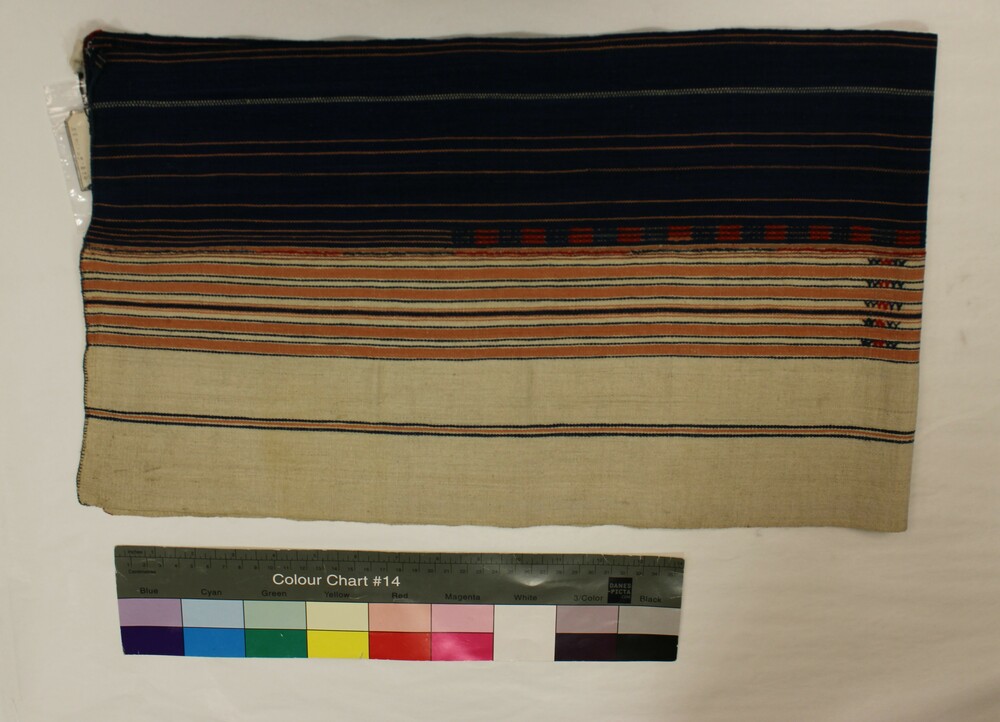 1928.69.1435Patterned skirt of wife of a man who has given feasts of merit. Constructed from two panels. [FB 15/8/2017]1928.69.1435
 1886.2.49.2Textile fragment from a mummy wrapping. For two other fragments see [1886.2.49 .1] & [1886.2.49 .3].1886.2.49.2
 1914.28.5Padded protective helmet made of cotton, filled with kapok, finished with blue cotton trim and adorned with five tassels. 1914.28.5
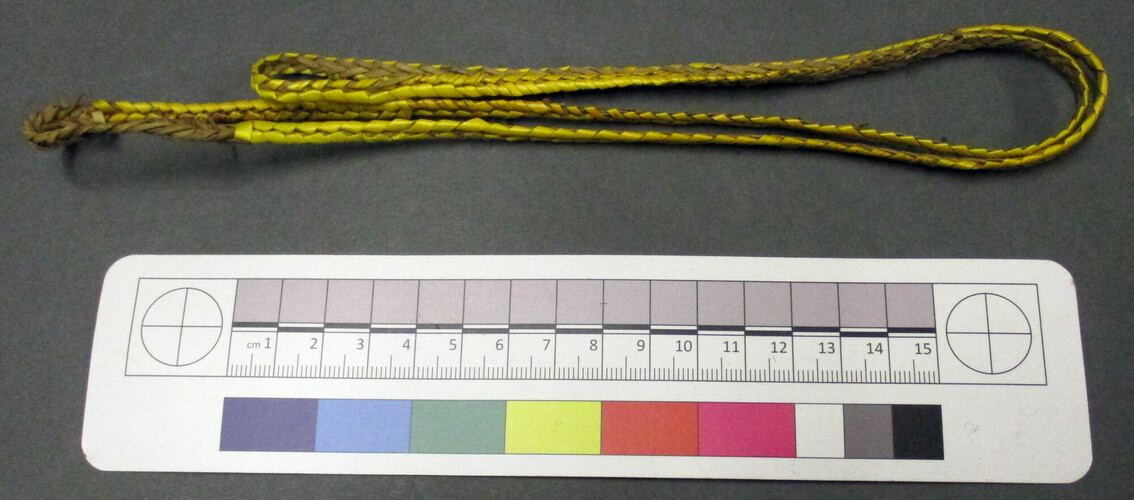 1938.36.721Baldric of plaited pandanus leaf with decoration of yellow strands of orchid stem. [BS [OPS move] 11/11/2016]1938.36.721
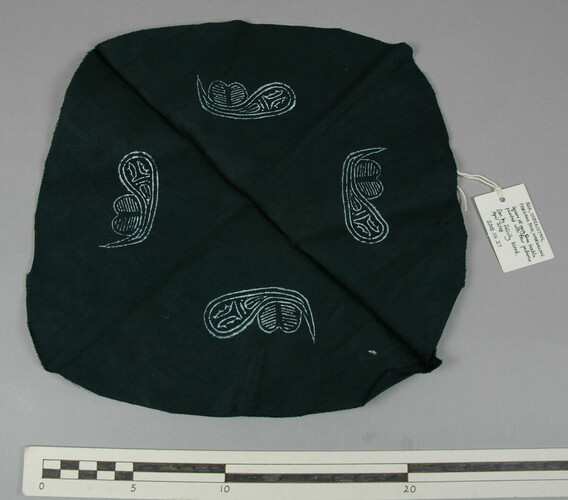 2008.116.27Square of navy blue cotton textile painted on one side with four "pepper" patterns in white pigment. Used in making traditional Uzbek skullcaps. [FC 12/01/2010]2008.116.27
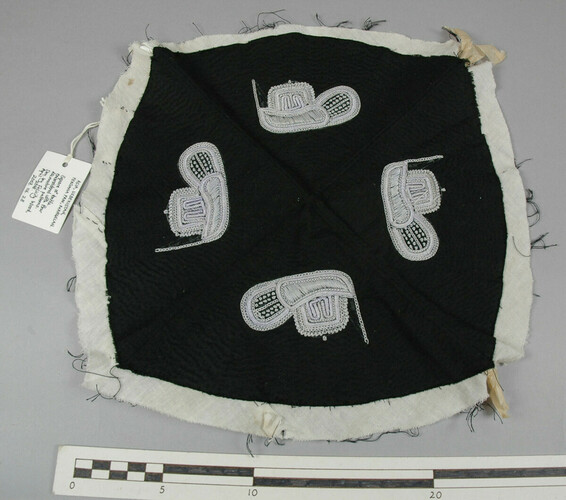 2008.116.28Square of black sateen textile which has been embroidered with four "pepper" patterns. Used in making traditional Uzbek skullcaps. [FC 12/01/2010]2008.116.28
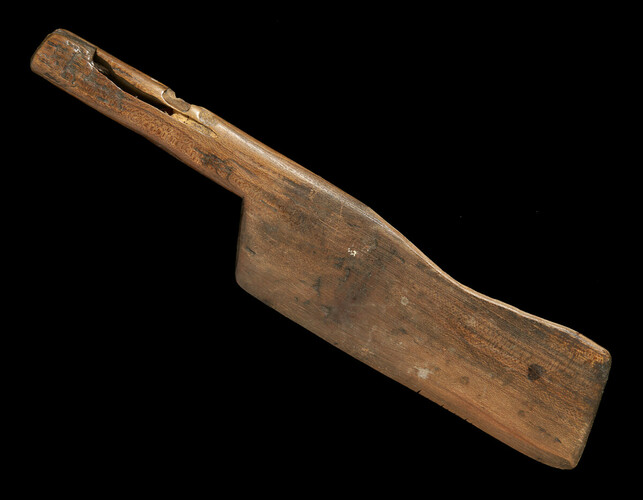 2008.116.29Apricot wood beater used to make braid for traditional Uzbek skull caps.2008.116.29
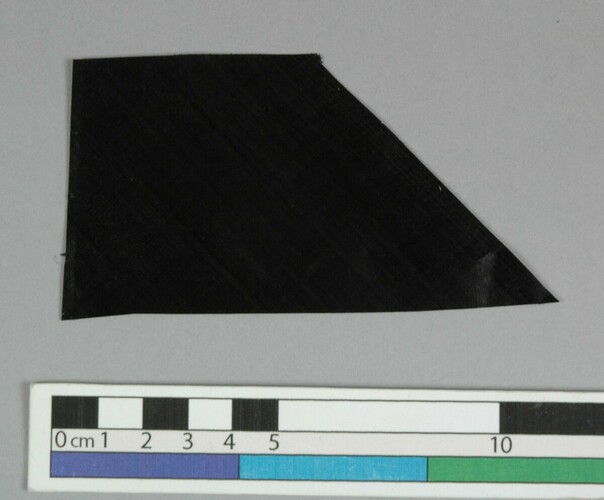 2008.116.30Piece of black glossy paper/textile used in traditional Uzbek skull cap making. [FC 14/01/2010]2008.116.30