
- Collection type
- Object
- Description
- Body sherd. The outer is a mid orangish red colour, there is a blackish staining [charcoal?] also present.
- Long description
- Body sherd. The outer is a mid orangish red colour, there is a blackish staining [charcoal?] also present. The interior is a mid yellowish brown. The core is grey colour with <5% coarse sub rounded white inclusions. [MN 26/11/2009]
- Geographical reference
- England West Sussex Mid Sussex Newtimber Devil's Dyke Road Black Burgh Barrow
- Person
- Maker Unknown Maker
- Field collector Augustus Henry Lane Fox Pitt-Rivers
- PRM source Augustus Henry Lane Fox Pitt Rivers founding collection
- Date / Period
- Date made: Unknown Archaeological period: Neolithic
- Date collected
- 1872 Aug
- Acquisition information
- Donated: 1884 Found unentered: 26/11/2009
- Materials and processes
- Material Pottery, Process Handbuilt, Process Fire-Hardened
- Dimensions
- Depth: max 3 mm, Width: max 32 mm, Length: max 39 mm, Weight 7 g
- Object numbers
- Accession number: 1884.140.1022 PR no.: 66/ 8386
- Research and responses
Pitt Rivers took the opportunity of a visit to Brighton to attend the British Association in August 1872 to open the barrow known locally as 'Black Burgh' on the Dyke Road. A wooden 3-d model of the barrow exists [Salisbury Museum]. PR recorded the finds for this site in great detail. [Bowden, 1991: 76-7] Pitt Rivers 'Opening of the Dyke Road or Black Burgh tumulus near Brighton in 1872' Journal of the Anthropological Institute 6 [1876] 280 - 287: 'The tumulus is about a mile off the Devil's Dyke ... one of the first things discovered was a vertical cylindrical hole in the chalk floor ... it was filled with fine white chalk rubble ... all over the top of the tumulus, just beneath the turf, an immense number of flint flakes and chips were found ... thirteen scrapers were found in all and one well-formed borer. ... [animal bones] ... a rude piece of rim of British pottery ... Digging onwards towards the centre we came to the grave ... the associated remains are of unusual interest. They consisted of a bronze knife-dagger. a bronze pin an earthen cup or fod vessel ad a necklace of shale beads. ... four inches above the floor of the grave ... were found several fragments of a different kind of pottery ... two disc shaped bronze objects ... [AP]
Pitt Rivers published his excavation at Black Burgh bowl barrow in the 1872 issue of The Journal of the Anthropological Institute of Great Britain and Ireland, as stated in the Primary Documentation. The full reference for this article is: Lane Fox, A. 1877. Opening of the Dyke Road, or Black Burgh Tumulus, Near Brighton, in 1872. The Journal of the Anthropological Institute of Great Britain and Ireland, Vol. 6: pp 280-287. This article can be accessed on JSTOR, the stable URL is http://www.jstor.org/stable/2841416 [MN 16/06/2009]
Black Burgh [TQ 2697 0964] is a bowl barrow located in the civil parish of Newtimber. The English Heritage maintained National Monuments Record [NMR] holds an entry on the barrow, see monument no. 398455. The NMR record can be accessed online at http://www.pastscape.org.uk/hob.aspx?hob_id=398455. [MN 16/06/2009]
Further items to explore
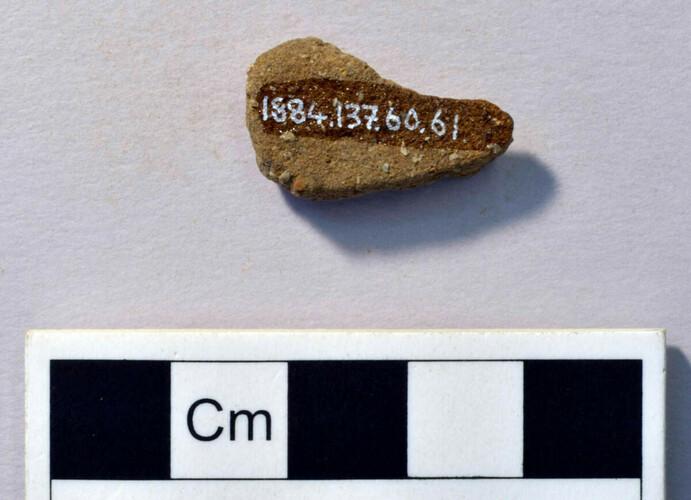 1884.137.60.61Ceramic sherd1884.137.60.61
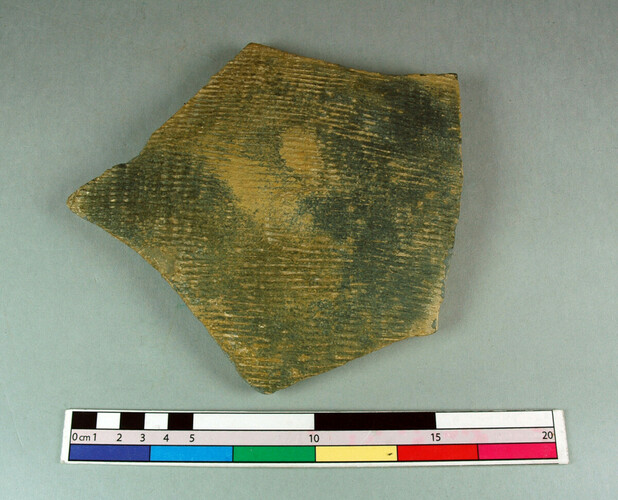 1896.9.10A large flat, thick and well-fired ceramic sherd. The decoration on the outside of the pot consists of rolled cord marks all over. [EH [OPS move] 12/12/2017]1896.9.10
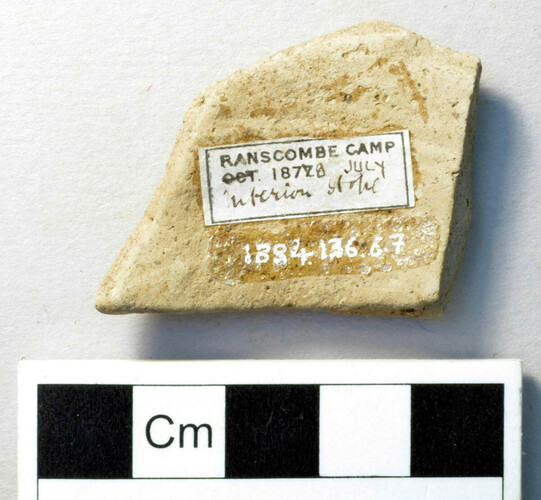 1884.136.6.7Ceramic sherd1884.136.6.7
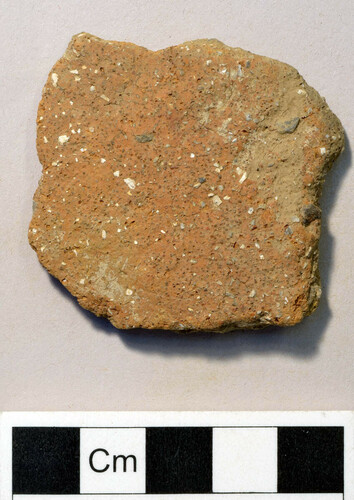 1884.140.1637.65Ceramic sherd1884.140.1637.65
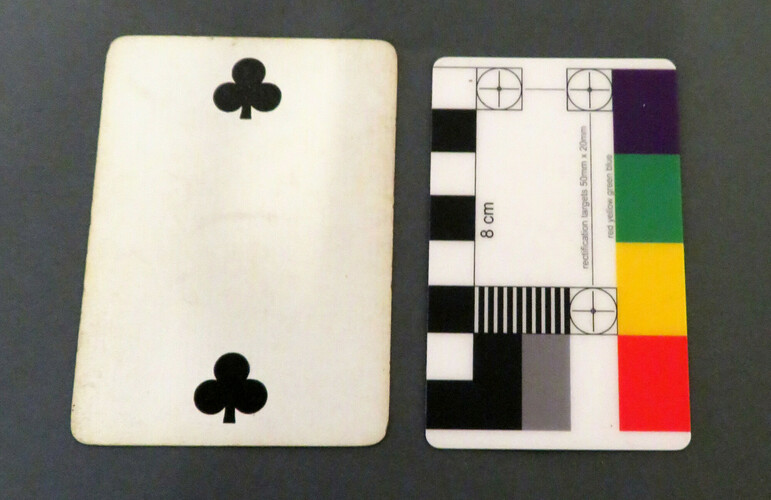 1992.8.3.112Playing card, two of clubs. Plain reverse. For the other playing cards in this incomplete set of 49, see [1992.8.3 .85 - 111] and [1992.8.3 .113 - 133]. [CW [OPS Move] 23/3/2017]1992.8.3.112
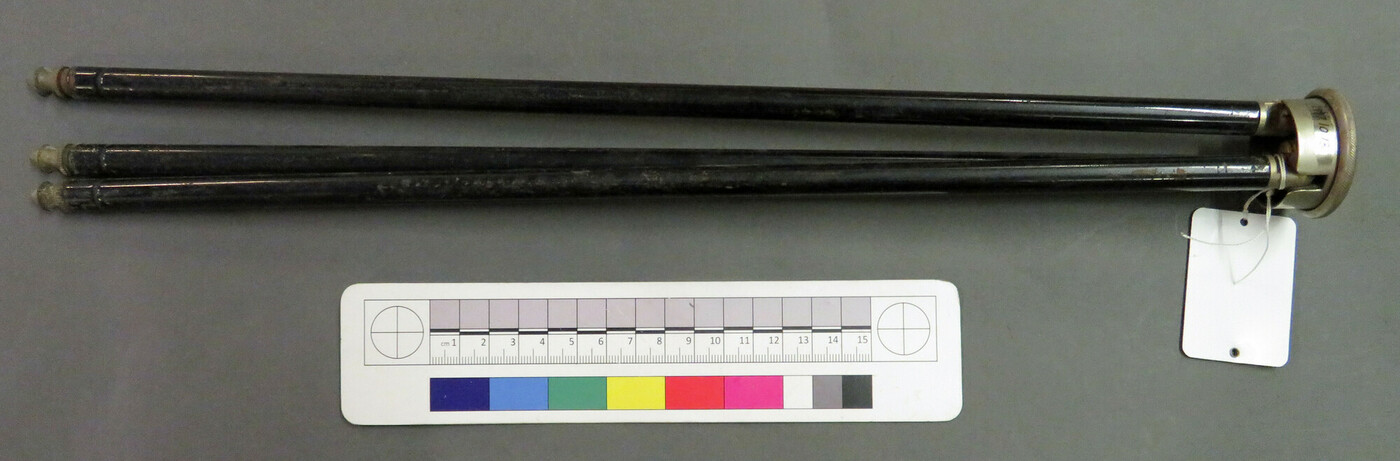 1997.10.13Metal camera tripod, part of Beatrice Blackwood's fieldwork equipment. [EH [OPS Move] 5/7/2017]1997.10.13
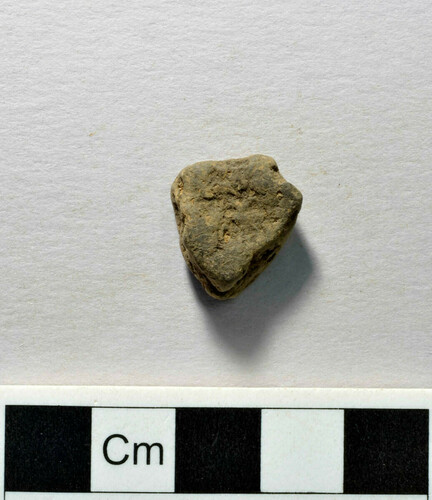 1884.136.1.544Ceramic sherd1884.136.1.544
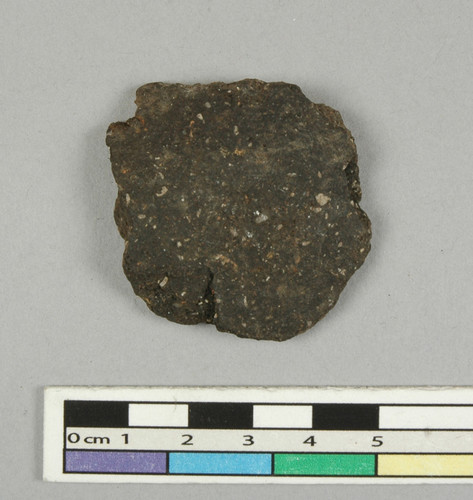 1884.138.36.1Ceramic sherd1884.138.36.1