
- Collection type
- Object
- Description
- Model of Japanese face mask. Part of model suit of armour. [El.B 2/4/2007]
- Long description
- The mask is designed to cover just the lower part of the face. It is suspended from the helmet and lacquered red on one side. [El.B 2/4/2007]
- Geographical reference
- Cultural groups
- Japanese
- Person
- Maker Unknown Maker
- Field collector Unknown Collector
- PRM source Augustus Henry Lane Fox Pitt Rivers founding collection
- Date / Period
- Date made: Possibly before 1874
- Date collected
- ?By 1874
- Acquisition information
- Donated: 1884
- Materials and processes
- Material Lacquer Varnish, Process Perforated, Process Lacquered Varnished
- Dimensions
- Length: max 47 mm
- Object numbers
- Accession number: 1884.31.32.2 PR Cat other PR nos: 106
- Research and responses
The following notes are drawn from research compiled by Andy Mills as part of the DCF Cutting Edge project in 2006-2007. This suit of miniature armour (roughly 1:6 scale) is technically very accomplished, and closely parallels the structure, materials and finish of real yoroi. It is perhaps only in the application of genuine printed leather, and the density of the technically correct lacing, where the scaling is compromised to truth of materials. Due to the continuity of manufacturing gogatsu-ningyo right up to the present day, and the long-held practice of making replicas of ancient styles, it is almost impossible to put an age to this piece on stylistic grounds alone.
This suit has a mixture of ‘modern’ and archaic elements. Two points of interest: the gilded plates connecting the breastplate to the shoulder-straps are termed Hato-no-Ita (‘Pigeon Plates’), and represent the spread tailfeathers of the pigeon (hato); this is symbolic of the war-god Hachiman, as the hato is his companion and vehicle (see The Armour Book in Honcho-Gunkiko , by H. Arai, published 1964). The helmet of this example is also particularly interesting, being of the Momonari-kabuto (‘Peach-shaped Helmet’) type. This type was most popular during the late 16th century, and is modelled after the helmets of Portuguese explorers (Bryant, 2004: Ch.8). The helmet and suit were made separately, and combined together by one of the suit’s owners. [SM 09/05/2008]
Search terms: Armour Weapon, Model, Figure, Reproduction, Armour, Mask
Further items to explore
 1935.69.4.7Shoulder guard. Part of a set of Japanese armour [1935.69.4 .1 - 12]. [MOBB [OPS move] 30/8/2017]1935.69.4.7
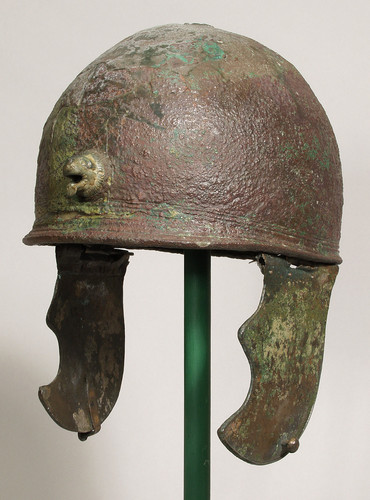 1884.32.14Bronze helmet with hinged ear-guards and lion-head badge.1884.32.14
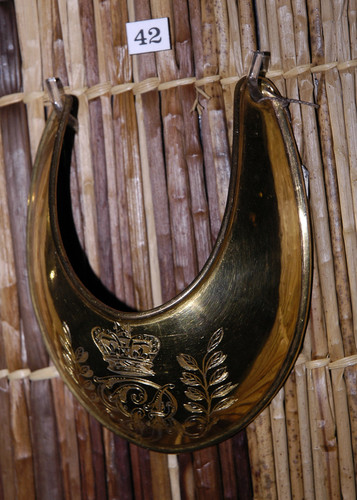 1887.12.1Gorget, a gilded brass crescent. [El.B 27/3/2007]1887.12.1
 1884.31.31.2Model of Japanese face mask. Part of model suit of armour. [El.B 2/4/2007]1884.31.31.2
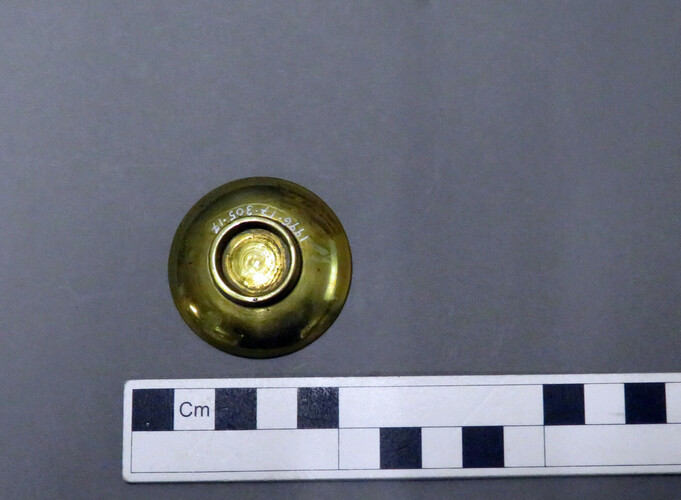 1996.17.305.17Small brass bowl with round foot on the base and a ring on the inside of the bowl. For the associated parts see shrine cabinet [1996.17.305 .1], shrine lid [1996.17.305 .2]; shrine stand and drawers [1996.17.305 .3 -.6] and other shrine contents [1996.17.305 .8 - .16 & .18 - .21]. [RH [OPS move] 6/9/2017]1996.17.305.17
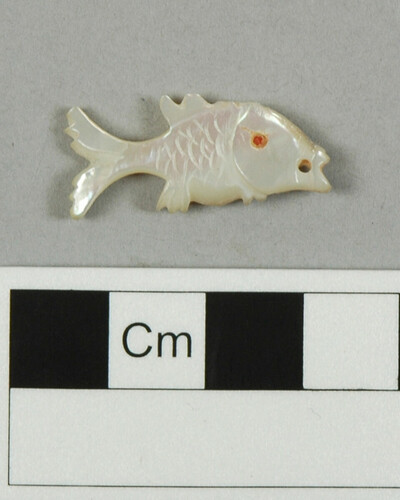 1985.51.608Amulet in the shape of a fish, carved from mother of pearl. Drilled hole at head end. [SM 11/03/2011]1985.51.608
 1985.53.391.5Rectangular paper amulet printed with an inscription in black and stamped in red. One of seven amulets [1985.53.391 .1 - .7] tied together with a strip of paper. [El.B 17/10/2013]1985.53.391.5
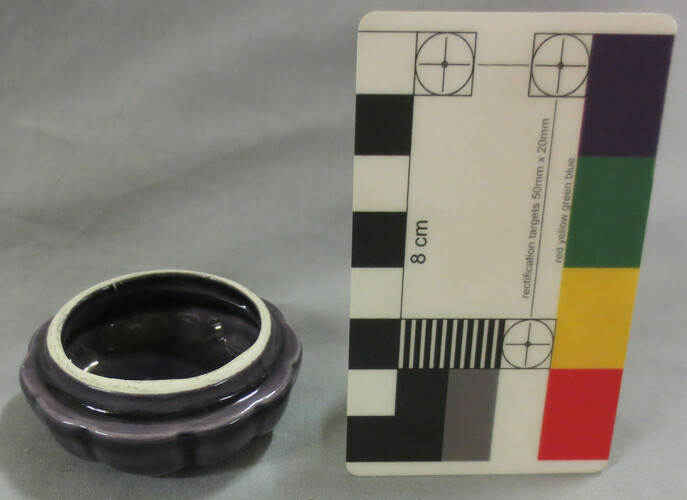 1996.17.84.1Incense box, pumpkin shape, porcelain with purple glaze, interior and exterior. The rim is unglazed and white. The lid for this box is 1996.17.84 .2. [MdeA [OPS move] 28/4/2016]1996.17.84.1