
- Collection type
- Object
- Description
- Unmarried girl’s black breast-cloth ornamented with cowrie trefoils, red doghair ornament and attached to the fringe 3 large buprestid beetles. [LKG 25/2/2010]
- Long description
- Unmarried girl’s black breast-cloth ornamented with cowrie trefoils, red doghair ornament and attached to the fringe 3 large buprestid beetles, known locally as 'Kezui'.. The top and bottom edges are parallel embroidered pairs of two lines, one red and one white. The bottom edge of the breast cloth is fringed with black thread, and there are three buprestid beetles hung in this fringe. There are three rows of four trefoil cowrie arrangements, and two rows of three doghair ornaments. [LKG 25/2/2010]
- Cultural groups
- Zeme Naga
- Date / Period
- Date made: Before 1930
- Date collected
- 10 October 1930
- Acquisition information
- Donated: 1931, uncertain
- Materials and processes
- Material Cotton Seed Fibre Textile Plant, Material Cowrie Shell, Material Dog Hair Animal, Material Cotton Seed Fibre Yarn Plant, Material Beetle Insect, Process Dyed, Process Woven, Process Stitched, Process Embroidered
- Dimensions
- Width 500 mm, Length 610 mm
- Object numbers
- Accession number: 1928.69.1416
- Research and responses
A very similar breast cloth (1923.13.4) was viewed virtually by members of the Zeme Naga community in Manipur during a virtual meeting on 16th September 2021, organised as part of the Talking Threads Project. For the full recording please see the project file. The group made the following comments:
This is called ‘Nzana’. It is a breast cloth for women used as dancing attire. The fringe includes elytra of the jewel beetle, known locally as ‘Kezui’ – this is a common insect in the area and is still used for decorating garments today. The red balls are made from dog or goat hair. This type of cloth is mostly used by the Zeme in Nagaland; the Zeme in Manipur rarely wear it.
Some members of the group noted that this cloth is only worn by unmarried girls while dancing. Other stated that it is used by all categories of women; worn by any women, married or unmarried, but only while dancing.
When asked if the girl who wore it may have woven this sort of cloth, the group responded that anyone can weave them, whoever is good can weave, there is no specific age.
Search terms: Textile, Clothing, Dance, Breast Cover, Dance Accessory
Further items to explore
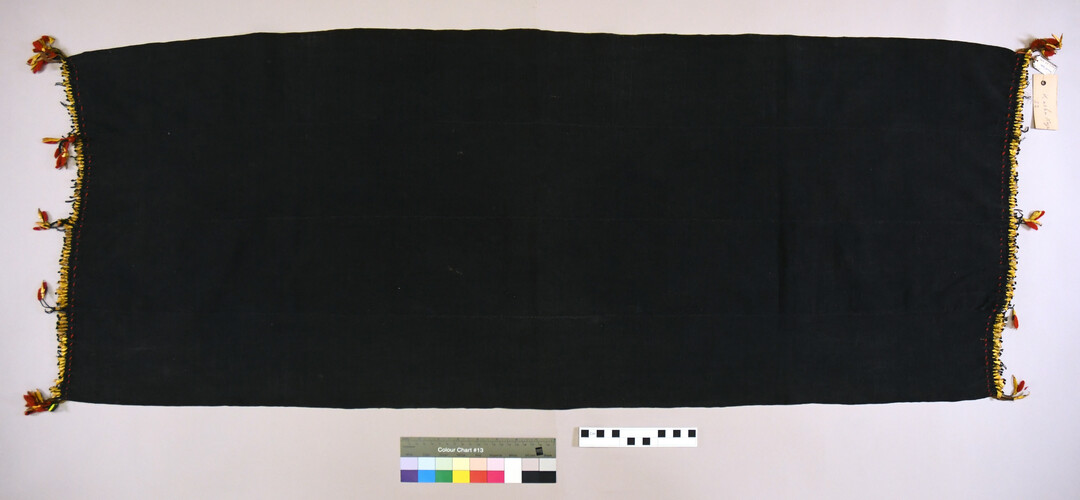 1923.85.989Woman's breast cloth, worn as dancing attire: indigo-dyed cloth with a fringe of orchid stem.1923.85.989
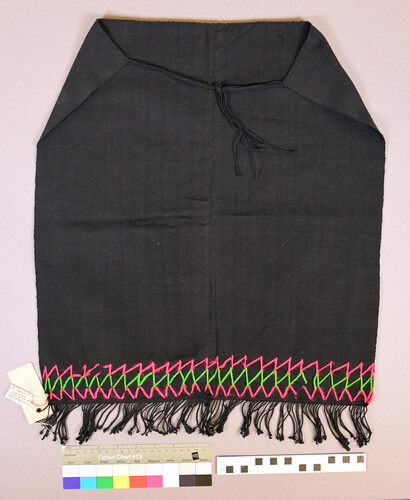 1923.85.990?Girl's indigo breast cloth with bright pink and green zig-zag in a simple stitch.1923.85.990
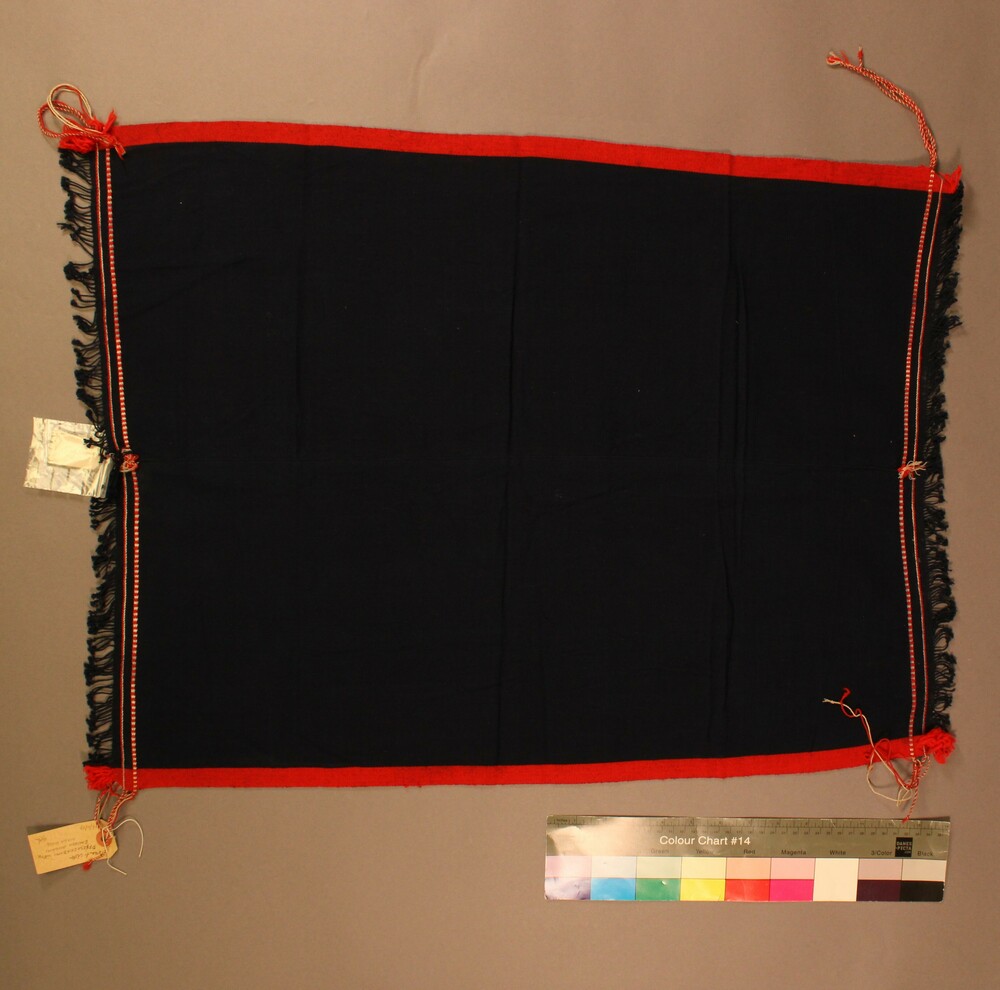 1934.82.133Woman’s breast cloth, worn from shortly before puberty1934.82.133
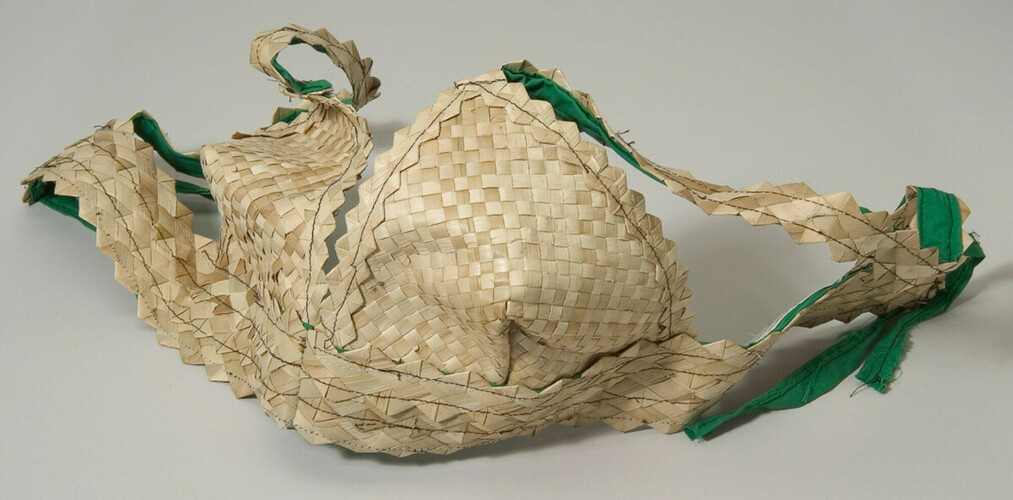 2004.56.20.4Part of a complete woman's dance costume: Woven pandanus leaf bra-shaped top lined with green cotton. [JP 18/6/2004]2004.56.20.4
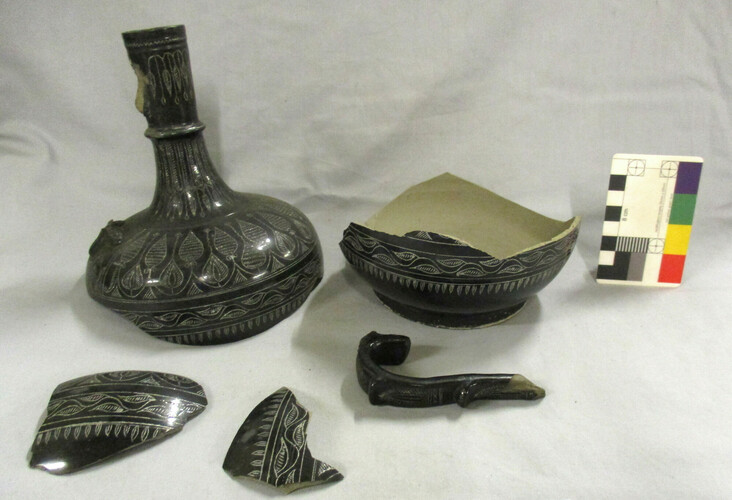 1944.9.95Black pottery jug with painted silver foliate pattern. Broken into 5 fragments. [ASh [OPS move] 13/04/2016]1944.9.95
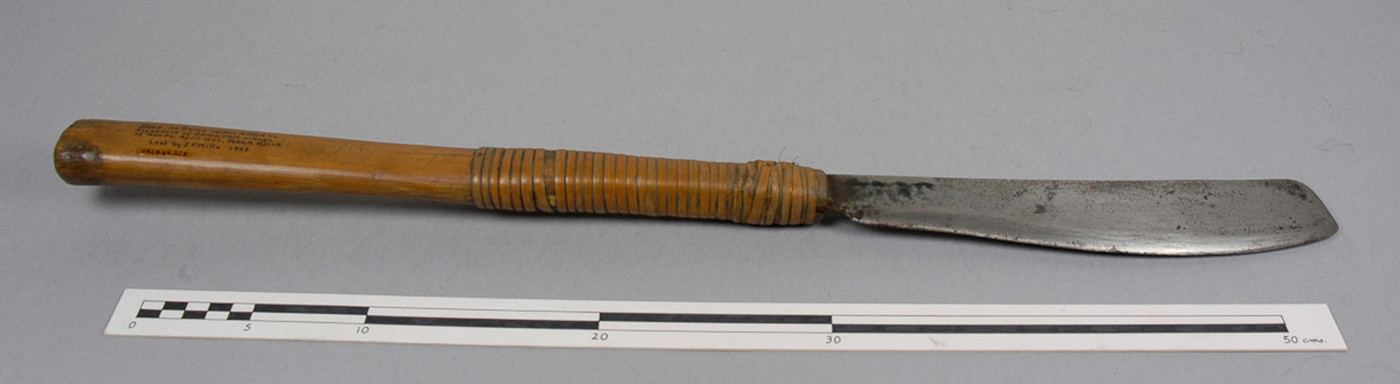 1928.69.328Dao with single edged, square ended blade and long bamboo handle bound with split cane along the join with the blade. [SM 05/07/2007]1928.69.328
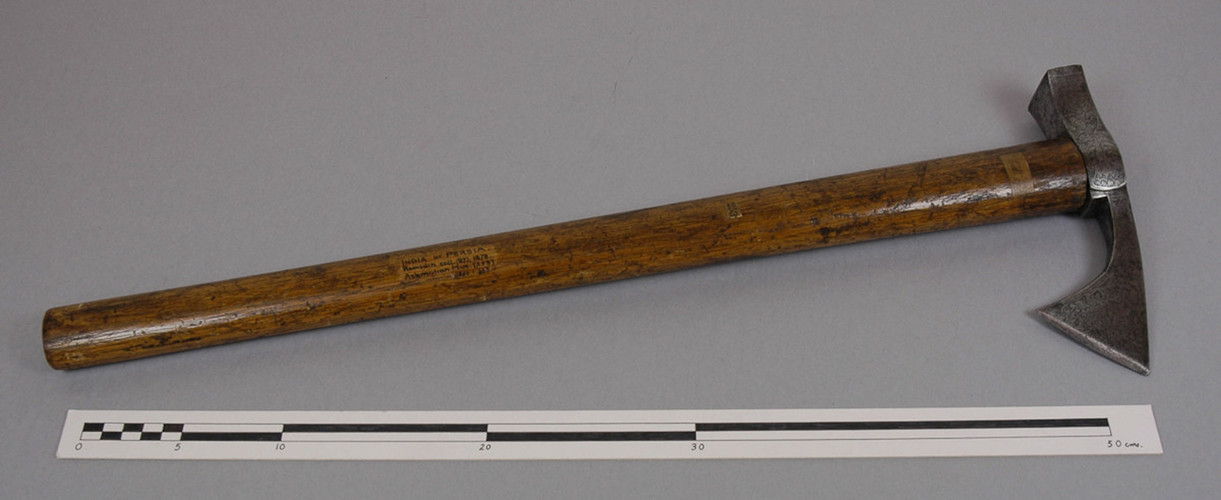 1886.1.253Axe with eye-hafted head, decorated with incised floral patterns. With a wooden haft. [SM 12/04/2007]1886.1.253
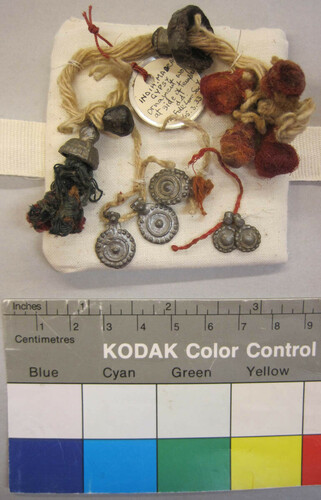 1965.3.33Head ornament, pair of woollen tassels joined together by cotton strings with lead pendants. [MJD DDF Body Arts Project 2010/2011 18/08/2010]1965.3.33