
- Collection type
- Object
- Description
- Stone tool; Stone arrow-head, concave shape. Parallel pressure flake scars all over on both sides. Finely retouched all the way along. [Fumiko Ohinata, Japanese Archaeology Project 1996-2000; JC 30 8 2000]
- Geographical reference
- Cultural groups
- Japanese
- Person
- Maker Unknown Maker
- Field collector Unknown Collector
- PRM source Augustus Henry Lane Fox Pitt Rivers founding collection
- Date / Period
- Archaeological period: Jōmon 縄文時代
- Date collected
- By 1874
- Acquisition information
- Donated: 1884
- Materials and processes
- Material Chert Stone, Process Flaked, Process Retouched
- Dimensions
- Depth: max 4 mm, Width: max 14 mm, Length: max 27 mm, Weight 1.1 g
- Object numbers
- Accession number: 1884.135.171 Other numbers: JAC 89 PR Cat other PR nos: 2217 PR no.: 813
- Research and responses
Unprovenanced single find [PW]. Classified by Fumiko Ohinata as a concave arrow-head. Would have been used in hunting. [JC 30 8 2000]
Listed and described as JAC89 on page 43 of the unpublished draft typescript 'The Japanese Archaeology Collections at the Pitt Rivers Museum, University of Oxford', by Fumiko Ohinata and Jeremy Coote (dated 2002): 'Stone Tools ... Projectile Points (Spearheads, Javelinheads, Arrowheads) ... Arrowheads... Typological analysis conducted more recently demonstrates a clear trend in which the dominant arrowhead shape changed through the Jomon period… Nearly all typological styles existed in the earliest period and remained present throughout the Jomon period, but a clear change in the arrowhead shapes occurred between the Early and Middle Jomon period. While the triangular body with a straight base dominated during the early stages, tanged arrowheads formed the majority after the Middle Jomon. In addition, other types such as rhomboid, half-half and five-sided arrowheads are also found in small quantities throughout the Jomon period… / JAC 89; Plate 10.3 / Concave / Unprovenanced / Beige chert / 2.7×1.4×0.4 cm; 1.1 g / Parallel pressure flake scars all over on both sides. Finely retouched all the way along. / Penciled “813”. / Original Pitt Rivers Collection; PRM 1884.135.171.' Also illustrated in Plate 10.3. (Copy of typescript in RDF: Researchers: Ohinata and Coote). [MN 24/08/2009]
Search terms: Archery Weapon, Hunting, Arrow-head, Hunting accessory
Further items to explore
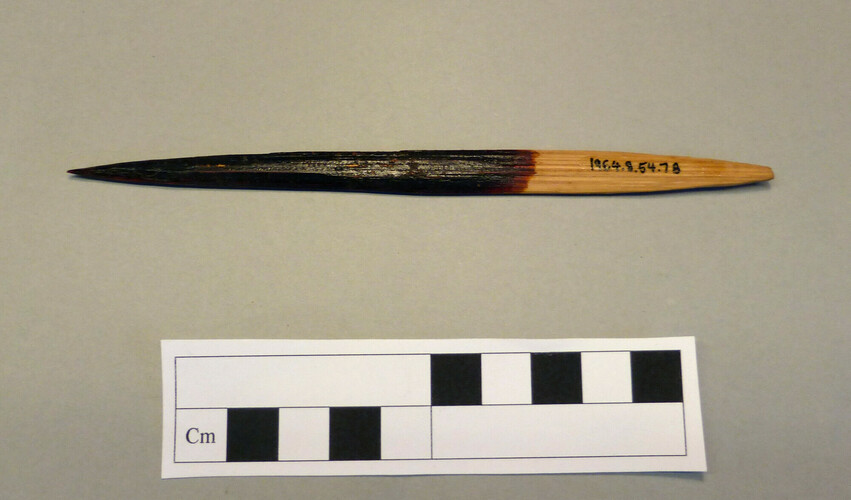 1964.8.54.7B1 of 17 Curare poisoned arrow-heads made from split bamboo. The head is carved with bands of lines covered with poison. [RH [OPS move] 12/10/2018]1964.8.54.7B
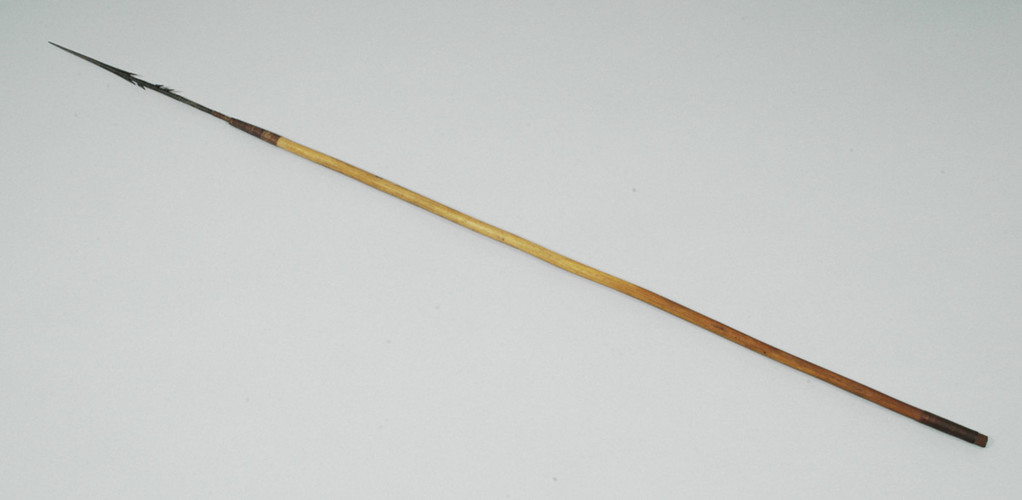 1930.86.19.10Arrow with narrow barbed iron point set into a wooden shaft with bound and nocked end [RTS 24/5/2005].1930.86.19.10
 1934.8.33Arrow with iron leaf-shaped blade and long tang set in a wooden shaft with nocked and bound end [RTS 28/9/2005].1934.8.33
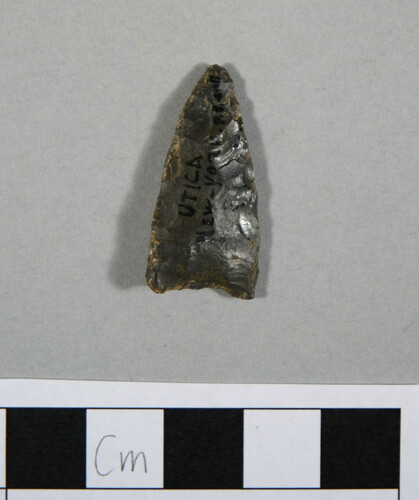 1884.135.268Stone arrow-head1884.135.268
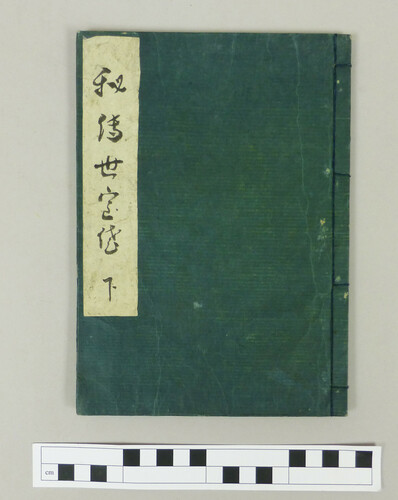 1985.53.507Book printed in Japanese, with blue paper covers. [El.B 28/10/2013]1985.53.507
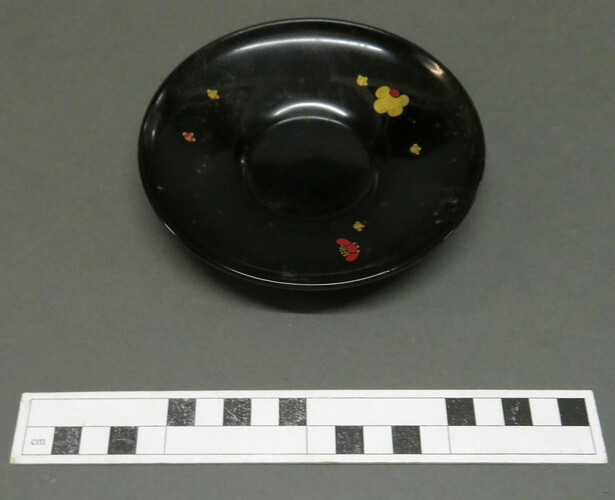 1996.17.218.2Saucer, lacquered surface, one of five [1996.17.218 .1 - .5] [ASh [OPS move] 13/6/2017]1996.17.218.2
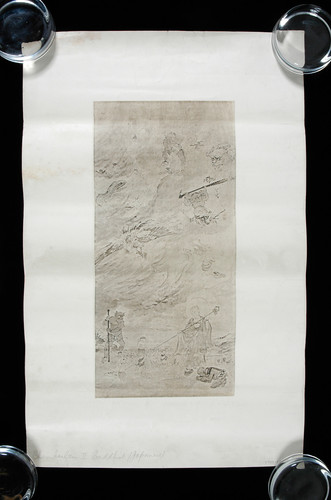 1908.82.407Book plate of Buddhist scene depicting Buddha saving children from Hell [SM 28/10/2008]1908.82.407
 1985.53.521.4Amulet, oval metal pendant incised with a picture of a horse, perforated for suspension. [El.B 30/10/2013]1985.53.521.4