
- Collection type
- Object
- Description
- Heavy penannular iron torque with lozenge-shaped section [RTS 5/4/2004].
- Long description
- Heavy penannular torque made from a thick bar of iron with an angular, lozenge-shaped section, bent into an oval loop with tapering, flat cut ends, 64 mm apart. Hammer marks are visible on some surfaces, which have been polished and are currently a metallic gray colour (Pantone 421C). The object is complete and intact, with some traces of rust, and measures 156 mm across the outside width, 134.2 mm across the inside width, and has a length of 139 mm, while the bar from which this has been made has a width of 11.3 mm and a thickness of 11.8 mm. The torque weighs 234.6 grams [RTS 5/4/2004].
- Geographical reference
- Person
- Maker Unknown Maker
- Field collector John Petherick
- PRM source Augustus Henry Lane Fox Pitt Rivers founding collection
- Date / Period
- Date made: Possibly before 1858
- Date collected
- 1858
- Acquisition information
- Donated: 1884
- Materials and processes
- Material Iron Metal, Process Hammered, Process Polished
- Dimensions
- Length: max 139 mm, Width: max 156 mm, Width: max 11.3 mm bar, Thick: max 11.8 mm bar, Weight 234.6 g
- Object numbers
- Accession number: 1884.78.29 PR Cat other PR nos: 104
- Research and responses
This object is said to have been collected in 1858; in that year Petherick led a trading expedition through Bongo territory, an account of which is given in his 1861 volume, Egypt, The Sudan and Central Africa; he refers to this group as the Dor. The expedition entered Bongo territory on January 25, 1858, visiting villages called Djau, Kurkur, Maeha, Mura, Umbura, Modocunga, Miha, Nearhe, Gutu, Mungela, Ombelambe and Lungo. Later in February they passed back through the Bongo villages of Djamaga and Lungo again. The expedition also passed through Shilluk, Nuer, Raik Dinka, Mundo and Zande territory on this trip. Petherick's collection was shipped back to England in 1859. It was later displayed in the Bethnal Green and South Kensington Museums [RTS 20/1/2004].
Although Petherick discusses the personal adornment of most of the groups he encountered, the only groups which he specifically describes as wearing metal necklaces are the Zande, whose ornaments 'consist of iron rings worn around the neck, wrists and ankles' and the Bari, whose chief is described as wearing a twisted iron necklace (Petherick 1869, p. 280 and p. 307). It is not yet clear how widespread this practice was [RTS 28/4/2004].
Search terms: Ornament, Neck Ornament
Further items to explore
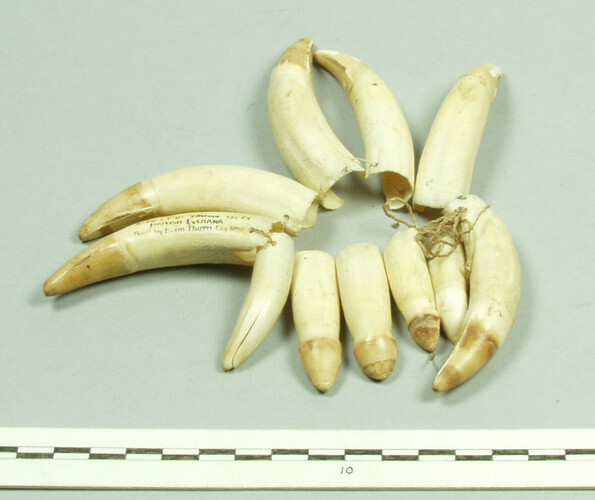 1895.11.21Neck ornament; eleven cayman teeth strung on fine twisted string. Too small to wear as a neck ornament as currently tied. [EC 'DCF 2004-2006 What's Upstairs?' 6/12/2005]1895.11.21
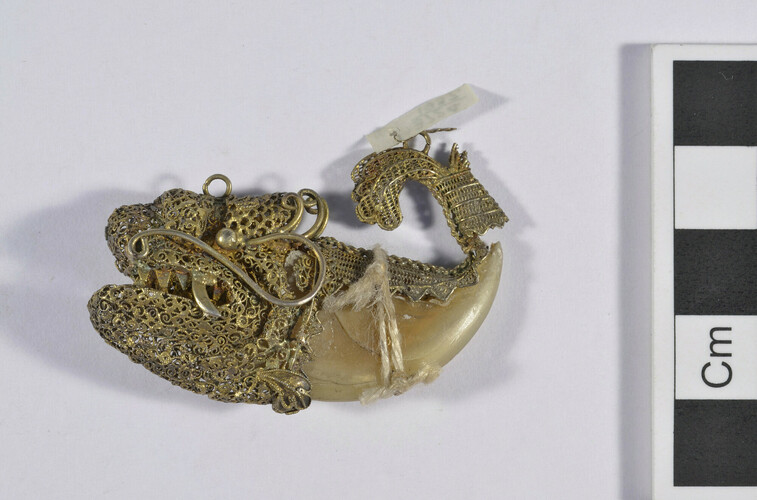 1985.52.2522Amulet, a feline animal claw, mounted in gold gilded white metal, in the shape of a fish, with two loops for suspension. [ACA 03/08/2012]1985.52.2522
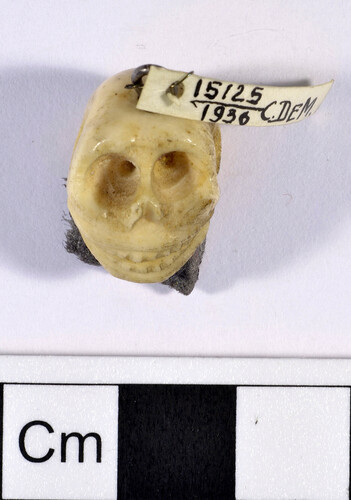 1985.52.483Amulet, pendant in the shape of a human skull carved in bone, perforated with a white metal loop for suspension. [RB 19/03/2012]1985.52.483
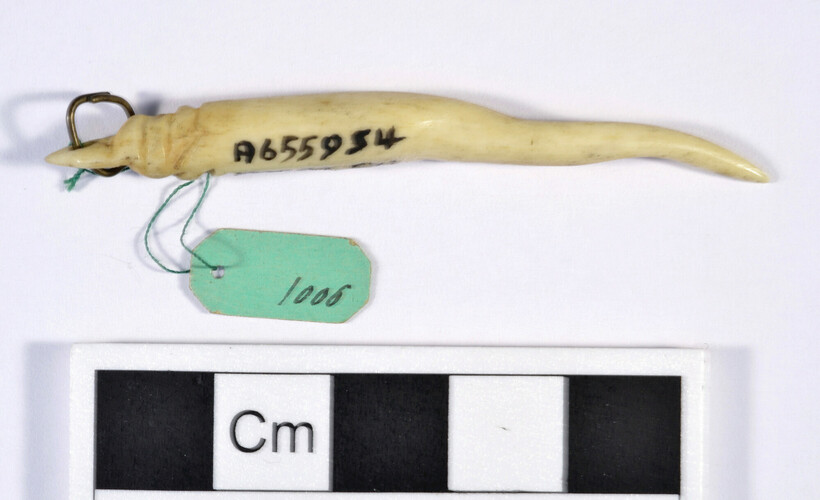 1985.52.531Amulet, pendant in the shape of a horn, carved, incised, and perforated bone, with a metal loop for suspension. [ACA 20/03/2012]1985.52.531
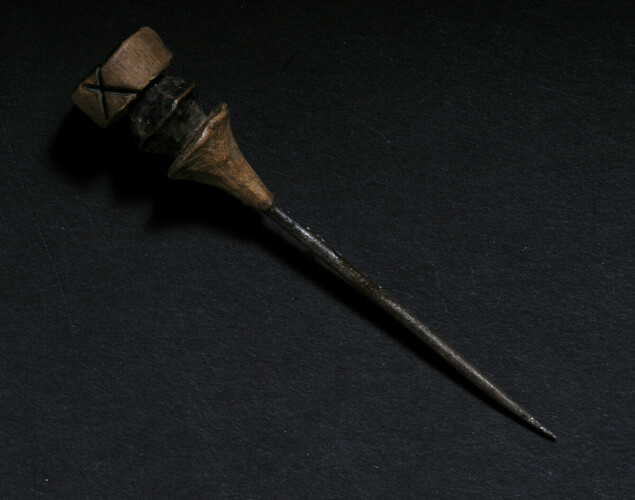 1979.20.59Short needle with a narrow iron point set into a carved wooden handle, used as multipurpose tool and as a hairpin [RTS 24/11/2004].1979.20.59
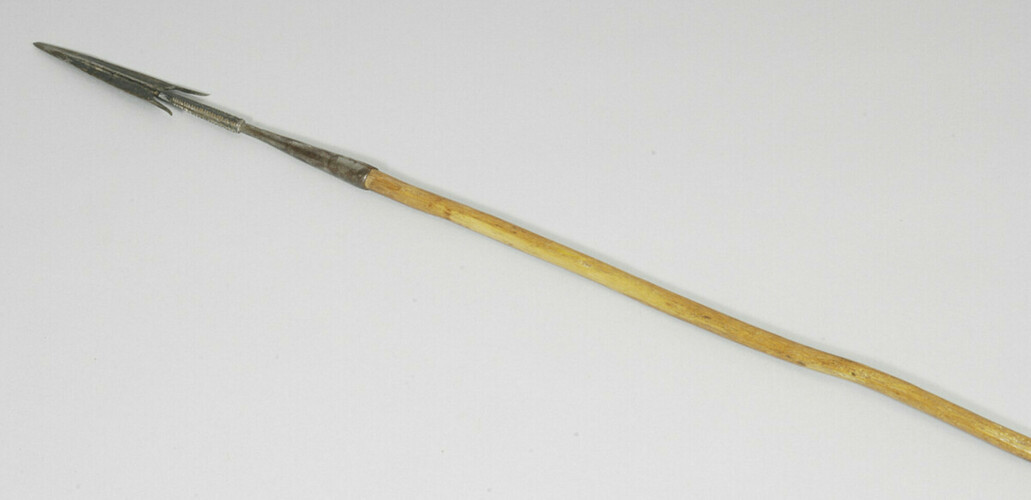 1979.20.110Spear with barbed, triangular blade, decorated shank and socketed base on a wooden shaft, of Jur manufacture [RTS 13/7/2005].1979.20.110
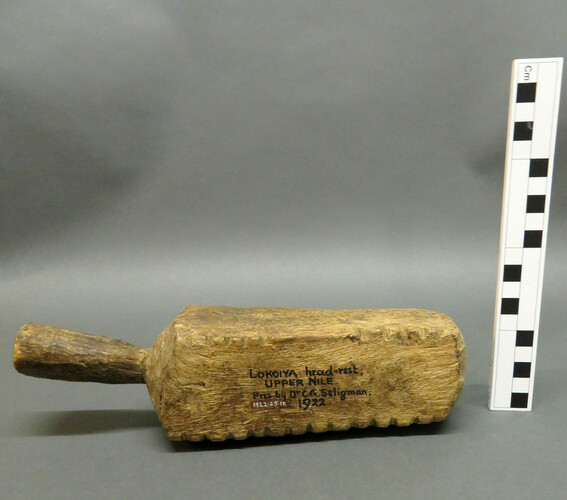 1922.25.10Rectangular headrest with flat sides, notched decoration and a cylindrical handle projecting from one side, carved from a single block of wood [RTS 1/6/2005]1922.25.10
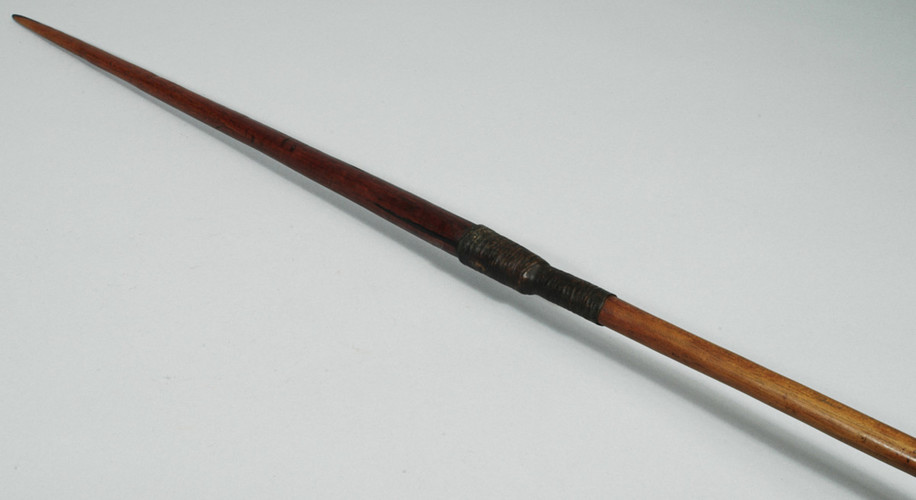 1931.66.6Spear with ebony point set into a long wooden shaft, with the junction covered by a hide sheath and the butt decorated with animal hair [RTS 11/1/2005].1931.66.6