
- Collection type
- Object
- Description
- Walrus ivory bow-drill (semi-circular), incised with scenes of hunting and fishing.
- Long description
- Walrus ivory bow-drill (semi-circular), incised with scenes of hunting and fishing. The incised scenes are highlighted with black/brown pigment. There is a hole through either end. [SM 15/01/2008]
- Geographical reference
- Alaska
- Person
- Maker Unknown Maker
- Field collector Edward Belcher
- PRM source Augustus Henry Lane Fox Pitt Rivers founding collection
- Date / Period
- Date made: Before 1884
- Date collected
- ?1826 1827
- Acquisition information
- Donated: 1884
- Materials and processes
- Material Walrus Ivory Tooth Animal, Material Pigment, Process Carved, Process Incised, Process Perforated, Process Drilled
- Dimensions
- Length: max 355 mm
- Object numbers
- Accession number: 1884.68.20 PR no.: 15/ 12395
- Research and responses
Note that this is one of nine Belcher collected objects not included in the Collectors Miscellaneous entry. This is one of only twelve objects from the Belcher collections which are not mentioned in the Black Red or Blue books. [AP Leverhulme project on founding collection 1995-1998]
- Associated publications
- Bockstoce, 1977: 80 et seq 'Drill bows were used regularly by Eskimos in NW Alaska. They are still used today by ivory carvers. The bows were used with a drill shaft, bit and mouthpiece to produce rapid turning of the bit. The use of a bow, with its line wrapped around the drill shaft, allowed increased speed of rotation compared to other methods, and it freed one of the driller's hands enabling him to hold firmly the object being worked on. Drill bits are one of the most widely admired objects of Eskimo material culture because of their intricate and elaborately engraved designs ... In comparing Beechey and Belcher's specimens to later drill bits, Ray has observed that [theirs] which are amongst the earliest such objects collected by Europeans, are notable for the absence of representations of dog teams, Europeans and ships and are distinguished by the depiction of a high proportion of mythological creatures ... 107 Belcher collection. Museum no PR 15/12395. ... (Figs 65 A-C). This bow is triangular in cross section. From the left side A depicts men and dogs driving caribou, possibly toward a corral. Farther to the right are grazing caribou, two hunters - one of them with dogs - and some lying caribou. Side B shows migrating and grazing caribou. Side C has, from the left, seven caribou, then a village scene with houses and caches. This is followed by what is probably a scene of people driving caribou into a corral and then into a river where they are speared by a man in a kayak. Above this are more scenes of caribou and men in kayaks.'. [AP Leverhulme project on founding collection 1995-1998]
Search terms: Figure, Tool, Fire, Animal Figure, Bow Drill
Further items to explore
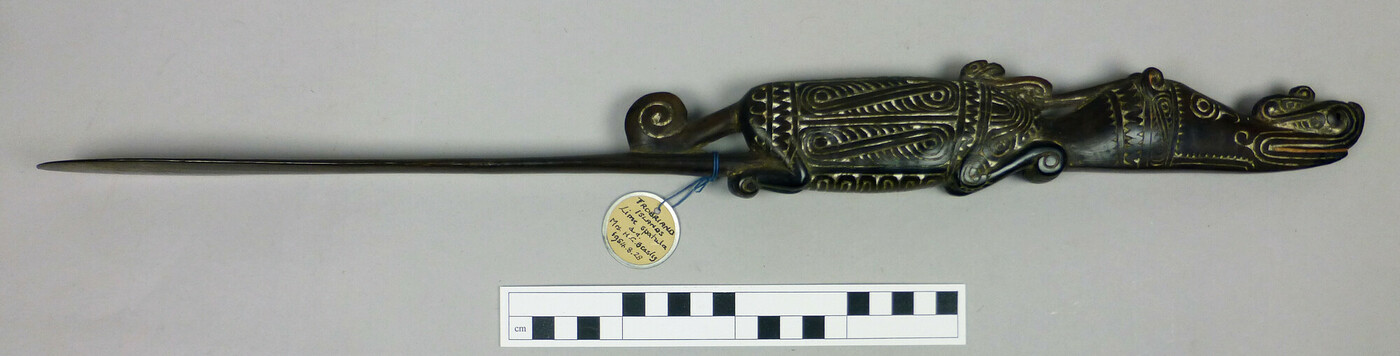 1954.8.28Large lime spatula, with handle carved as a pig. [JC 24 5 2013]1954.8.28
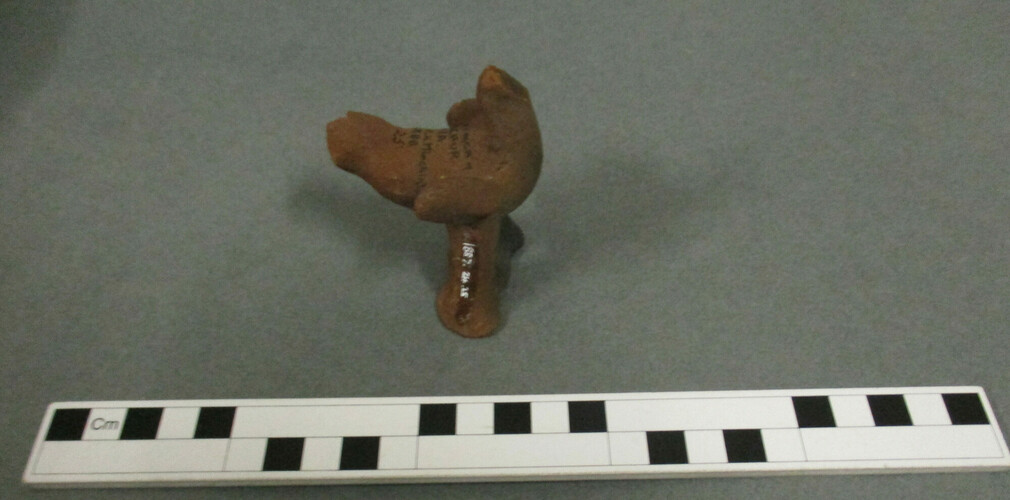 1887.24.25Clay animal figure of a bird. Black patches along the underside, representing signs of burning. The head is missing. [BH [OPS Move] 27/6/2017]1887.24.25
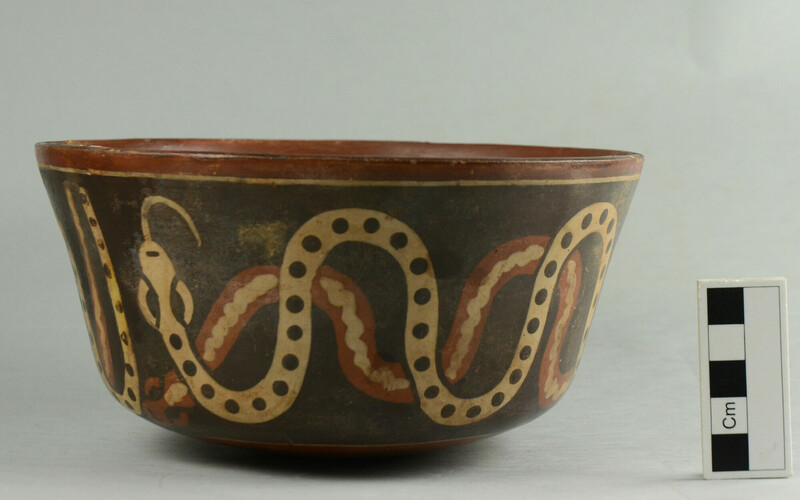 1933.75.2Pottery bowl painted with serpent designs on the exterior. Polychrome. Nasca.1933.75.2
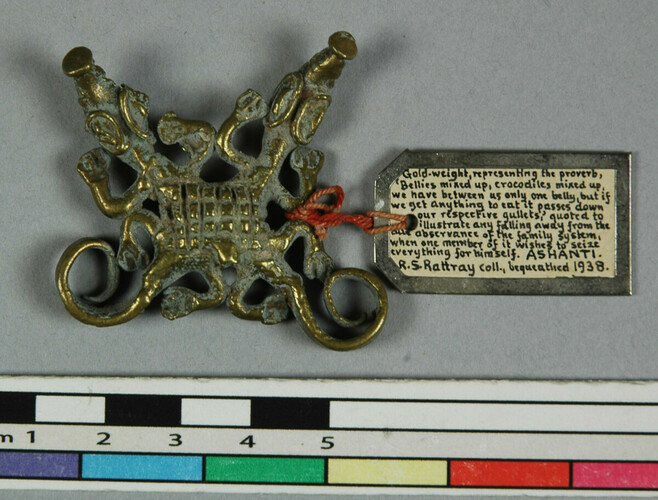 1938.18.785Brass weight for weighing gold, in the shape of two crocodiles crossed at the body. [MJD DDF Body Arts Project 2010/2011 13/12/2010]1938.18.785
 1994.15.384Drawing by a child of three figures in pencil. [MJD 14/01/2015]1994.15.384
 1994.15.1896Drawing in coloured crayon of a man, woman and boy. They are all standing outside on grass. [SM 13/05/2008]1994.15.1896
 1884.118.6.5?Tool made from ivory. Curved in shape with one slightly pointed end and a handle at the other end. [SB [OPS Move] 28/6/2017]1884.118.6.5
 1994.15.432Drawing in pencil by a child of two figures. [MJD 15/01/2015]1994.15.432