
- Collection type
- Object
- Description
- Saddle-bag of dark-coloured hide embroidered with scroll hatched 3-leaf and double-curved designs in red, white and blue moose-hair.
- Long description
- Saddle-bag of dark-coloured hide embroidered with scroll hatched 3-leaf and double-curved designs in red white and blue Moose-hair. Hide fringing along the edges of the saddle bag. [E.S-R 'DCF 2004-2006 What's Upstairs?' 7/1/2005]
- Geographical reference
- Person
- Maker Unknown Maker
- Field collector Unknown Collector
- PRM source Augustus Henry Lane Fox Pitt Rivers founding collection
- Date / Period
- Date made: 1790-1840
- Date collected
- ?Prior to 1880
- Acquisition information
- Donated: 1884
- Materials and processes
- Material Animal Skin, Material Moose Hair Animal, Material Animal Sinew, Material Yarn, Process Embroidered, Process Stitched, Process Appliqué, Process Dyed
- Dimensions
- Length: max 930 mm without tassels, Width: max 265 mm
- Object numbers
- Accession number: 1884.53.31 PR no.: 16/ 10513
- Research and responses
Observations made by delegates during the ‘Object Lives’ research visit to the PRM on the 13-15th April 2015. The delegation consisted of Beverly Lemire, Anne Whitelaw, Sara Komarnisky, Judy Half, Cynthia Cooper, Sarah Nesbitt, Sarah Carter, Jonathan Lainey, Laurie Bertram, Susan Berry, Katie Pollock and Julie-Ann Mercer. This is a University of Alberta-based group; see: http://objectlives.com/
moosehair embroidered saddle bag
The group noted that: There is a button slip on each side of the flap for bag but no button. Items decorated with moosehair embroidery were made for sale on an industrial scale, but production was not mechanised, all handmade. Looked at under the dyno saw bundles of fibre, many twisted as part of the embroidery process. Darkly smoked hide. Traditional dyes. Early 19th century. The shape is European, would have been worn over the front shoulders of the horse. This item appears never to have been used, but also would have been worn over a blanket, hence no wear. [FB 31/10/2016]
Examined by the GRASAC research team on 10 December 2007 as part of a research project to create a digital database. This will incorporate information about collections of indigenous material culture from the Great Lakes region of North America that are housed in a number of museums on several continents; see https://icslac.carleton.ca/grasac/. The group noted the saddle-bag is made of blackened hide (smoked or dyed), there is some fading across the surface. The moosehair is dyed red, blue, white, yellow and green/blue. The fringe is interesting in the way it applied, it sticks up into the interior of the pouch and has been sewn into the seam, there is a binding of hide that wraps around from back to front. Both pockets are made from two pieces, one for the front, one for the back, creating double thickness. The motifs include cross hatch diamonds across the central spine with a large bold zigzag design around the border of the pockets and the central band. The pockets have multi-lobed semi-floral motifs and a horseshoe band of wavy lines. There appear to be no signs of wear indicating the saddle-bag has not been used. The size of the saddle-bag suggests that it is either suitable for use on a pony or small horse if attached to the D-rings at the back of a saddle, like most North American saddlebags, or it is meant to be placed on the shoulders of the horse infront of the saddle, which fits with the shape. The Accession Book describes this as Iroquois probably because of their use of horses and the cross-hatching design. However Ruth Phillips thought it could equally be Wendat because of the cut of the hide and the style, which is very similar to 1884.92.17. Phillips dated the saddlebag as made between 1790 and 1840. [for information on Project see researchers file GRASAC]. [ZM 19/12/2007] [L Peers 16/01/2008]
- Associated publications
- Illustrated in black and white as Plate XII, B in Hair Embroidery in Siberia and North America by Geoffrey Turner (Oxford: Pitt Rivers Museum, University of Oxford, Occasional Paper on Technology, 7). The illustration is captioned (page 78) as follows: 'Double saddle-bag of heavy (?moose) skin dyed greenish-brown. Moose hair embroidery in red, white, and blue. Max. width 27 cm. excluding fringe. Attributed to Iroquois. PRM: P.R. IV.116.31.' [MJD 19/08/2011] Illustrated in colour and listed as catalogue number 260 on page 171 of On the Trails of the Iroquois, edited by Sylvia R. Kasprycki (transl. Christian E. Feest) (Bonn: Kunst-und Ausstellungshalle der Bundesrepublik Deutschland, 2013). Catalogue entry (pages 124-5): '260 Saddle bag | Iroquois or Huron, late 18th/early 19th century | Leather, moosehair, sinew, yarn | H (with carrying strap) 93, W 26.5 cm | Pitt Rivers Museum, Oxford, cat. no. 1884.53.31 (Pitt Rivers coll.) | Stylized floral patterns in linear moosehair appliqué on leather are in the nineteenth century primarily associated with the Huron (Wendat). There are, however, indications that both style and technique are also practiced by the Iroquois. C[hristian].F[eest].' [FB 08/04/2013; JC 4 2 2016]
Search terms: Animal Gear, Bag, Saddle Bag
Further items to explore
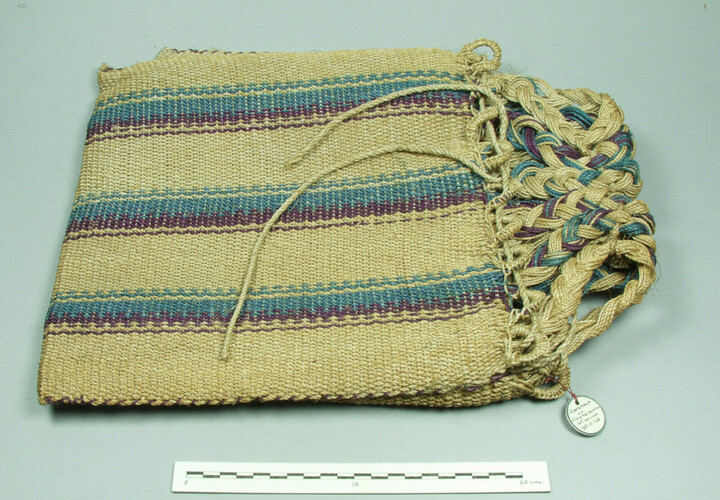 1951.11.143Double bag, probably a saddle bag, made of a complete warp-faced textile woven from sisal yarn, with warp stripes in purple, blue and natural. The two bags, each of which has a drawstring threaded through a row of loops are joined with braids by the sprang method. [LM 'DCF 2004-2006 What's Upstairs?' 16/1/2006]1951.11.143
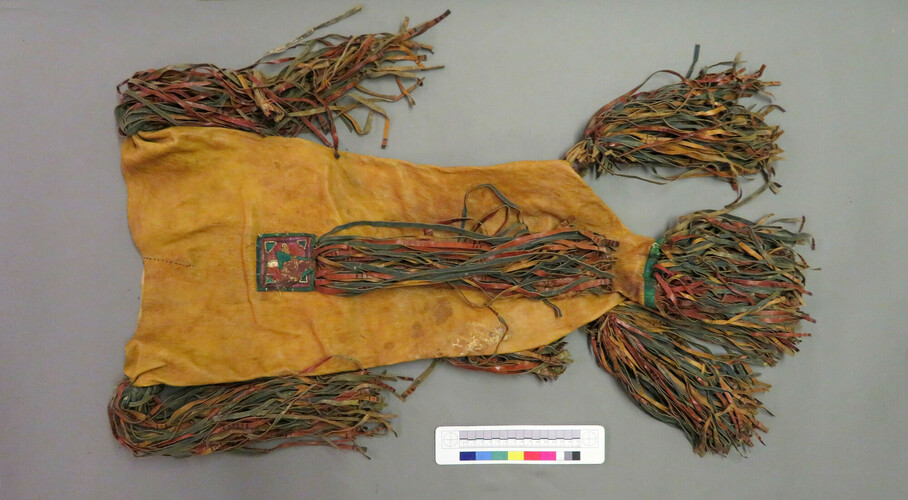 1940.7.0240Leather cushion or saddle bag with tassels. [BS [OPS move] 18/10/2017]1940.7.0240
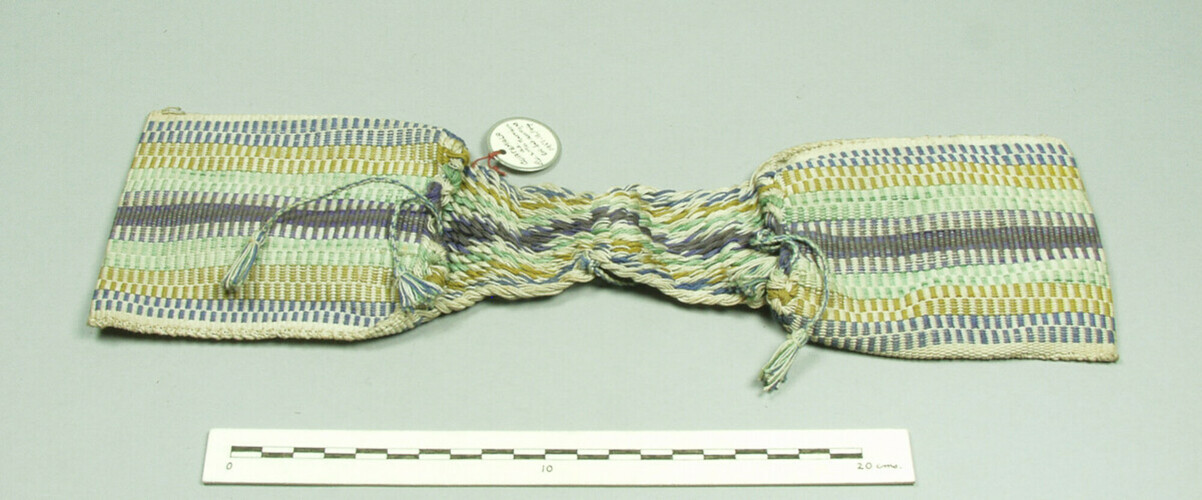 1951.11.144Double cotton bag, possibly miniature saddle bag. Made from a complete warp-faced textile with simple warp pattern in blue, yellow, green, purple and white. The two bags, each with its plaited drawstring, are linked with sprang. [LM 'DCF 2004-2006 What's Upstairs?' 16/1/2006]1951.11.144
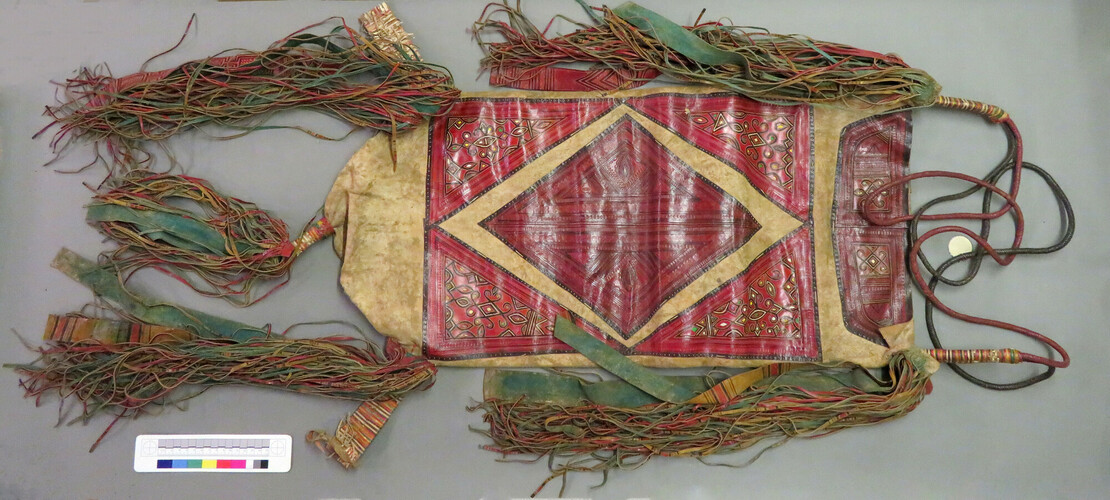 1940.7.0241Saddle bag for camel.1940.7.0241
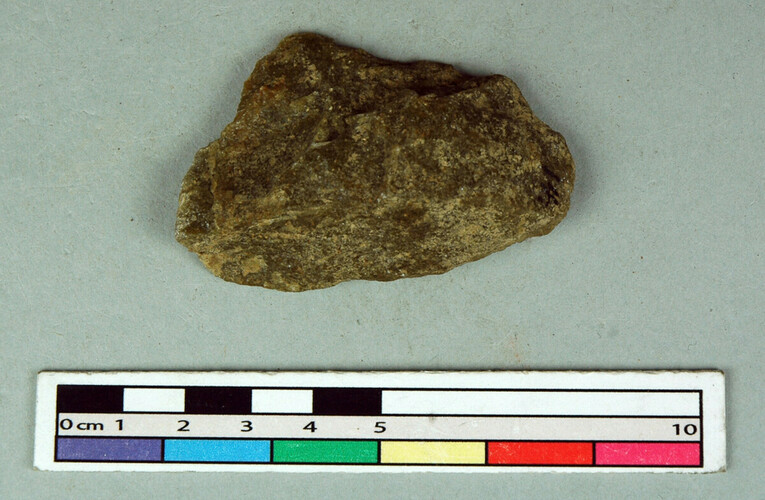 2010.47.41Stone tool2010.47.41
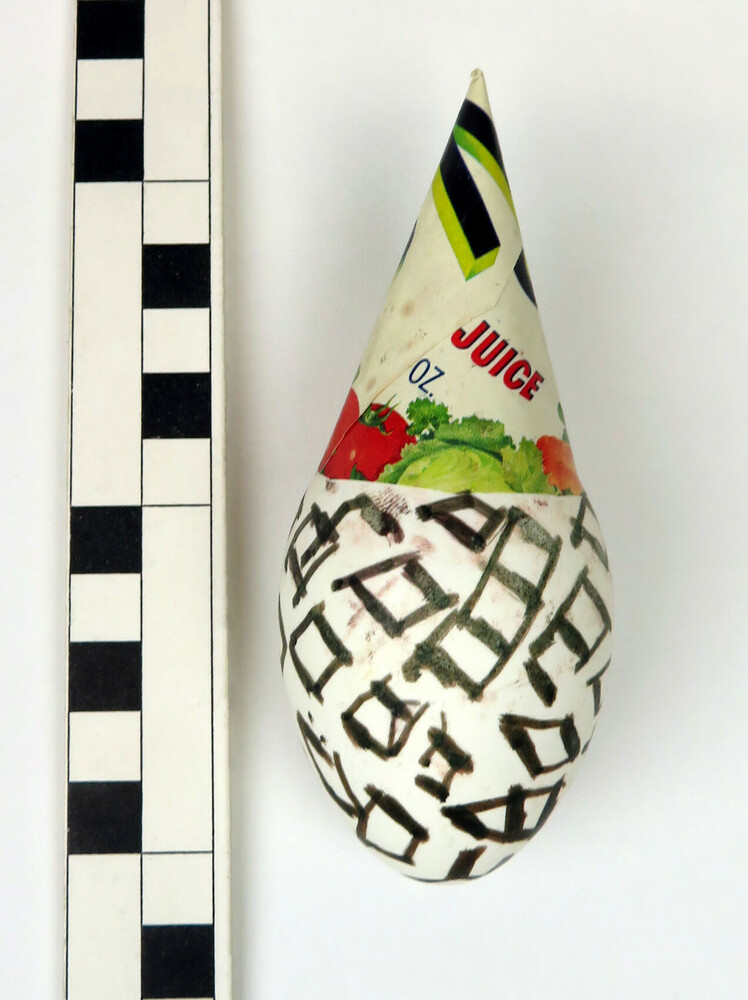 2019.7.163Easter egg with the top cut off an cone made of card glued to the top. The egg itself is decorated with black squares.2019.7.163
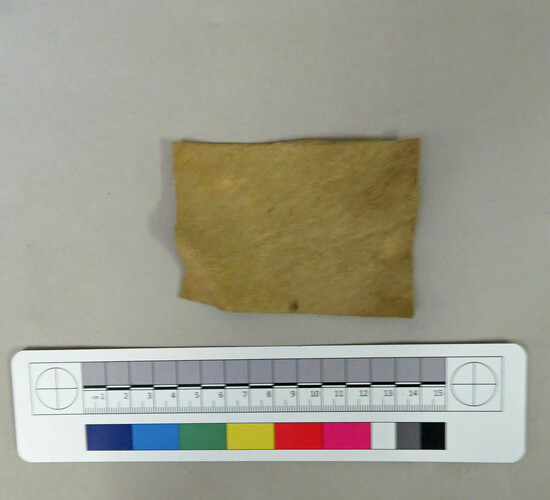 1992.22.28.8Scrap of dressed leather. It is rectangular in shape. One of a set of leather scraps, for the others see 1992.22.28 .1 - .17 [AB [OPS move] 25/8/2017]1992.22.28.8
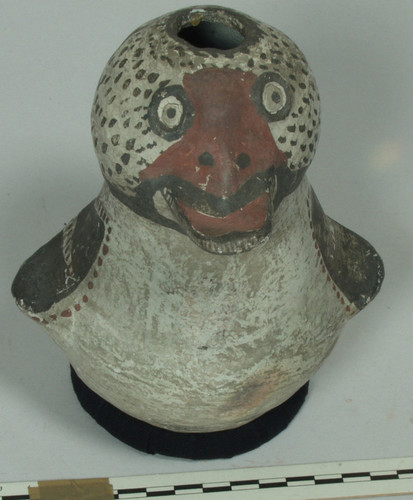 1917.53.555Ceramic figure of a bird with painted decoration1917.53.555