
- Collection type
- Object
- Description
- Iron armpiece from pikeman's armour, with leather straps for fastening and two 'cushions' of thick textile. [El.B 26/3/2007]
- Geographical reference
- England
- Cultural groups
- European
- Person
- Maker Unknown Maker
- Field collector Unknown Collector
- PRM source Augustus Henry Lane Fox Pitt Rivers founding collection
- Date / Period
- Date made: 1600-1700
- Date collected
- By 1862
- Acquisition information
- Donated: 1884
- Materials and processes
- Material Iron Metal, Material Animal Leather Skin, Material Textile, Process Perforated
- Dimensions
- Length: max 445 mm, 14 lb 10 oz
- Object numbers
- Accession number: 1884.31.11 PR Cat other PR nos: 117
- Research and responses
This piece of armour is as likely to have been used in England as in any other part of the British Isles and I have therefore included it in the English ethnography project [AP 25/07/2006]
Suits of pikemen’s armour of the English Civil War period (1642-1651, comprising three distinct periods of conflict) represent the last phase in the development of English armour. They are not, however, generally of particularly high quality. Analyses of the steel in this kind of armour usually reveals that it has been made hurriedly or carelessly, from poor quality materials, and by a smith with little true skill as an armourer. These were often peasant armours, made by a village or town smith. The growing quality and completeness of cavalry armour across the 15th and 16th centuries made the bow – traditionally the weapon which had always swung a battle against cavalry - less and less effective. During the late 15th century, this state of affairs promoted a major revolution in Western European military tactics - away from the deployment of large numbers of archers, and towards vast numbers of pikemen. The army of Elizabeth I, for example, was almost overwhelmingly composed of pikemen and arqebusiers (an early form of firearm, predating the musket). The pikeman, an infantryman armed with a spear 4-6m long, which had a tassel behind the head to prevent rainwater and blood running down and making it slippery, took the field in massed ranks, in various phalanx and ‘hedgehog’ formations. These formations were, provided they held their ground, impenetrable to any cavalry charge. Veteran pikemen, who had experience of handling the particularly unwieldy weapon, and who had a steady nerve, were always preferred over raw recruits. The development of pike-based tactics in the 16th and 17th centuries rapidly decreased the ability of cavalry to move around the battlefield, and was ultimately responsible (alongside the wheelock pistol) for the gradual abandonment of full armour in European warfare. This consequently produced a further innovation in deployment tactics, whereby units took to the field in chequered formations of pikemen and musketeers (termed “shot and pike”) – the musketeers of each unit aiming to shoot enough pikemen of the enemy, to create a gap in the wall of pikes, and allow the cavalry to charge in, and trample or cut the infantry down. The pikeman was something of a sitting duck, however, and required heavily armouring in the front, and about the head. The corselet with tassets (thigh-guards) and ‘English Pot’ were the result. He also carried a sword to defend himself when the enemy had broken through the wall of points. The armoured pikeman ultimately came to dominate English military tactics of the 17th century, as Robert Ward wrote in 1639 in his Animadversions of Warre: “So long as the pikes stand firme, although the shot be routed, yet it cannot be said the field is won, for the whole strength of an army consists in the pikes”. The importance of pikemen’s armour led to several changes in British clothing fashions. The late 16th-century trend of wearing heavily padded hose emerged from the pikeman’s need to prevent the tassets of his armour chafing on his thighs. Also, a heavy leather jerkin was conventionally worn under the corselet for the same reason, but when the corselet was abandoned in the later 17th century, the jerkin underneath perpetuated. Indeed, the mid-17th-century jerkin, with its high waist and long skirt, can be seen to have closely followed the form of the corselet. Relevant Reading: London: Reeves & Turner. Ffoulkes, C. (1912) The Armourer & His Craft. London: Methuen & Co. Norman, V. (1971) The Medieval Soldier. London: Arthur Baker Ltd. Anderson, A. (2002) The Civil Wars, 1640-9. London: Hodder & Stoughton. Nicolle, D. (ed.) (2002) Companion to Medieval Arms & Armour. Woodbridge: Boydell. Research Conducted for DCF Cutting Edge Project 2006/2007 [AM]
- Associated publications
- C ffoulkes. 1912. 'European Arms and Armour in the University of Oxford' Clarendon Press, Oxford. p62 '192 Breast plates and tassets XVII cent. This is part of a pikeman's armour the back of which is missing. The tassets are each of one plate. Weight 14 lb 10 oz Pitt Rivers coll 117' [AP Leverhulme project on founding collection 1995-1998]
Search terms: Armour Weapon, Armour
Further items to explore
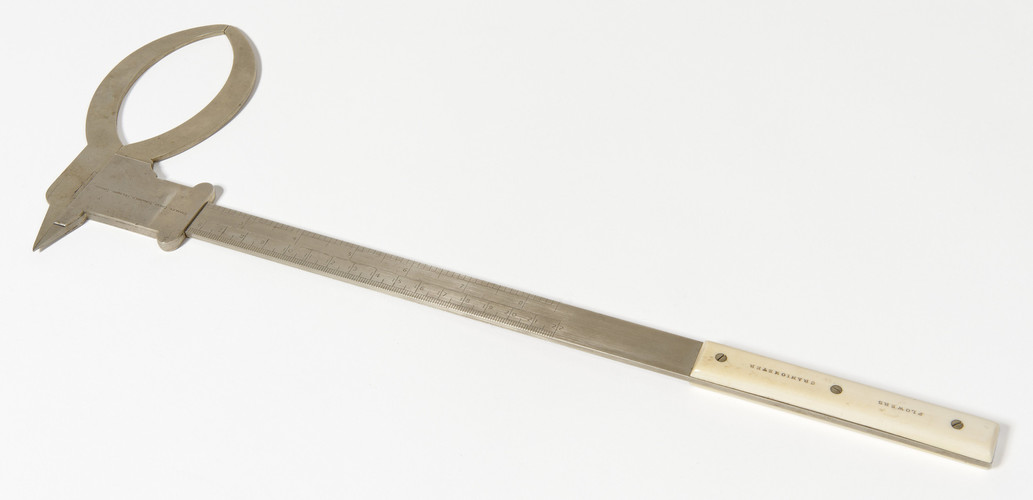 1971.30.9.1Craniometer.1971.30.9.1
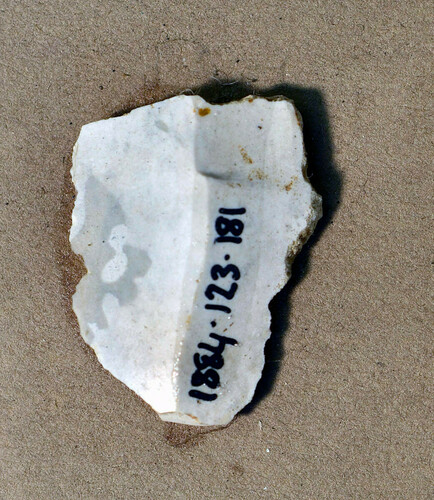 1884.123.181Stone flake1884.123.181
 1947.4.2.2Key for Roasting Jack [1947.4. 2 .1]. Oval shaped handle with cylindrical protrusion at the base with a square opening. Made of copper alloy. See 1947.4.2 .1 for the brass cylinder and see 1947.4.2 .3 associated with this item. [Bethany Skuce [OPS Move] 30/06/2016]1947.4.2.2
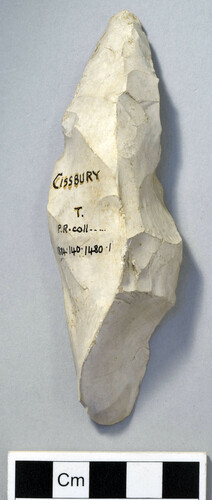 1884.140.1480.1Stone borer1884.140.1480.1