
- Collection type
- Object
- Description
- Key for Roasting Jack [1947.4. 2 .1]. Oval shaped handle with cylindrical protrusion at the base with a square opening. Made of copper alloy. See 1947.4.2 .1 for the brass cylinder and see 1947.4.2 .3 associated with this item. [Bethany Skuce [OPS Move] 30/06/2016]
- Geographical reference
- England
- Cultural groups
- English
- Date / Period
- Date made: Before 1947
- Date collected
- By 1947
- Acquisition information
- Donated: 1947
- Materials and processes
- Material Copper Alloy Metal, Material Iron Metal, Process Stamped, Process Cast
- Dimensions
- Depth: max 11 mm, Width: max 55 mm, Length: max 56 mm
- Object numbers
- Accession number: 1947.4.2.2
- Research and responses
'The Clockwork Roasting Jack or How Technology Entered The Kitchen' By Jeanne Schinto. Originally appeared in Gastronomica: The Journal of Food and Culture, published by The University of California Press, Vol. 4, No. 1, Winter 2004 Clockwork jacks: ... [nineteenth century] The English one was brass and shaped like a bottle with a long neck. Its spring-driven mechanism was meant to be wound with a (missing) key. The manufacturer's name, "John Linwood," was pressed into a brass label on the front. ... Their purpose: to turn spits of roasting meat before a fire without the need of anyone doing it by hand. Our English jack, I learned, would turn a vertical "dangle spit" in front of a fireplace or inside something called a "tin kitchen"; ... '
Before the revolution introduced by electricity, clockwork was the best means of automating processes in the kitchen. In particular this was used to turn meat during roasting. No longer did people have to employ a servant to walk a treadmill to turn the spit, or to stand over the fire and turn it themselves. With “John Linwood’s Warranted” clockwork bottle jack the cook could turn her attention to other things whilst the Sunday roast was done to perfection on all sides [AP 26/09/2006]
http://www.folkpark.com/collections/ireland/home_life/cooking/ This bottle jack, made from brass, is marked 'John Linwood, Birmingham'. He started to manufacture bottle jacks in the 1790's. - this suggests the manufacturer may have been based in Birmingham [AP 06/02/2007]
Search terms: Tool, Food and Drink, Cooking Tool, Food Accessory, Key
Further items to explore
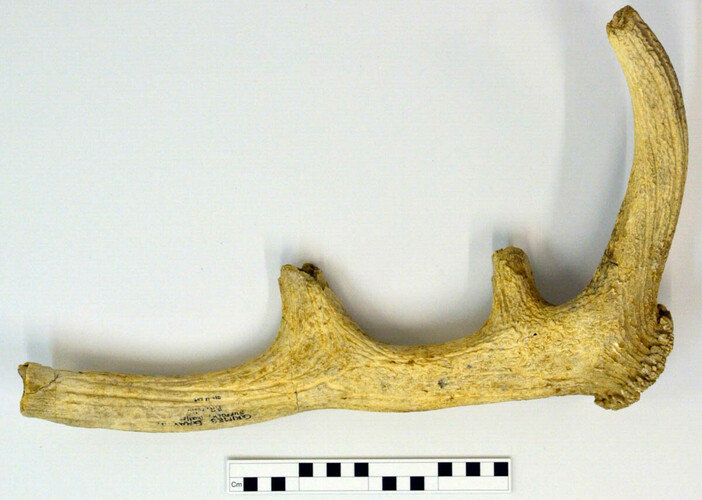 1884.118.269Pick made from deer antler; the two tines are broken and the main tip has been removed, part of the crown is present. The pick appears to have been repaired. [CG [Excav. PR] 11/11/2013]1884.118.269
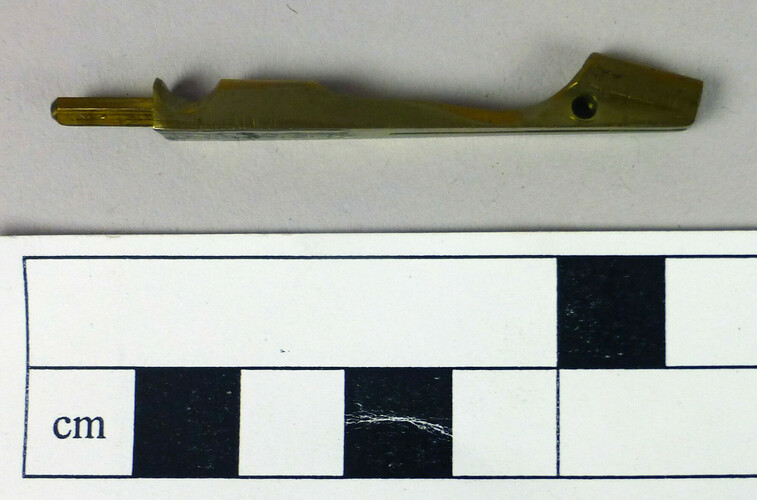 1971.30.3.7Part of a metal drawing instrument [ SM (Verve) 12/6/2017]1971.30.3.7
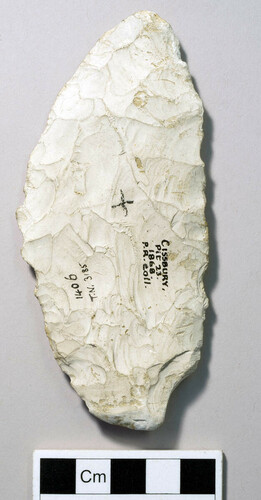 1884.140.1446.2Stone implement1884.140.1446.2
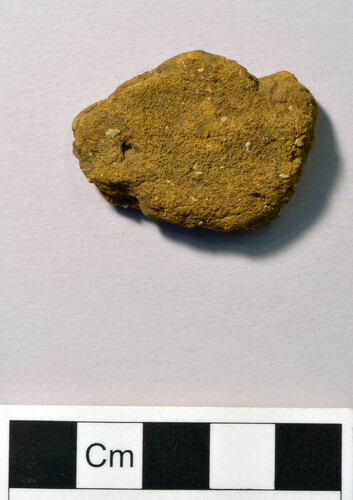 1884.137.10.14Ceramic sherd1884.137.10.14