
- Collection type
- Object
- Description
- Iron dao mounted with brass and with a forked (2 prongs) butt. [SM 13/04/2007]
- Long description
- Iron dao mounted with brass and with a forked (2 prongs) butt. The brass is missing in several sections on the shaft. [SM 13/04/2007]
- Cultural groups
- Ao Naga
- Date / Period
- Date made: Before 1923
- Date collected
- 1923
- Acquisition information
- Loaned: 1925 Donated: 1928
- Materials and processes
- Material Iron Metal, Material Brass Metal, Process Forged (Metal)
- Dimensions
- Length: max 1010 mm, Width: max 53 mm
- Object numbers
- Accession number: 1928.69.743
- Research and responses
The following notes are drawn from research compiled by Andy Mills as part of the DCF Cutting Edge Project in 2006-2007. Ao daos are known as Nok, while ancient heirloom daos are termed Noklang. Dao holders are termed Noklaptsi. Normal Ao daos are used for the same vast range of functions as discussed in the entry for 1938.35.1427. Noklang daos performed an active role in the religious ceremonies of the Ao. A Few rich men of the Ao kept these ancient tools, which were of unknown origin to the people, and brought them out at mithun sacrifices. Other, more practical daos were actually used during the rite, in large numbers, to repeatedly wound a mithun (Bos gaurus gaurus), until it died from massive blood loss.
Mills (see The Ao Nagas by J. P. Mills. 1926. p.60) recognised three principle forms of noklang:
A. The commonest type, possessing a large blade 15cm wide, 30cm long, with a 10cm tang. This followed the ordinary shape of the Ao dao, rather like the Sema form described above, with an incurved back. These possessed a distinctive rounded projection on the back of the blade.
B. A type commoner in Lhota country (a sub-clan of the Ao), long and narrow, with a straight cutting edge, and a curved back.
C. A type found only in Changki villages (another sub-clan of the Ao), much more like a sword than a dao. These were kept in pairs by the noklang-holder and his wife, and brought out to be stood in the ground by their tangs at the mithun sacrifice. It was considered a bad omen for the harvest if one of the blades fell over during the rite. [SM 08/04/2008]
Further items to explore
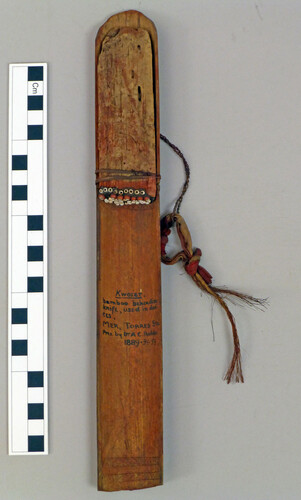 1889.34.54Bamboo ceremonial knife.1889.34.54
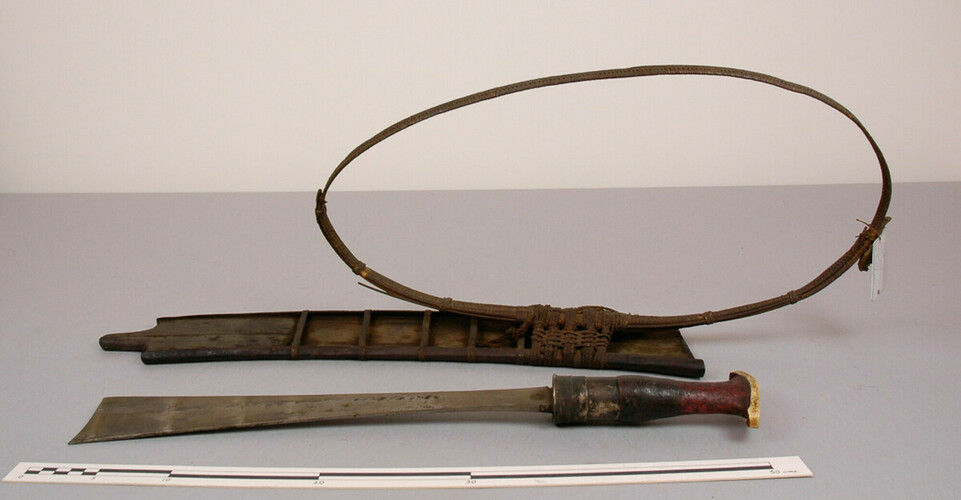 1966.1.153.1Sword (dao) [.1] with blade widening towards the tip, with hilt lacquered red and bound with silver near the blade, with bone pommel. With wooden sheath [.2] of a flat board bound with bands of plaited cane, and with cane belt attached. [El.B 03/07/2007]1966.1.153.1
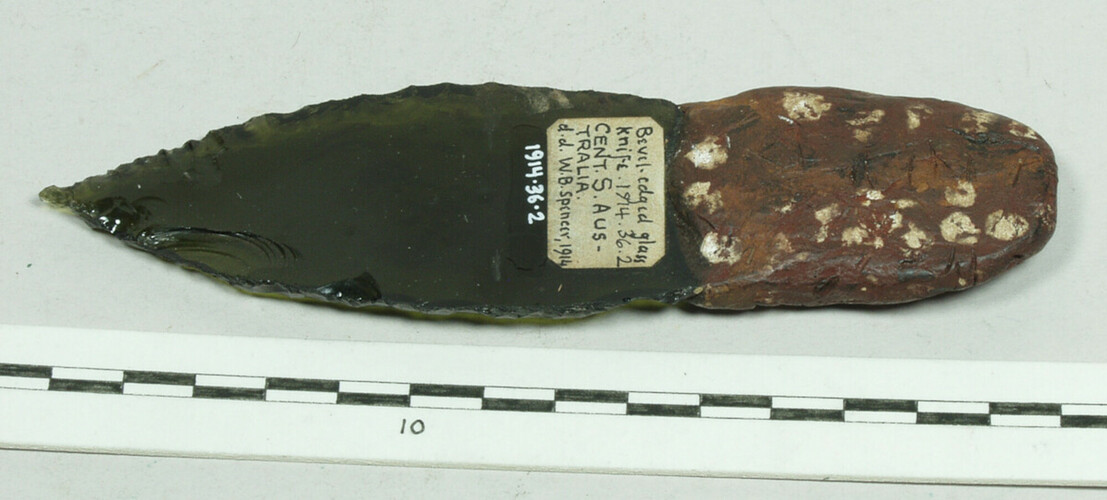 1914.36.2Gum-handled glass knife.1914.36.2
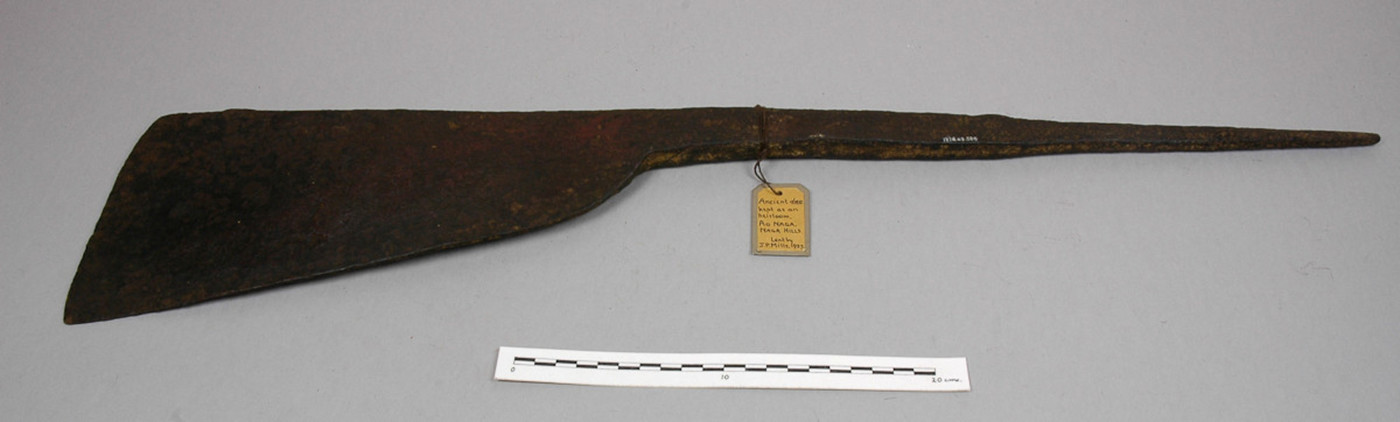 1928.69.386Iron dao with expanded blade and long tapering tang. [SM 04/07/2007]1928.69.386
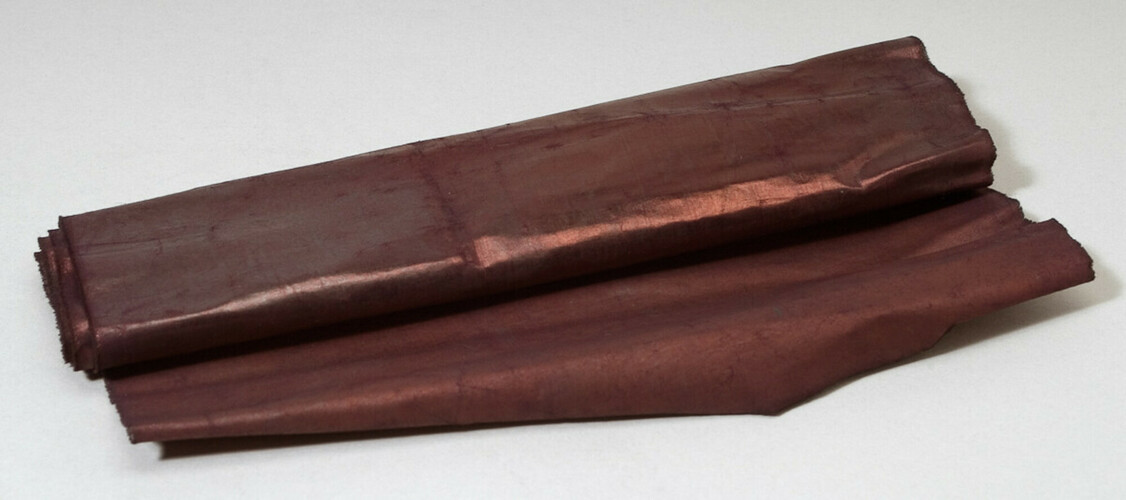 2003.9.282Cloth dyed with indigo for making masks2003.9.282
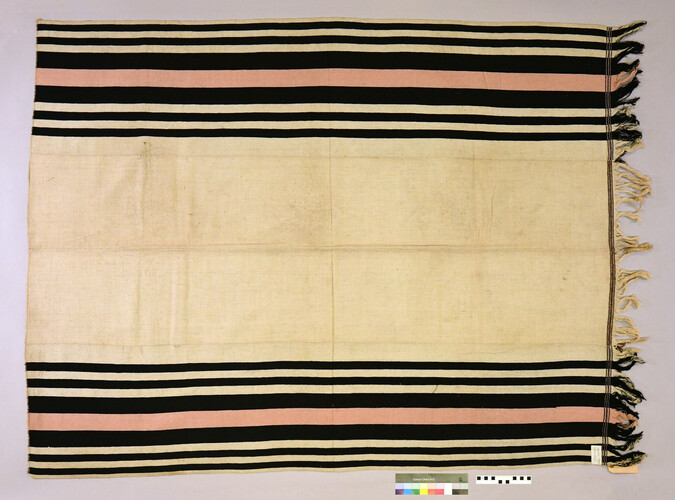 1946.7.32Man's shawl, kherempai, of white cotton with black and salmon pink stripes and a fringe at one end.1946.7.32
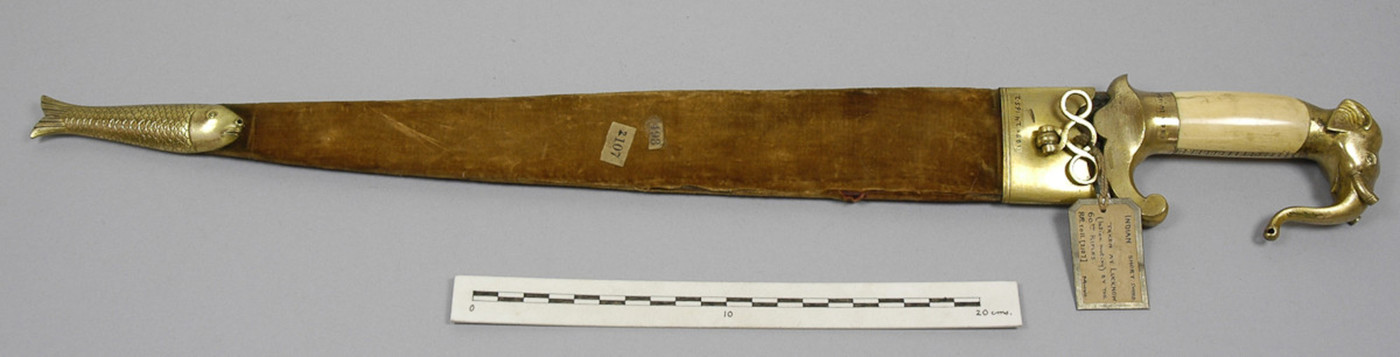 1884.24.165.1Short sword with ivory grip, copper alloy bolster and butt in the shape of an elephant's head. The wooden sheath is covered in orange velvet and has a chape in the shape of a fish. [El.B 14/3/2007]1884.24.165.1
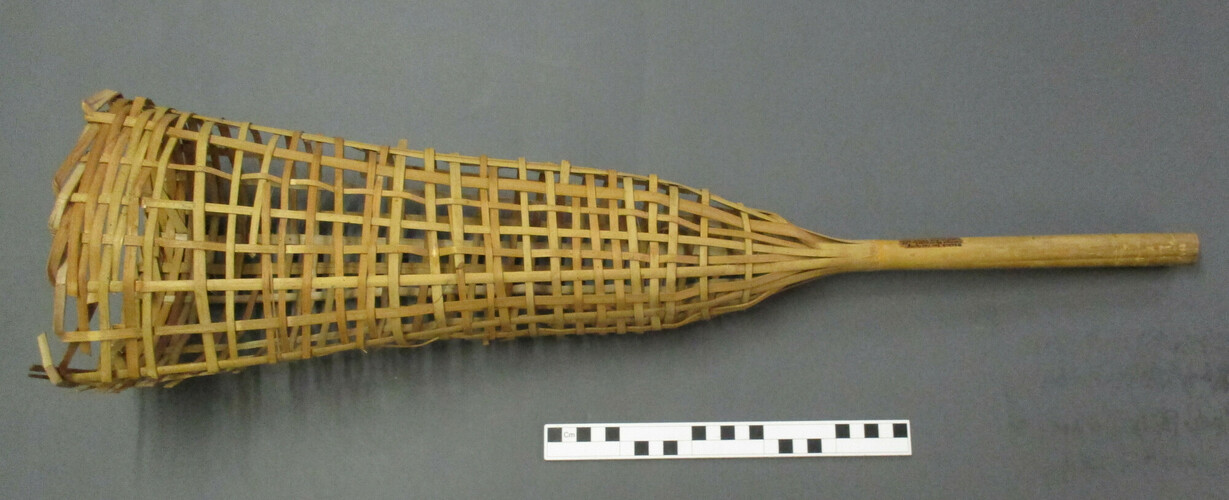 1931.87.157Basket for carrying food, made of bamboo split at the node and woven in openwork chequer. [MJD 13/5/2010]1931.87.157