
- Collection type
- Object
- Description
- Man's shawl, kherempai, of white cotton with black and salmon pink stripes and a fringe at one end.
- Long description
- Man's shawl, kherempai, of white cotton with black and salmon pink stripes and a fringe at one end. The cloth is constructed of four panels of woven cotton stitched with white cotton yarn: two inner white panels and two outer panels of white each with six black warp stripes and a central salmon-pink warp stripe. One end has been sewn up with a blanket stitch known locally as 'kaheliambe'. The warp ends at the opposite end have been loosely twisted to form a fringe. The fringed end has three decorative lines of supplementary weft across the cloth. On the outer panels this consists of three lines of pink and black, while on the two central panels the lines are orange and black. The ends of the supplementary wefts form short tassels at two of the seams.
- Cultural groups
- Zeme Naga
- Date / Period
- Date made: Before 1942
- Date collected
- 1937 - 1942
- Acquisition information
- Donated: 1946
- Materials and processes
- Material Cotton Seed Fibre Yarn Plant, Material Cotton Seed Fibre Textile Plant, Process Spun, Process Dyed, Process Stitched, Process Woven, Process Supplementary Weft Woven
- Dimensions
- Width 51 mm side border, Width: max 1240 mm, Length: max 1710 mm
- Object numbers
- Accession number: 1946.7.32
- Research and responses
This textile was viewed virtually by members of the Zeme Naga community in Manipur during a virtual meeting on 16th September 2021, organised as part of the Talking Threads Project. For the full recording please see the project file. The group made the following comments:
This cloth is called Ramsangphai, but it is written as Kherempai. Only Zeme men wear this cloth. Phai means cloth, and in particular refers to a shawl. This cloth can be worn on any occasion except a funeral. The fringes can be on both sides or on just one side like this example. Although it has a similar design, the Angami Naga lohe cloth has a different meaning.
The stitch along the selvedge, which looks like blanket stitch, is known locally as ‘kaheliambe’.
Objects in the original Reid collection have gone to various places. 1946.7.96 - 1946.7.124 were sent to the Musee de l'Homme in 1946. 1946.7.85 - 1946.7.95 seem to have been intended to be sent to Paris, but did not go. 1946.7.5 - 1946.7.84, the remainder of the accessioned collection, were kept at the PRM from the beginning. A further group of items never accessioned were sent to the National Museet in Copenhagen in 1947 (the latter group are listed in a single record with REID in accession number field). [SD 27/6/2000]
Search terms: Clothing Textile, Textile, Body Cloth
Further items to explore
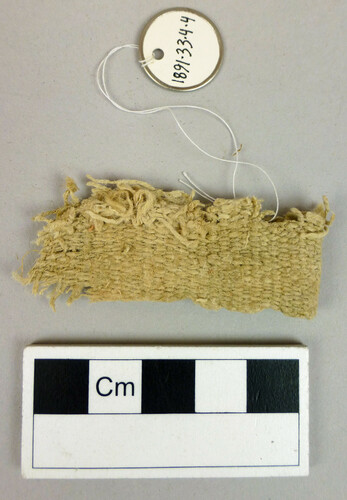 1891.33.4.4Linen fragment of coarse weave.1891.33.4.4
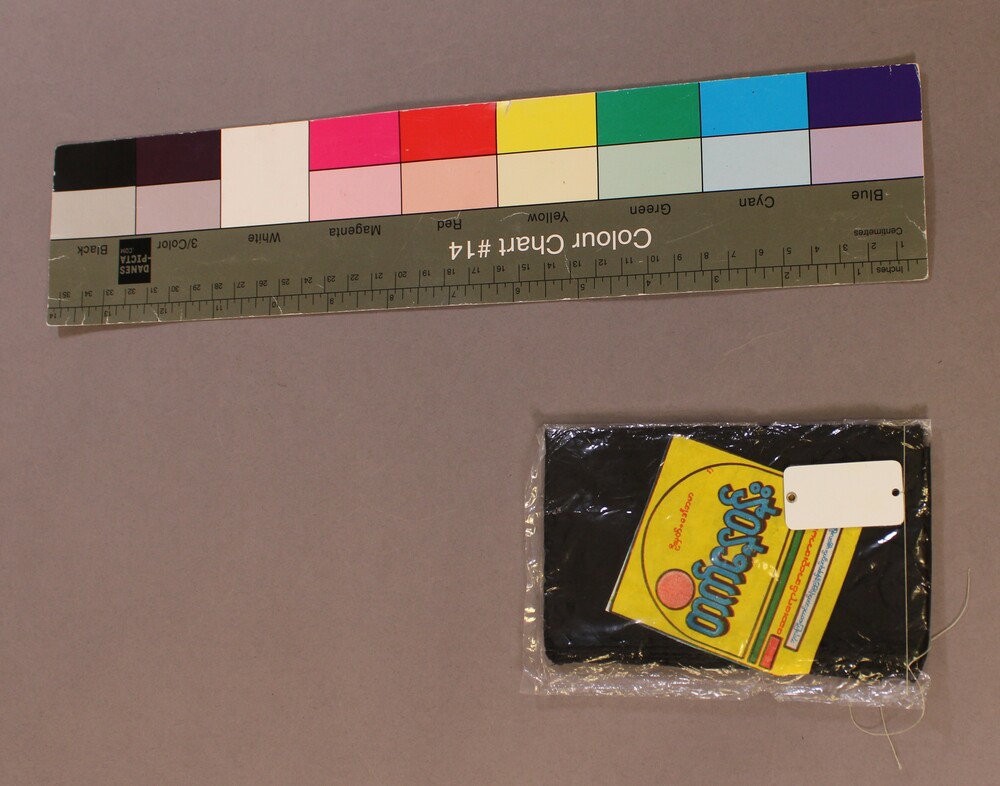 1997.28.58Woman's waistband, still sealed in commercial package.1997.28.58
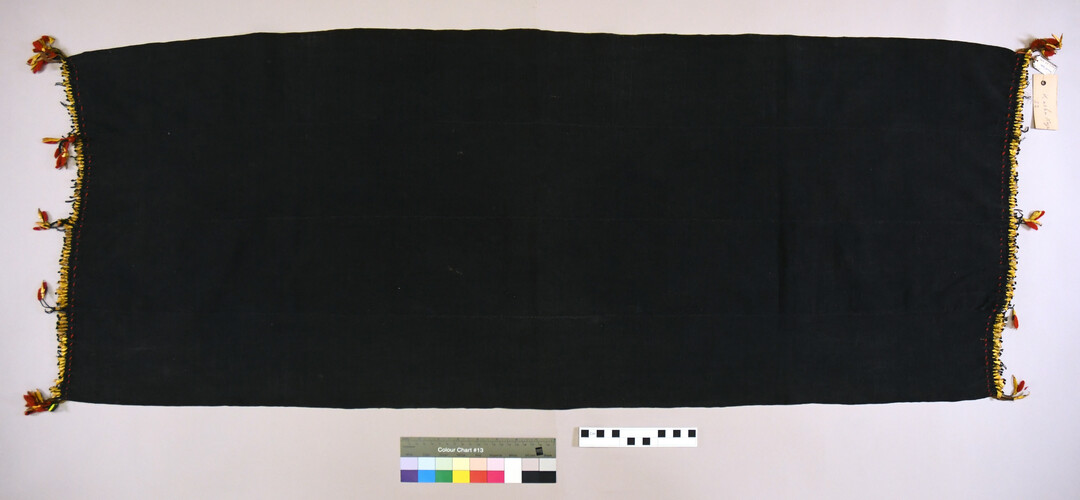 1923.85.989Woman's breast cloth, worn as dancing attire: indigo-dyed cloth with a fringe of orchid stem.1923.85.989
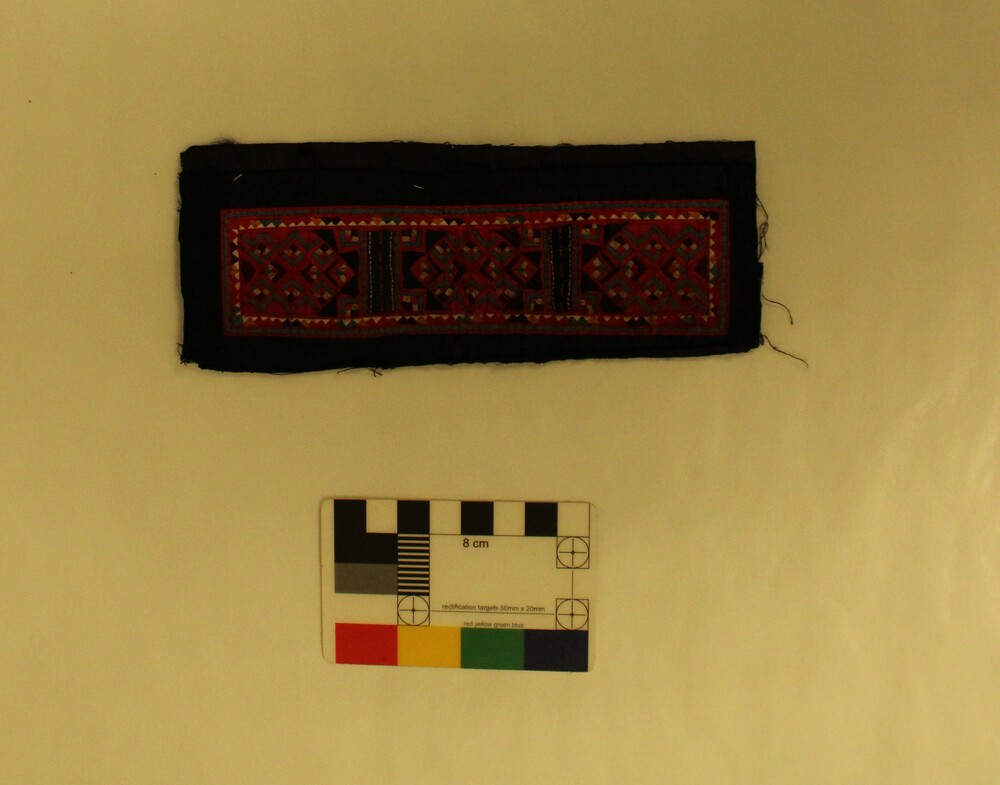 1992.24.1Band of fine applique from a garment. Layers of silk fabric have been stitched in a geometric pattern on a backing of indigo-dyed cotton.1992.24.1
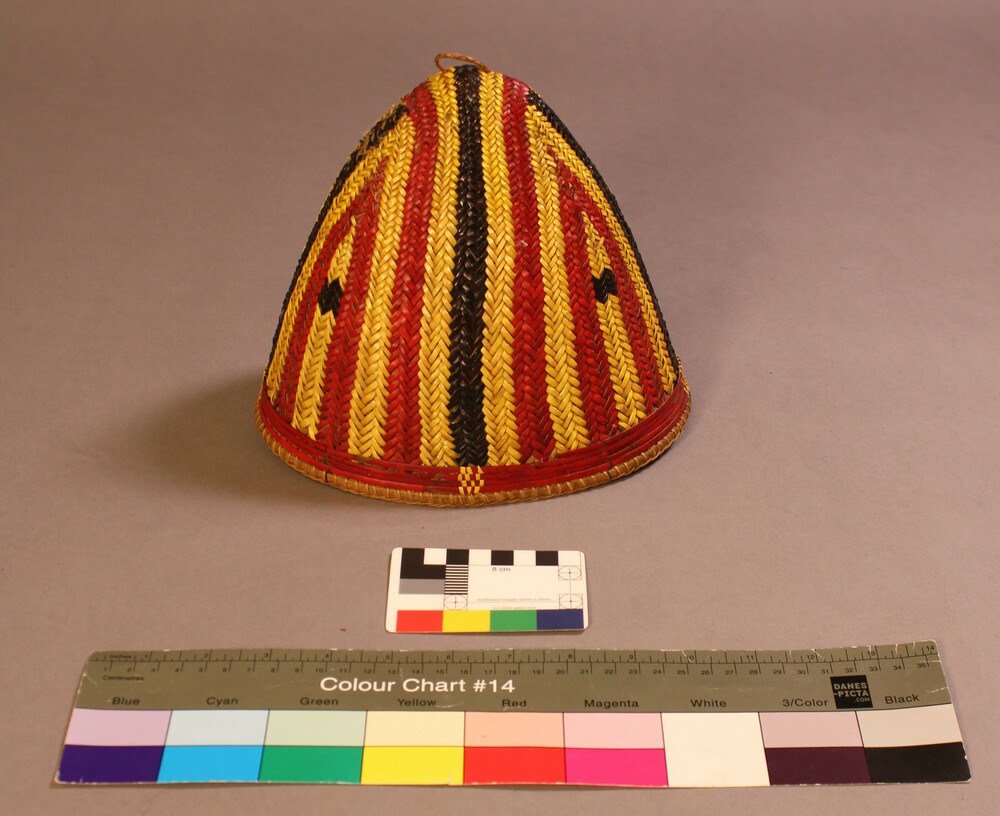 1928.69.877Man's hat of coloured cane work1928.69.877
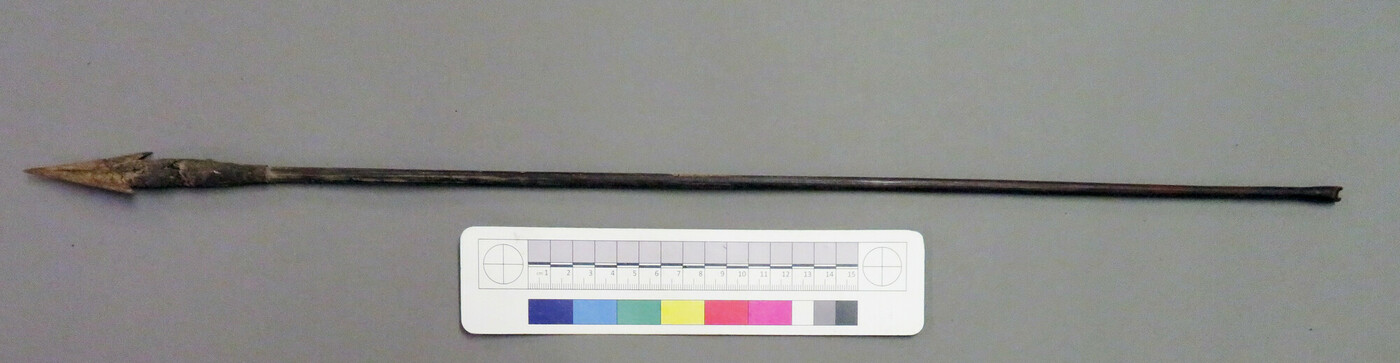 1942.8.83.11Bamboo arrow with socketed barbed iron head. For associated quiver and other arrows see [1942.8.83 .1 - .12] [EH [OPS move] 14/9/2017]1942.8.83.11
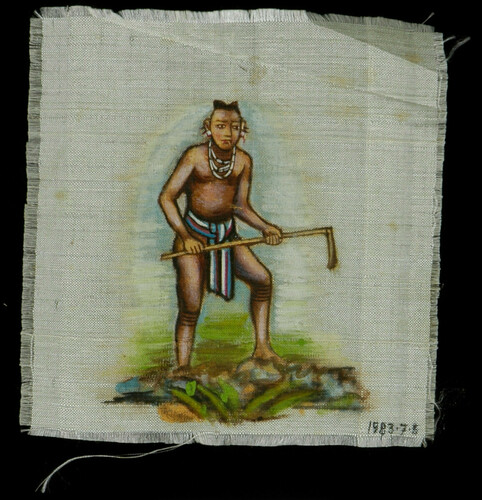 1983.7.5Painting on silk depicting a Naga man with a hoe. [El.B 16/04/2008]1983.7.5
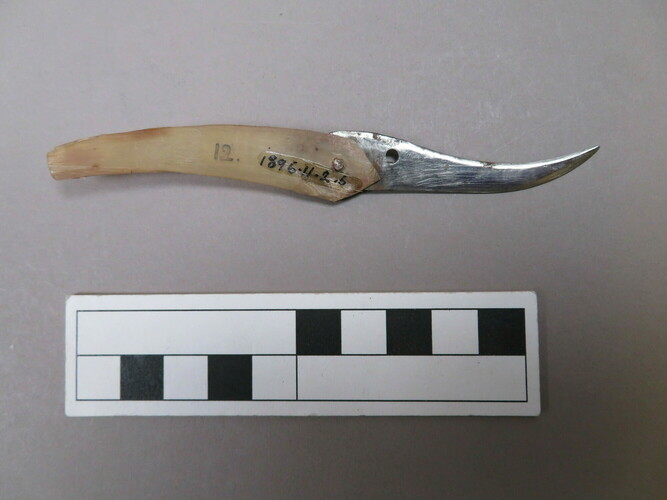 1896.11.2.6Lancet [1 of 12] from surgeon's outfit.1896.11.2.6