
- Collection type
- Object
- Description
- Bone skate with perforation through one end of bone.
- Geographical reference
- Cultural groups
- English
- Date / Period
- Date made: Before 1866
- Date collected
- By 1866
- Acquisition information
- Purchased: 13/01/1899
- Materials and processes
- Material Horse Bone Animal, Process Carved, Process Perforated
- Dimensions
- Length x Width x Height: max 255 x 50 x 32 mm
- Object numbers
- Accession number: 1899.69.2
- Research and responses
http://en.wikipedia.org/wiki/Ice_skating ... The exact time and process by which humans first learned to ice skate is not known, though archaeologists believe the activity was widespread. The convenience and efficiency of ice skating to cross large, icy areas is shown in archaeological evidence by the finding of primitive animal bone ice skates in places such as Russia, Scandinavia, Great Britain, Germany, and Switzerland. The runners were made from bones of cattle. They ground down until they formed a flat gliding surface, and thongs tied them to the feet. ... [AP 28/09/2006]
Search terms: Transport and Travel, Clothing Footgear, Skate
Further items to explore
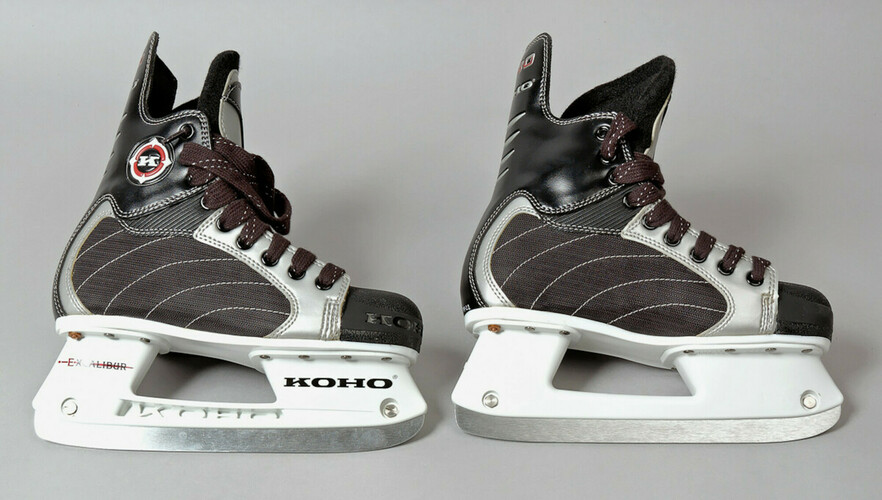 2006.77.2.1Pair of hockey skates consisting of black boots fixed to metal blades.2006.77.2.1
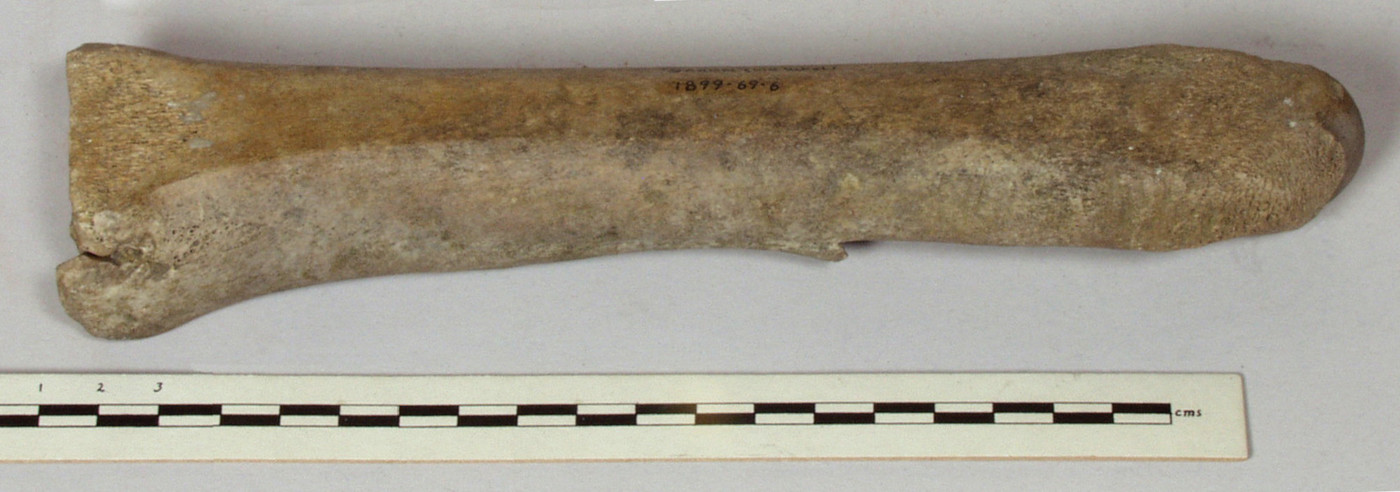 1899.69.6Bone skate.1899.69.6
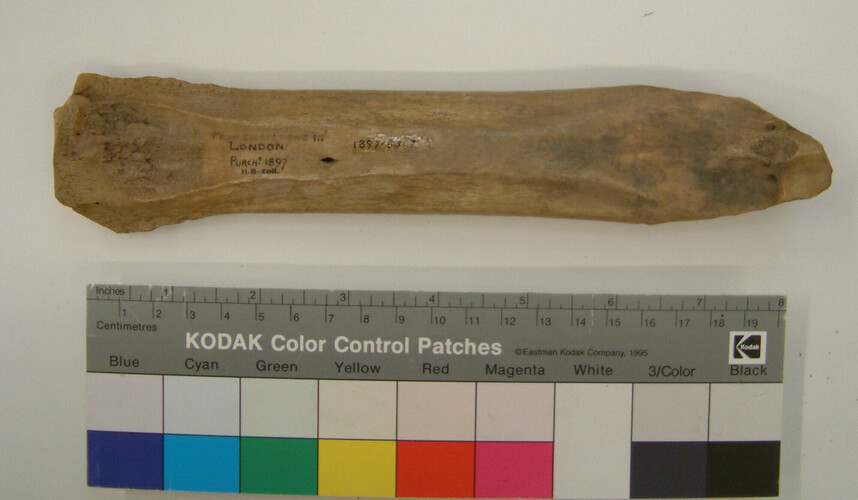 1897.83.7Horse bone skate.1897.83.7
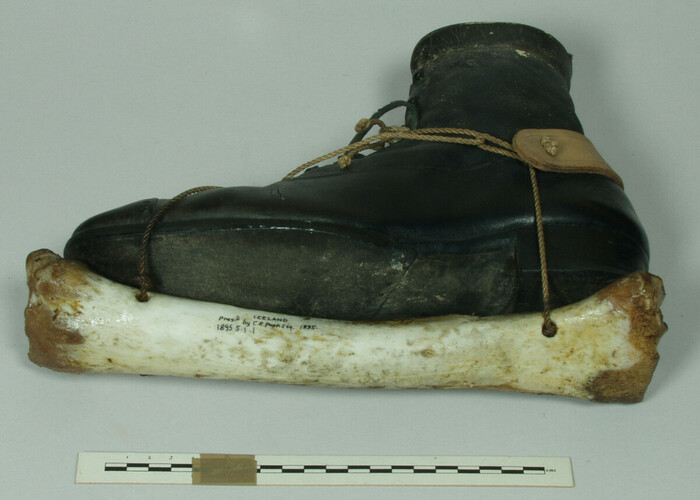 1895.5.1.1Pair of bone skates [ .1 - .2] Both have string and leather straps that enable them to be attached to shoes. [.1] is currently attached to a boot [2004.193.1 .2] to illustrate how they were used.1895.5.1.1
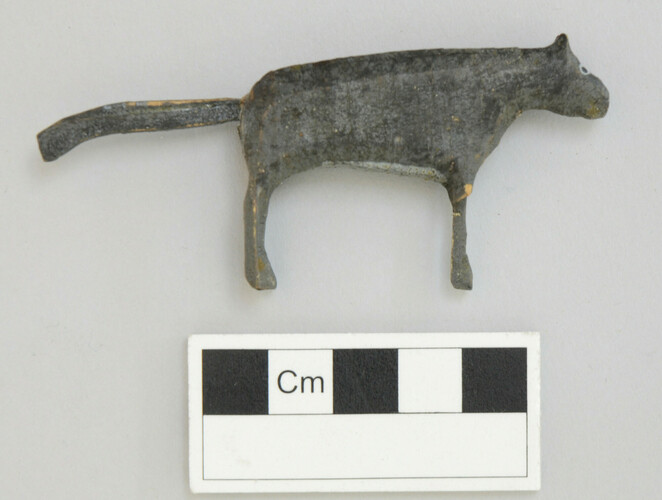 1956.9.70.128Dark grey animal figure with a grey stomach, long tail and short pointed ears. Part of a Noah’s Ark set. One of a pair [See 1956.9.70.129 for other figure]. [SM (Verve) 15/04/2015]1956.9.70.128
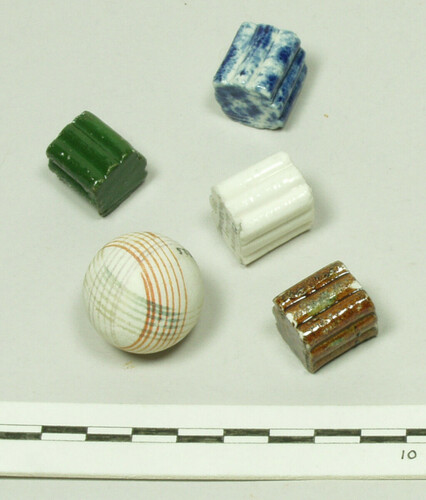 1895.20.2.1Set of game pieces, including four chequers (one white [.1], one blue [.2], one brown [.3] and one green [.4]) and a marble decorated with orange lines [.5] [N.B. 'DCF 2004-2006 What's Upstairs?' 4/3/2005]1895.20.2.1
 1884.138.2.26Ceramic sherd1884.138.2.26
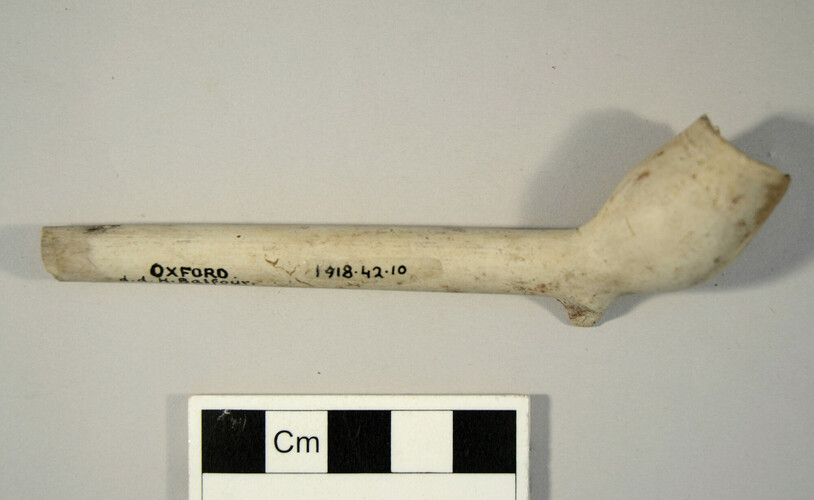 1918.42.10Early clay tobacco pipe.1918.42.10